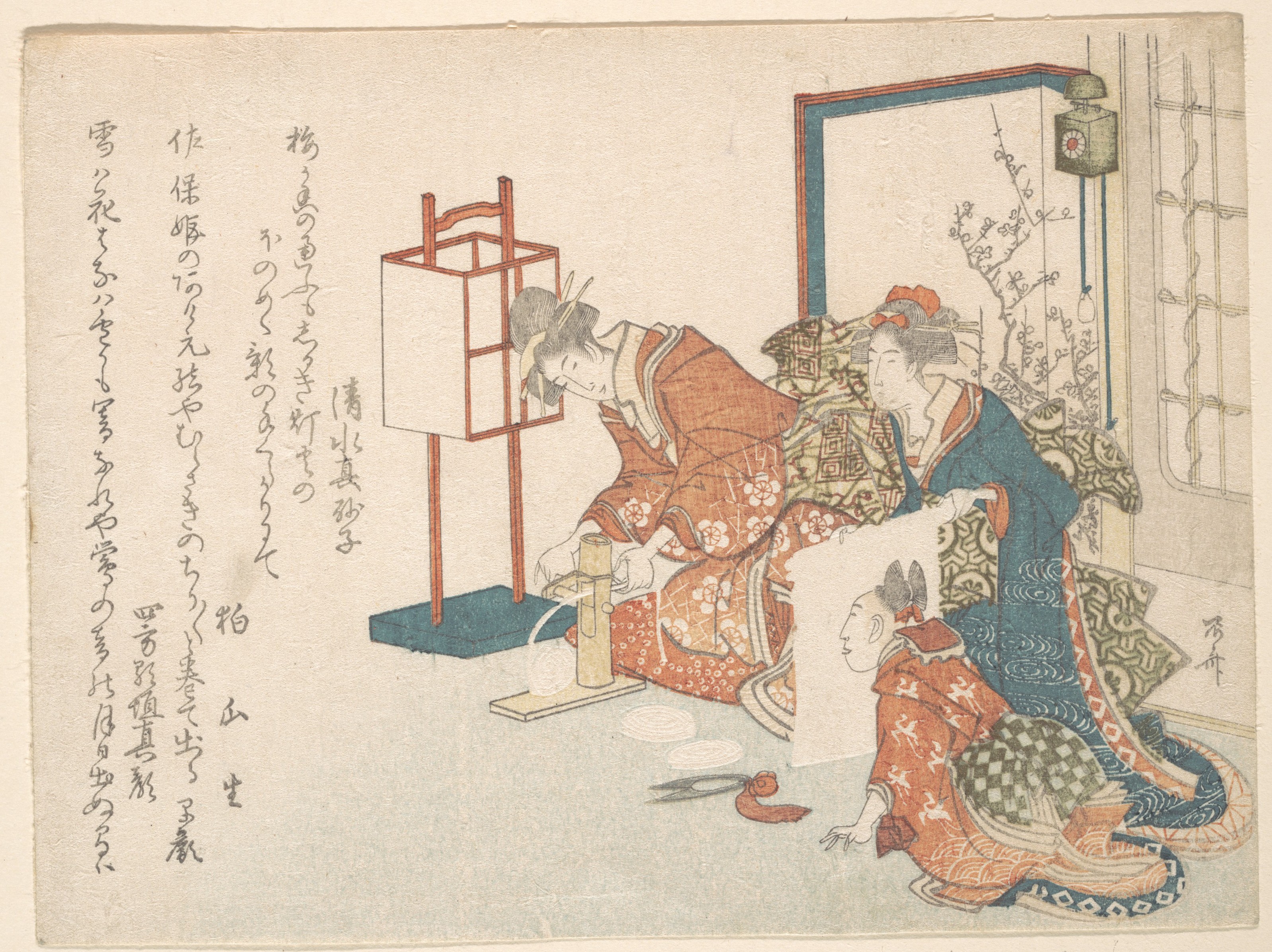
- Date:
- 1750–1835
- Medium:
- Woodblock print (surimono); ink and color on paper
- Source:
- Metropolitan Museum of Art
Description
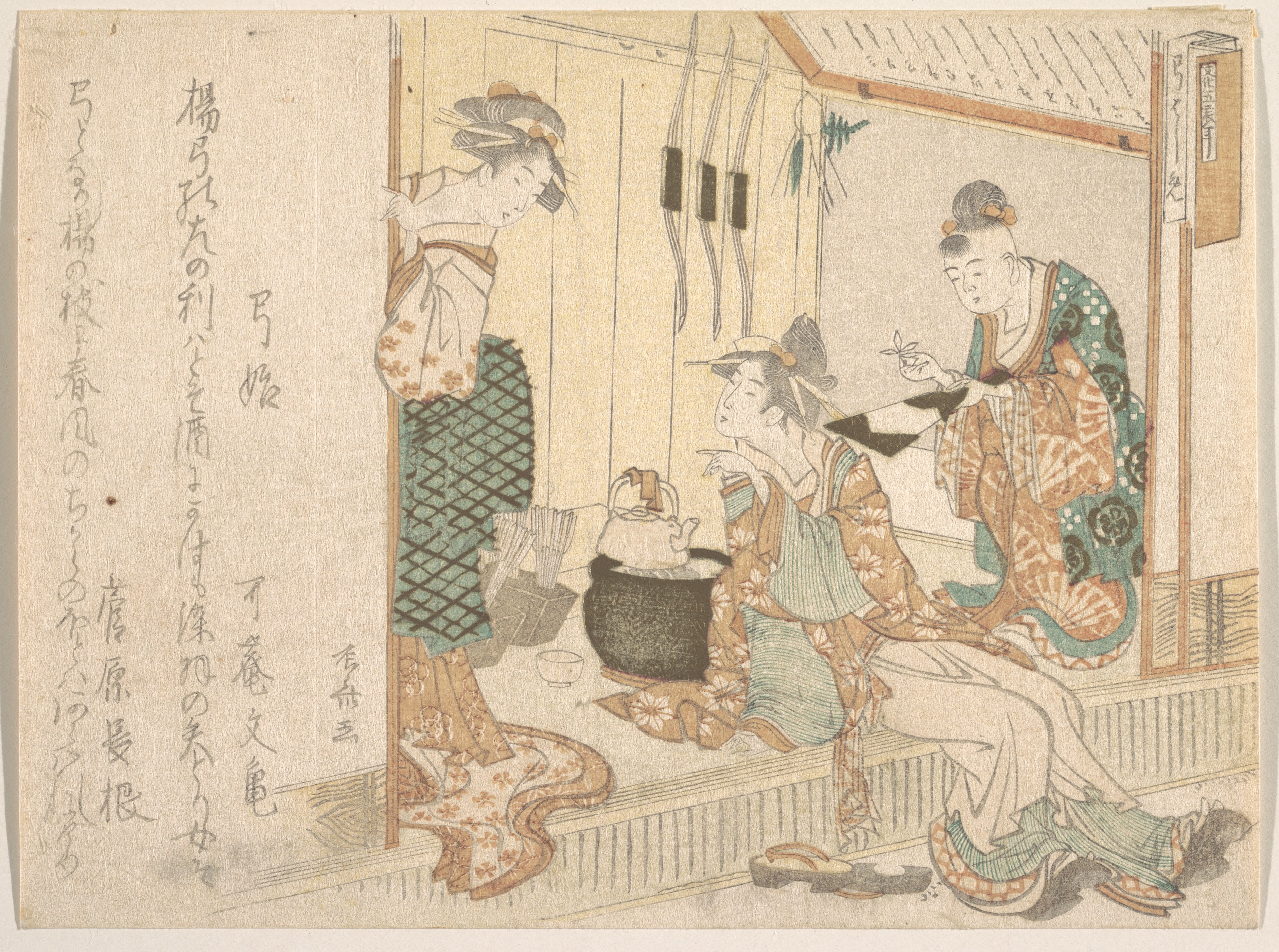
Three women in patterned kimono (rust-red with plum blossoms, olive-green geometric weave, and indigo with wave patterns) gather around a low writing table, one bent forward pouring water from a small bamboo-handled vessel onto an ink stone while the others look on; scissors and folded white paper lie on the floor nearby. A rectangular paper lantern on a red-lacquer stand stands beside them, and a flowering plum branch and a hanging brazier or lamp appear against a lattice-screened window at right. Columns of cursive Japanese text (poems) fill the left portion of the composition; the palette is muted rust, olive, indigo, and grey-blue against cream paper.
More Prints by Ryūryūkyo Shinsai
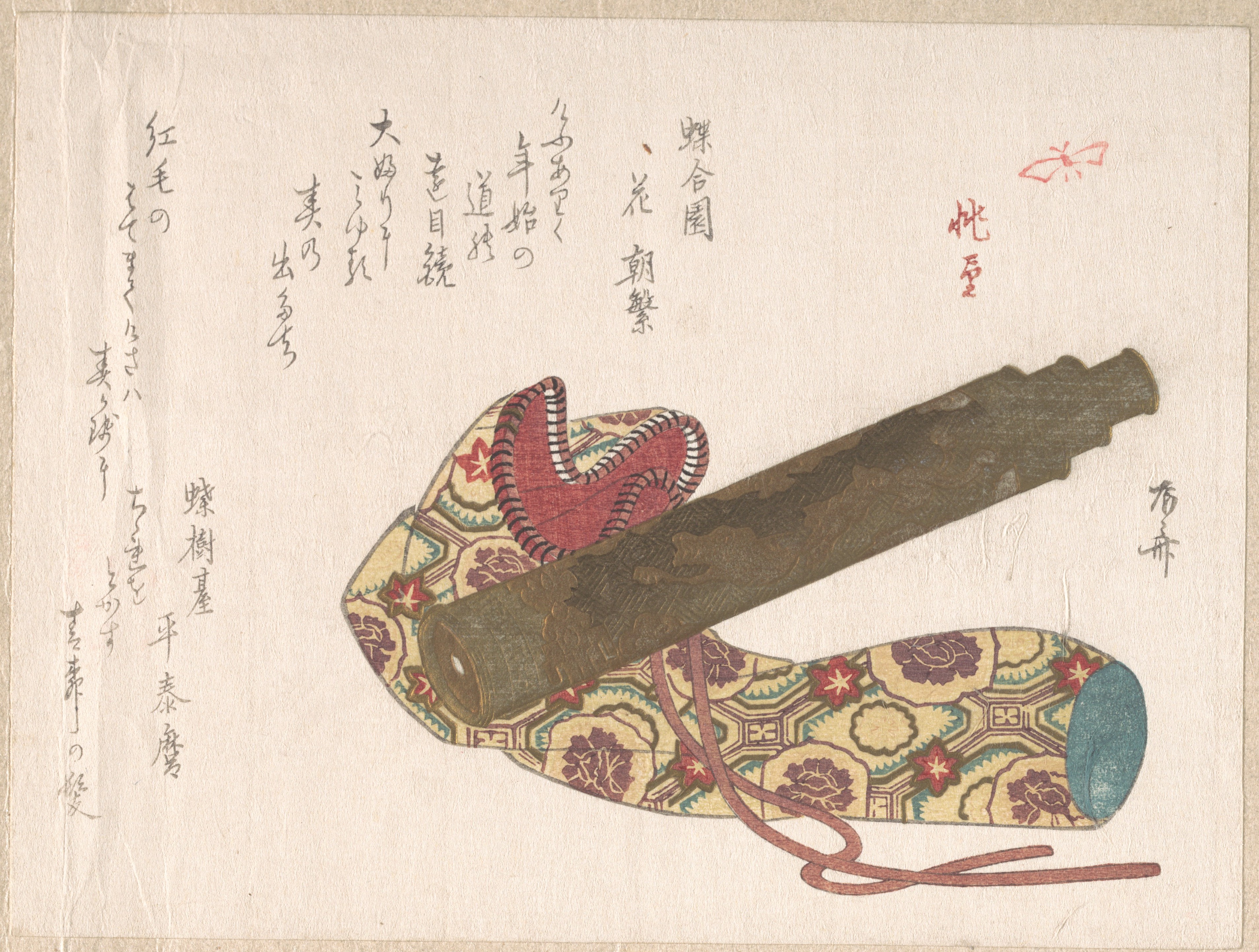
Telescope with Its Bag
19th century
Woodblock print (surimono); ink and color on paper
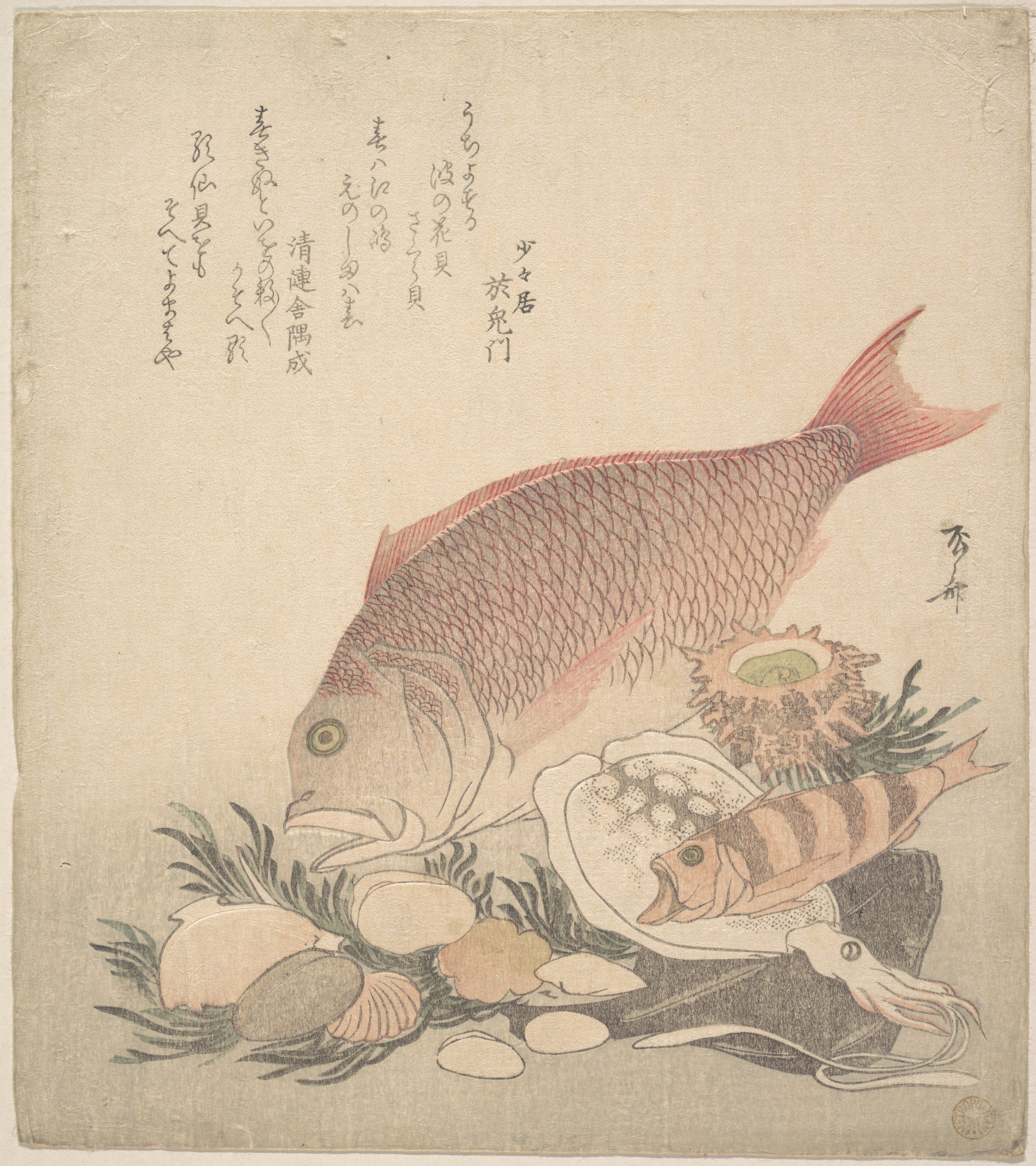
Large and Small Fish Swimming Among Shells and Moss at the Bottom of the Sea
ca. 1830
Woodblock print (surimono); ink and color on paper
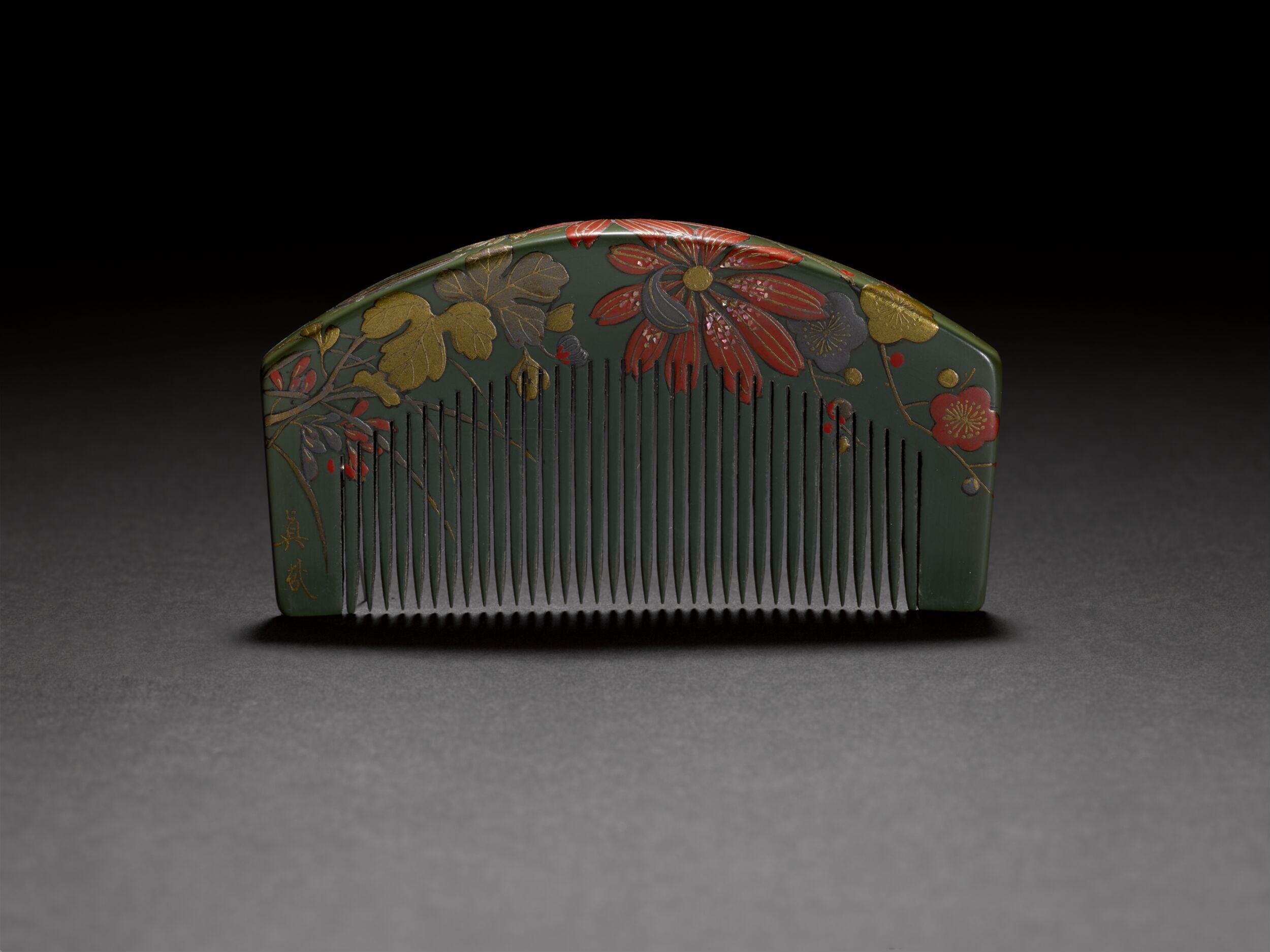
Untitled
1880 - 1895
Two Young Ladies Having Tea Attended by Elderly Servant
Woodblock print (surimono); ink and color on paper
Frequently Asked Questions
Print was created by Ryūryūkyo Shinsai (柳々居辰斎) in 1750–1835.