
Sea Bream (Tai) on Nabeshima Porcelain Dish, Sake Cup on Stand, and Painting of a Peony
- Date:
- ca. 1820
- Medium:
- Woodblock print (surimono); ink and color on paper
- Source:
- Metropolitan Museum of Art
Description
Sea Bream (Tai) on Nabeshima Porcelain Dish, Sake Cup on Stand, and Painting of a Peony is a surimono print by Ryuryukyo Shinsai in the Metropolitan Museum of Art, dated to about 1810. The composition assembles three carefully chosen items in a celebratory still life: a red sea bream on a Nabeshima-ware dish whose porcelain is the finest of its kind, a lacquered stand bearing a sake cup, and a small painting of a peony hung or propped behind the offering. The tai is a fish whose name puns on omedetai, signaling auspicious occasions such as the New Year, weddings, and other formal gatherings, and Shinsai aligns these emblems so the sheet reads as a portable banquet table. Working within the Hokusai school's surimono tradition after his apprenticeship under Tawaraya Sori, Shinsai brings to the assembly an exact eye for porcelain glaze, lacquer surface, and ink-painted blossom, distinguishing each material through controlled variation in line and color. Surimono printers used blind embossing and metallic pigments to register the gleam of cup, glaze, and scale, and an early nineteenth-century impression preserves that delicate finish. The kyoka poems originally printed on the sheet would have completed the celebratory program, with verses on prosperity, sociability, and the meeting of land and sea on the table. The print exemplifies how Shinsai used the Hokusai school's analytic still-life mode to assemble entire ceremonies from a few objects.
More Prints by Ryūryūkyo Shinsai
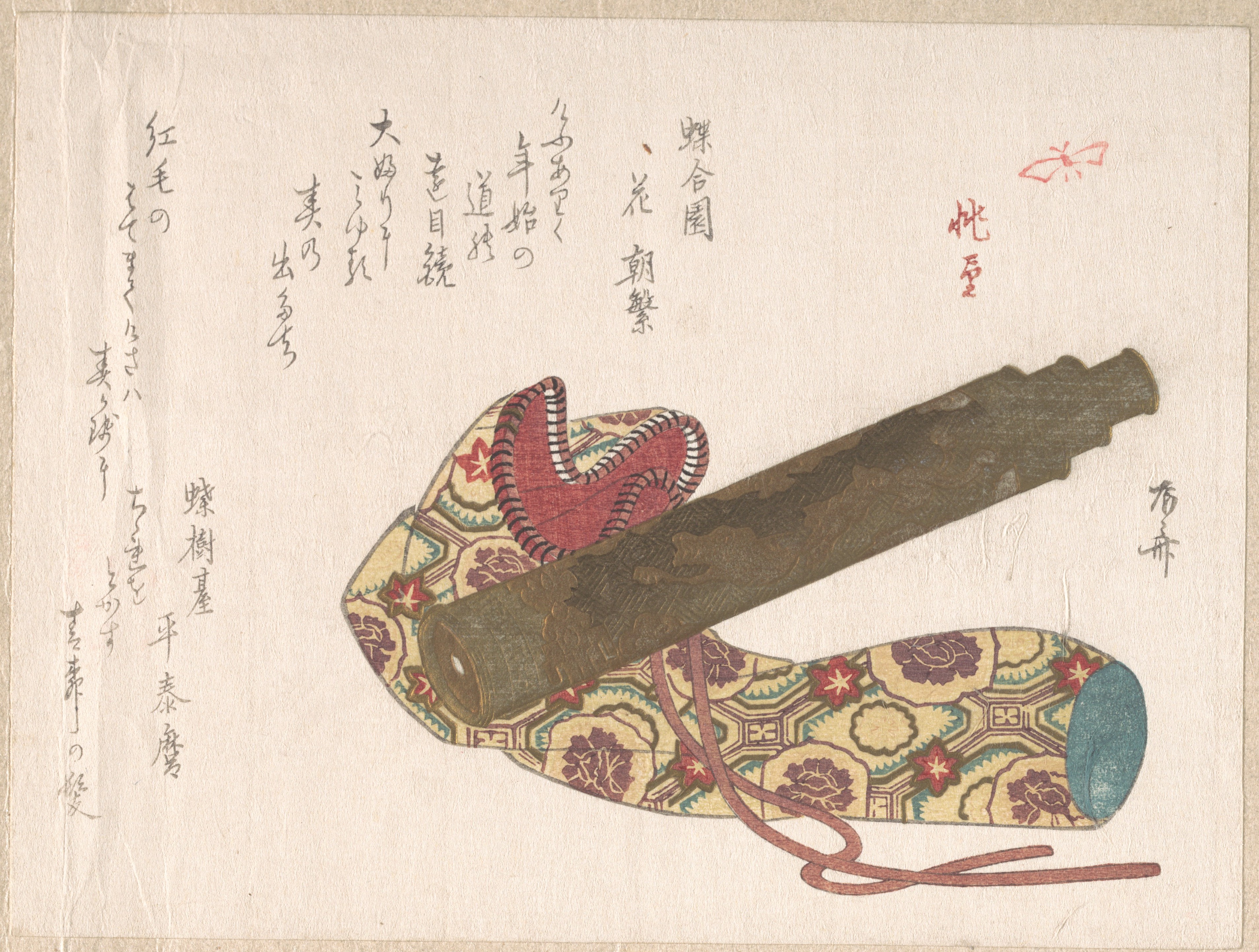
Telescope with Its Bag
19th century
Woodblock print (surimono); ink and color on paper
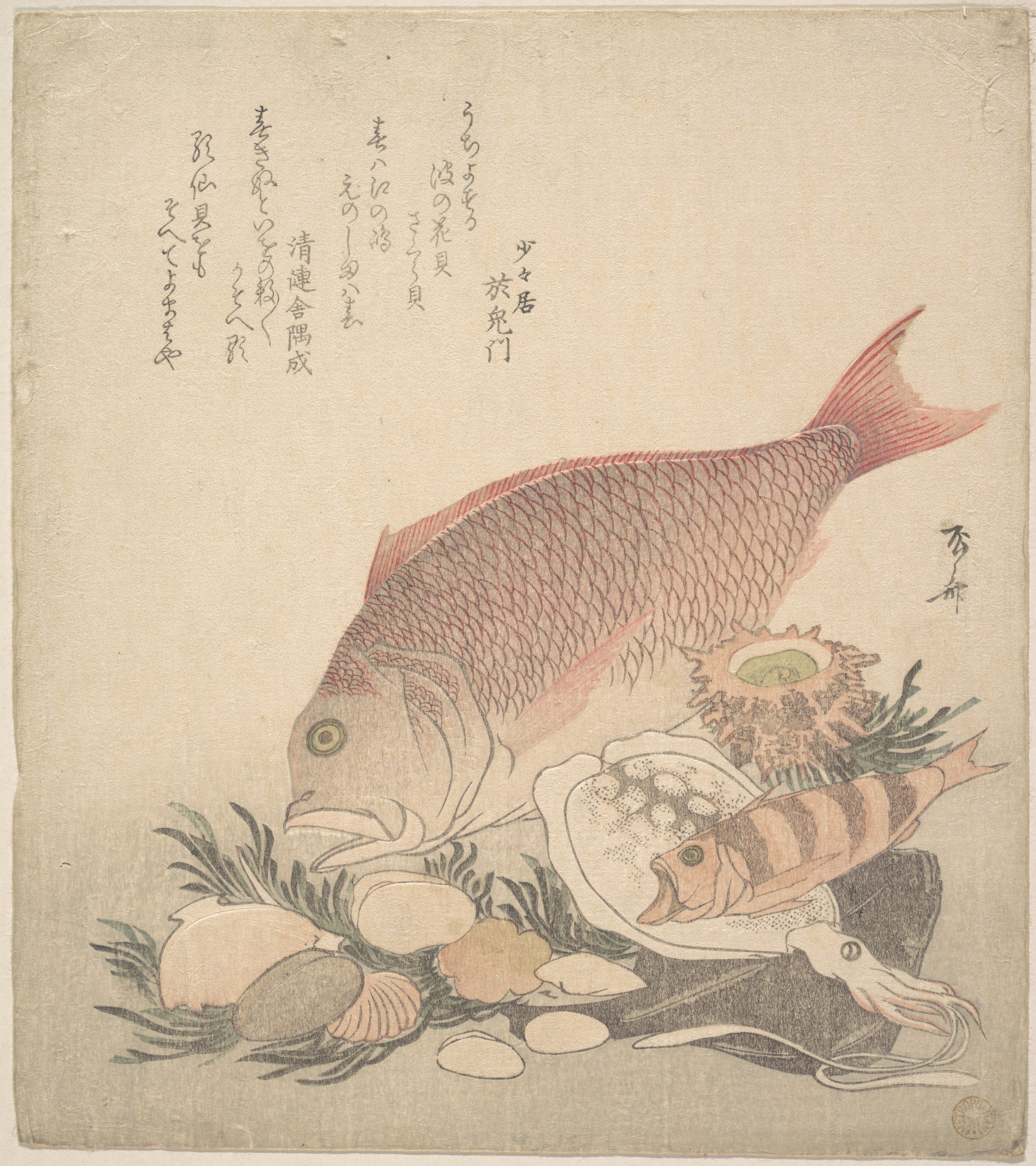
Large and Small Fish Swimming Among Shells and Moss at the Bottom of the Sea
ca. 1830
Woodblock print (surimono); ink and color on paper
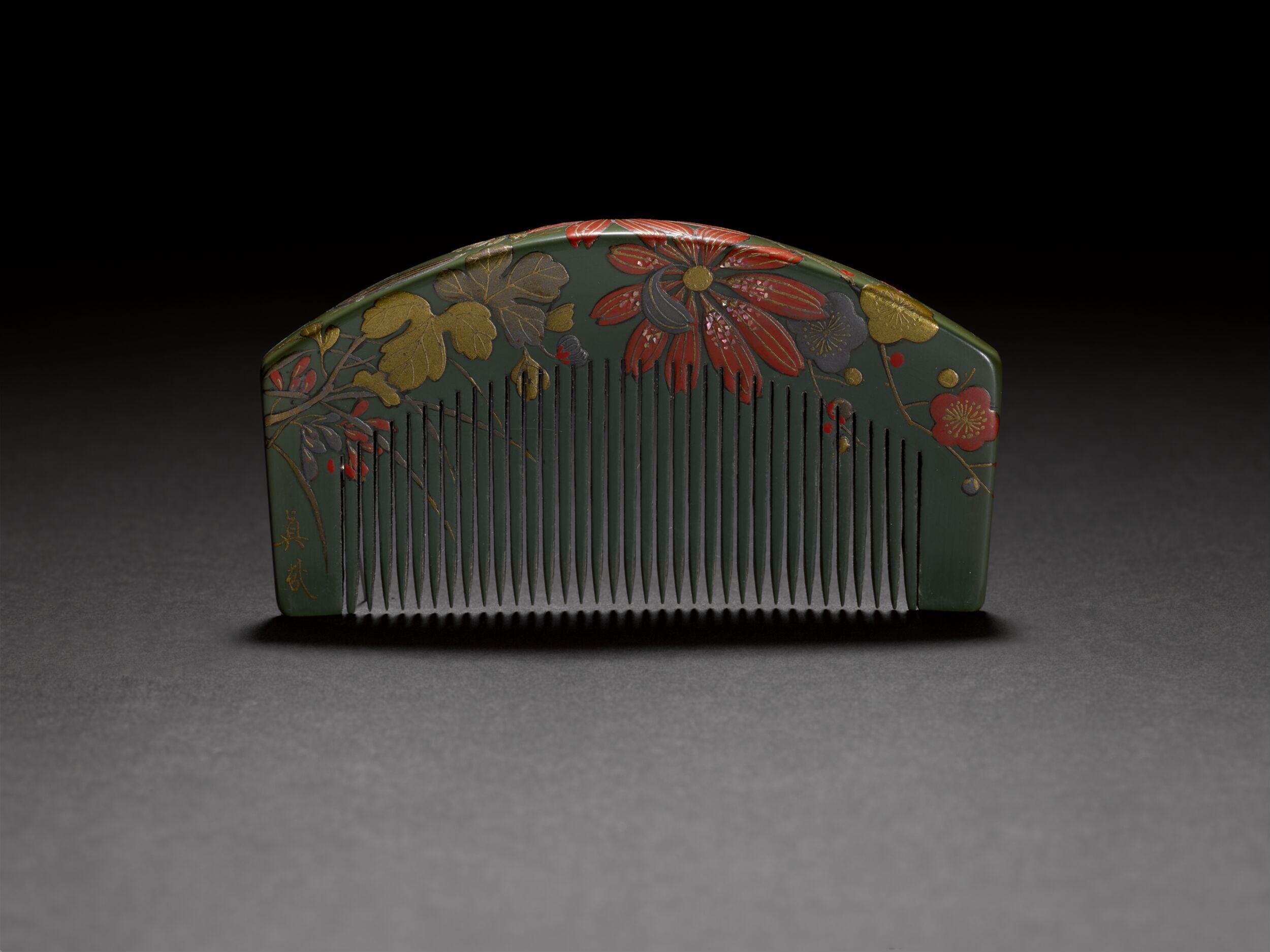
Untitled
1880 - 1895
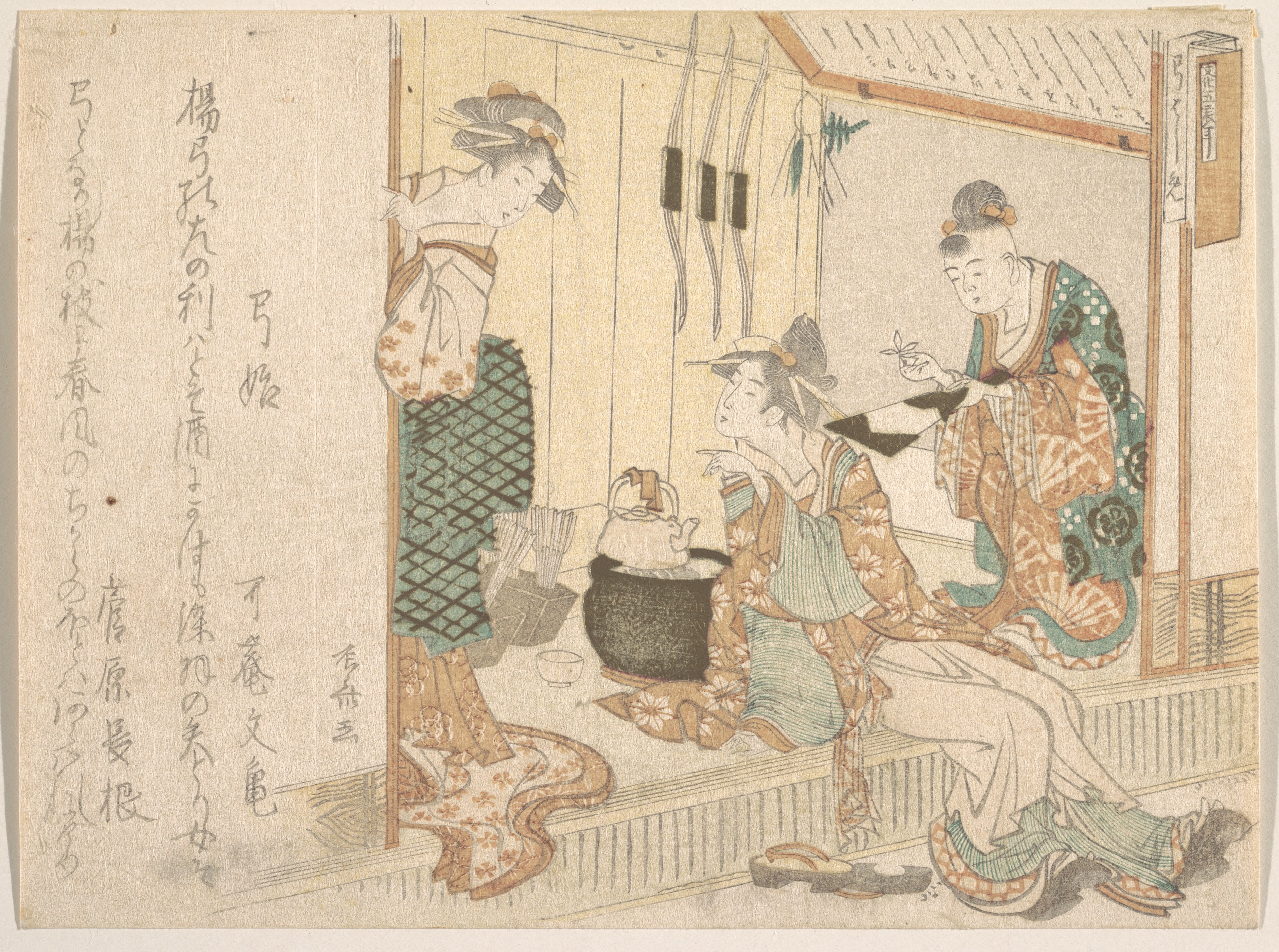
Two Young Ladies Having Tea Attended by Elderly Servant
Woodblock print (surimono); ink and color on paper
Frequently Asked Questions
Sea Bream (Tai) on Nabeshima Porcelain Dish, Sake Cup on Stand, and Painting of a Peony was created by Ryūryūkyo Shinsai (柳々居辰斎) in ca. 1820.