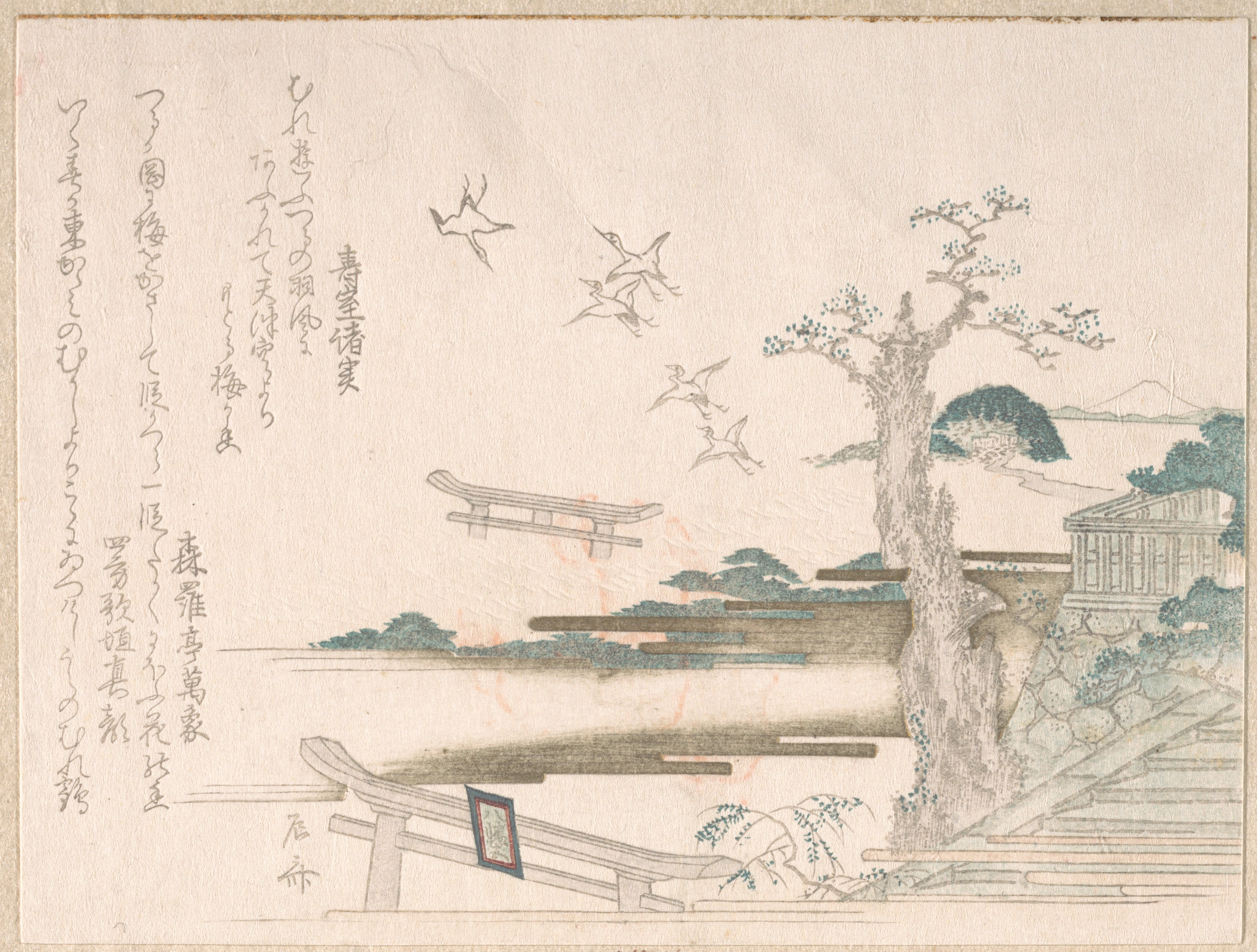
Spring Rain Collection (Harusame shū), vol. 2: Cranes at Tsurugaoka Hachimangō Shrine in Kamakura
- Date:
- 1810s
- Medium:
- Privately published woodblock prints (surimono) mounted in an album; ink and color on paper
- Source:
- Metropolitan Museum of Art
Description
Cranes at Tsurugaoka Hachimango Shrine in Kamakura belongs to volume 2 of the Spring Rain Collection (Harusame shu), a luxury album of surimono designed by Ryuryukyo Shinsai and held by the Metropolitan Museum of Art, dated to about 1810. The composition shows cranes within the precincts of Tsurugaoka Hachimango, the great shrine of Kamakura associated with the Minamoto clan and with sustained samurai patronage, making the choice of subject a tribute to both classical history and contemporary devotion. As a Hokusai school designer who had trained under Tawaraya Sori, Shinsai treats cranes with the calligraphic economy that the surimono format encouraged: the long necks and legs are drawn as confident lines, while the spread or folded wings are described in modulated tones that exploit the luxury inks and paper used for surimono printing. The shrine setting is sketched with restraint, perhaps suggested by a stone lantern, fence, or pine, so that the birds remain dominant and the place identifies itself through poetic association. Cranes carry well-established meanings of longevity and conjugal devotion in Japanese visual culture, and the kyoka verses originally accompanying the sheet would have linked these wishes to the New Year setting of the Harusame project. The Metropolitan's impression preserves the careful spacing and gentle palette characteristic of the album, allowing readers to study Shinsai's contribution to one of the period's most ambitious surimono compilations.
More Prints by Ryūryūkyo Shinsai
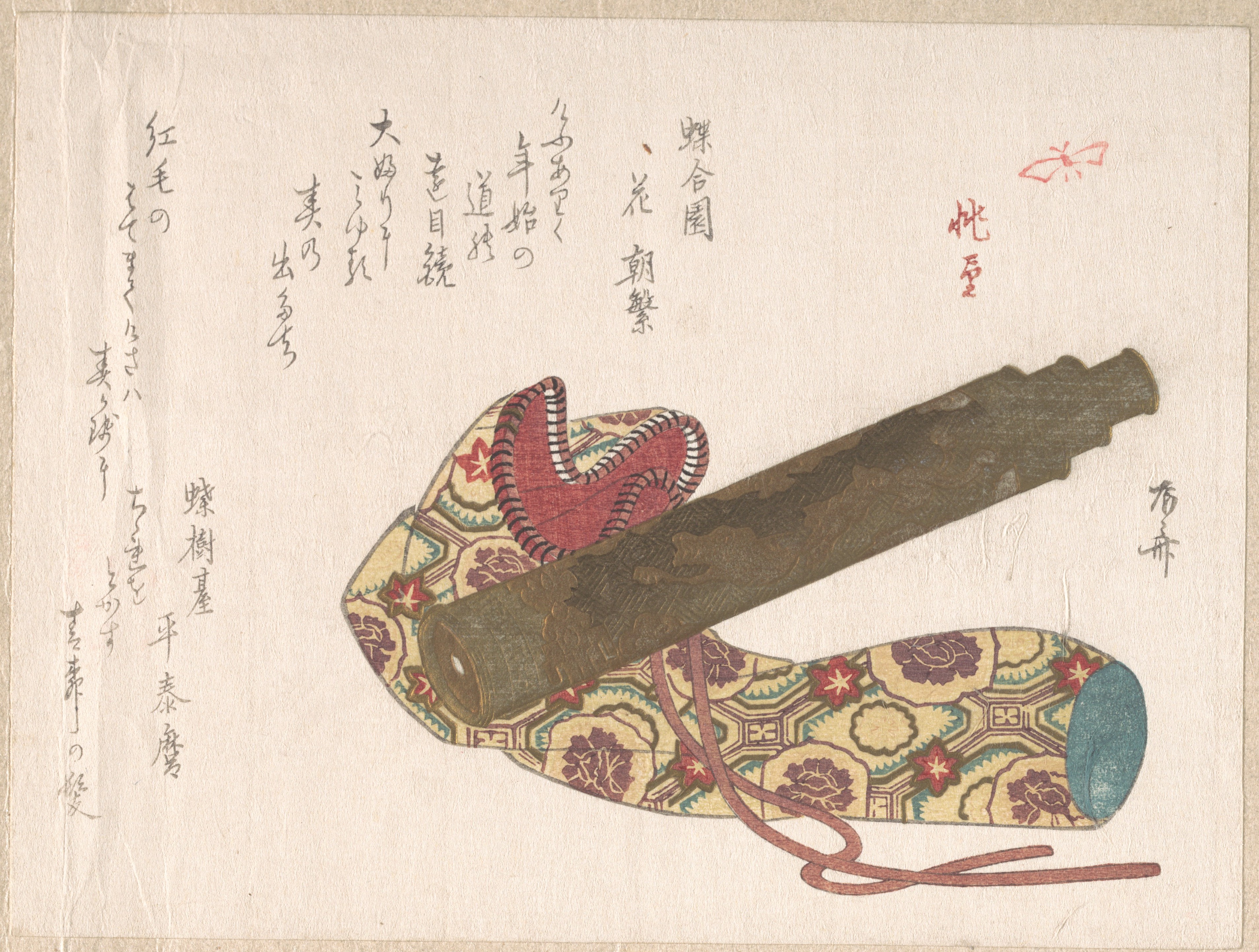
Telescope with Its Bag
19th century
Woodblock print (surimono); ink and color on paper
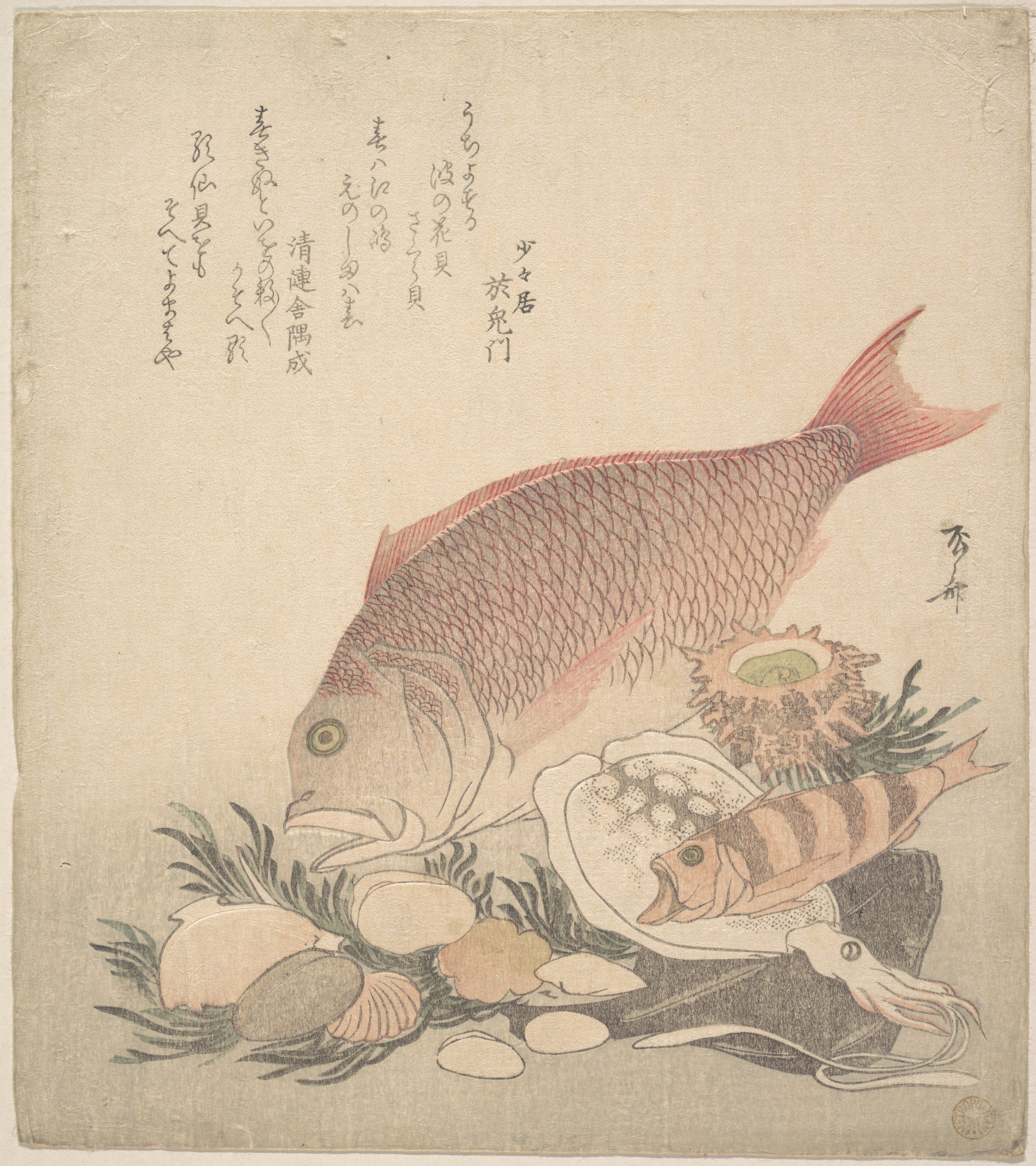
Large and Small Fish Swimming Among Shells and Moss at the Bottom of the Sea
ca. 1830
Woodblock print (surimono); ink and color on paper
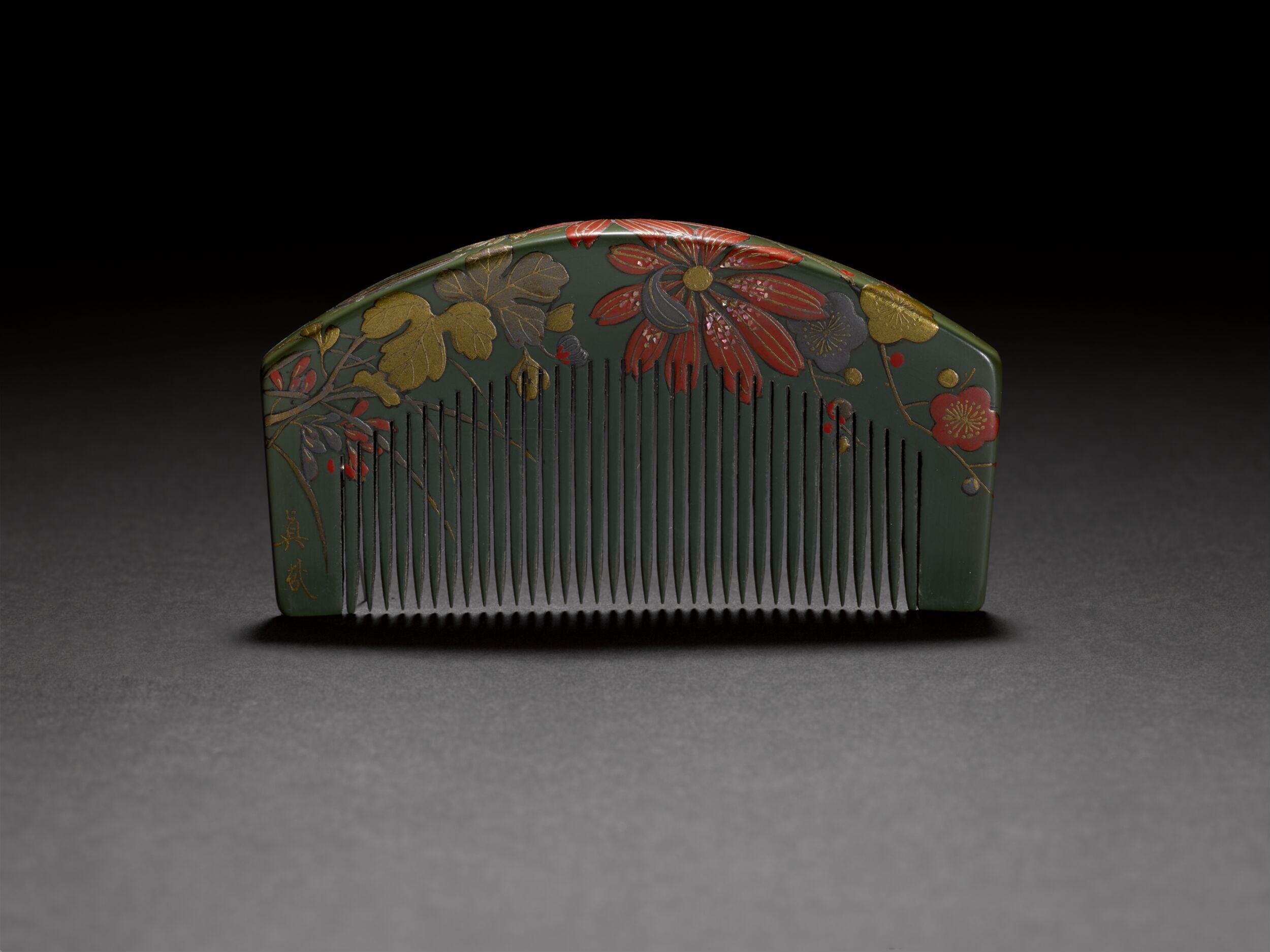
Untitled
1880 - 1895
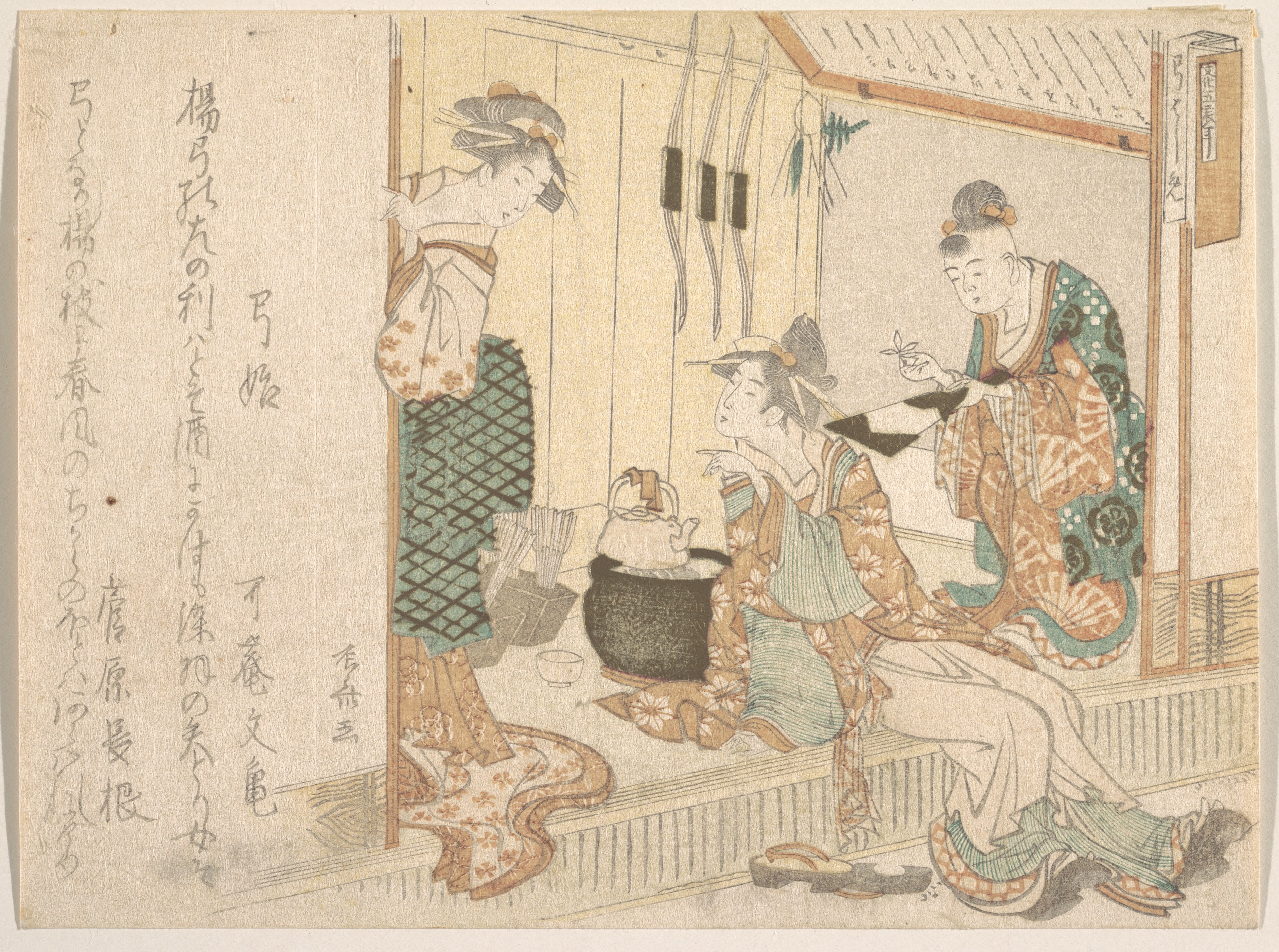
Two Young Ladies Having Tea Attended by Elderly Servant
Woodblock print (surimono); ink and color on paper
More Birds & Flowers Prints
Frequently Asked Questions
Spring Rain Collection (Harusame shū), vol. 2: Cranes at Tsurugaoka Hachimangō Shrine in Kamakura was created by Ryūryūkyo Shinsai (柳々居辰斎) in 1810s.
Spring Rain Collection (Harusame shū), vol. 2: Cranes at Tsurugaoka Hachimangō Shrine in Kamakura depicts birds & flowers, spring, and rain.