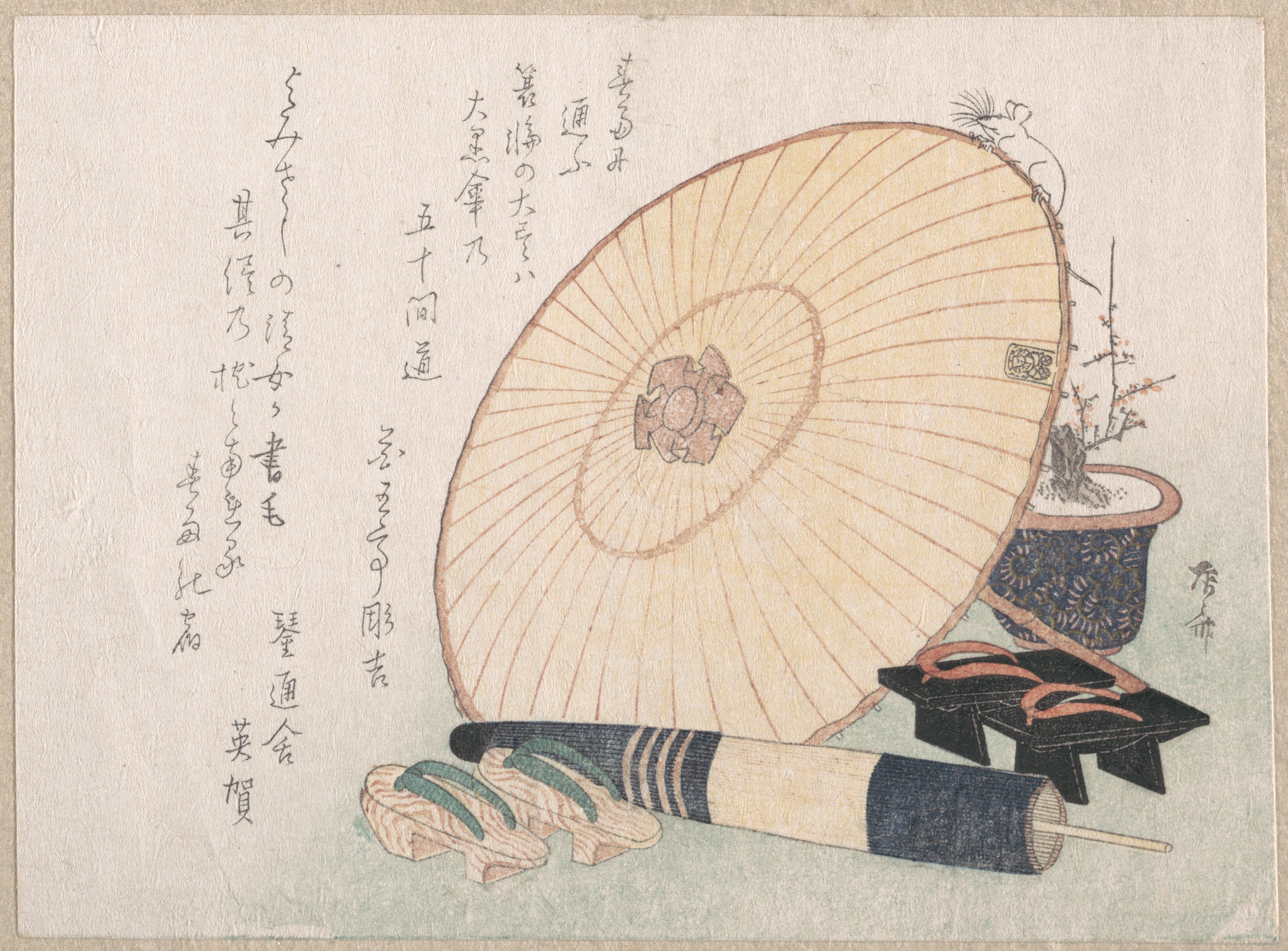
Umbrellas and Geta (Japanese Wooden Sandals)
- Date:
- probably 1816
- Medium:
- Part of an album of woodblock prints (surimono); ink and color on paper
- Source:
- Metropolitan Museum of Art
Description
Umbrellas and Geta (Japanese Wooden Sandals) is a surimono print by Ryuryukyo Shinsai in the Metropolitan Museum of Art, dated to about 1816. The composition gathers Japanese oiled-paper umbrellas and pairs of geta as a freestanding still life, an arrangement that reads simultaneously as an entry hall vignette and as a meditation on travel through changeable weather. Working in the Hokusai school's surimono tradition, Shinsai often chose subjects that registered the small material practices of Edo life, and few items spoke as directly to the rhythm of urban movement as umbrellas and clogs. The umbrellas are shown closed or partly opened, their ribs and oiled-paper surfaces marked by the careful linear control that distinguishes Shinsai's draftsmanship, while the geta are placed at angles that hint at recent or imminent use. Surimono printers exploited the textures of paper, wood, lacquer, and woven cord with metallic pigments and embossing, and the print's restrained palette typically focuses on browns and creams keyed to the natural materials. The kyoka poets who commissioned such surimono would have responded with verses on commuting through rainstorms, anticipating outings, or the social significance of the household entryway. The work belongs to Shinsai's mature still-life mode, in which the Hokusai school's interest in objects of daily use achieves a quiet, almost portrait-like respect for things.
More Prints by Ryūryūkyo Shinsai
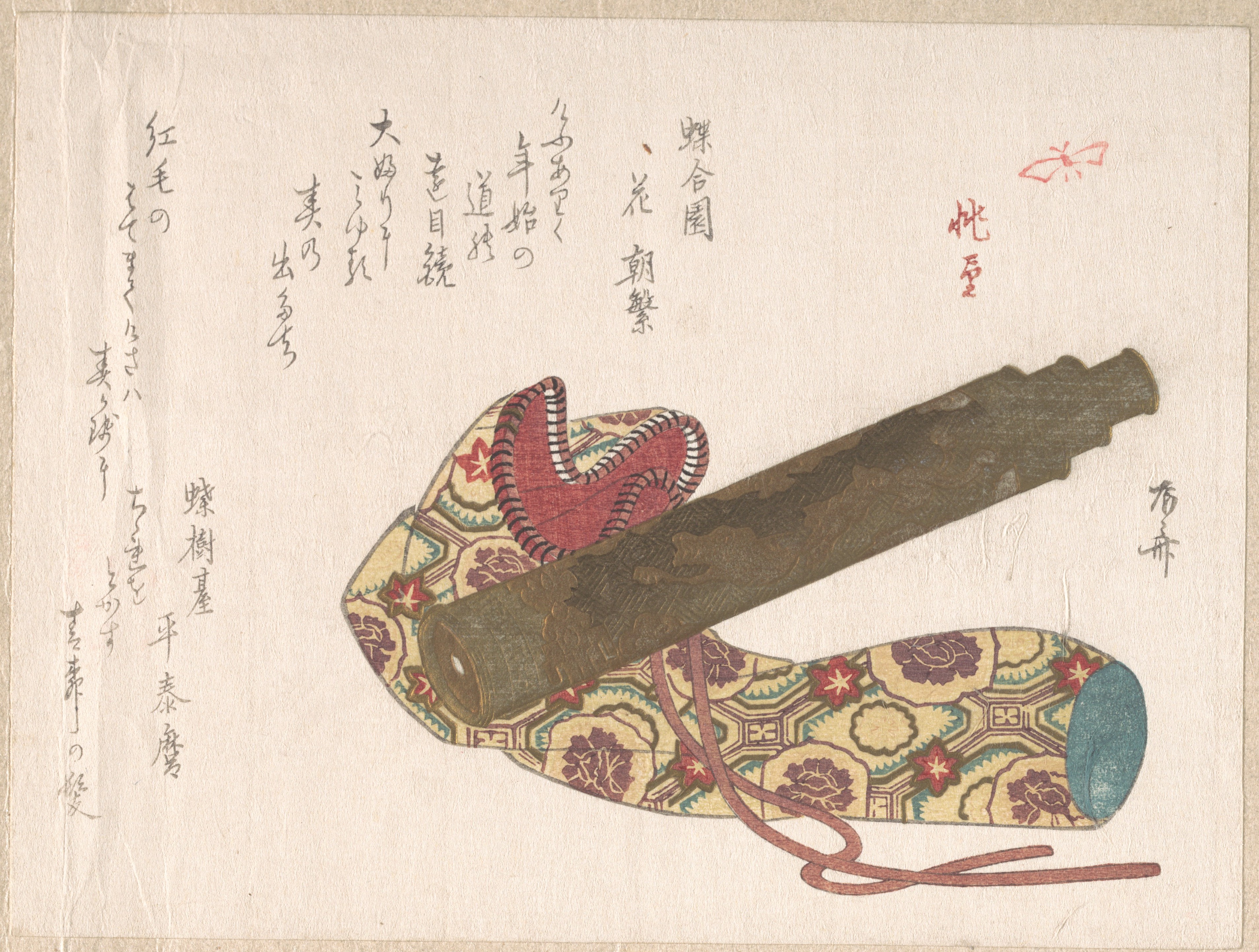
Telescope with Its Bag
19th century
Woodblock print (surimono); ink and color on paper
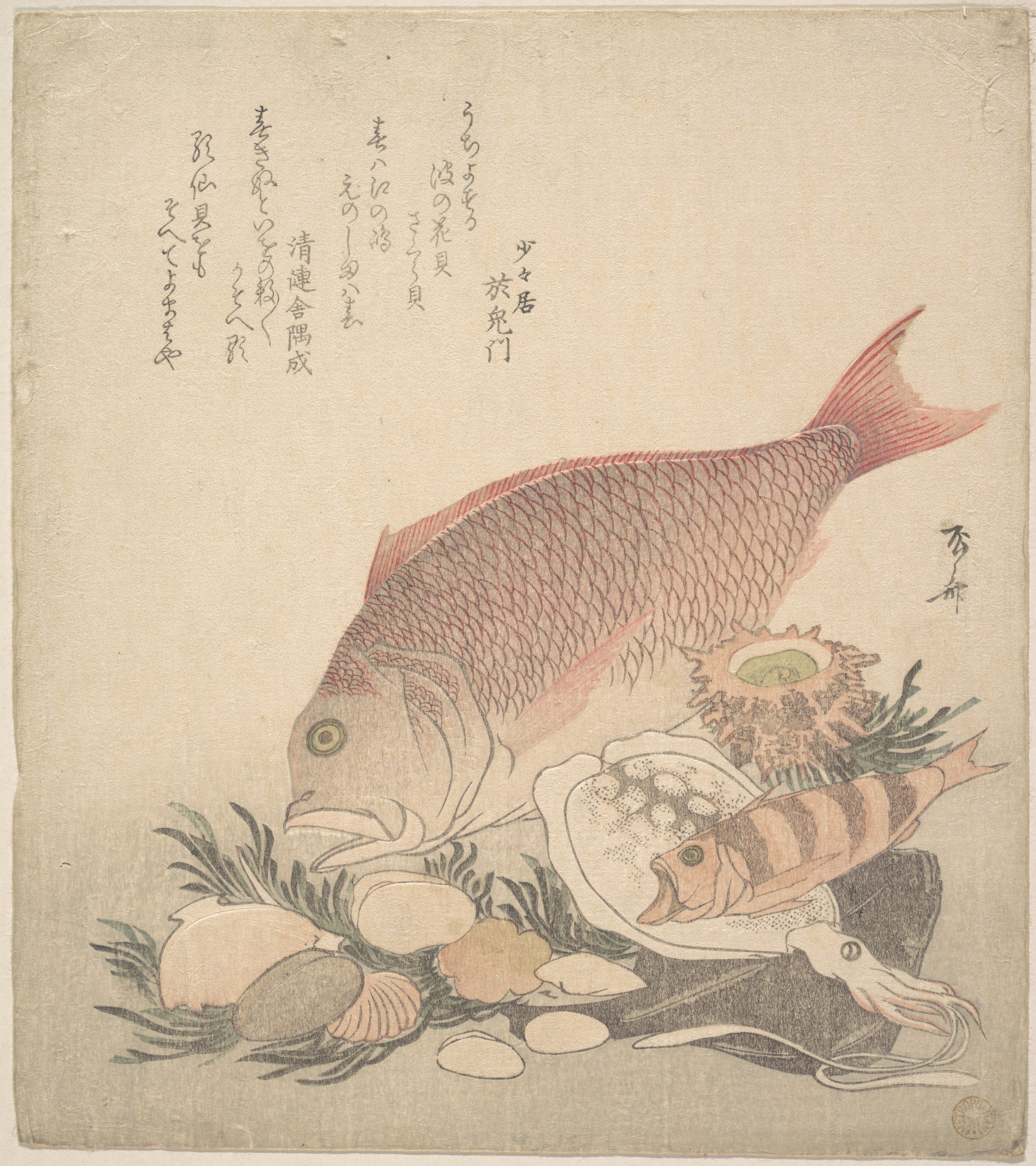
Large and Small Fish Swimming Among Shells and Moss at the Bottom of the Sea
ca. 1830
Woodblock print (surimono); ink and color on paper
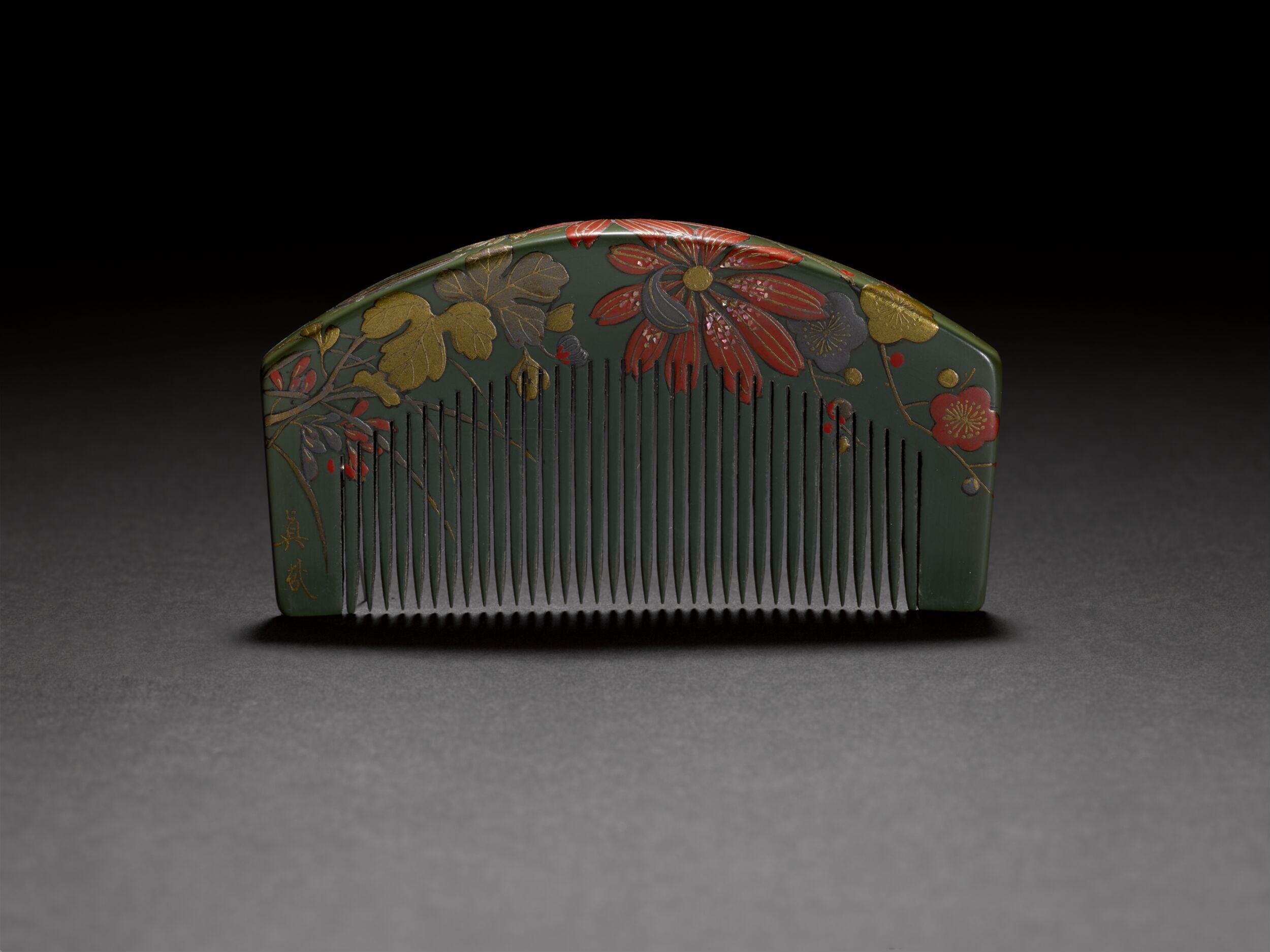
Untitled
1880 - 1895
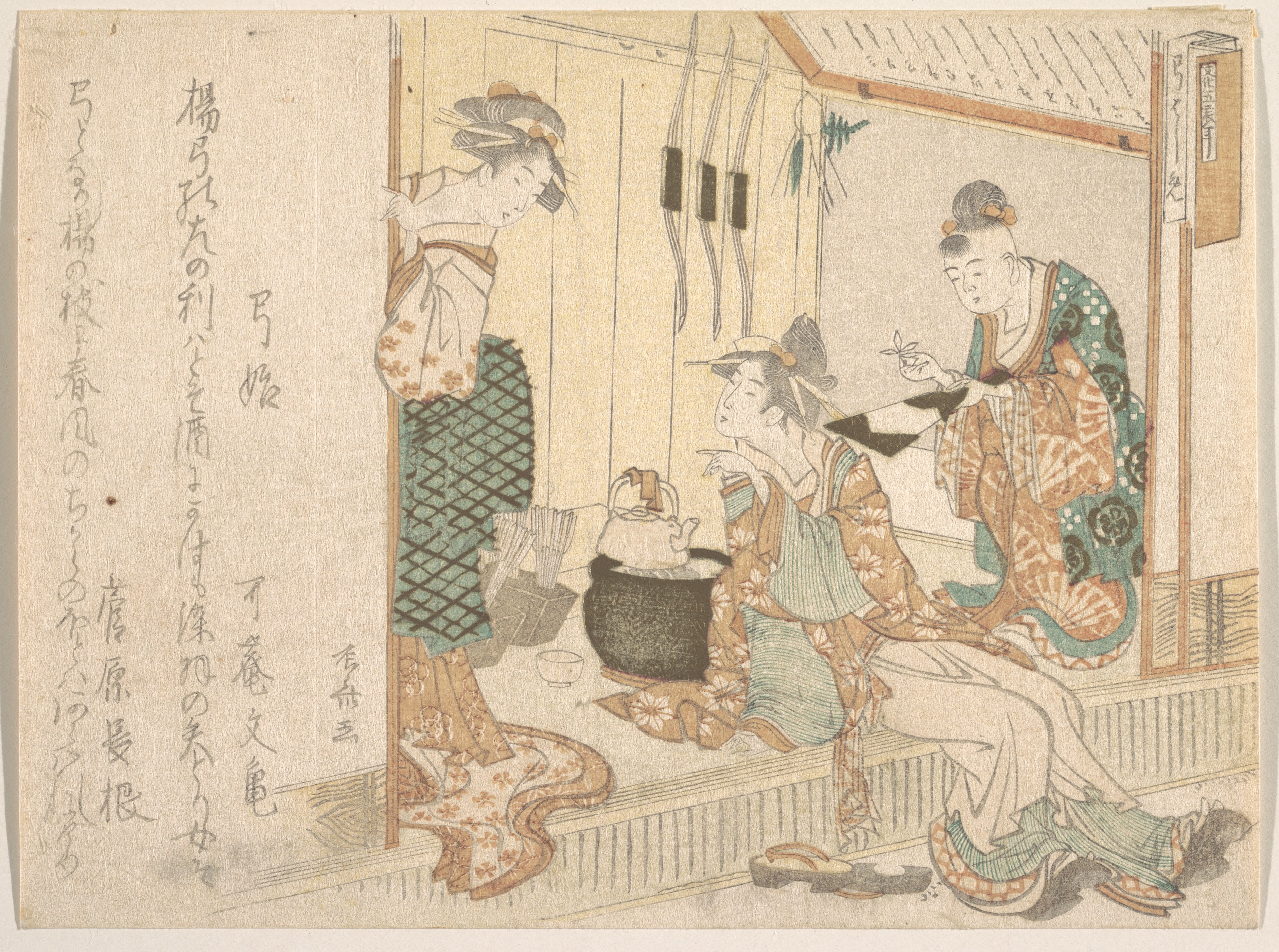
Two Young Ladies Having Tea Attended by Elderly Servant
Woodblock print (surimono); ink and color on paper
Frequently Asked Questions
Umbrellas and Geta (Japanese Wooden Sandals) was created by Ryūryūkyo Shinsai (柳々居辰斎) in probably 1816.