
Kurenai, Red Flower
- Source:
- ukiyo-e.org
Description
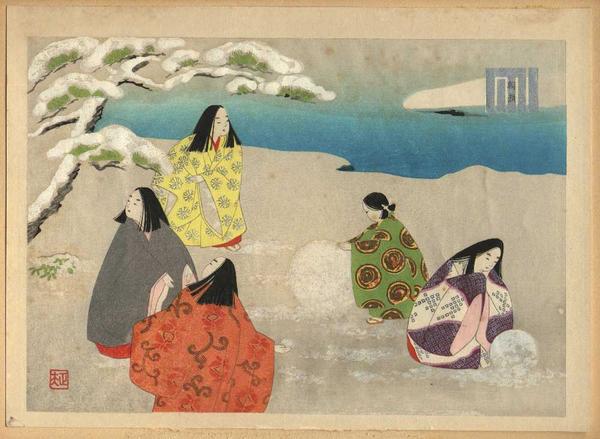
Kurenai, Red Flower is a shin-hanga bijin-ga print designed by Sentaro Iwata (1901-1974) and published in Tokyo by Watanabe Shozaburo, the firm that defined the commercial and aesthetic standards of the early- to mid-twentieth-century shin-hanga movement. The title kurenai refers to a deep crimson-red dye historically extracted from safflower (benibana) and prized in Japanese textile and cosmetic traditions, and the print pairs that chromatic association with a portrait of a refined young woman. Iwata's design centers on the sitter's face and the patterned fabric of her kimono, building the image through carefully balanced areas of warm red against neutral grounds, a palette ideally suited to the layered, transparent inks of traditional Japanese woodblock printing. As a Watanabe Shozaburo bijin-ga production, Kurenai, Red Flower passed through the hands of a publisher, a designer, a carver, and a printer, each contributing specialized skill to the final impression. Iwata, a student of Kaburaki Kiyokata, brought to the design a foundation in nihonga painting and a measured, contemplative approach to female portraiture that distinguished his work from the more theatrical bijin-ga of contemporaries such as Ito Shinsui. The shin-hanga movement promoted by Watanabe deliberately revived the four-way collaborative system of Edo-period ukiyo-e while updating subjects, drawing technique, and printing finesse for a modern audience that included international collectors. Sentaro Iwata's bijin prints from this collaboration are valued today for their poised compositions, restrained sensuality, and the quiet seasonal or emblematic motifs implied by their titles. Kurenai, Red Flower is documented through ukiyo-e.org, which aggregates institutional and collector records of Japanese prints and provides a reference image for ongoing research into Iwata's published output.
More Prints by Sentaro Iwata

More Birds & Flowers Prints

Featured in Collections
Curated cross-cuts that include this print.
Frequently Asked Questions
Kurenai, Red Flower was created by Sentaro Iwata (岩田専太郎).
Kurenai, Red Flower depicts birds & flowers.