Kegon
- Date:
- 1970
- Medium:
- Brush Painting
- Image courtesy of
- Artsy
Description
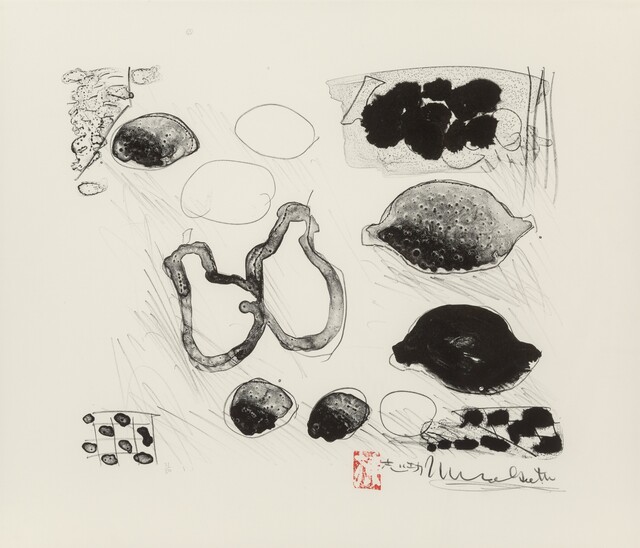
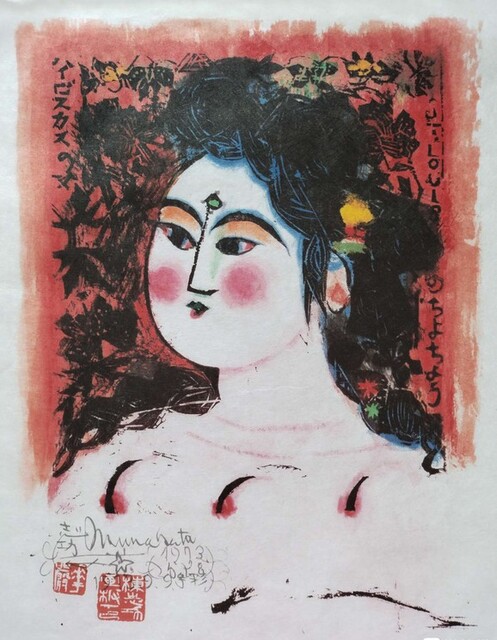
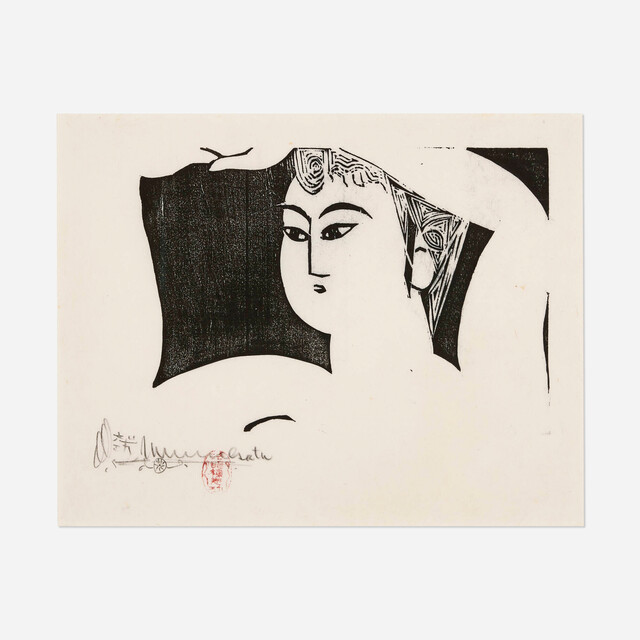
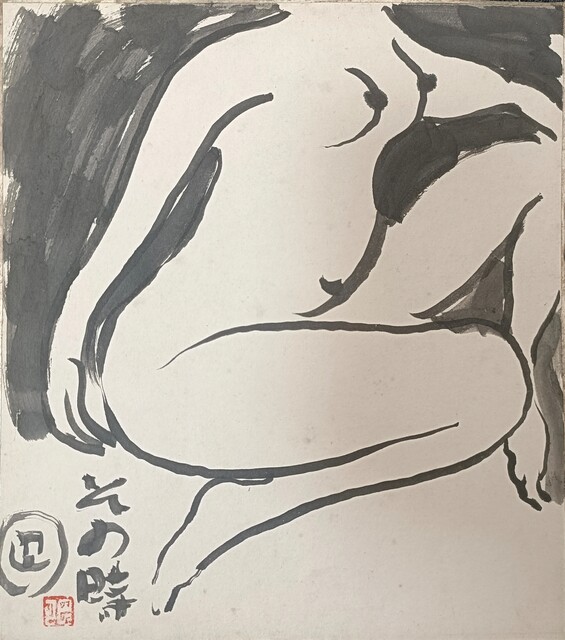
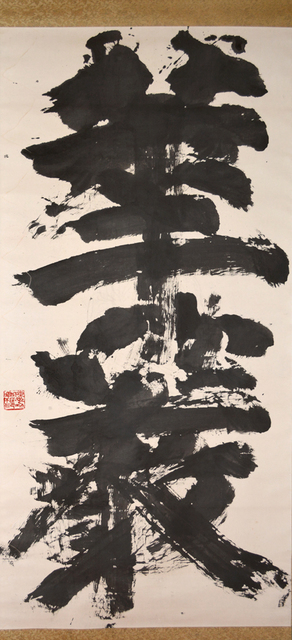
Kegon is a Japanese woodblock print by Shiko Munakata, dated 1970 and produced in the final phase of the artist's celebrated career. Born in Aomori in 1903, Munakata had emerged from the prewar [sosaku-hanga](/glossary/sosaku-hanga) movement as one of the most singular voices in twentieth-century Japanese printmaking, winning the international prize at the 1955 Sao Paulo Biennial and the grand prize at the 1956 Venice Biennale, and combining a virtuoso command of carved black-and-white woodblock with a deep engagement with Pure Land Buddhism, Zen, and the visionary religious imagery of medieval Japan. The title Kegon refers to the Avatamsaka, or Flower Garland, Sutra, one of the central scriptures of East Asian Mahayana Buddhism and the foundation of the Kegon school of Japanese Buddhism that had its historical seat at Todaiji in Nara. Munakata was profoundly engaged with Buddhist subjects throughout his career, and his Kegon imagery typically gathers bodhisattvas, devotees, and divine emblems into the dense, swarming black-and-white compositions that became his recognizable signature, sometimes hand-colored on the verso so that delicate tints register through the fibrous paper. His celebrated identification of his work as itaga, the work of the board itself, gave the medium a near-spiritual standing in his practice, and a Kegon subject of this kind belongs naturally to the body of late prints in which the religious motivation of his art reached its fullest expression. The impression discussed here is documented through the Artsy listing on the secondary market (https://www.artsy.net/artwork/shiko-munakata-kegon), which preserves a record of the design under Munakata's name. The print marks one of the last great Buddhist subjects of his career, made only a few years before his death in 1975.