Biography
Shiko Munakata (棟方志功, 1903–1975) was the most internationally celebrated sosaku-hanga artist and one of the towering figures of twentieth-century Japanese art. His vigorous, boldly carved woodblock prints — which he preferred to call "board prints" (hanga) rather than woodcuts — combined Buddhist iconography, Japanese folk aesthetics, and a raw expressive energy that earned him the Grand Prize for printmaking at the 1956 Venice Biennale, bringing unprecedented global recognition to the Japanese creative print movement.
Born on September 5, 1903, in Aomori, a remote city in northern Honshu known for its harsh winters and vibrant Nebuta festival, Munakata grew up in a blacksmith's family of modest means. From an early age he showed artistic aptitude, but his path to art was indirect. As a young man he was profoundly influenced by a reproduction of one of Vincent van Gogh's sunflower still lifes — an encounter that proved transformative. Munakata declared his ambition to become "the van Gogh of Aomori" and moved to Tokyo in 1924 to pursue oil painting.
In Tokyo, Munakata initially struggled as a painter, submitting works to the government-sponsored Teiten exhibition and facing repeated rejection before one of his oil paintings was finally accepted in 1928. His work was accepted at the Kokugakai (National Painting Society) exhibition in 1930, and it was there, at the Kokugakai's spring exhibition in 1935, that the folk-art theorist Yanagi Soetsu — founder of the mingei (folk craft) movement — encountered Munakata's prints and bought twenty-five of them. Yanagi recognized in Munakata's work a raw creative power that aligned with mingei ideals of artisanal authenticity and direct expression, and his patronage drew the artist into the mingei circle and deepened his commitment to the woodblock medium.
Munakata took up woodblock printmaking in the late 1920s and quickly developed the distinctive style that would define his career. Working with fierce intensity — often carving so close to the block that his nose nearly touched the surface, a consequence of his severe nearsightedness — he attacked the wood with gouges and chisels, creating images of extraordinary vitality. His technique was deliberately rough, embracing the grain and texture of the wood rather than fighting against it. He carved rapidly, almost violently, treating the woodblock not as a medium to be mastered but as a collaborator in the creative act.
The 1930s saw Munakata's emergence as a major force in the sosaku-hanga movement. During these years he turned increasingly to Buddhist subject matter, producing ambitious large-scale print sets and deepening his engagement with the imagery of bodhisattvas, guardians, and celestial beings that would remain central to his artistic vision.
His masterpiece belongs to the end of that decade: Shaka Judai Deshi (Ten Great Disciples of the Buddha), completed in 1939 and widely considered his greatest achievement. The series depicts the Buddha's ten principal followers as monumental, icon-like figures carved with broad, sweeping strokes that convey both spiritual authority and human warmth. Each figure fills the picture plane with a commanding physical presence, rendered in Munakata's characteristic style of bold outlines, minimal interior detail, and expressive distortions of form.
Another signature technique was hand-coloring applied to the reverse of the printed sheet, so that pigment seeped through the thin Japanese paper to create soft, luminous color effects on the front. This method allowed Munakata to add color without obscuring the power of his black-and-white carving, and prints featuring this back-coloring are among his most prized by collectors.
The mid-1950s marked the height of Munakata's international recognition. In 1955 he took first prize at the São Paulo Bienal in Brazil, and the following year he was awarded the Grand Prize for printmaking at the 1956 Venice Biennale — an honor that catapulted him to international fame and validated the sosaku-hanga movement's claim that Japanese printmaking could be a vehicle for individual artistic expression on par with any Western art form. He exhibited extensively in Europe and the United States in the years that followed.
Despite his international acclaim, Munakata remained deeply rooted in Japanese culture and aesthetics. He drew inspiration from Aomori's folk traditions, Buddhist scripture, the Noh theater, and classical Japanese poetry. He maintained a prolific output of prints, paintings, calligraphy, and illustrated books throughout the 1960s and early 1970s — among them Munakata's Tokaido, a modern reinterpretation of Hiroshige's Fifty-three Stations of the Tokaido — and his studio in Kamakura became a gathering place for artists and collectors.
Munakata's eyesight, never strong, deteriorated further in his later years, yet he continued to work with undiminished energy. In 1970 he was awarded the Order of Culture (Bunka-kunsho), one of Japan's highest cultural honors. He died on September 13, 1975, in Tokyo, at the age of seventy-two.
His works are held in major collections worldwide, including the Museum of Modern Art in New York, the British Museum, the Art Institute of Chicago, the National Museum of Modern Art in Tokyo, and the Munakata Shiko Memorial Museum in Aomori. Munakata's influence on subsequent generations of Japanese printmakers has been profound, demonstrating that the woodblock medium could accommodate the most personal and expressive artistic visions.
Key Facts
- Active Period
- 1903–1975
- Nationality
- 🇯🇵Japan
- Movement
- Sōsaku-hanga
- Works Indexed
- 140
Frequently Asked Questions
Shiko Munakata (棟方志功, 1903–1975) was the most internationally celebrated sosaku-hanga artist and one of the towering figures of twentieth-century Japanese art. His vigorous, boldly carved woodblock prints — which he preferred to call "board prints" (hanga) rather than woodcuts — combined Buddhist iconography, Japanese folk aesthetics, and a raw expressive energy that earned him the Grand Prize for printmaking at the 1956 Venice Biennale, bringing unprecedented global recognition to the Japanese creative print movement.
Shiko Munakata was active from 1903 to 1975. They were associated with the Sōsaku-hanga movement.
Shiko Munakata's work was shaped by the Sōsaku-hanga tradition in Japanese woodblock printmaking. Sōsaku-hanga: ## What is sōsaku-hanga? Sōsaku-hanga (創作版画, "creative prints") was a twentieth-century Japanese print movement defined by a single commitment: the artist must design, carve, and print every work alone.
Shiko Munakata's prints frequently feature religious, figures, mythology, temples & shrines, abstract, landscapes.
Original prints by Shiko Munakata can be found in collections including Art Institute of Chicago, Art Gallery of Greater Victoria, Harvard Art Museums, Scholten Japanese Art.
Series by Shiko Munakata
The Tale of the Auklet (Uto Hanga-kan)
5 prints
Two Bodhisattva and Ten Great Disciples of Sakyamuni (Nibosatsu Shaka judai deshi)
1 print
Scenes of the Season
1 print
Two Bodhisattva and Ten Great Disciples of Buddha Sakyamuni (Nibosatsu Shaka judai deshi)
8 prints
Ten Great Disciples of Shaka
1 print
Story of the Cormorant
1 print
Two Bodhisattvas and Ten Great Disciples of Buddha Sakyamuni
2 prints
Four Seasons
1 print
The Heart Sutra, Second Series (Tsuikai shingyo-sho)
1 print
Kegon-fu
2 prints
Blue Sky of Spring (Seitensho hanga saku)
1 print
Munakata's Tokaido (Tokaido Munakata hanga)
2 prints
Pantheon of the Gandavyuha Sutra (Kegon-fu)
3 prints
Calendar in the Mood of the Tea Ceremony
1 print
Ten Great Disciples of the Buddha Sakyamuni
1 print
Woodblock Prints by Shiko Munakata (140)
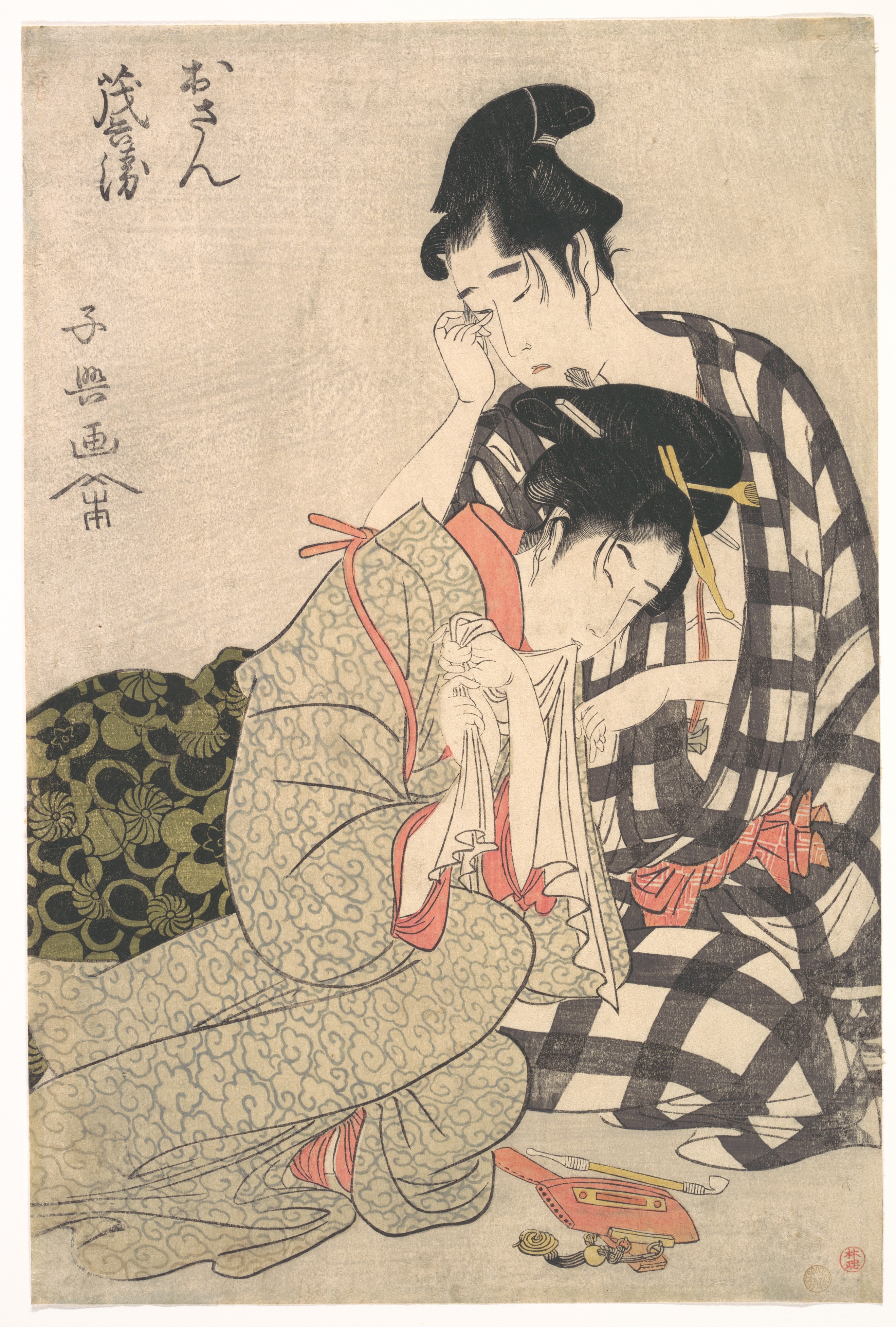
Disconsolate Lovers
ca. 1800
Woodblock print
Rabbit and Fish
spring 1855
Woodblock print

Self Portrait
20th century
Woodblock print; ink on paper
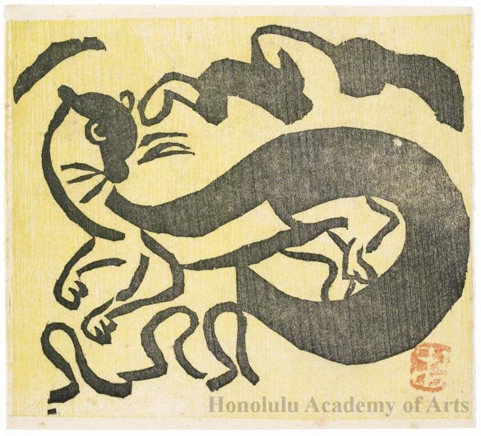
Weasel
c. 1920s
Woodblock print
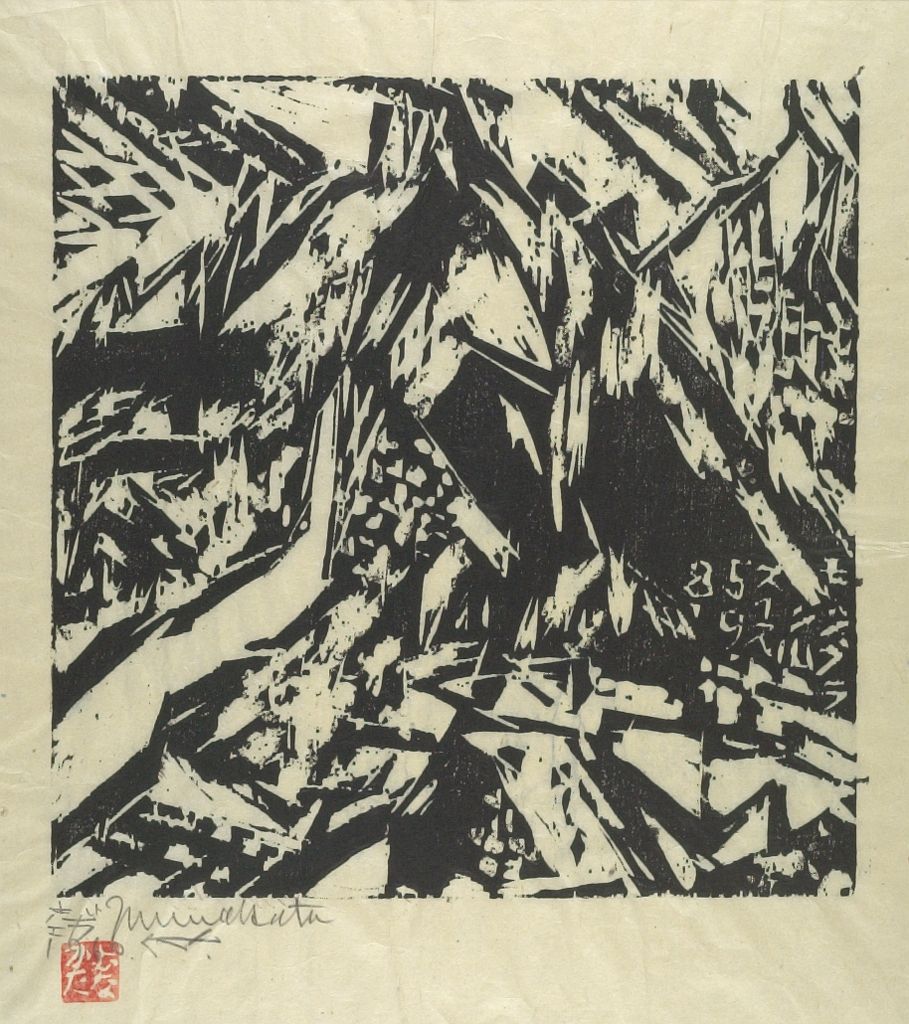
Mt. Blanc, Shôwa period, dated 1960
Shôwa period, 1926-1989
Woodblock print
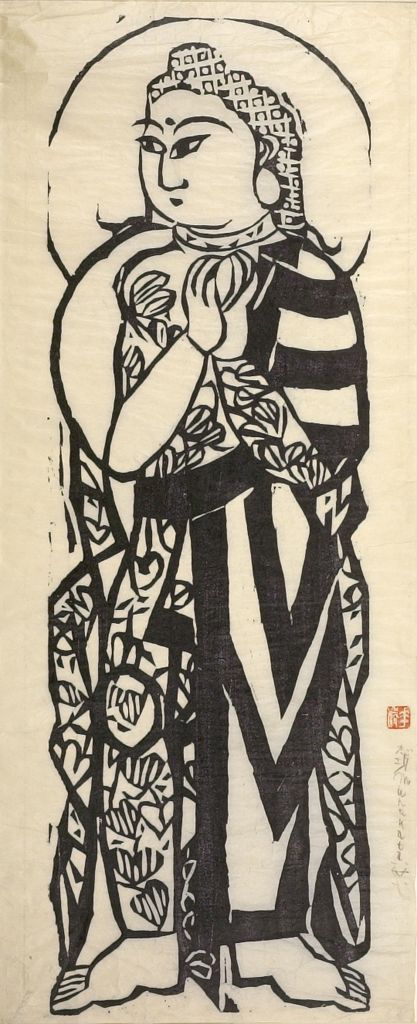
Bodhisattva Manjusri (Monju bosatsu no saku), from the series Ten Great Disciples of the Buddha Sakyamuni (Shaka jûdai deshi), Shôwa period, undated (block carved 1948)
Shôwa period, 1926-1989
Woodblock print
Portrait of Munakata Shikô (1905-1975), Shôwa period, dated 1968
Shôwa period, 1926-1989
Woodblock print
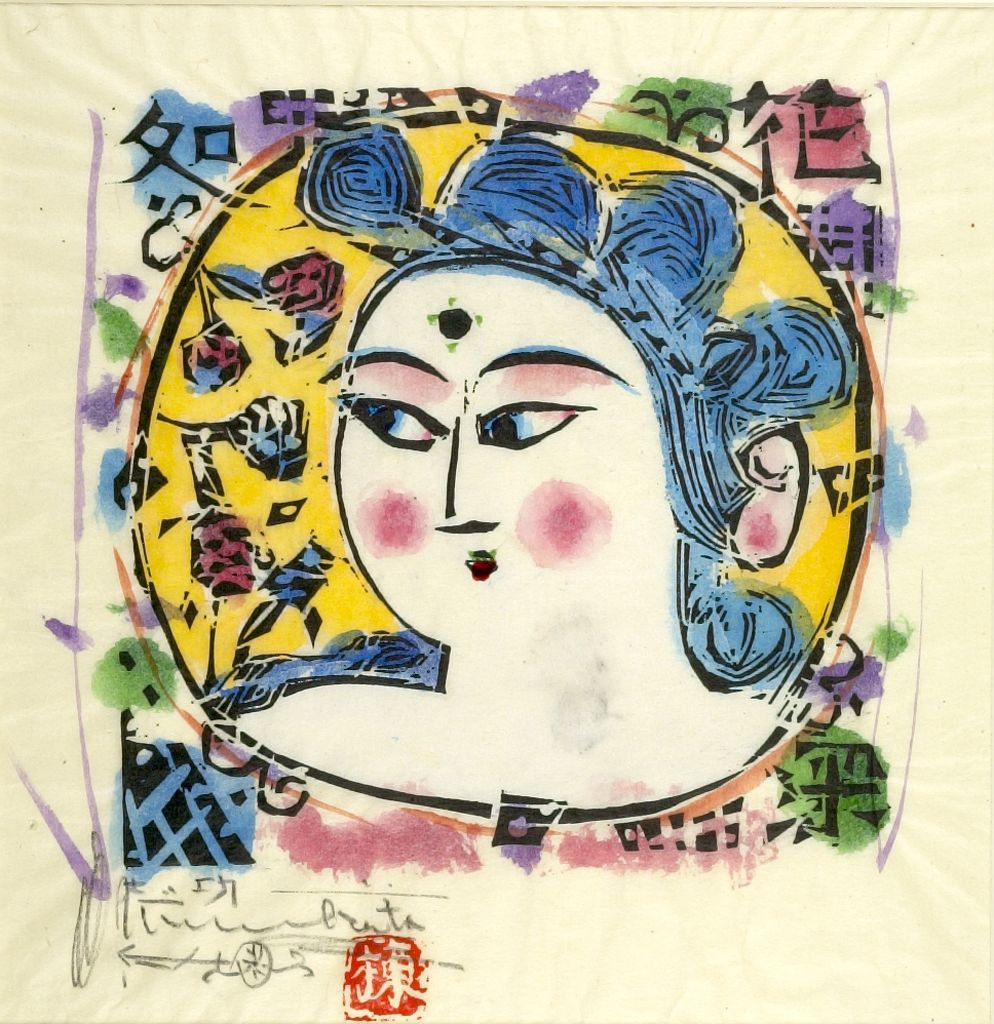
Korin, Shôwa period,
Shôwa period, 1926-1989
Woodblock print
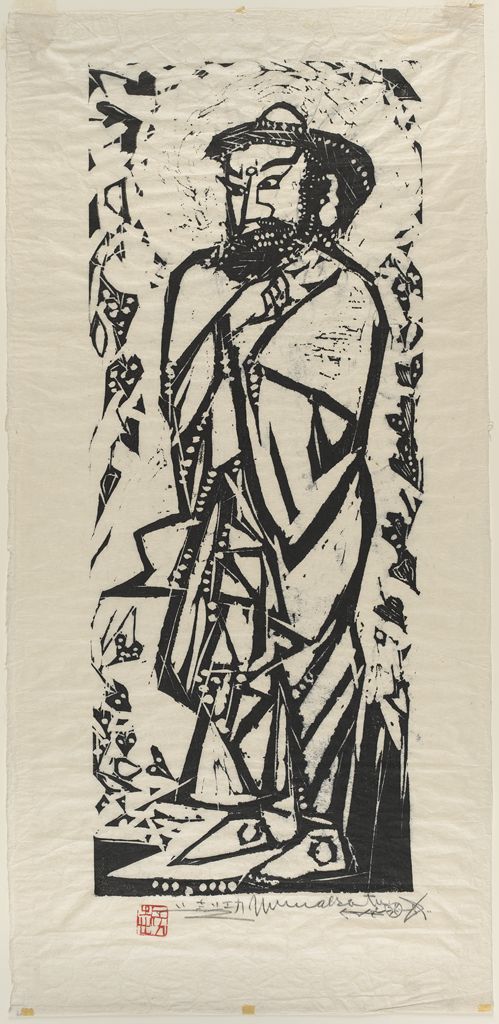
April: Sakyamuni, from the series Calendar in the Mood of the Tea Ceremony (Cha-in jûnikagetsu hangasaku), Shôwa period, dated 1956
Shôwa period, 1926-1989
Woodblock print
Untitled (Seated Nude Female with Birds)
1930-1974
Woodblock print
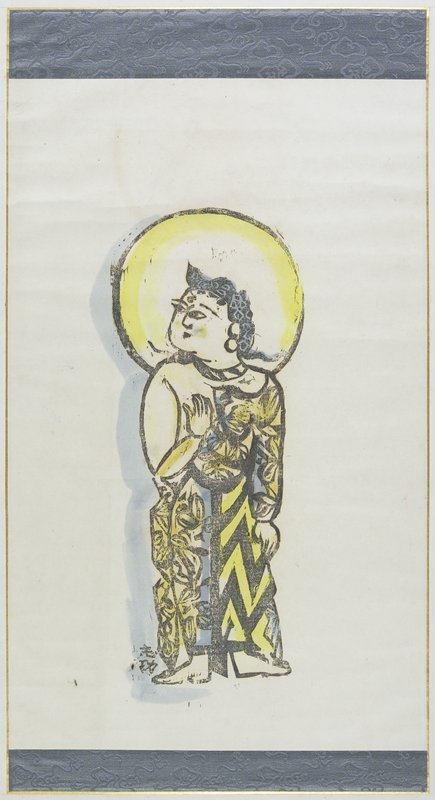
(Kwannon Goddess)
1930-1974
Woodblock print

The Night Visit, from the series "Story of the Cormorant"
About 1938
Woodblock print

Manjusri (Monju Bosatsu), from the series "Pantheon of the Gandavyuha Sutra (Kegon-fu)"
1936
Woodblock print

Thunder God (Raijin) from the series "Pantheon of the Gandavyuha Sutra (Kegon-fu)"
1936
Woodblock print
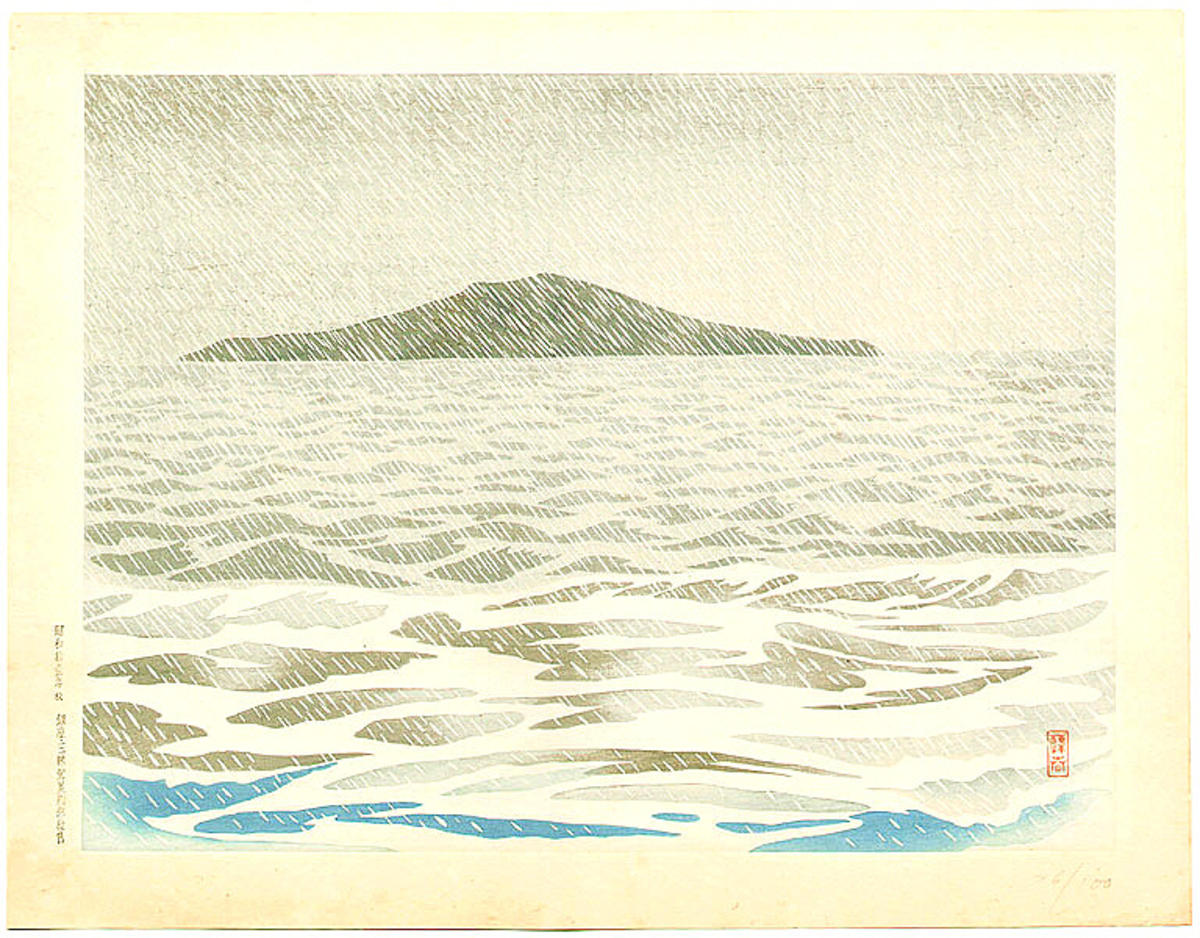
Squall over the Ocean
1936
Woodblock print

Vairocana (Dainichi Nyorai), from the series Kegon-fu
1937
Woodblock print

Yaksa (Yasha-o), from the series Kegon-fu
1937
Woodblock print
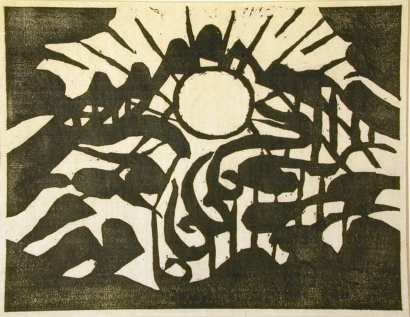
Hisshutsu
1937
Woodblock print
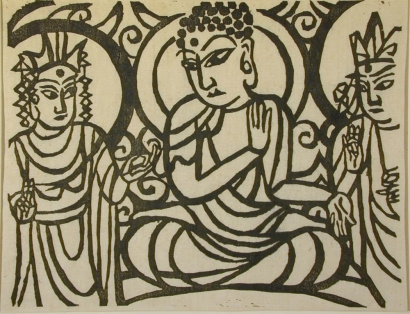
Amida Nyorai (Amitabha)
1937
Woodblock print
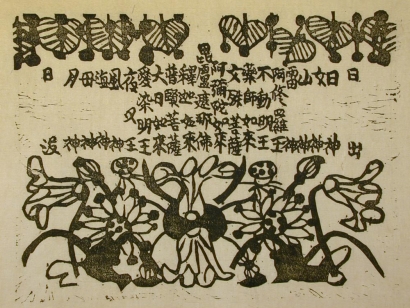
Kegon Kyo
1937
Woodblock print
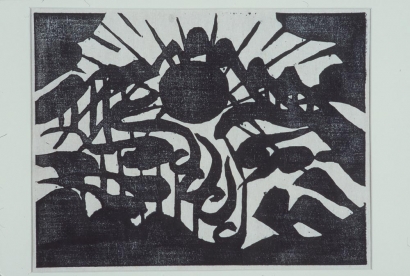
Nichibotsu (Sunset)
1937
Woodblock print
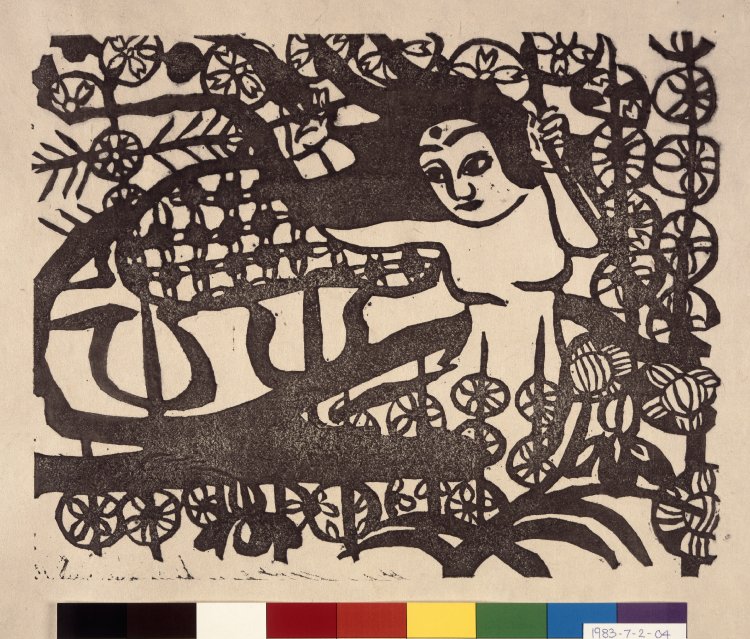
Joshin (Goddess) / Kegonpu (Record of the Kegon Sutra)
1937
Woodblock print
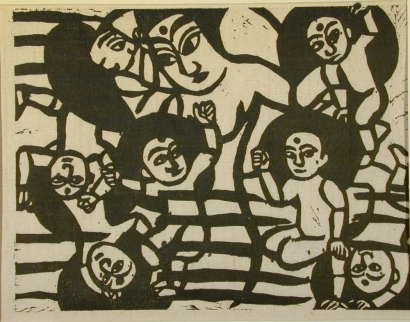
Boshin
1937
Woodblock print

Shaka Nyorai
1937
Woodblock print