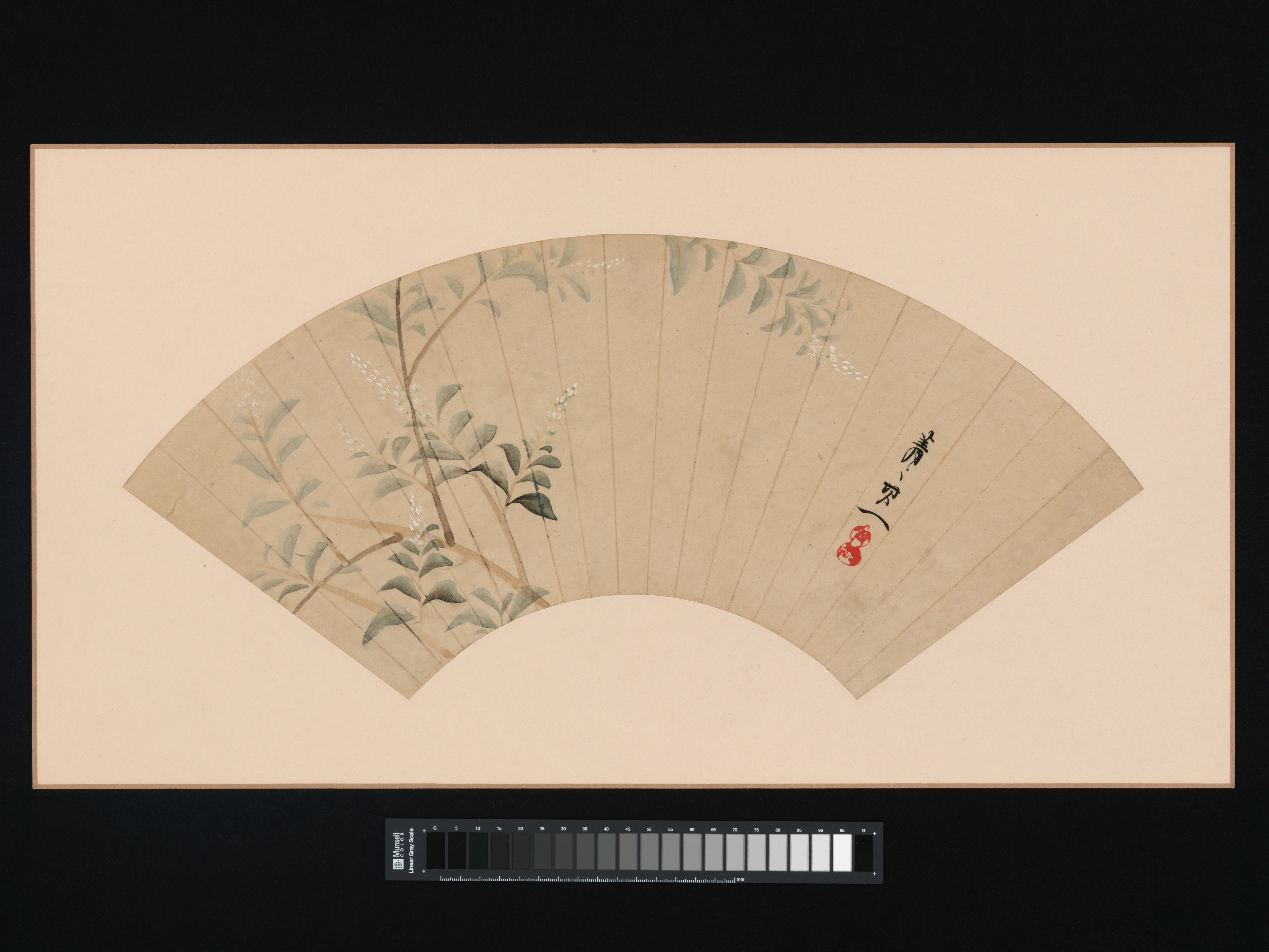
Bush Clover
- Date:
- Early 19th century
- Medium:
- Folding fan mounted as an album leaf; ink and color on paper, framed
- Source:
- Metropolitan Museum of Art
Description
Bush Clover is a folding fan mounted as an album leaf, executed in ink and color on paper and held by the Metropolitan Museum of Art. The work belongs to the format of the painted fan, one of the standard small-scale formats of Edo painting, in which a curved arc of paper is decorated in a way that addresses both the practical use of the object as a fan and the eventual likelihood that the design will be remounted as an album leaf or framed picture once its working life ends.
The composition takes bush clover (hagi), an autumn flowering plant celebrated in classical Japanese poetry as one of the seven autumn grasses, and arranges sprays of its slender stems, small leaves, and small purple-red blossoms across the fan's curved surface. The asymmetric organization of the design takes advantage of the fan's natural geometry, with the foliage rising from one side and crossing toward the opposite edge in a single sweeping movement. The Rinpa interest in the abstract pattern of natural form finds an ideal subject in the bush clover's delicate, repeated structure of small leaves on slender stems.
Kiitsu's handling combines crisp brush drawing for the stems and the leaf outlines with softer gradations of pigment for the colored areas, demonstrating his command of the small-format conventions of late-Edo painting and his ability to translate the Rinpa decorative idiom across scales. The fan stands as an intimate example of the artist's work and connects him to the broader culture of seasonal poetry and seasonal imagery that defined refined Edo taste.
More Prints by Suzuki Kiitsu

Offering Table Containing the Seals of Suzuki Kiitsu
1854
Hanging Scroll; ink and colors on paper
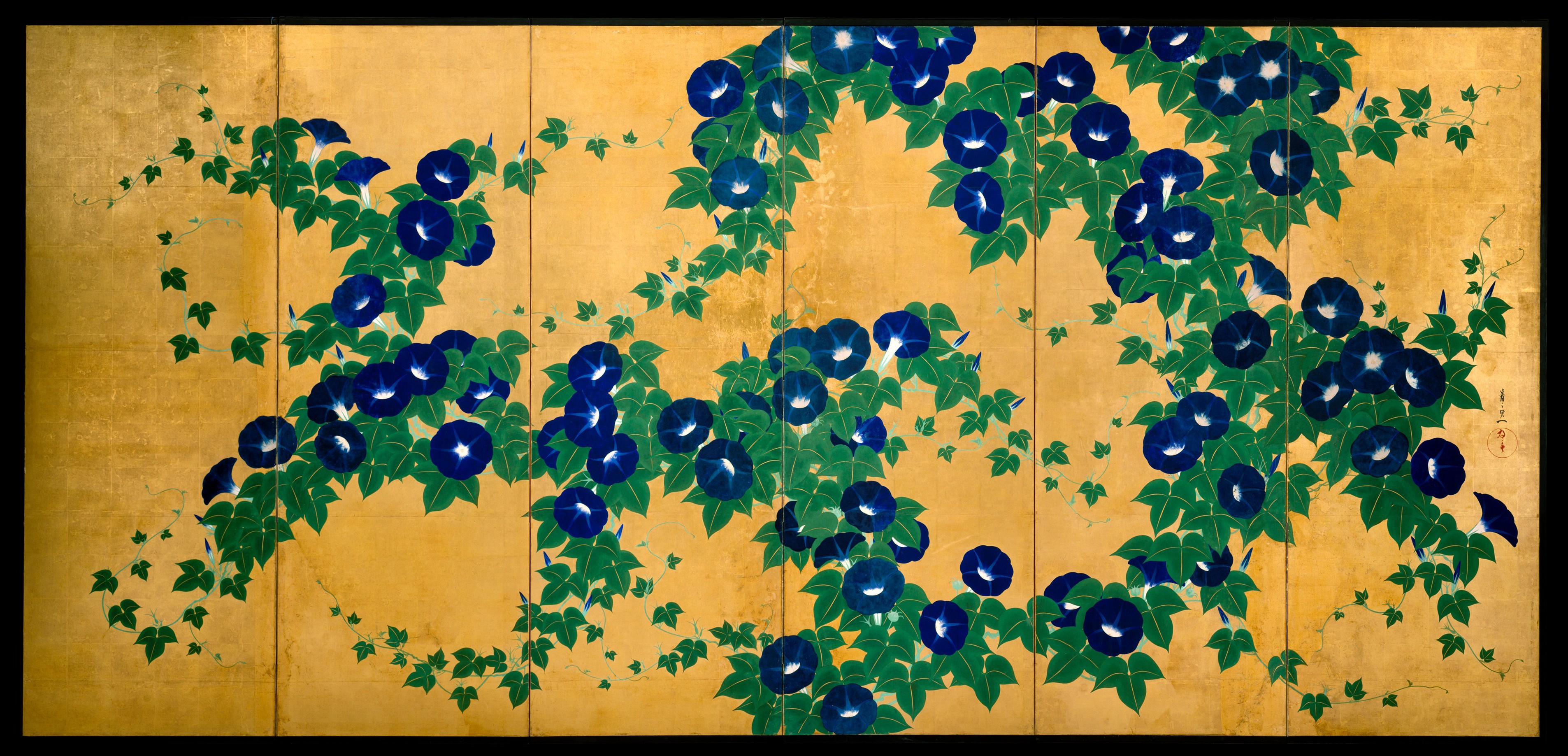
Morning Glories
Early 19th century (1800–1833)
Pair of six-panel folding screens; ink, color, and gold leaf on paper
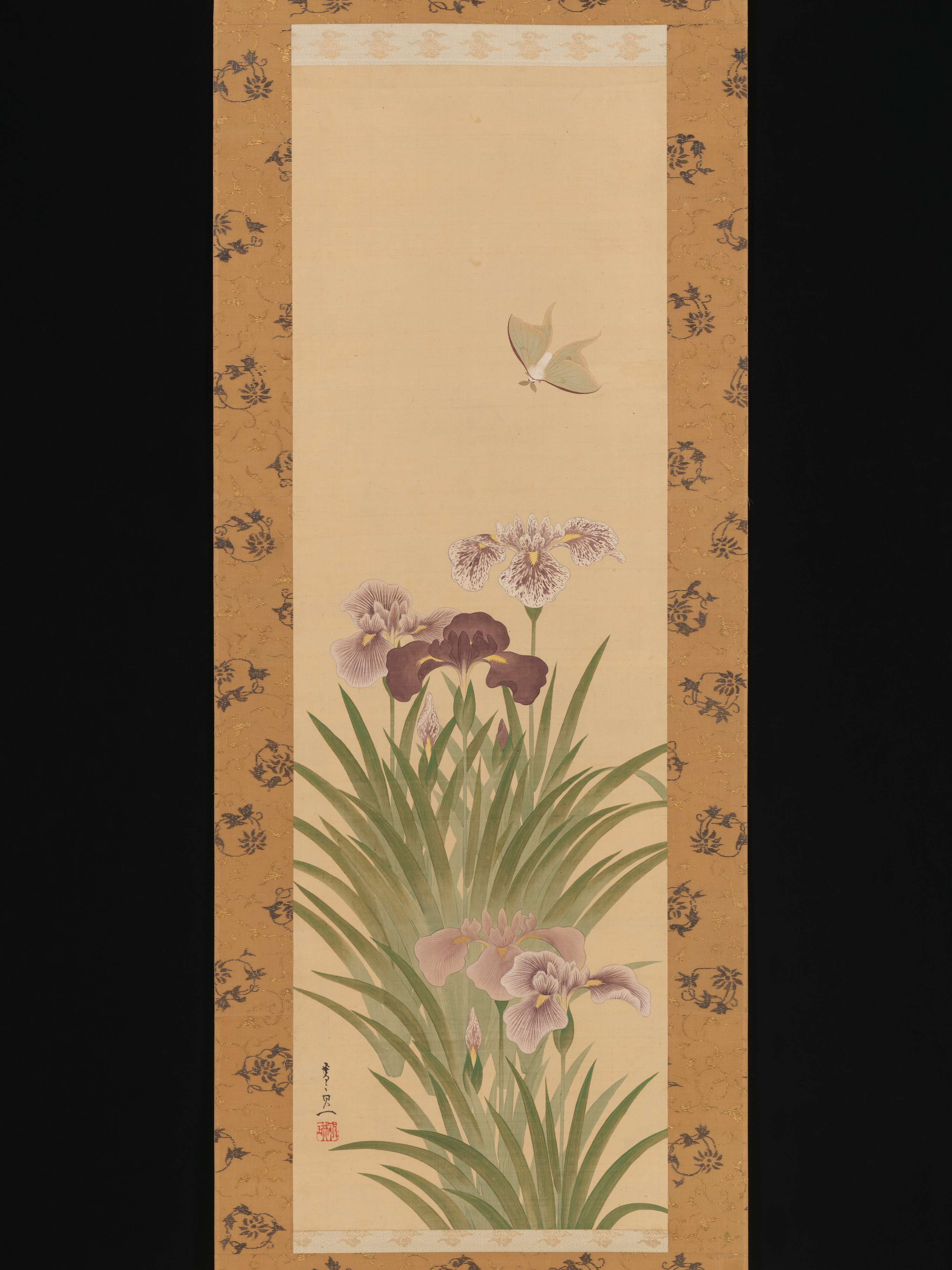
Irises and Moth
ca. 1850
Hanging scroll; ink and color on silk
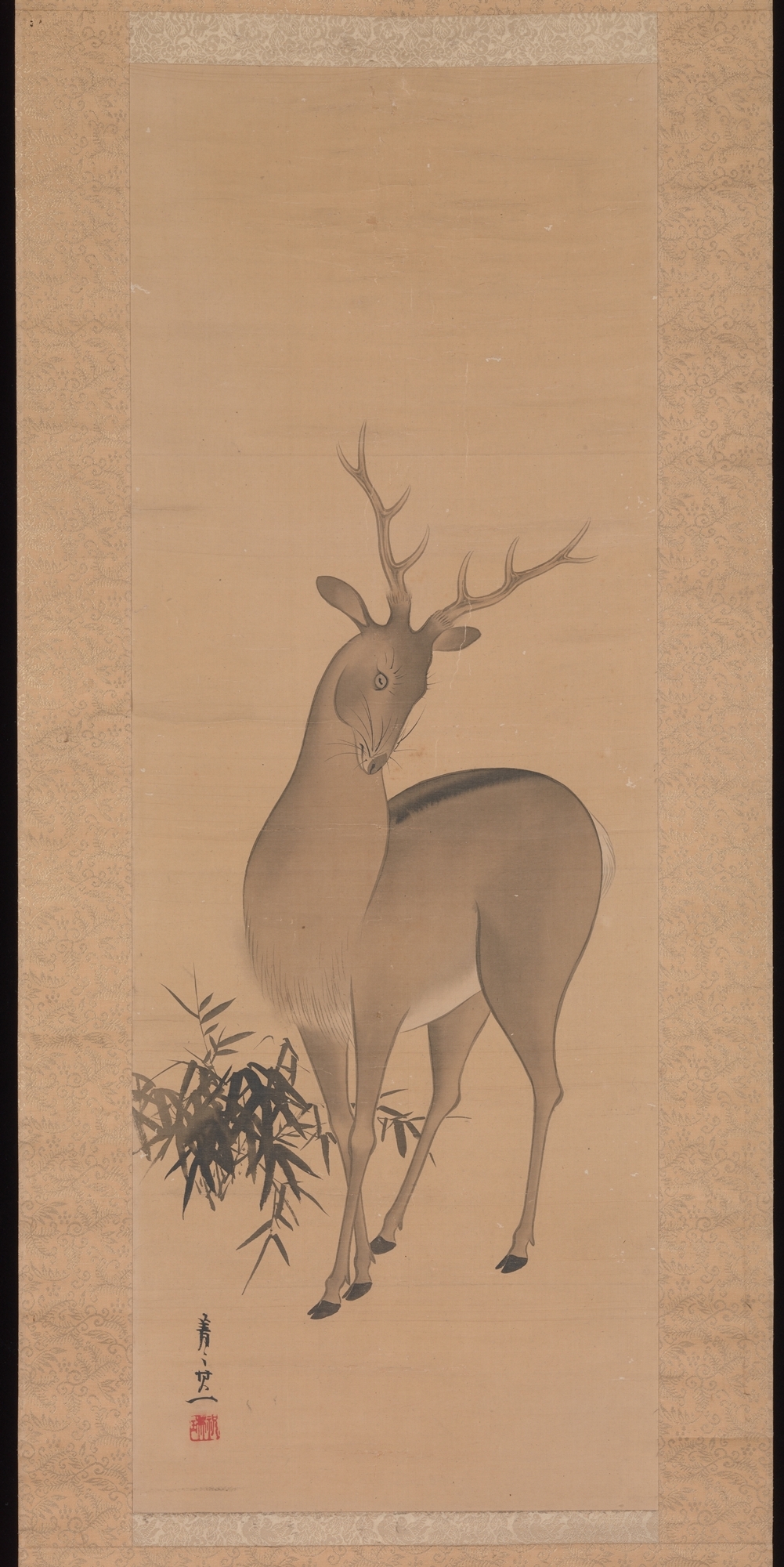
Deer
19th century
Hanging scroll; ink and color on silk
Frequently Asked Questions
Bush Clover was created by Suzuki Kiitsu (鈴木其一) in Early 19th century.