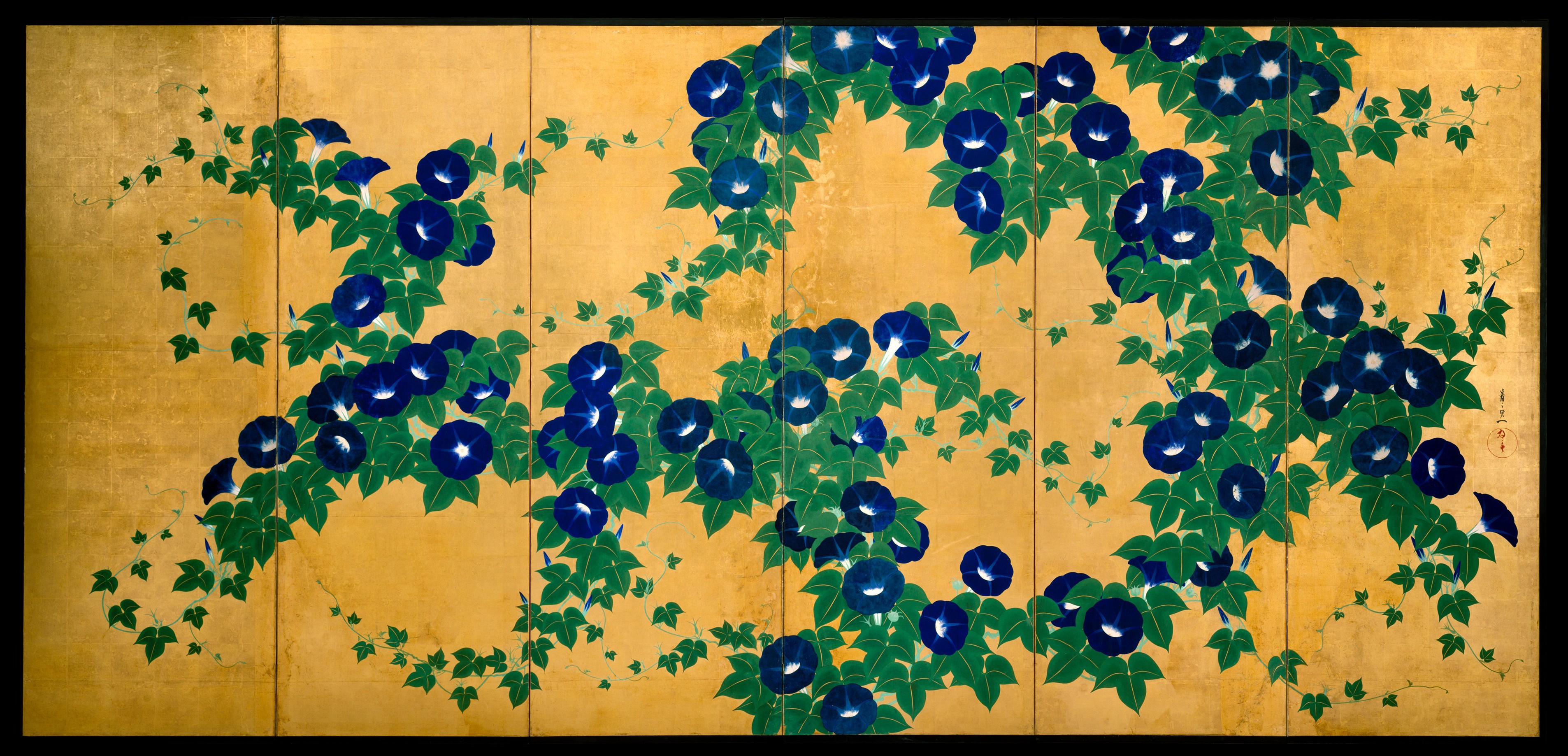
Morning Glories
- Date:
- Early 19th century (1800–1833)
- Medium:
- Pair of six-panel folding screens; ink, color, and gold leaf on paper
- Source:
- Metropolitan Museum of Art
Description
Morning Glories is a pair of six-panel folding screens in ink, color, and gold leaf on paper, dating to the early nineteenth century and held by the Metropolitan Museum of Art. The composition translates the gold-ground decorative tradition that Ogata Kōrin had defined a century earlier into a new key suited to Kiitsu's own moment, with massed indigo morning glory blossoms threading their way across the gold ground on bright green vines that organize the entire surface through serpentine rhythms of leaf and tendril. The pair of screens reads as a single continuous composition when set side by side, with the vines climbing and falling in counterposed waves that demonstrate the Rinpa school's characteristic interest in abstract patterning derived from close natural observation.
Kiitsu's handling of the leaves shows his command of the school's signature tarashikomi technique, in which wet pigment is dropped into wet pigment on the painting surface to produce mottled organic textures that suggest the variegated color of living foliage. The blossoms themselves are painted with cleaner outline and more saturated color than Hōitsu's softer style would have employed, reflecting Kiitsu's distinctive contribution to the Edo Rinpa idiom: a sharper, more designerly approach to the decorative inheritance, in which the flat decorative pattern and the botanical observation reinforce each other rather than dissolving into pure atmosphere. The screens stand as one of the canonical expressions of the Rinpa school's nineteenth-century maturity.
The Met's pair is among the most reproduced works in Kiitsu's surviving oeuvre and demonstrates the format and ambition for which he was best known among contemporary Edo patrons, who commissioned such screens for the formal reception rooms of samurai mansions and wealthy merchant houses where their gold grounds would gather and reflect the available light.
More Prints by Suzuki Kiitsu

Offering Table Containing the Seals of Suzuki Kiitsu
1854
Hanging Scroll; ink and colors on paper
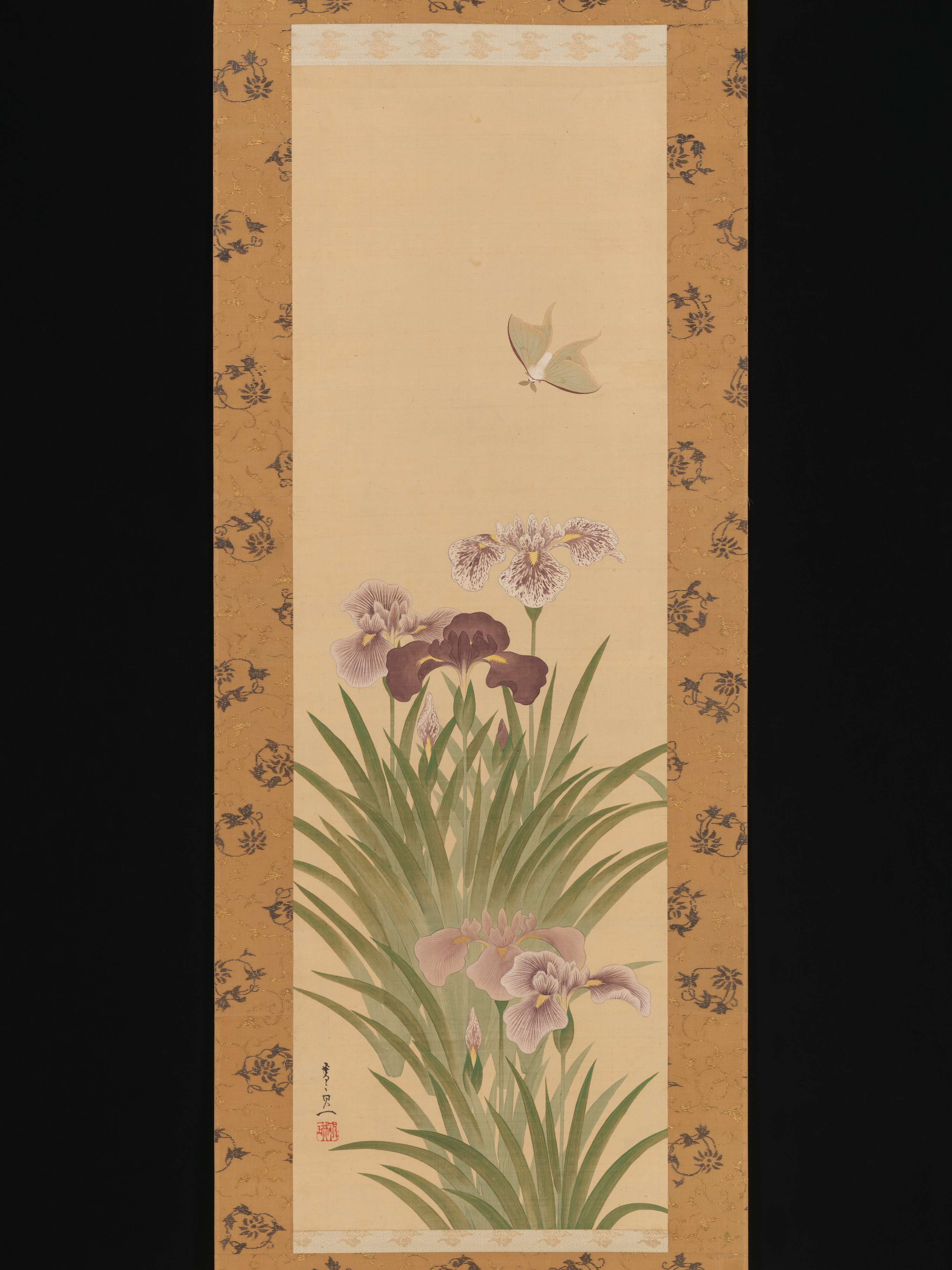
Irises and Moth
ca. 1850
Hanging scroll; ink and color on silk
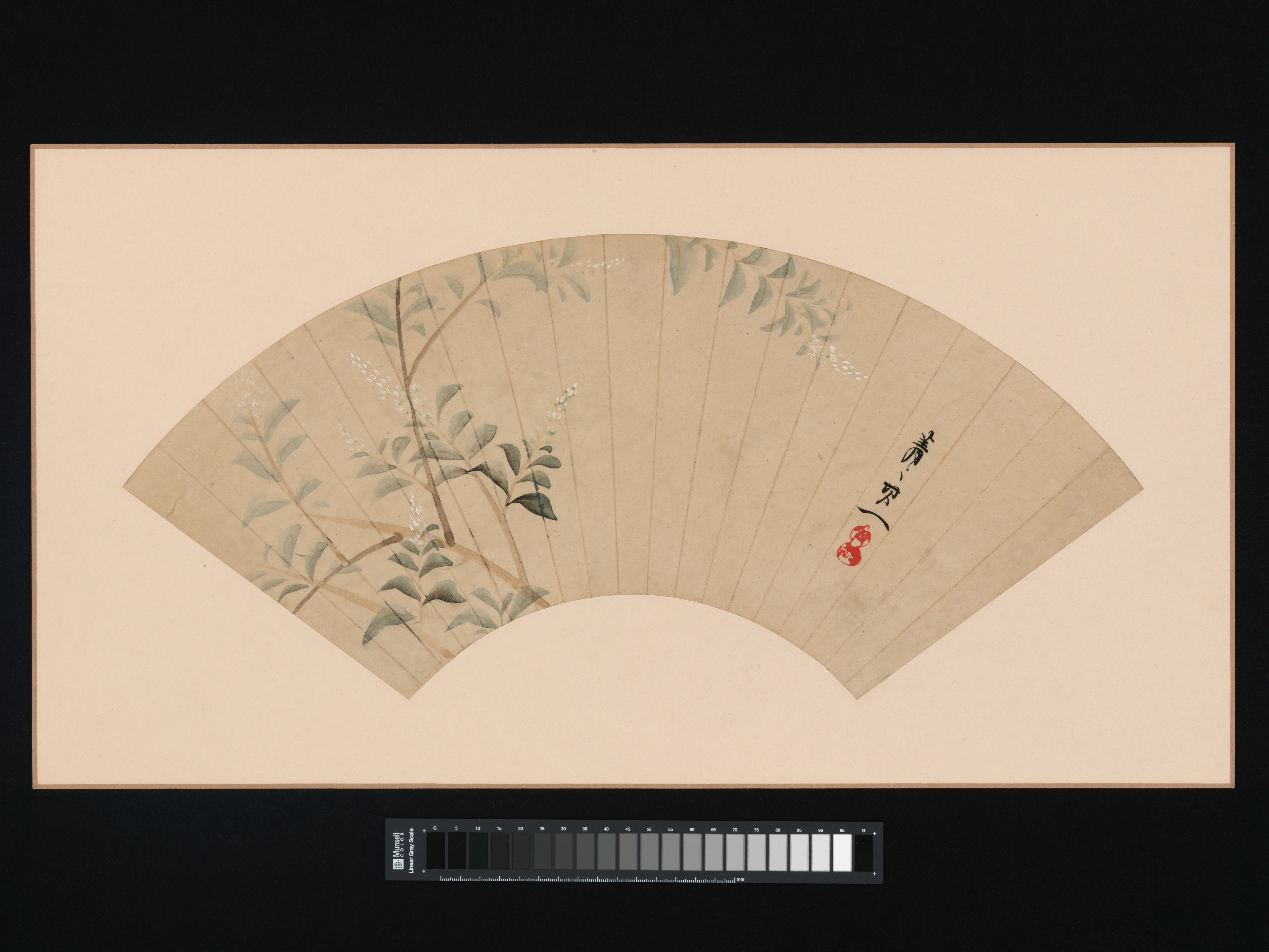
Bush Clover
Early 19th century
Folding fan mounted as an album leaf; ink and color on paper, framed
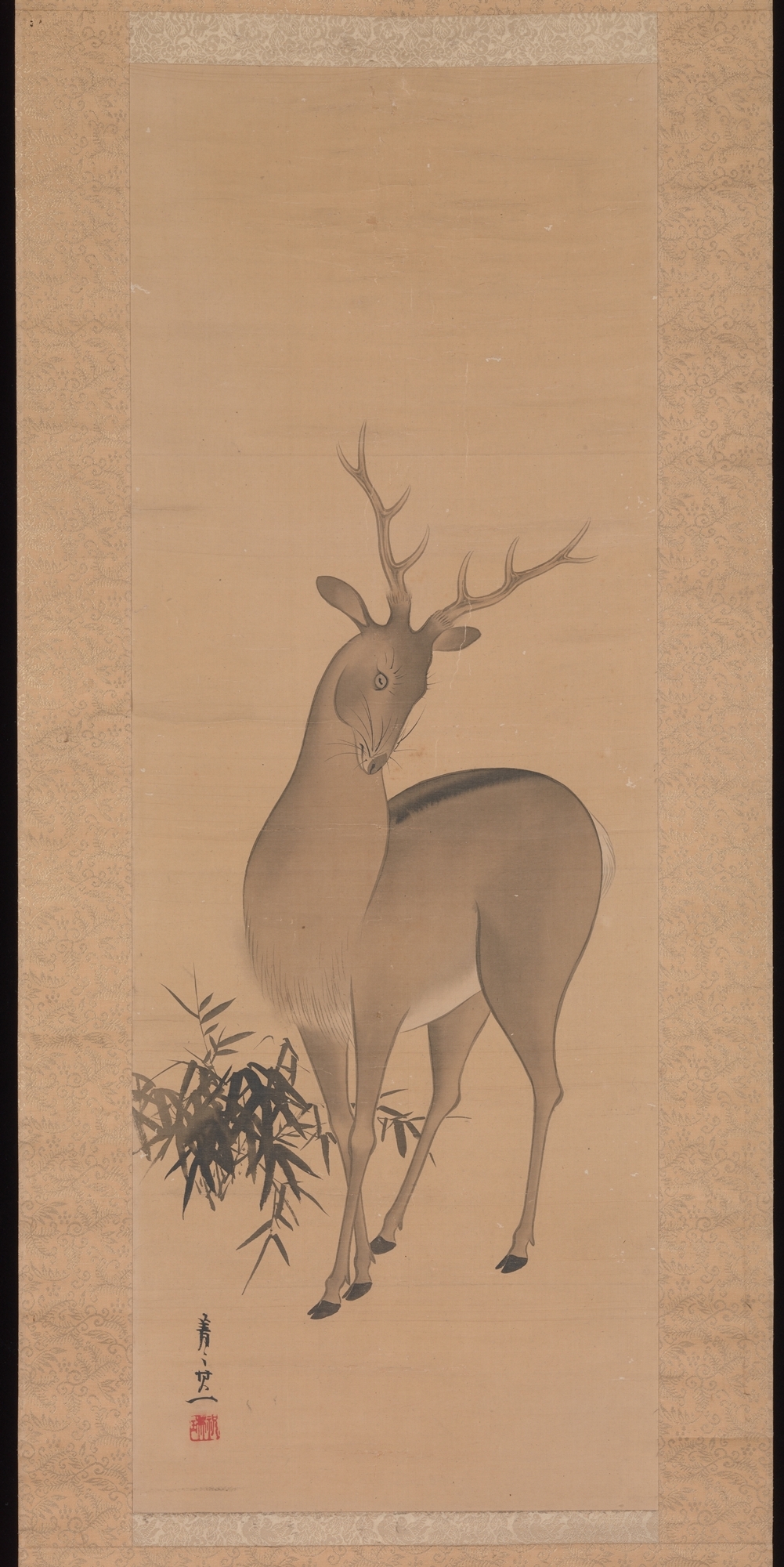
Deer
19th century
Hanging scroll; ink and color on silk
Frequently Asked Questions
Morning Glories was created by Suzuki Kiitsu (鈴木其一) in Early 19th century (1800–1833).