Suzuki Kiitsu
鈴木其一
1796–1858
Japan
Biography
Suzuki Kiitsu (鈴木其一, 1796-1858) was the foremost disciple of Sakai Hōitsu and a central figure of Edo Rinpa in its second generation, the painter who carried the school's distinctive synthesis of Kōrin-derived design and contemporary natural observation to a refined and personal expression. Working in the cultural ferment of late-Edo Japan, Kiitsu produced a body of paintings that translated the gold-ground decorative tradition of Kōetsu, Sōtatsu, and Kōrin into a vocabulary suited to nineteenth-century taste, with sharper drawing, cooler color, and an almost botanical precision in the rendering of plants and seasonal subjects. He stands today as one of the artists who, more than most, kept the Rinpa lineage alive into the modern era and bridged the school's classical roots with the aesthetic sensibilities that would shape later Japanese painting.
Kiitsu was born in 1796, the son of a dyer, and trained in the textile-dyeing trade — a craft background that would mark his entire career through an unusual sensitivity to color, surface, and pattern. The early training in the dyer's workshop, where the careful preparation of pigments and the geometric organization of fabric design were daily disciplines, gave him a foundation in decorative thinking that would later distinguish his Rinpa paintings from those of more orthodox academic backgrounds. He entered the Edo studio of Sakai Hōitsu (1761-1828) in his youth, becoming the master's foremost pupil. He married the elder sister of Suzuki Reitan (1782-1817), a fellow pupil of Hōitsu, and took over as head of the Suzuki family after Reitan's death, which is how he came to bear the Suzuki surname. The relationship between Hōitsu and Kiitsu was one of the most generative master-disciple bonds in late-Edo painting, with the older artist effectively designating Kiitsu as the successor who would carry the Edo Rinpa revival into the next generation.
Hōitsu had himself revived the Rinpa school by reaching back to the work of Ogata Kōrin (1658-1716), the early eighteenth-century master whose designs of irises, plum blossoms, and seasonal grasses on gold and silver grounds defined the school's classical idiom. Hōitsu's 1815 commemorative project Kōrin hyakuzu (One Hundred Paintings by Kōrin), prepared on the centenary of Kōrin's death, was the landmark scholarly act that reframed Kōrin's oeuvre for a nineteenth-century audience, and Kiitsu collaborated with his master on this enterprise, absorbing the visual vocabulary of the Rinpa tradition through close study of the prints and reproductions it generated. The Metropolitan Museum and the Art Institute of Chicago both preserve works by Kiitsu that show direct engagement with Kōrin-school motifs while developing them in his own distinctive direction.
Kiitsu's mature style is recognizable across a range of formats from large folding screens to intimate hanging scrolls, album leaves, and surimono. Where Hōitsu's painting tended toward soft atmospheric effect and a slightly nostalgic warmth, Kiitsu pursued crisper line, more saturated color contrasts, and a designer's eye for the abstract patterning of natural forms. His celebrated Morning Glories screens at the Metropolitan Museum, a pair of six-panel folding screens in ink, color, and gold leaf, exemplify the Edo Rinpa idiom at its most ambitious: massed indigo blossoms and bright green leaves arranged in serpentine rhythms across a gold ground, the entire surface organized through patterns of repetition and variation that recall both Kōrin's iris screens and the textile designs of Kiitsu's early training. The composition demonstrates the school's signature tarashikomi technique, in which wet pigment is dropped into wet pigment to produce mottled organic surfaces, applied here to the leaves with virtuoso control.
In his hanging scrolls, Kiitsu turned to subjects that combined Rinpa decorative elegance with the careful botanical study that characterized late-Edo natural history painting. His paintings of irises, bush clover, and other seasonal plants range from pure botanical study to genre scenes that record contemporary Edo life, and he applied the same compositional principles to animal subjects, isolating a single stylized figure against an unmarked silk ground articulated through a balance of crisp outline and graded color. The Setsubun Festival at Sensōji, a hanging scroll dated 1857 now in the Metropolitan Museum, is an unusually documentary work for a Rinpa painter, recording the bean-throwing ritual at the Sensōji temple in Asakusa as a contemporary social occasion, and demonstrates that Kiitsu engaged with Edo's living culture as well as its classical inheritance.
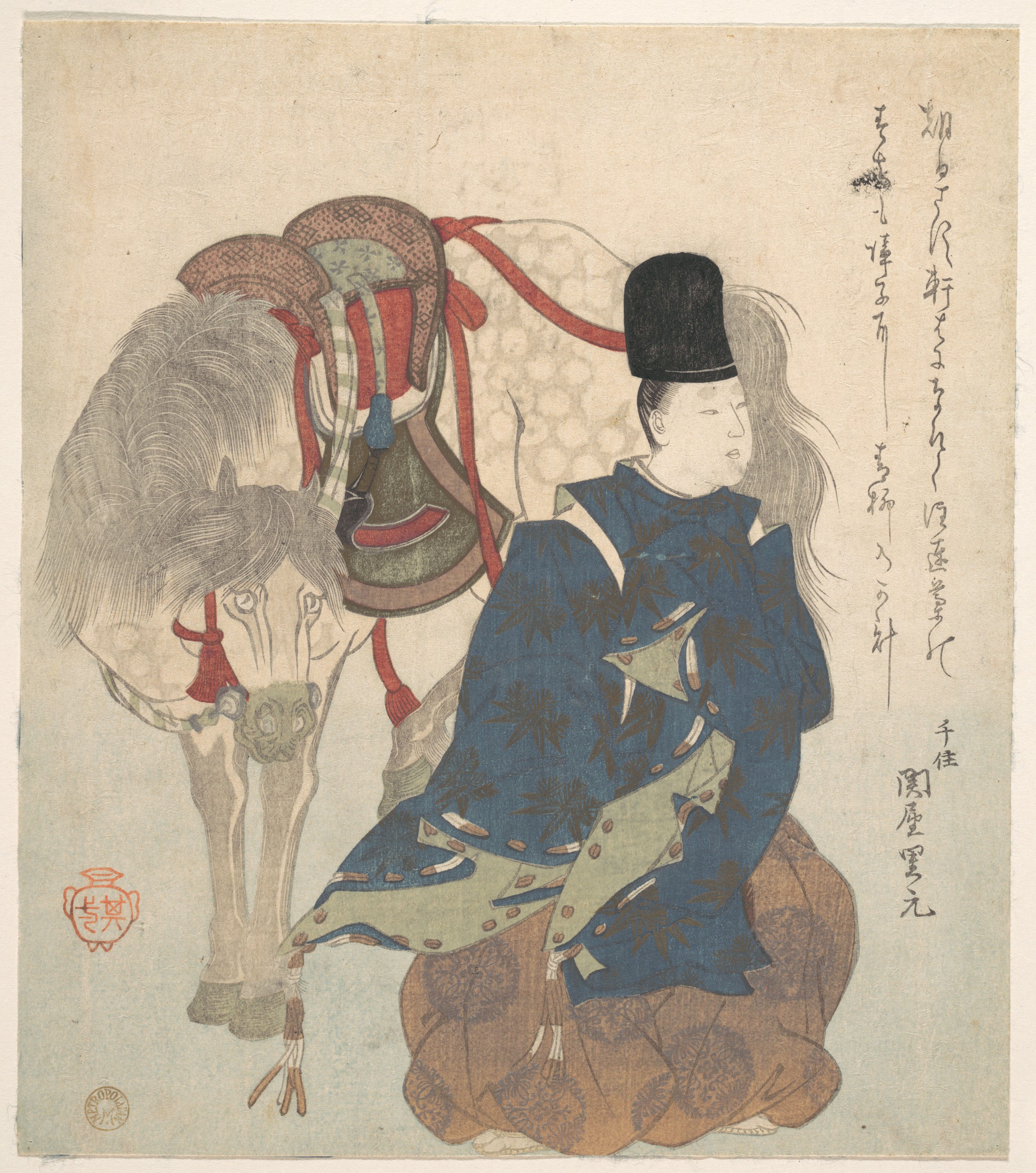
Kiitsu also produced surimono, the privately commissioned woodblock prints favored by kyōka poetry circles, which connect him to the broader culture of late-Edo literary salons and demonstrate the same compositional discipline he brought to his painted work, with metallic pigments and refined block carving translating his linear style into the printed medium. The Offering Table Containing the Seals of Suzuki Kiitsu, in the Art Institute of Chicago, is a particularly self-referential work that depicts the artist's own personal seals arranged on a ceremonial offering table, a kind of pictorial autograph documenting the seals through which he authenticated his paintings and asserting his place within the Rinpa lineage.
The late years of Kiitsu's career coincided with the gathering crisis of Tokugawa rule, the arrival of Commodore Perry's fleet in 1853, and the early stages of the political upheaval that would culminate in the Meiji Restoration of 1868. He did not live to see the new order, dying in 1858, but his work conditioned the aesthetic vocabulary that later Rinpa revivalists such as Kamisaka Sekka would draw on when the tradition was renewed again in the early twentieth century as part of the modern design movement around Nihonga and the Kyoto craft schools.
The celebrated Morning Glories screens at the Metropolitan Museum, together with the many other works by Kiitsu in that collection, have made him the Edo Rinpa artist whose name registers most strongly outside Japan, and his prints and scrolls have become anchor works in the Western reception of the school.
For collectors of Japanese painting and woodblock prints, Suzuki Kiitsu represents the bridge between two worlds: the gold-ground decorative tradition of Kōrin and the increasingly modern sensibilities of late-Edo Japan. His paintings show how a classical school could be renewed by a disciple of unusual ability, his surimono demonstrate that he engaged with the literary print culture of his day, and his presence in major museum holdings including the Metropolitan Museum and the Art Institute of Chicago ensures that his work remains accessible to study. He is essential to any serious engagement with Edo Rinpa, with the late-Edo revival of classical painting traditions, and with the broader history of Japanese decorative art as it moved from the early modern period toward the threshold of modernity.
Key Facts
- Active Period
- 1796–1858
- Nationality
- 🇯🇵Japan
- Subjects
- Birds & FlowersAutumn Foliage
- Works Indexed
- 10
Frequently Asked Questions
Suzuki Kiitsu (鈴木其一, 1796-1858) was the foremost disciple of Sakai Hōitsu and a central figure of Edo Rinpa in its second generation, the painter who carried the school's distinctive synthesis of Kōrin-derived design and contemporary natural observation to a refined and personal expression. Working in the cultural ferment of late-Edo Japan, Kiitsu produced a body of paintings that translated the gold-ground decorative tradition of Kōetsu, Sōtatsu, and Kōrin into a vocabulary suited to nineteenth-century taste, with sharper drawing, cooler color, and an almost botanical precision in the rendering of plants and seasonal subjects. He stands today as one of the artists who, more than most, kept the Rinpa lineage alive into the modern era and bridged the school's classical roots with the aesthetic sensibilities that would shape later Japanese painting.
Suzuki Kiitsu was active from 1796 to 1858.
Suzuki Kiitsu's prints frequently feature birds & flowers, autumn foliage.
Original prints by Suzuki Kiitsu can be found in collections including Art Institute of Chicago, Metropolitan Museum of Art.
Woodblock Prints by Suzuki Kiitsu (10)
Young Nobleman Crouching beside His Horse
1798–1810
Woodblock print (surimono); ink and color on paper
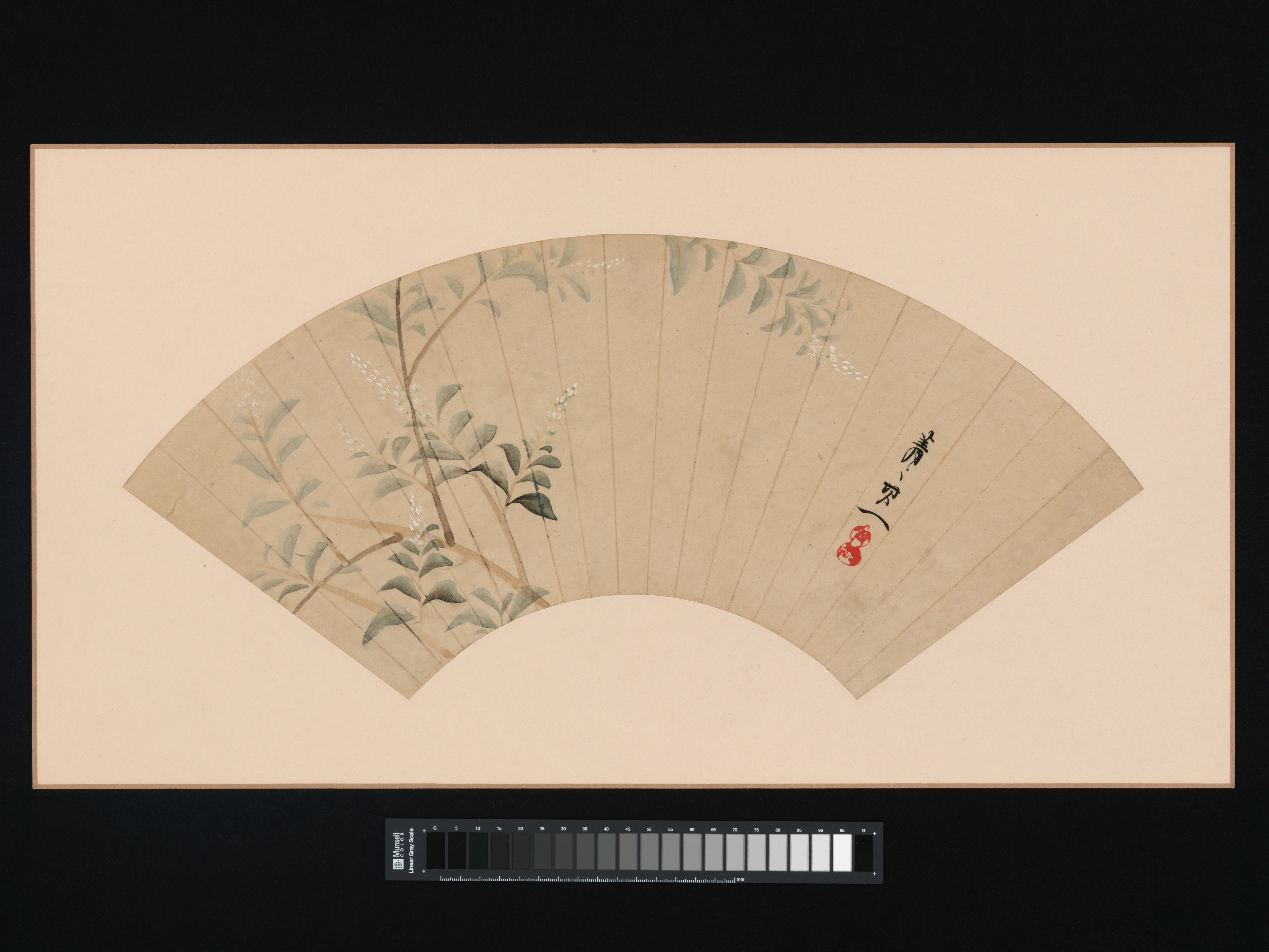
Bush Clover
Early 19th century
Folding fan mounted as an album leaf; ink and color on paper, framed
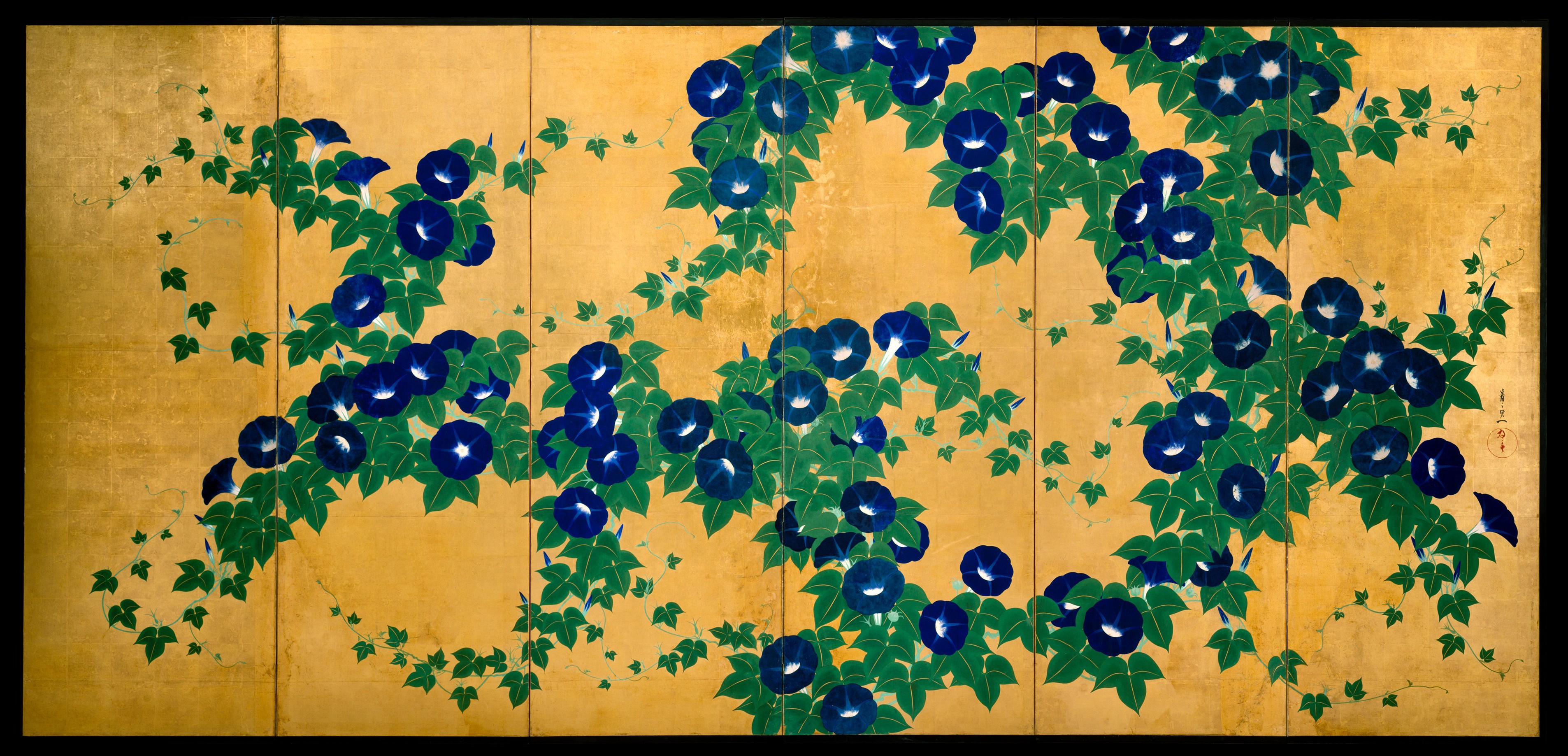
Morning Glories
Early 19th century (1800–1833)
Pair of six-panel folding screens; ink, color, and gold leaf on paper
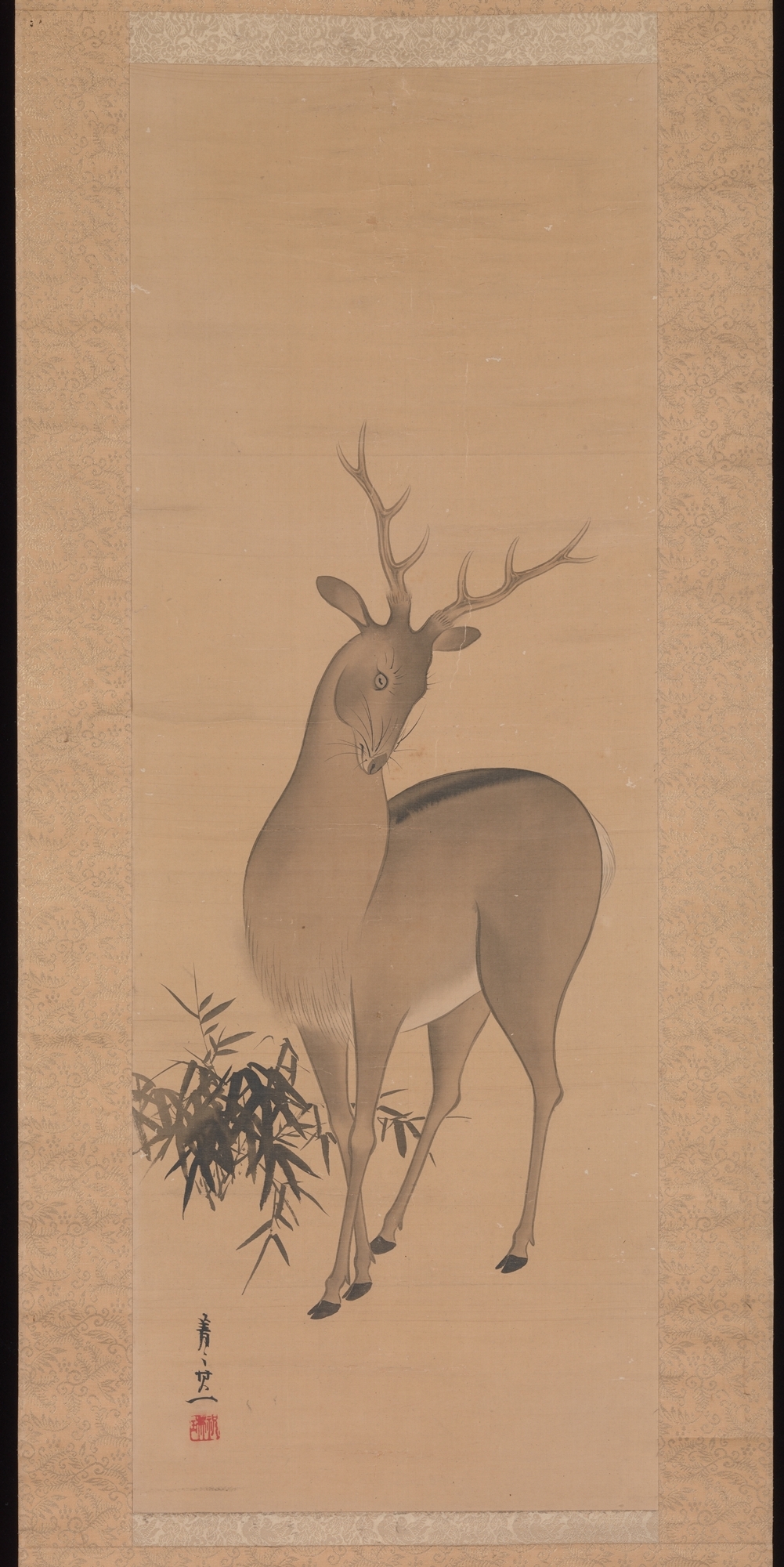
Deer
19th century
Hanging scroll; ink and color on silk

Flowers of Autumn and Winter
19th century
Six panel screen; ink, colors and gold leaf on paper

Morning Glories (two-panel screen)
19th century
Two-panel screen; ink, colors and gold on paper
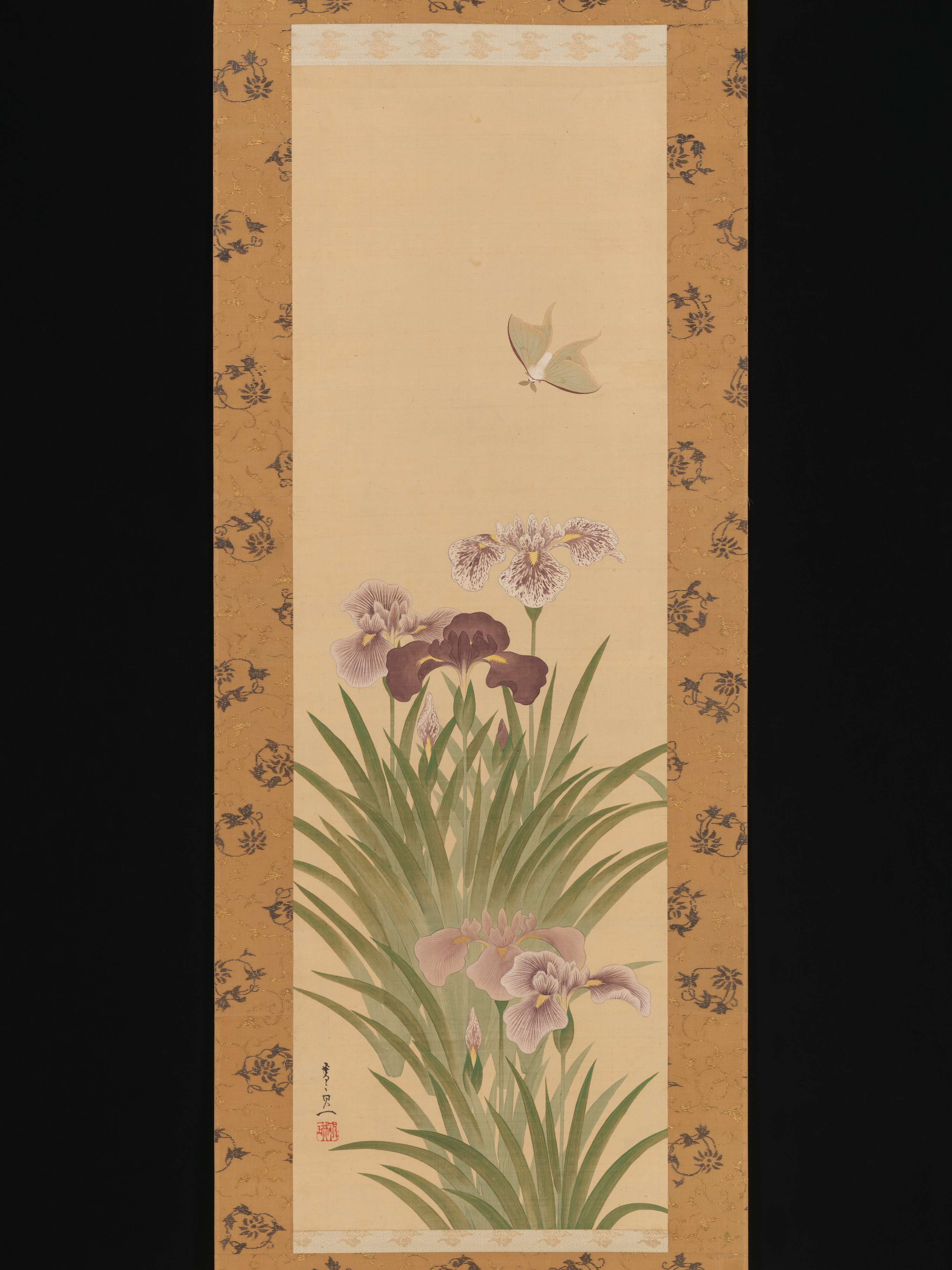
Irises and Moth
ca. 1850
Hanging scroll; ink and color on silk

Offering Table Containing the Seals of Suzuki Kiitsu
1854
Hanging Scroll; ink and colors on paper
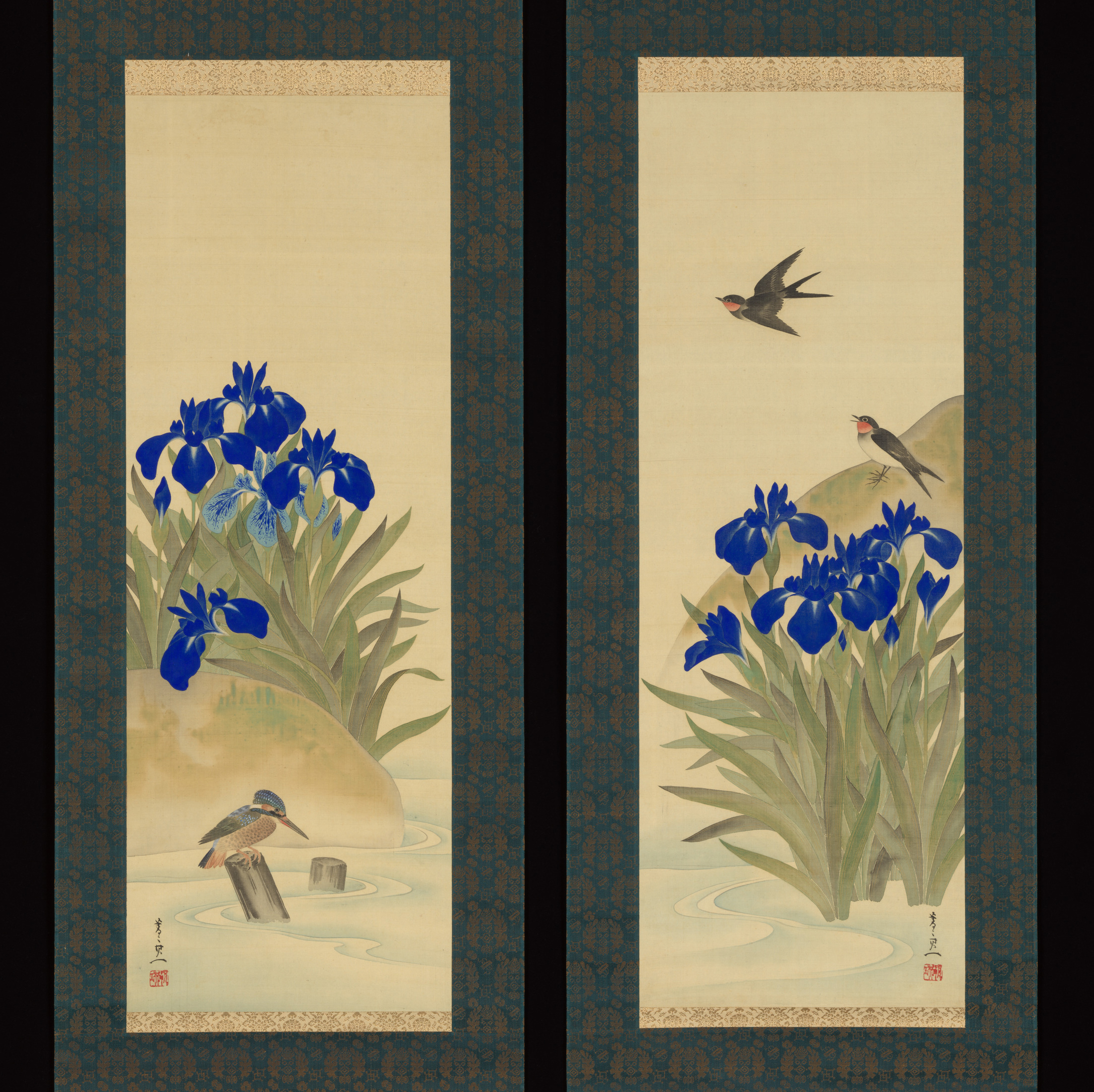
Irises
mid-1850s
Diptych of hanging scrolls; ink and color on silk

Setsubun Festival at Sensōji
1857
Hanging scroll; ink and color on paper