
Morning Glories (two-panel screen)
- Date:
- 19th century
- Medium:
- Two-panel screen; ink, colors and gold on paper
- Source:
- Art Institute of Chicago
Description
Morning Glories (two-panel screen) is a two-panel folding screen in ink, colors, and gold on paper, dating to the nineteenth century and held by the Art Institute of Chicago. The work treats the same morning glory motif that defines Kiitsu's six-panel screens at the Metropolitan Museum but in the more compact two-panel format, which Edo Japanese painters frequently used for the smaller alcove screen that would stand beside a tea ceremony arrangement or in the modest reception spaces of a private residence.
The composition uses the same iconographic vocabulary that distinguishes Kiitsu's morning glory designs: indigo and blue-violet blossoms massed against gold leaf, with green vines and leaves threading the composition in serpentine rhythms that organize the entire surface as a pattern of repetition and variation. The two-panel format requires Kiitsu to compress the long horizontal flow of his six-panel screens into a more concentrated and self-contained design, and the resulting composition reads as a focused excerpt of his decorative idiom in which every blossom and vine carries the full weight of the school's aesthetic discipline.
The screen represents the smaller end of the format range that Edo Rinpa painters worked across and shows how Kiitsu adapted his principal subject matter to different scales of architectural setting, from the formal reception room of a daimyō mansion to the more domestic interior of a wealthy merchant's residence. The two-panel screen at the Art Institute is among the canonical examples of Kiitsu's treatment of the morning glory subject.
More Prints by Suzuki Kiitsu

Offering Table Containing the Seals of Suzuki Kiitsu
1854
Hanging Scroll; ink and colors on paper
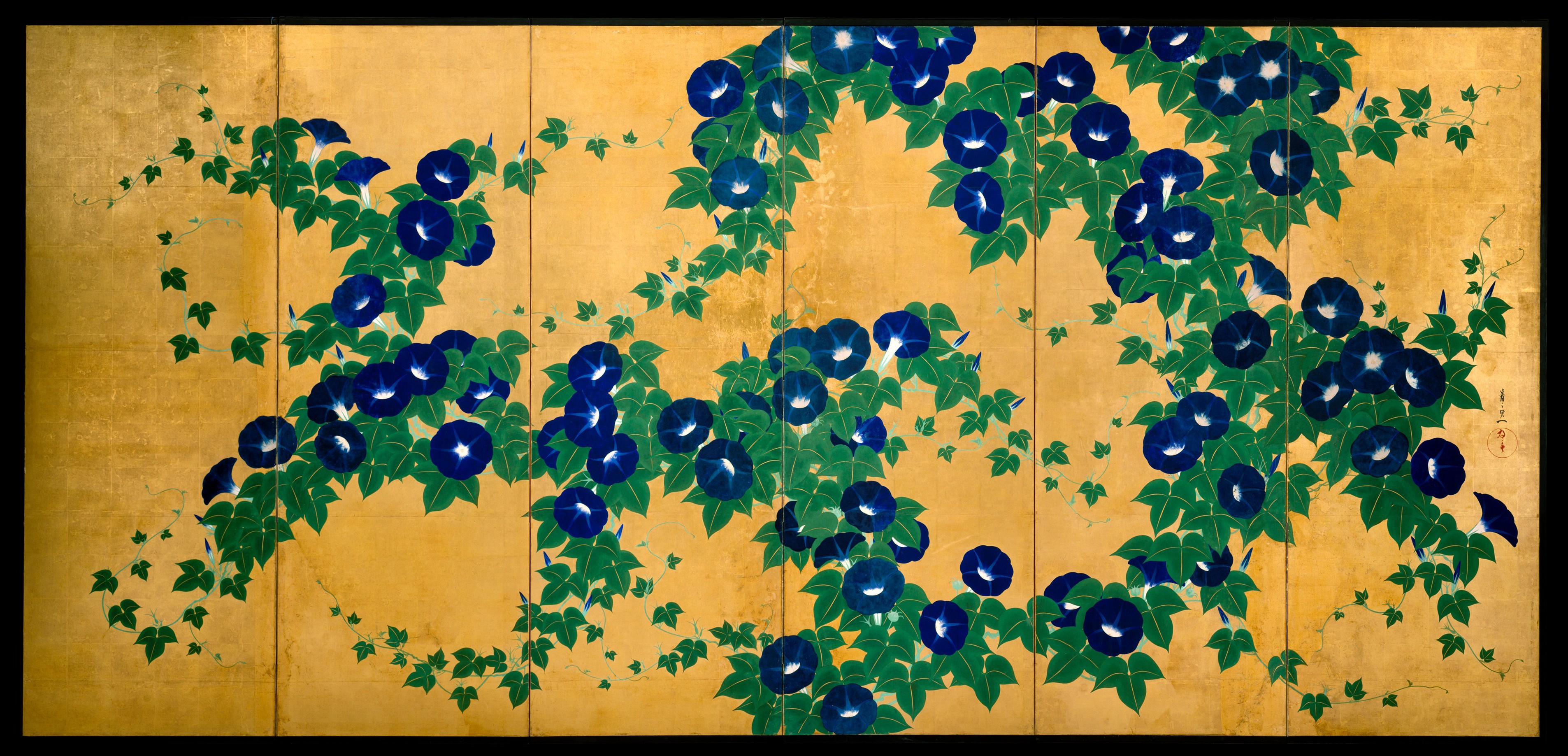
Morning Glories
Early 19th century (1800–1833)
Pair of six-panel folding screens; ink, color, and gold leaf on paper
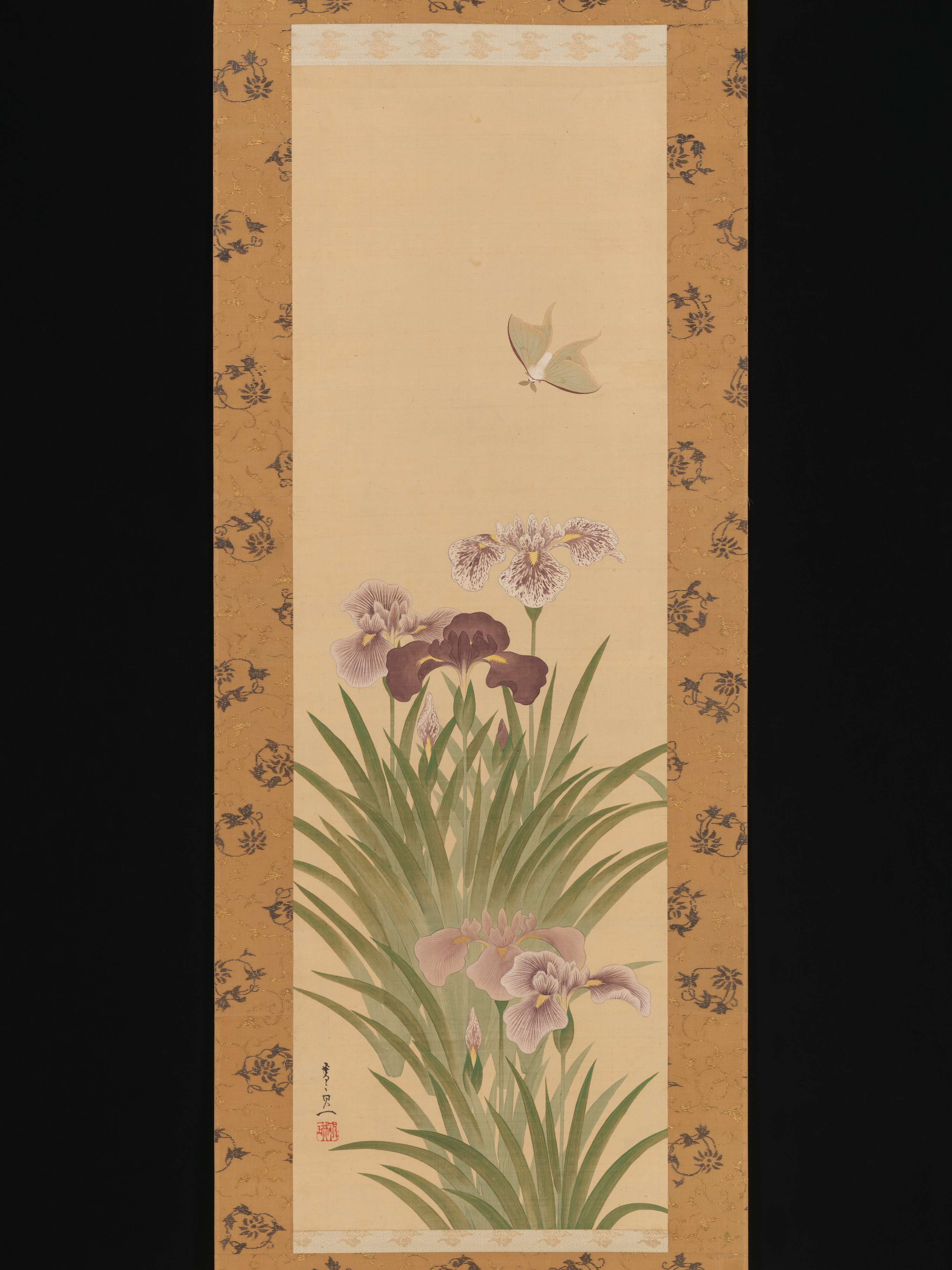
Irises and Moth
ca. 1850
Hanging scroll; ink and color on silk
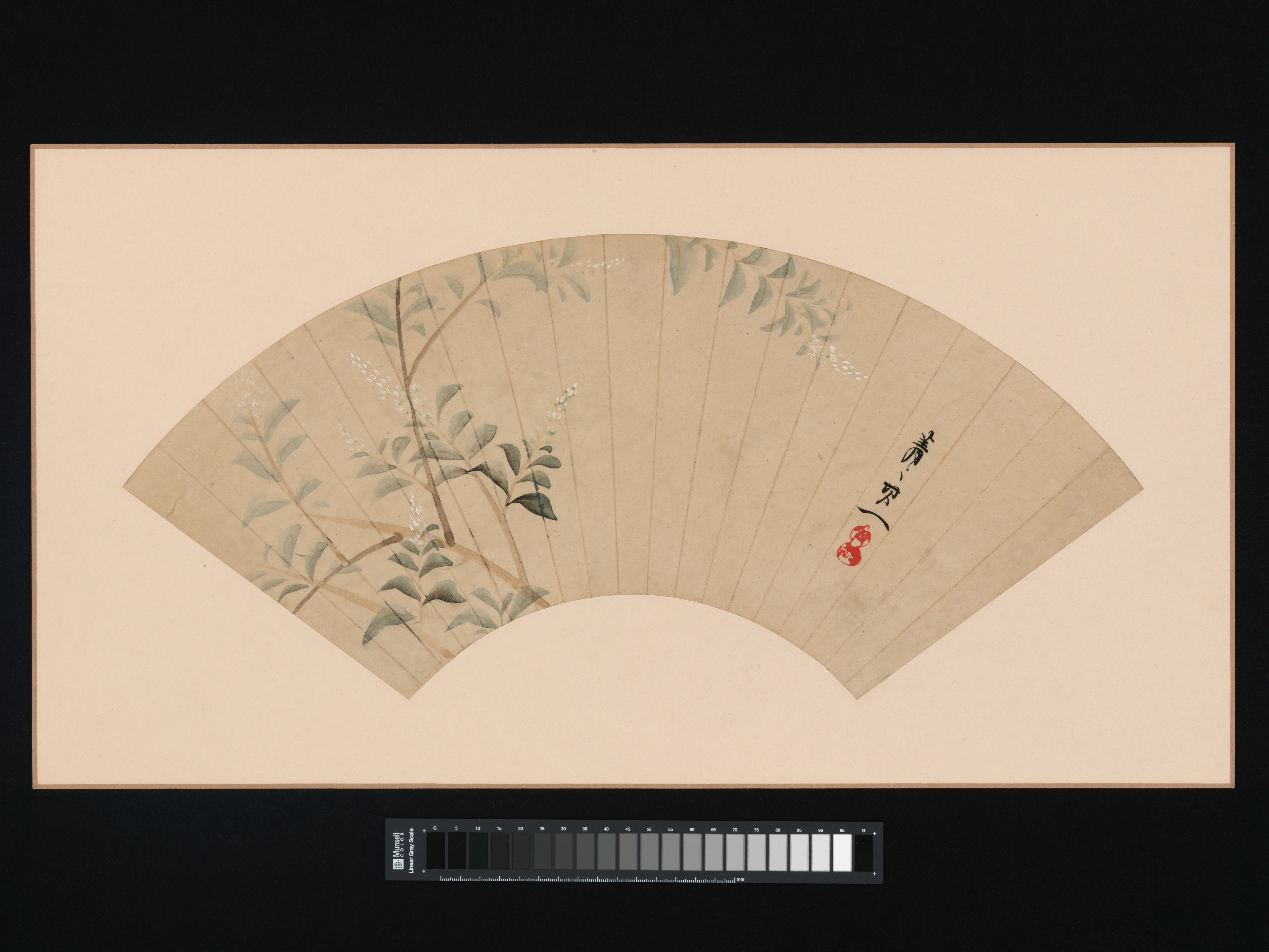
Bush Clover
Early 19th century
Folding fan mounted as an album leaf; ink and color on paper, framed
Frequently Asked Questions
Morning Glories (two-panel screen) was created by Suzuki Kiitsu (鈴木其一) in 19th century.