
Setsubun Festival at Sensōji
- Date:
- 1857
- Medium:
- Hanging scroll; ink and color on paper
- Source:
- Metropolitan Museum of Art
Description
Setsubun Festival at Sensōji is a hanging scroll in ink and color on paper, signed and dated 1857, and held by the Metropolitan Museum of Art. The work depicts the bean-throwing ritual associated with the Setsubun festival, the seasonal observance marking the transition from winter to spring in the traditional Japanese calendar, as it was performed at the Sensōji temple in the Asakusa district of Edo. The choice of subject is unusual for a Rinpa painter, who would more typically have focused on the seasonal grasses and flowers associated with classical poetry rather than on contemporary urban ritual.
The composition records the festival as a contemporary social occasion at one of Edo's most important religious sites, with figures of celebrants and clergy at the temple grounds amid the architectural setting that would have been familiar to any nineteenth-century Edoite. Sensōji's annual Setsubun observance was a well-attended popular event, and Kiitsu's depiction sits at the intersection of seasonal observance, religious practice, and everyday Edo life. The dated inscription of 1857 places the work in the very last year of Kiitsu's life, making it among the latest securely attributed works in his oeuvre.
The scroll demonstrates that the Edo Rinpa school in its second generation was not confined to a hermetic reworking of classical Kōrin-derived motifs but engaged with the lived culture of contemporary Edo, and it reveals an aspect of Kiitsu's range that is sometimes overshadowed by the gold-ground decorative work for which he is best known.
More Prints by Suzuki Kiitsu

Offering Table Containing the Seals of Suzuki Kiitsu
1854
Hanging Scroll; ink and colors on paper
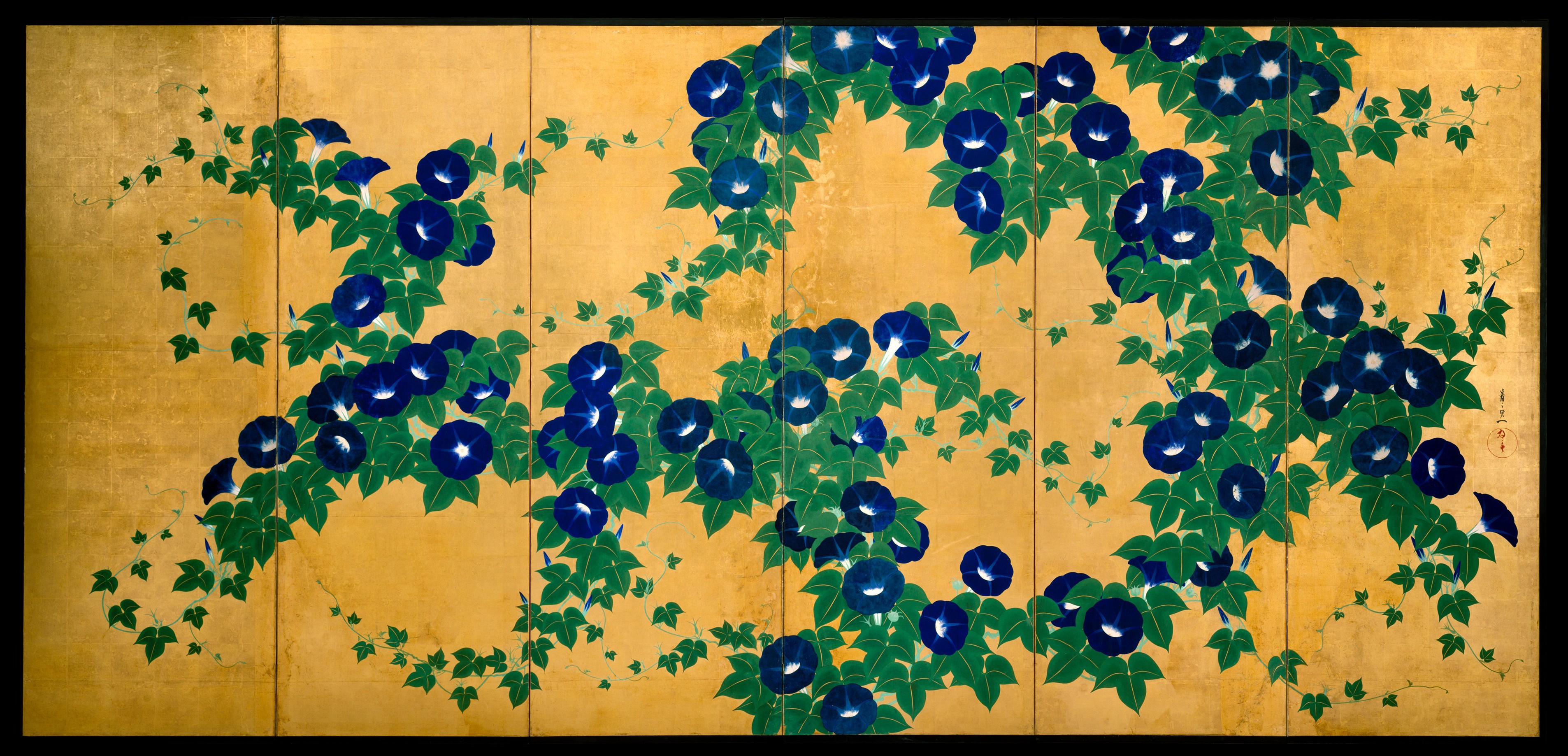
Morning Glories
Early 19th century (1800–1833)
Pair of six-panel folding screens; ink, color, and gold leaf on paper
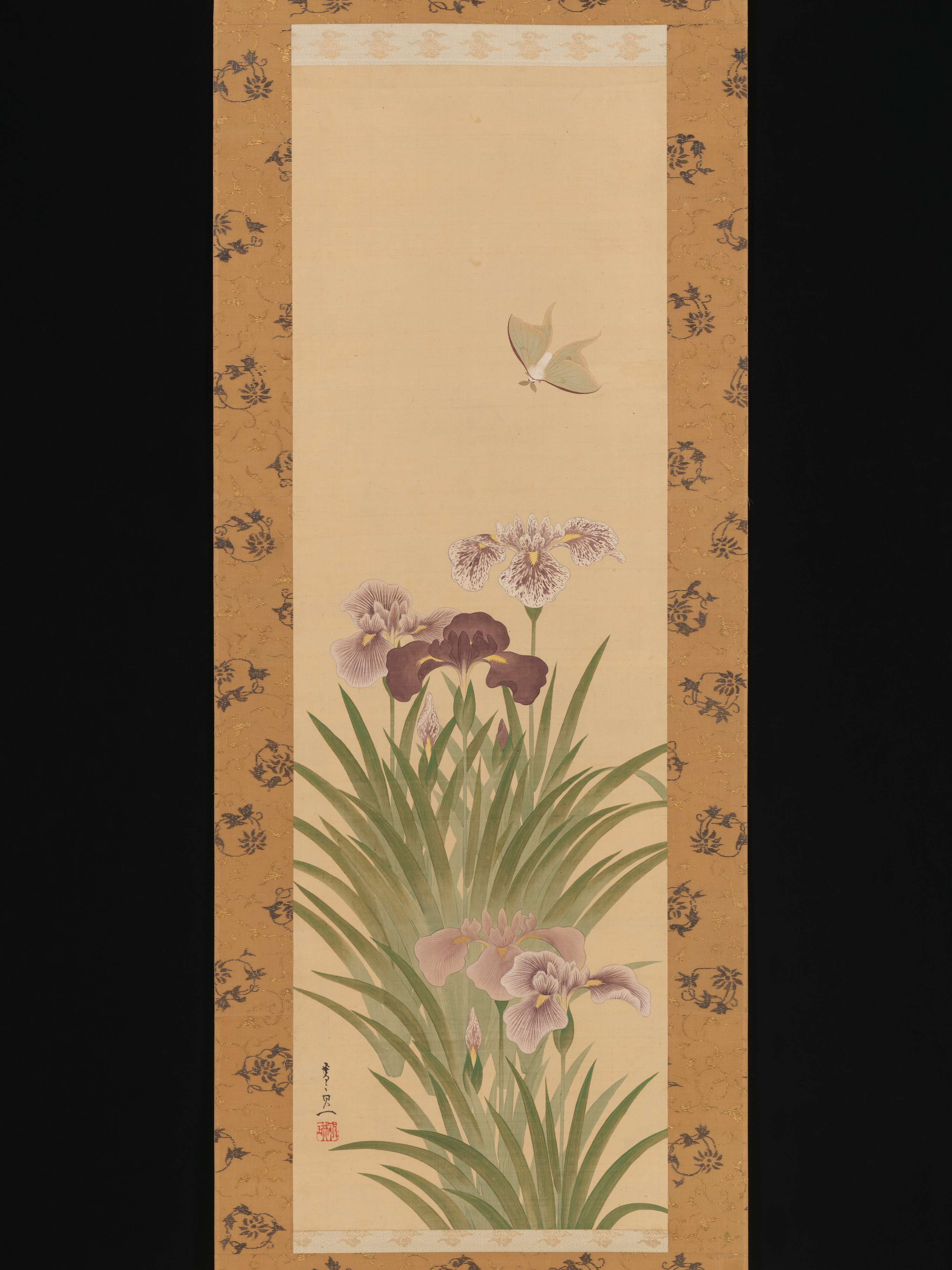
Irises and Moth
ca. 1850
Hanging scroll; ink and color on silk
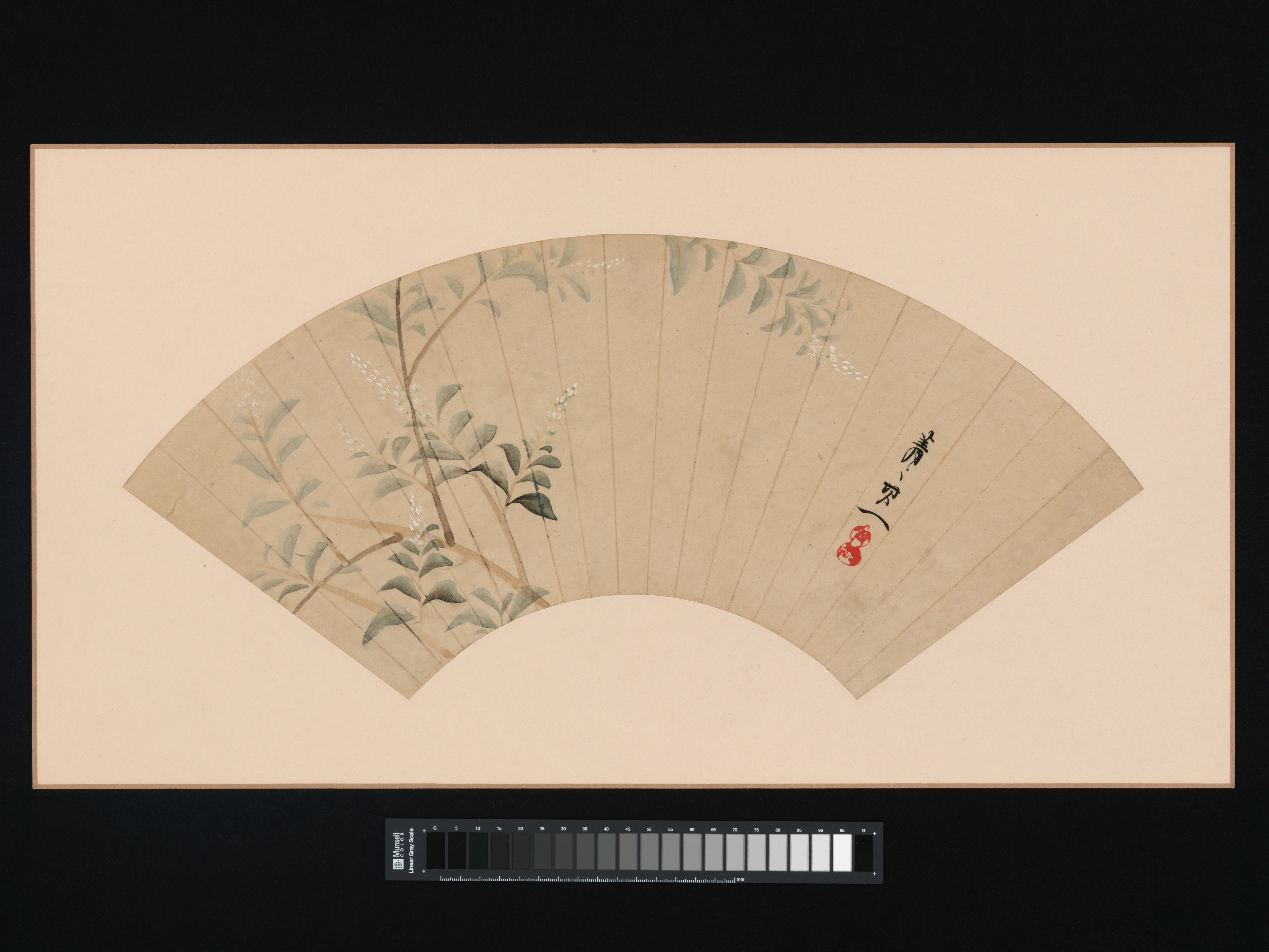
Bush Clover
Early 19th century
Folding fan mounted as an album leaf; ink and color on paper, framed
Frequently Asked Questions
Setsubun Festival at Sensōji was created by Suzuki Kiitsu (鈴木其一) in 1857.