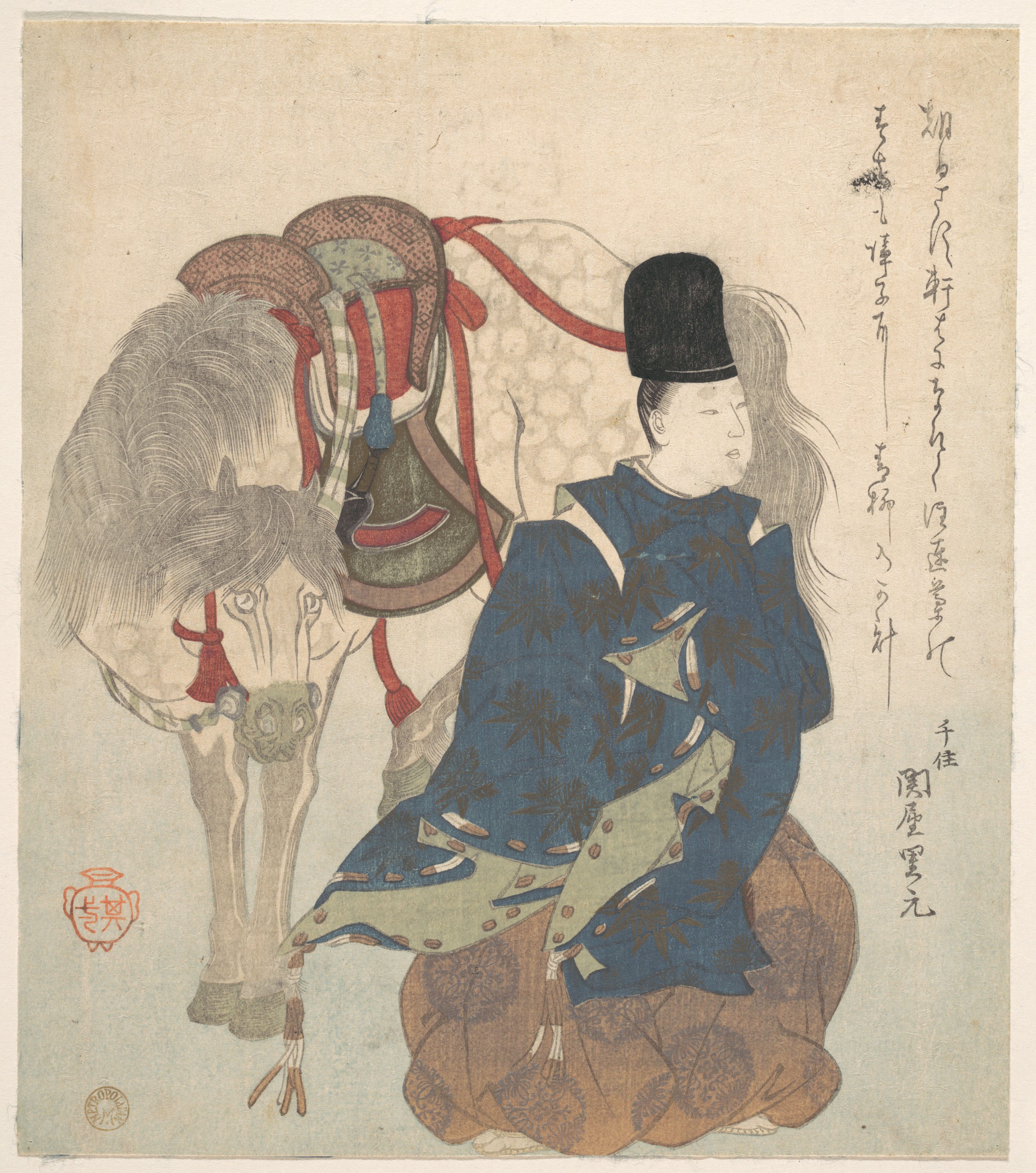
Young Nobleman Crouching beside His Horse
- Date:
- 1798–1810
- Medium:
- Woodblock print (surimono); ink and color on paper
- Source:
- Metropolitan Museum of Art
Description
Young Nobleman Crouching beside His Horse is a woodblock print in the surimono format, executed in ink and color on paper and dating to roughly the turn of the nineteenth century. The work is held by the Metropolitan Museum of Art and stands as evidence of Kiitsu's participation in the small but culturally significant world of surimono production, the privately commissioned prints that wealthy poetry circles distributed to their members and friends rather than offering for public sale.
The composition shows a young nobleman in a moment of pause, crouching beside the horse he has presumably just dismounted, in a quiet incident drawn from the conventions of classical Japanese narrative imagery. The horse subject connects the work to the broader tradition of equestrian painting that ran through Japanese pictorial culture from the medieval emaki scrolls onward, while the format of the print and its restrained palette of metallic and chromatic pigments mark it as a refined private object rather than a commercial publication.
Kiitsu's involvement in surimono production places him within the broader network of late-Edo cultural production, in which painters of the established schools, kyoka poets, woodblock carvers, and printers collaborated on the production of objects that functioned as both poetry albums and miniature painting collections. The work demonstrates that his decorative discipline translated effectively into the printed medium, where the linear precision and the controlled distribution of color that characterize his painted work also serve the requirements of the carved block.
More Prints by Suzuki Kiitsu

Offering Table Containing the Seals of Suzuki Kiitsu
1854
Hanging Scroll; ink and colors on paper
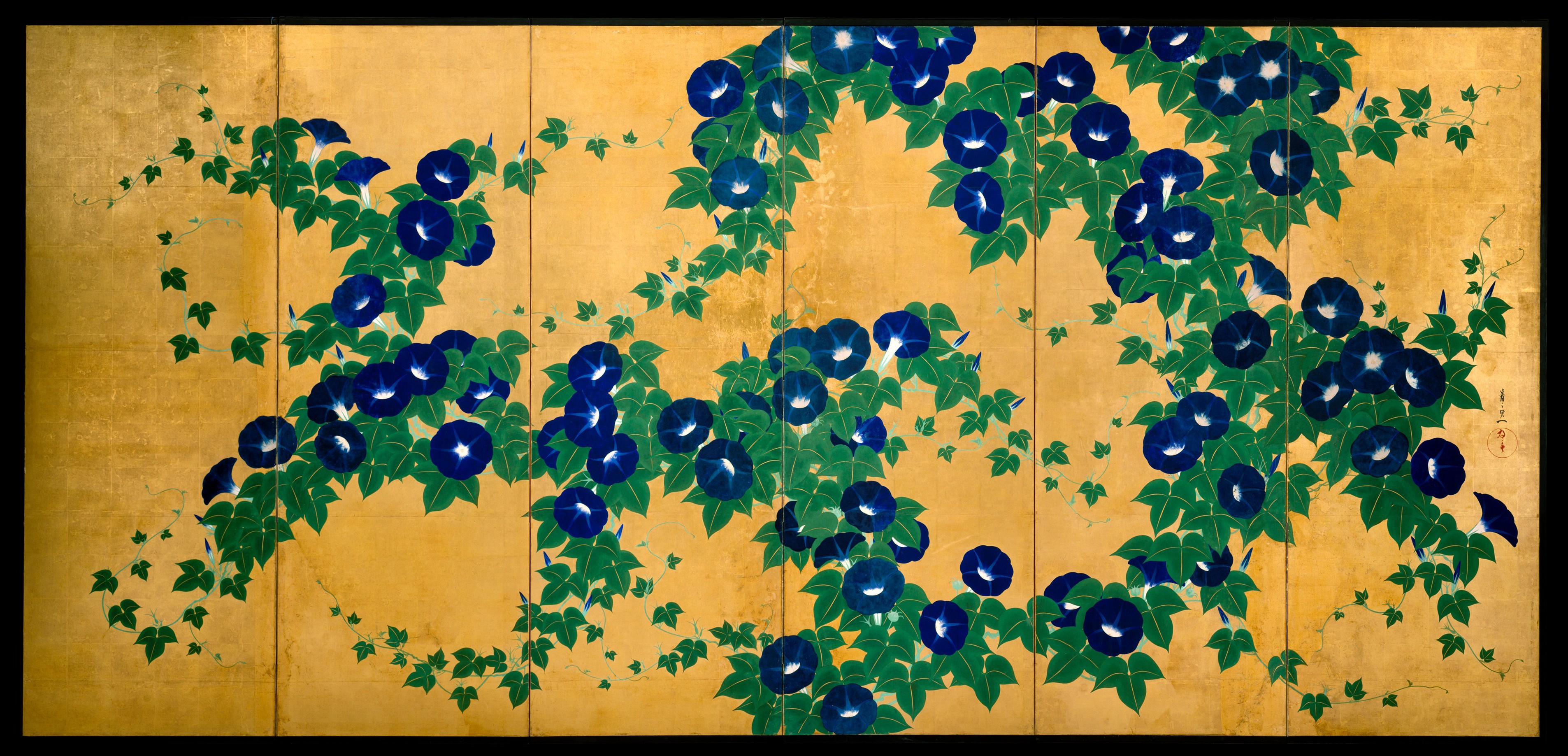
Morning Glories
Early 19th century (1800–1833)
Pair of six-panel folding screens; ink, color, and gold leaf on paper
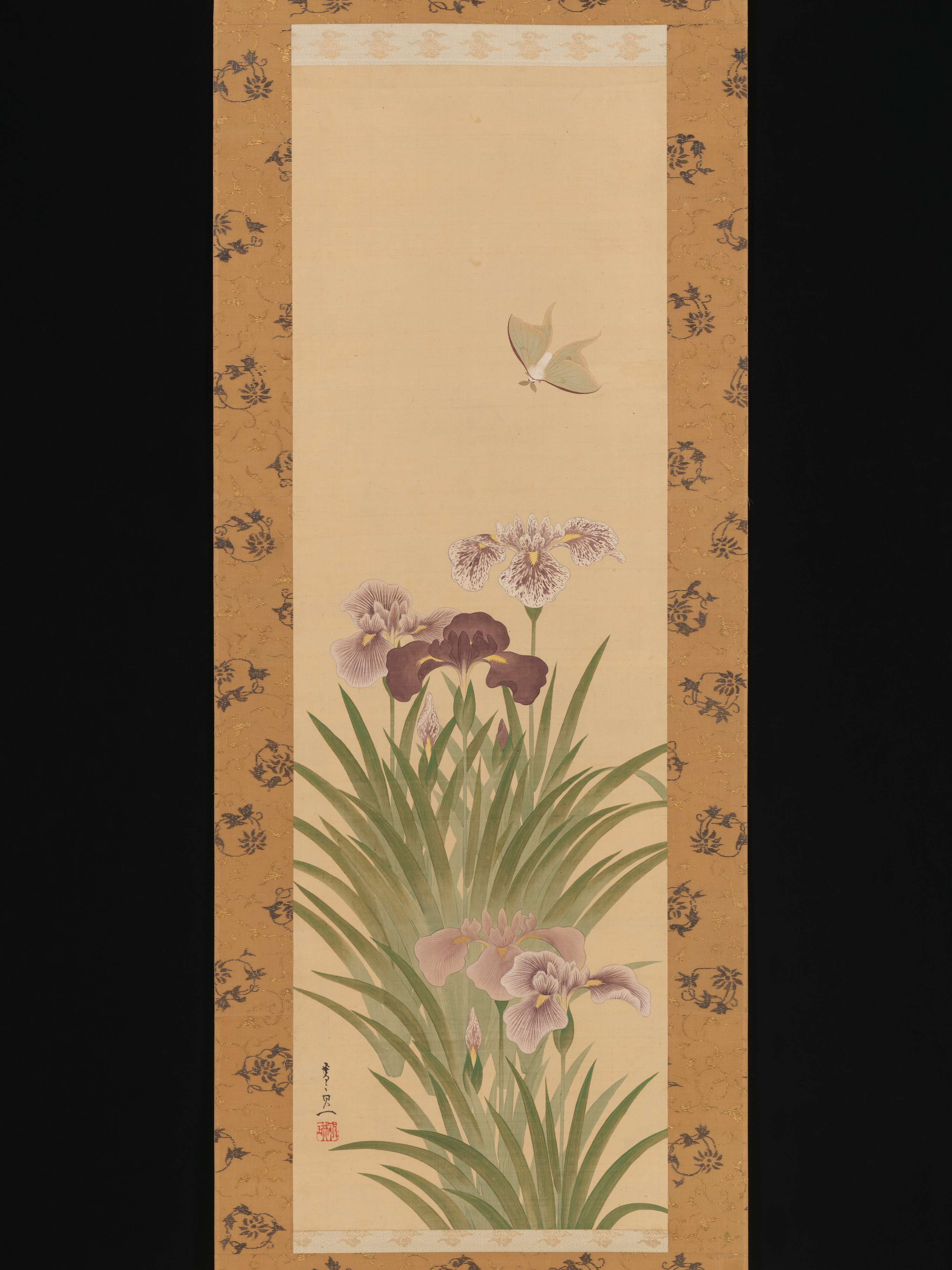
Irises and Moth
ca. 1850
Hanging scroll; ink and color on silk
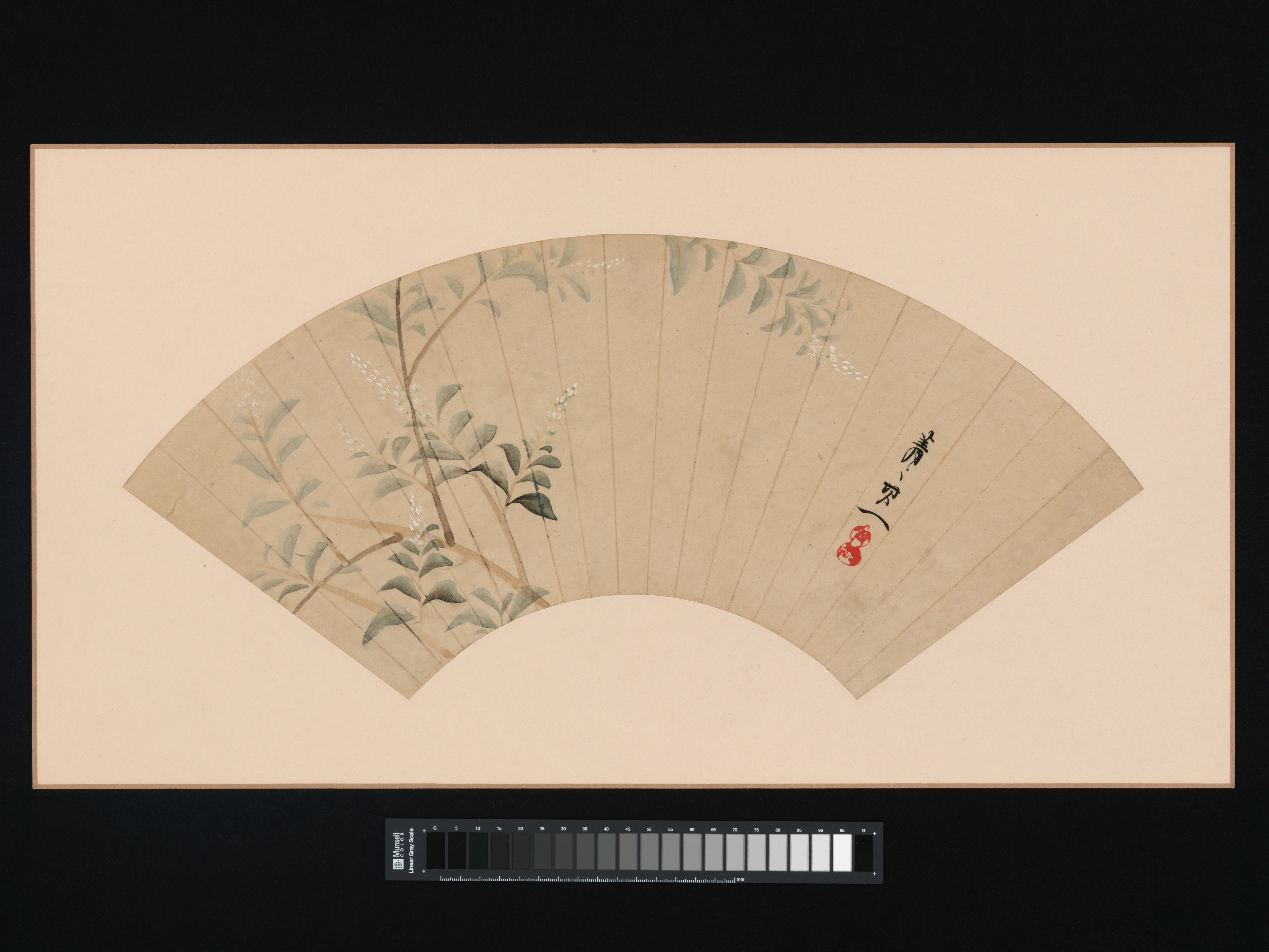
Bush Clover
Early 19th century
Folding fan mounted as an album leaf; ink and color on paper, framed
Frequently Asked Questions
Young Nobleman Crouching beside His Horse was created by Suzuki Kiitsu (鈴木其一) in 1798–1810.