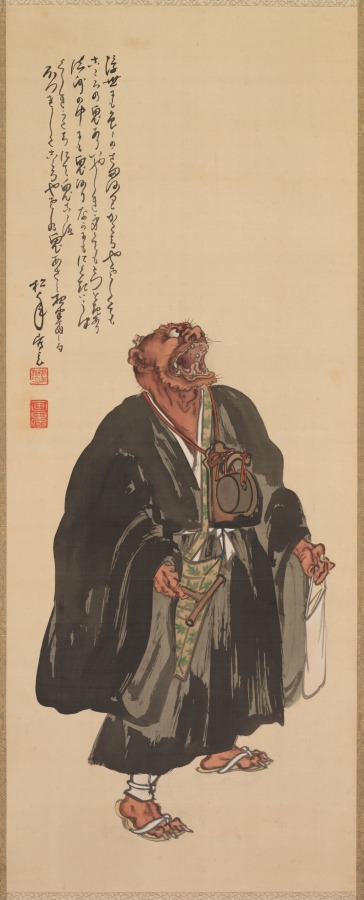
Demon Intoning the Name of the Buddha
鬼の念仏図
- Date:
- Late 1800s–early 1900s
- Medium:
- Hanging scroll; ink and color on silk
- Source:
- Cleveland Museum of Art
Description
A late hanging-scroll reworking by Suzuki Shōnen of an iconic Ōtsu-e folk motif. The original Ōtsu painting — a souvenir image sold to pilgrims on the road into Kyoto — depicted a tonsured horned demon in a Buddhist kesa robe, swinging a small bell-gong and intoning the name of the Amida Buddha. The motif, half satire and half devotional, had been one of the most popular subjects of the Edo-period Ōtsu workshops. Shōnen revisits it for a Meiji literati audience. He converts the simple folk figure into a more elaborate ink-and-color study on silk, gives the demon a more individuated, almost portrait-like presence, and accompanies the image with a long calligraphic inscription that reflects on the meaning of the iconography. The hanging-scroll format itself reframes what had been a printed souvenir as a literary object suitable for tokonoma display. The work is characteristic of Shōnen's late Meiji practice of rescuing Edo-period popular subjects from the print trade and reabsorbing them into the elevated medium of brush painting. Held by the Cleveland Museum of Art (acc. 1991.77).
More Prints by Suzuki Shōnen


Frequently Asked Questions
Demon Intoning the Name of the Buddha (鬼の念仏図) was created by Suzuki Shōnen (鈴木松年) in Late 1800s–early 1900s.