
Ehon tsūhō shi
絵本通宝志
- Date:
- 1729
- Medium:
- Woodblock-printed book; 7 vols.
- Source:
- Art Institute of Chicago
Description
Held in the Art Institute of Chicago and dated 1729, Ehon tsūhō shi (絵本通宝志) is a seven-volume woodblock-printed picture book that belongs to the central run of Morikuni's mature e-tehon production. The Frederick W. Gookin Collection's set preserves the line-block impressions of an early edition and documents one of the most widely circulated of Morikuni's picture manuals. As with his other multi-volume projects of this period — the Morokoshi kinmō zui of 1719 and the Gaten tsūkō of 1727 — the book functions simultaneously as a showcase of Morikuni's own draftsmanship and as a teaching resource: the compositions are organized to be studied, copied, and recombined by readers learning the orthodox Kanō pictorial vocabulary. Across seven volumes, the book presents figure subjects, landscapes, and bird-and-flower compositions in the spare line-block manner that was the e-tehon standard, allowing the engravers to preserve the essential brush gestures that defined a Kanō-trained painter's hand. The publication contributed substantially to Morikuni's reputation as the foundational figure of the Osaka e-tehon tradition and as the illustrator most responsible for putting the Kanō school's orthodox models into the hands of the early-eighteenth-century reading public, well beyond the closed studios where such knowledge had previously been transmitted.
More Prints by Tachibana Morikuni

Gaten tsūkō
画典通考
1727
Woodblock-printed book; 10 vols.
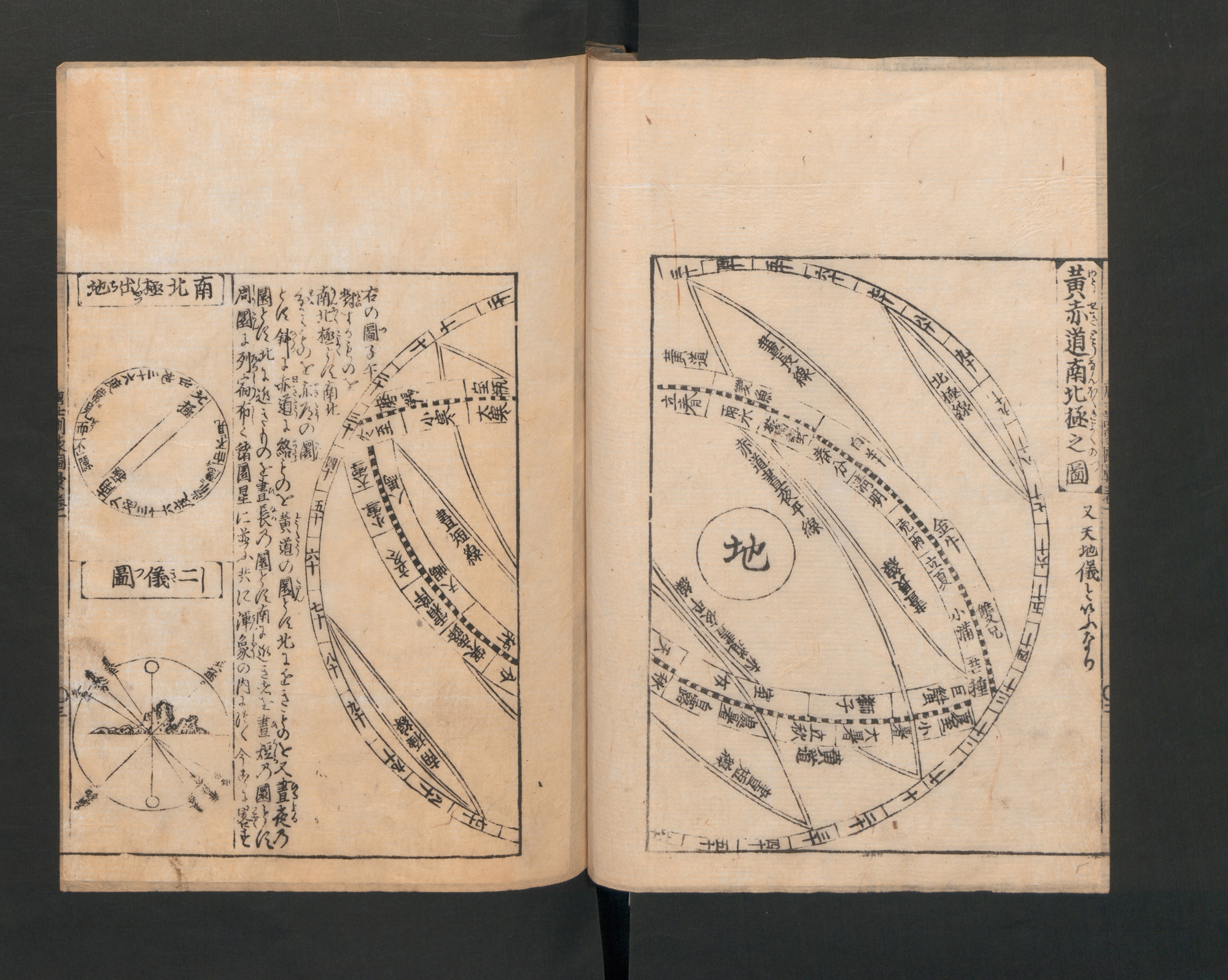
Illustrated Encyclopedia of China (Morokoshi kinmō zui)
唐土訓蒙図彙
1719; preface dated 1718
Set of two woodblock printed books; ink on paper
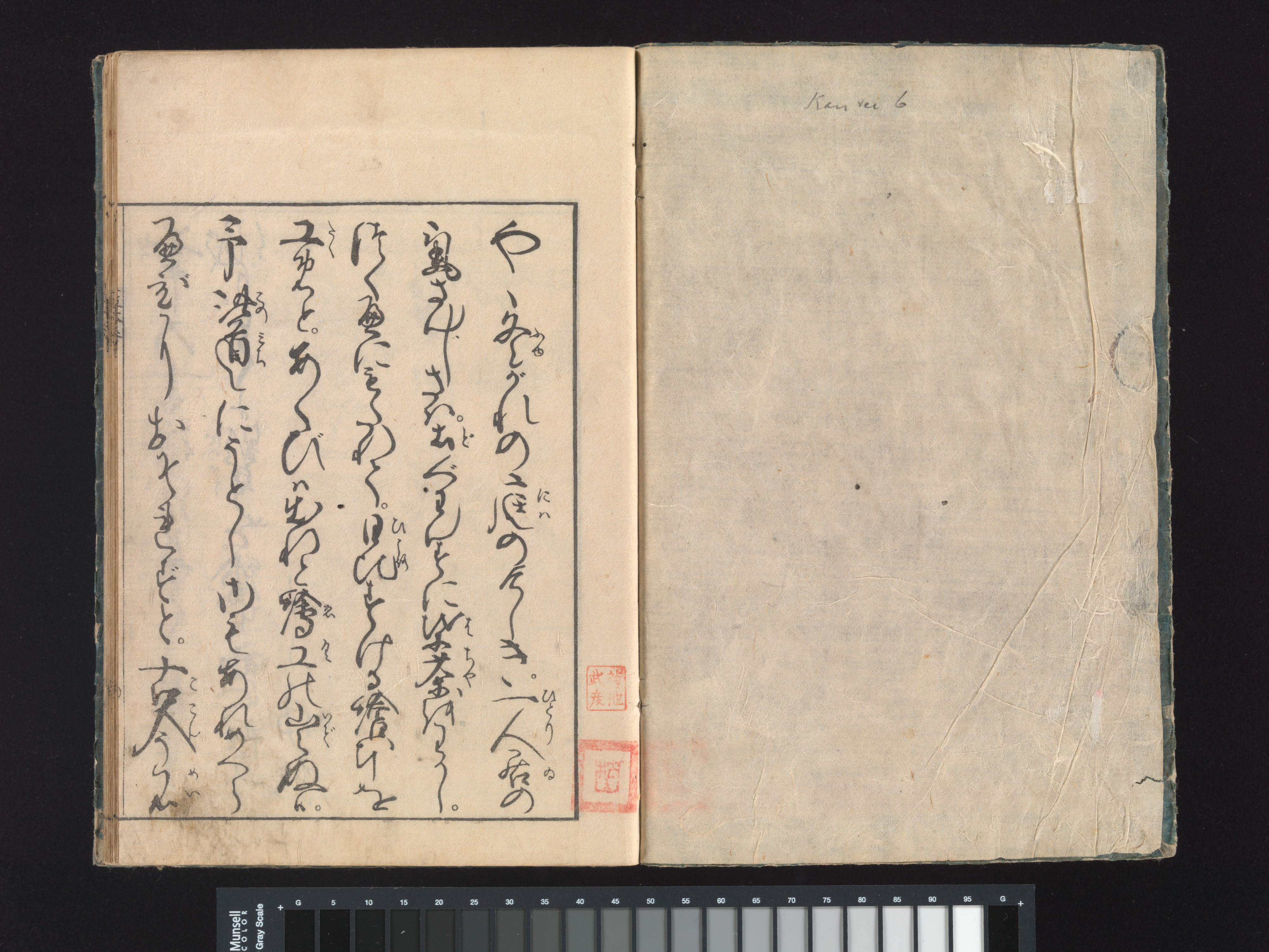
A Beginner's Pictorial Encyclopedia of Natural History (Ehon shaho bukuro)
絵本写宝袋
1761 (1794 second edition)
Three volumes of woodblock printed books (Japanese-style binding); ink on paper

Fusō gafu
扶桑画譜
1735
Woodblock-printed book; 5 vols.
Frequently Asked Questions
Ehon tsūhō shi (絵本通宝志) was created by Tachibana Morikuni (橘守国) in 1729.