Tachibana Morikuni
橘守国
1679–1748
Japan
Biography
Tachibana Morikuni (橘守国, 1679-1748) was an Osaka Kanō-school painter and prolific book illustrator whose printed picture manuals (e-tehon, 絵手本) carried the orthodox brush vocabulary of the academy into the eighteenth-century commercial publishing trade and made the Kanō pictorial idiom widely available to provincial painters, amateur artists, craftsmen, and connoisseurs across Japan. Working from Osaka rather than the official Kanō centers in Edo and Kyoto, Morikuni is the foundational figure of the Kamigata e-tehon tradition that flourished alongside, and in productive dialogue with, the rising ukiyo-e print culture of his lifetime.
Morikuni's painting training came through the Kanō line. He is generally identified as a pupil of Tsuruzawa Tanzan, a painter of the Kanō lineage descended from Kanō Tan'yū, and through Tanzan he inherited the Kanō school's full curriculum of orthodox brush models: Chinese landscape and figure subjects, kachō-ga (bird-and-flower) conventions, Confucian and Daoist historical narratives, and the auspicious symbolic vocabulary that defined the academy's official commissions. Like most pupils of his generation, Morikuni was trained to copy from authoritative model books and to compose within a tightly controlled stylistic range. What set his career apart was his decision to redirect that training into the booming Osaka and Kyoto publishing trade, where illustrated books had become a major commercial market by the early eighteenth century.
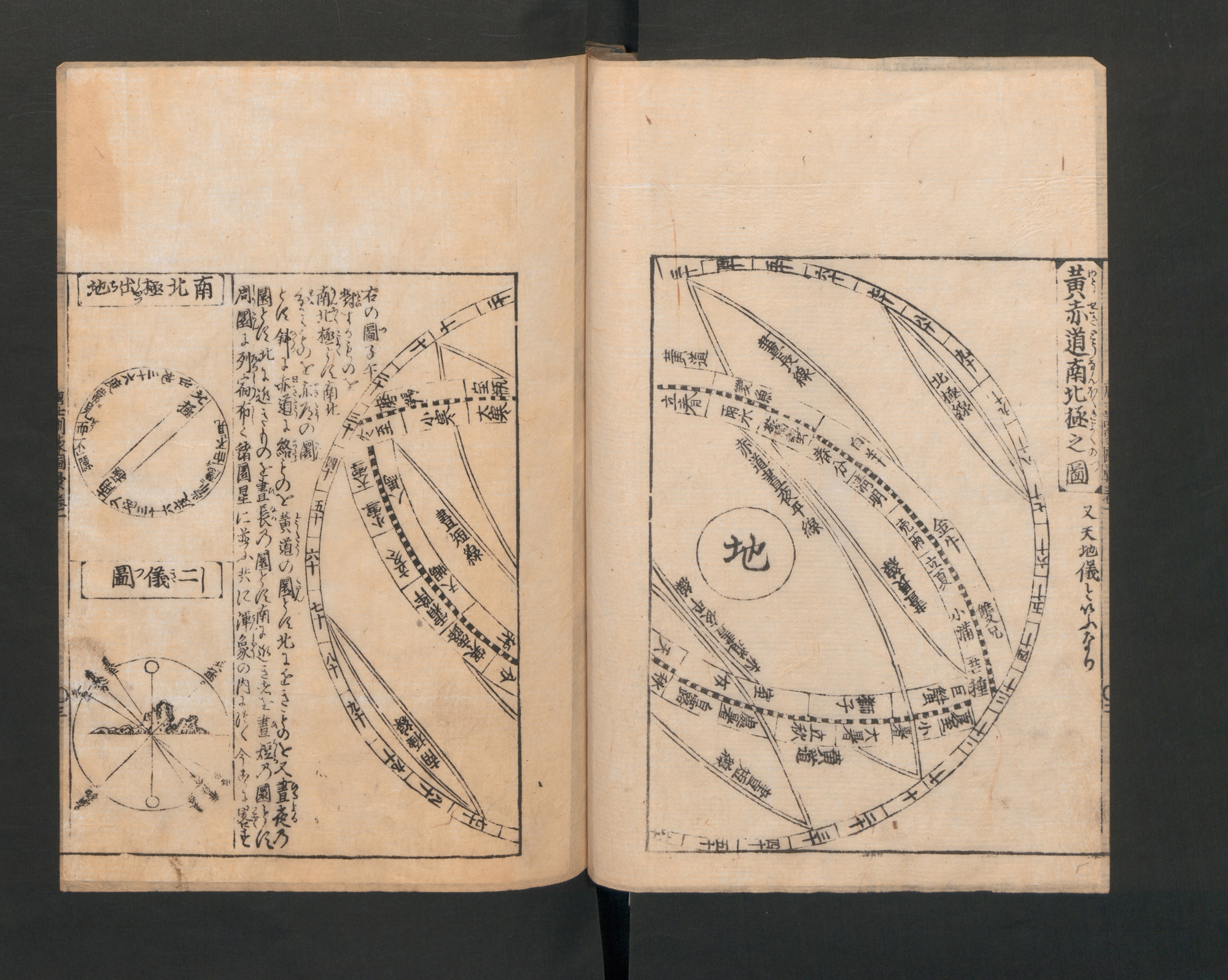
Beginning with his Ehon kojidan (1714) and continuing across more than three decades of sustained output, Morikuni produced a series of large multi-volume picture books that functioned as both showcases of his own draftsmanship and as systematic teaching manuals for would-be painters. The Morokoshi kinmō zui (Illustrated Encyclopedia of China, 1719) catalogued Chinese subjects — emperors, sages, animals, plants, costumes, implements — that any Kanō-trained painter was expected to command. The Ehon shaho bukuro (1720) gathered annotated model illustrations for painting themes and compositions drawn from both Japanese and Chinese subjects, and the Ehon tsūhō shi (1729) presented his compositions as model lessons, grouping figures, landscapes, and birds and flowers into the kinds of paired and serial arrangements that pupils could copy and recombine. The Fusō gafu (1735) turned to specifically Japanese subjects. His final major project, the Unpitsu soga (The Moving Brush in Rough Painting, 1749), appeared the year after his death and codified the rapid, abbreviated brush manner — soga, literally rough or sketch-like painting — that he had developed across his late career.
The historical significance of Morikuni's project is twofold. First, his books democratized access to Kanō-school models. Before the early eighteenth century, the orthodox brush vocabulary of the academies was transmitted privately, from teacher to pupil, through manuscript model books that circulated only within the lineage. Morikuni's printed e-tehon broke that monopoly, putting authoritative figure types, landscape conventions, and kachō-ga compositions into the hands of anyone who could afford a printed book. Provincial painters, amateur literati, decorative-arts designers, and ukiyo-e illustrators all drew on his manuals, and motifs traceable to his books appear across the eighteenth- and nineteenth-century print and decorative traditions. Second, Morikuni helped define what an e-tehon should look like as a publication: large-format, multi-volume sets organized by subject category, with explanatory prefaces, captioned illustrations, and the kind of systematic coverage that distinguished a teaching manual from a casual picture book. Fellow Kamigata illustrators such as Ōoka Shunboku (1680-1763) and Nishikawa Sukenobu (1671-1750) published instructional picture books in the same Kyoto-Osaka milieu, and the e-tehon as a genre remained a major commercial category in Japanese publishing through the end of the Edo period.
Morikuni died in Osaka in 1748 at the age of seventy. His books continued to be reprinted and reissued throughout the second half of the eighteenth century and into the nineteenth, with second and later editions appearing well after his death. His volumes are held today in major collections of Japanese illustrated books, including the Metropolitan Museum of Art, where they anchor study of the early Edo e-tehon tradition and of the broader transmission of Kanō pictorial conventions into the commercial print trade.
Key Facts
- Active Period
- 1679–1748
- Nationality
- 🇯🇵Japan
- Works Indexed
- 6
Frequently Asked Questions
Tachibana Morikuni (橘守国, 1679-1748) was an Osaka Kanō-school painter and prolific book illustrator whose printed picture manuals (e-tehon, 絵手本) carried the orthodox brush vocabulary of the academy into the eighteenth-century commercial publishing trade and made the Kanō pictorial idiom widely available to provincial painters, amateur artists, craftsmen, and connoisseurs across Japan. Working from Osaka rather than the official Kanō centers in Edo and Kyoto, Morikuni is the foundational figure of the Kamigata e-tehon tradition that flourished alongside, and in productive dialogue with, the rising ukiyo-e print culture of his lifetime.
Tachibana Morikuni was active from 1679 to 1748.
Original prints by Tachibana Morikuni can be found in collections including Art Institute of Chicago, Metropolitan Museum of Art.
Woodblock Prints by Tachibana Morikuni (6)
Illustrated Encyclopedia of China (Morokoshi kinmō zui)
唐土訓蒙図彙
1719; preface dated 1718
Set of two woodblock printed books; ink on paper

Gaten tsūkō
画典通考
1727
Woodblock-printed book; 10 vols.

Ehon tsūhō shi
絵本通宝志
1729
Woodblock-printed book; 7 vols.

Fusō gafu
扶桑画譜
1735
Woodblock-printed book; 5 vols.

The Moving Brush in "Rough" Painting (Unpitsu soga)
運筆麁画
1749
Set of three woodblock printed books; ink on paper
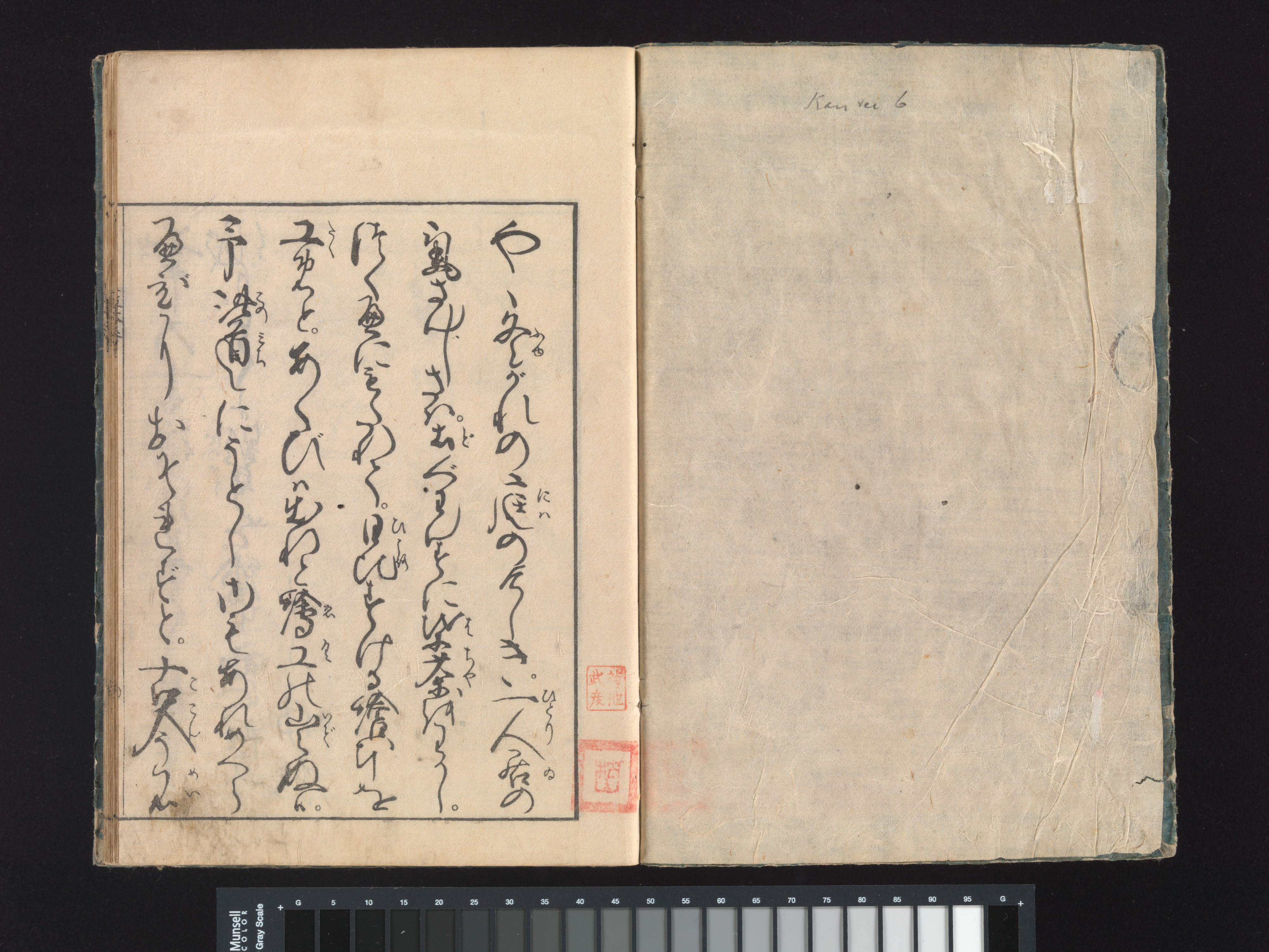
A Beginner's Pictorial Encyclopedia of Natural History (Ehon shaho bukuro)
絵本写宝袋
1761 (1794 second edition)
Three volumes of woodblock printed books (Japanese-style binding); ink on paper