
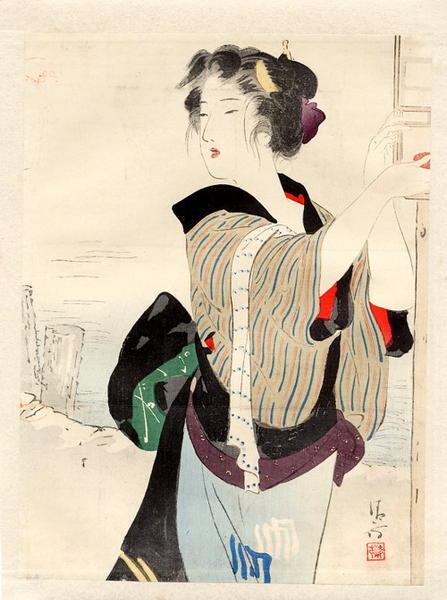
Portrait Of a woman
- Medium:
- Mokuhanga (Japanese woodblock)
- Image courtesy of
- Saru Gallery
Description
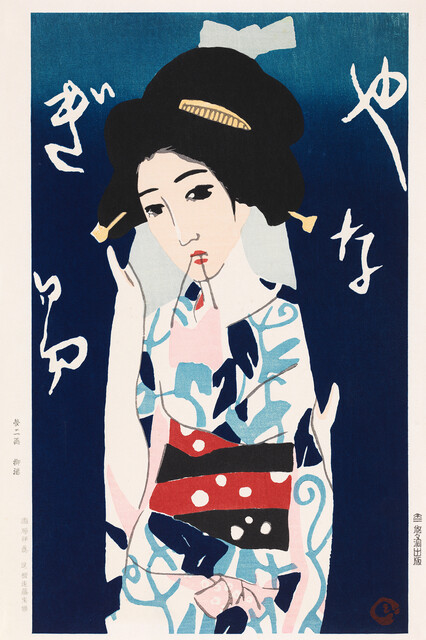
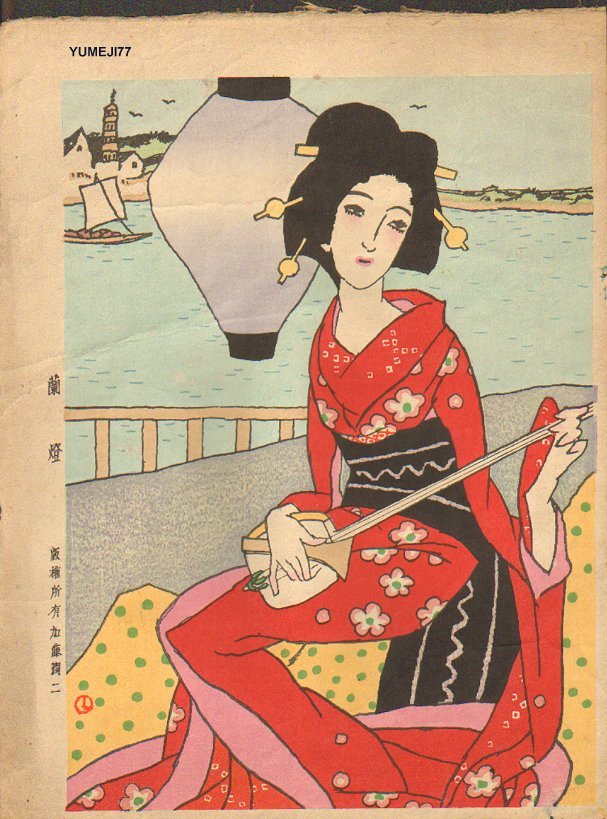
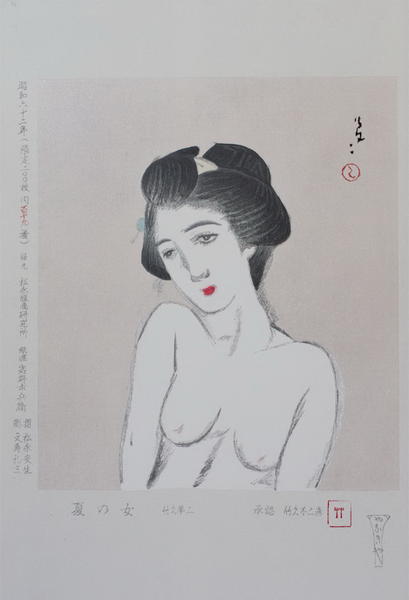
The print is a representative example of yumeji-shiki bijin, the distinctive type of feminine beauty — large dark eyes, slender attenuated body, sloping shoulders, melancholic mouth — that became Yumeji's recognizable contribution to twentieth-century Japanese visual culture and a visual signature of the Taisho era. The composition would isolate the figure against a plain or sparsely indicated ground, drawing pictorial weight to face and posture. Yumeji's bijin departs from the courtesan iconography of Utamaro and the actor-portrait tradition of Sharaku: his women are interior, emotional, often unnamed, presented as vessels of mood rather than as recognizable individuals or stock types. The technique combines traditional mokuhanga keyblock-and-color-block construction with Art Nouveau and Jugendstil compositional simplification — a flattening of pictorial space, an emphasis on continuous contour line, and a restrained palette that reads almost as poster design. His influence on subsequent Japanese illustration, manga character design, and shōjo aesthetics traces directly back to portraits of this kind.
More Prints by Takehisa Yumeji

More Portraits Prints

Frequently Asked Questions
Portrait Of a woman was created by Takehisa Yumeji (竹久夢二).
Portrait Of a woman depicts portraits.