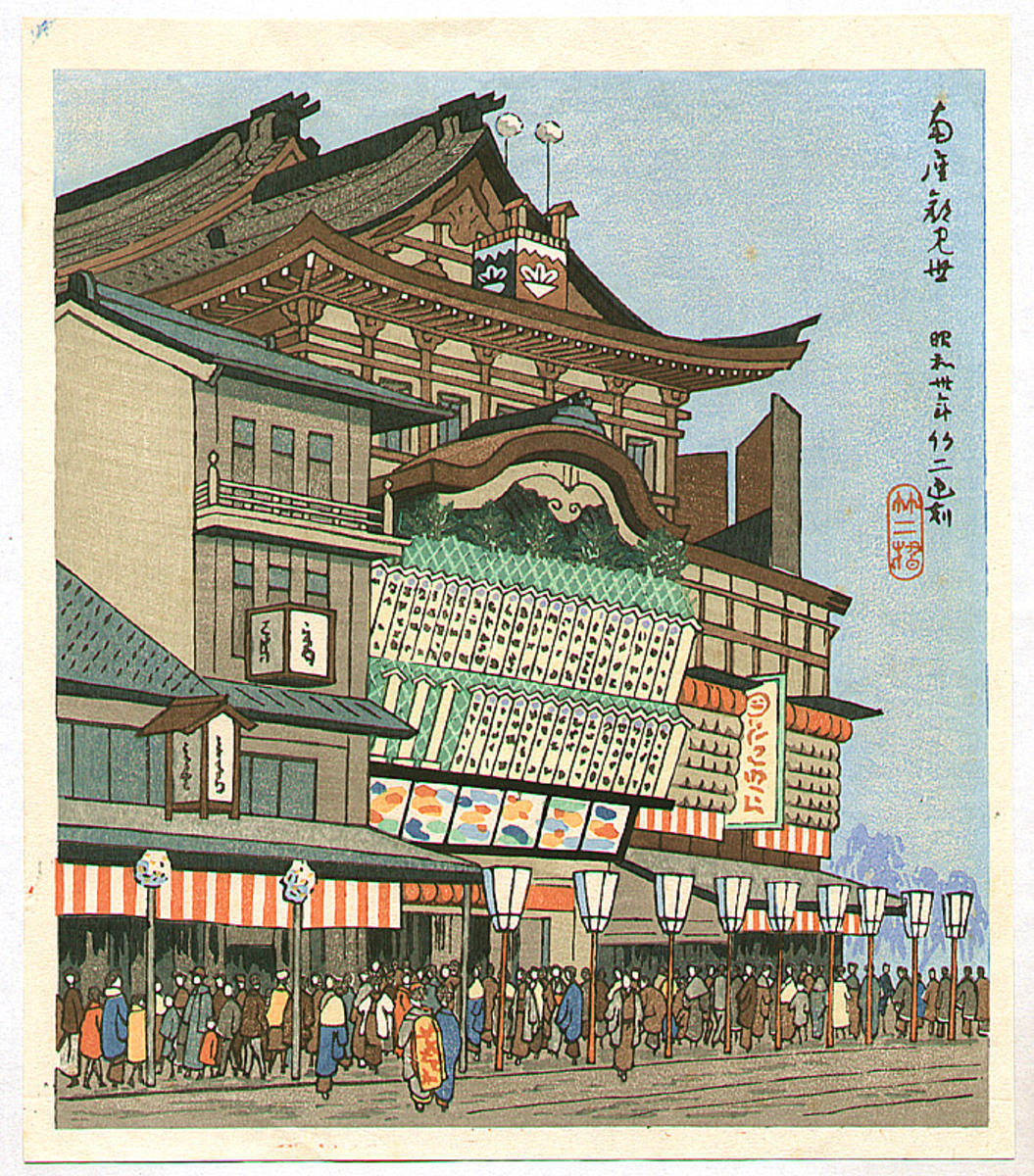
Kabuki Theater
歌舞伎
by Takeji Asano
- Medium:
- Woodblock print
- Format:
- Oban
- Publisher:
- Unsodo
- Source:
- Ukiyo-e.org (via Artelino)
Description
The Kabuki Theater as an architectural subject allowed Asano to apply his characteristic atmospheric sensitivity to the built environment of traditional Japanese performing arts. The theater's exterior — its curved rooflines, lanterns, and banner-hung facade — is rendered with the warm, observational care he brought to temple and shrine subjects, situating performance culture within the same visual world as the sacred architecture that dominated his output. Asano's Kyoto upbringing gave him intimate familiarity with the theatrical culture of the old capital, where Kabuki's relationship to everyday life was more porous than in Tokyo.
More Prints by Takeji Asano


More Kabuki Prints
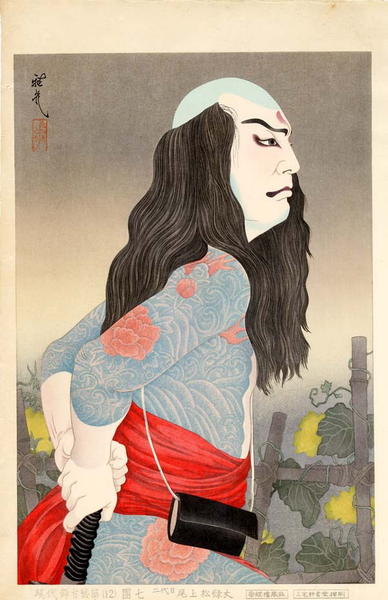
Onoe Shoroku II as the tattooed villain Danshichi
1955
Woodblock print

View of Kabuki Theater from Matsuya (Ginza Matsuya yori Kabukiza), no. 3 from the series "Pictures of Ginza, First Series (Gashu Ginza dai isshu)"
1928
Color lithograph

Distant View of Mitsukoshi Movie Theater in Shinjuku from the Sixth Floor of Hoteiya (Hoteiya rokkai kara Shinjuku Mitsukoshi Musashi no kan enbo zu), no. 1 from the series "Scenery of Shinjuku (Gashu Shinjuku fukei)"
1930
Color lithograph

Onimaru, from the series "Fifty Kyogen Plays (Kyogen gojuban)"
1927 (Published)
Color woodblock print
Featured in Collections
Curated cross-cuts that include this print.
Frequently Asked Questions
Kabuki Theater (歌舞伎) was created by Takeji Asano (浅野竹二).
Kabuki Theater uses Moku-hanga, Nishiki-e, and Bokashi, on woodblock print.
Kabuki Theater was published by Unsodo.
Kabuki Theater depicts kabuki.