
Spring Rain Collection (Harusame shū), vol. 3: Swallows and Peonies
- Date:
- ca. 1820
- Medium:
- Privately published woodblock prints (surimono) mounted in an album; ink and color on paper
- Source:
- Metropolitan Museum of Art
Description
From the Met's Harusame shū album, this surimono pairs swallows in flight with peonies in bloom — a classical kachō pairing carrying early-summer associations. Peonies (botan) had long been the 'king of flowers' in East Asian flower painting, prized for their layered petals, deep color, and connotations of wealth and aristocratic refinement; swallows were the canonical bird of late spring and early summer, returning from the south with the warming weather. Combining them in a single image carried a particular seasonal weight that kyōka poets would have responded to in their accompanying verses, perhaps playing the contrast of the swallow's quick movement against the peony's heavy stillness. Hokuba renders the peonies with full-bodied attention to their layered petals, the printing exploiting the format's capacity for tonal gradation in the color blocks, and the swallows in two registers of flight, the design's diagonals giving the static format a sense of movement. The print exemplifies the contributions Hokuba made to the album format during the Spring Rain Collection's circa-1820 production.
More Prints by Teisai Hokuba
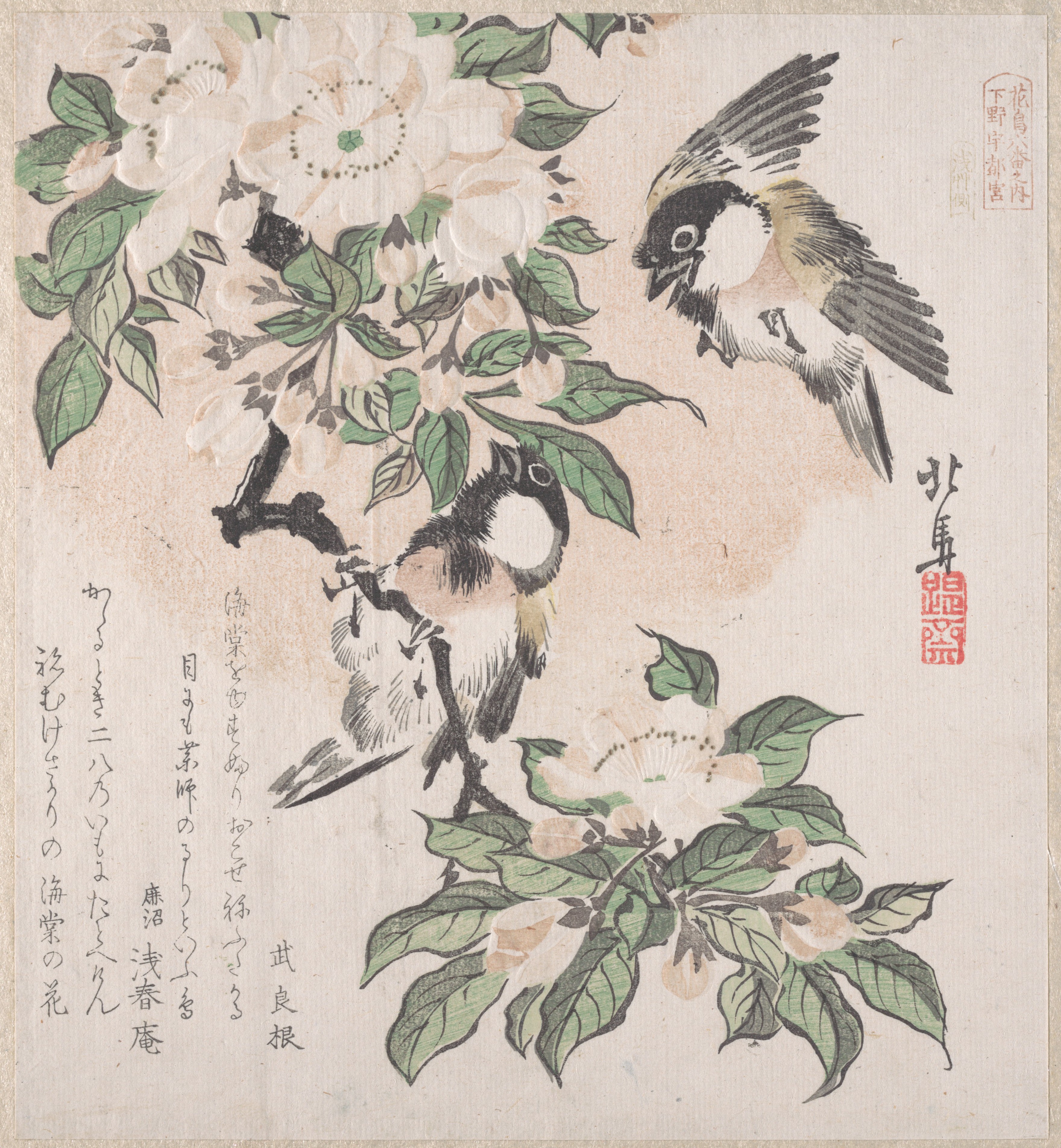
Spring Rain Collection (Harusame shū), vol. 3: Marsh-tits and Crab Apple Flowers
ca. 1820
Privately published woodblock prints (surimono) mounted in an album; ink and color on paper
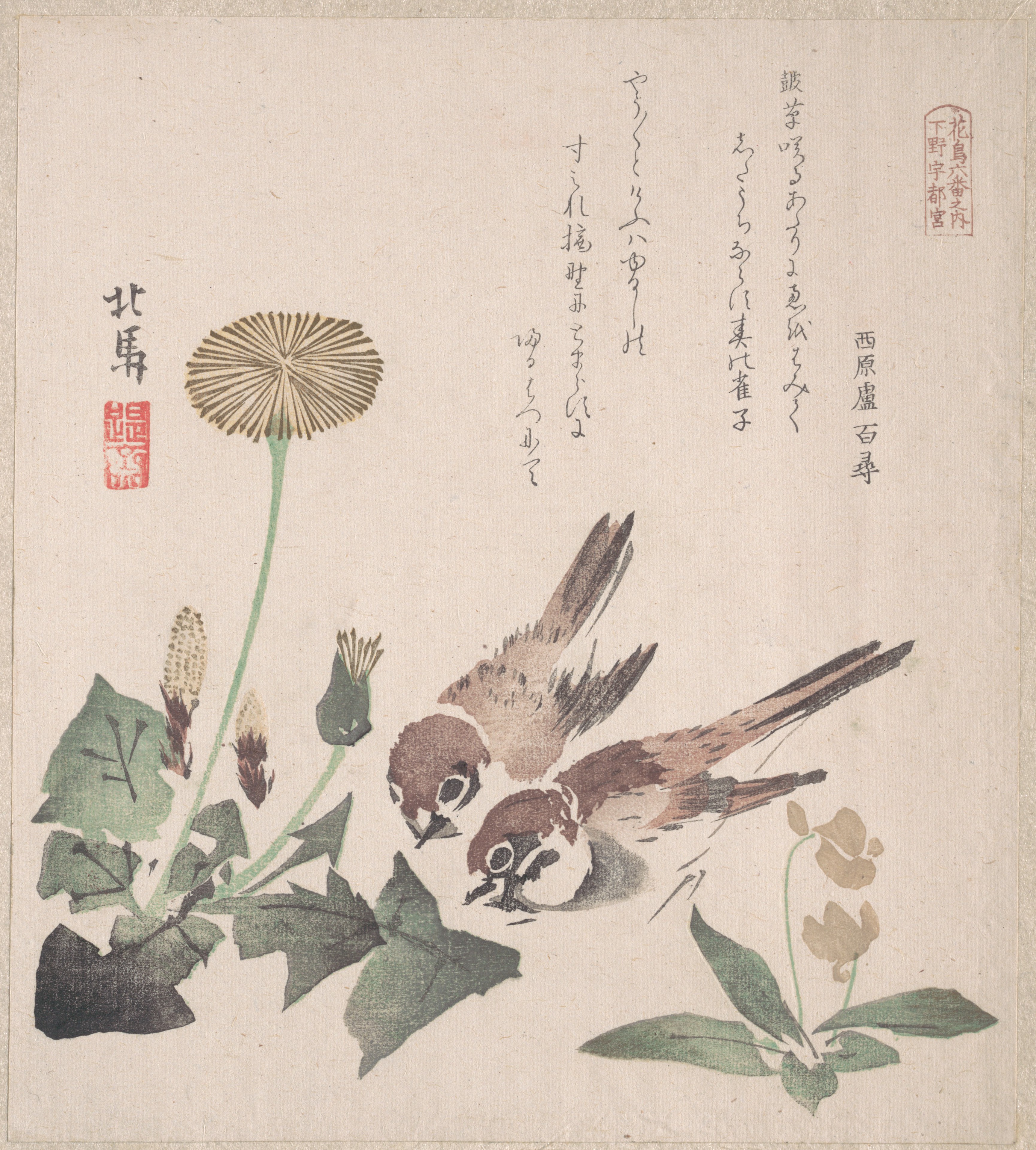
Spring Rain Collection (Harusame shū), vol. 3: Sparrows and Dandelions
ca. 1820
Privately published woodblock prints (surimono) mounted in an album; ink and color on paper

Ferry boat on the Yodo River
c. 1815/25
Color woodblock print; shikishiban, surimono
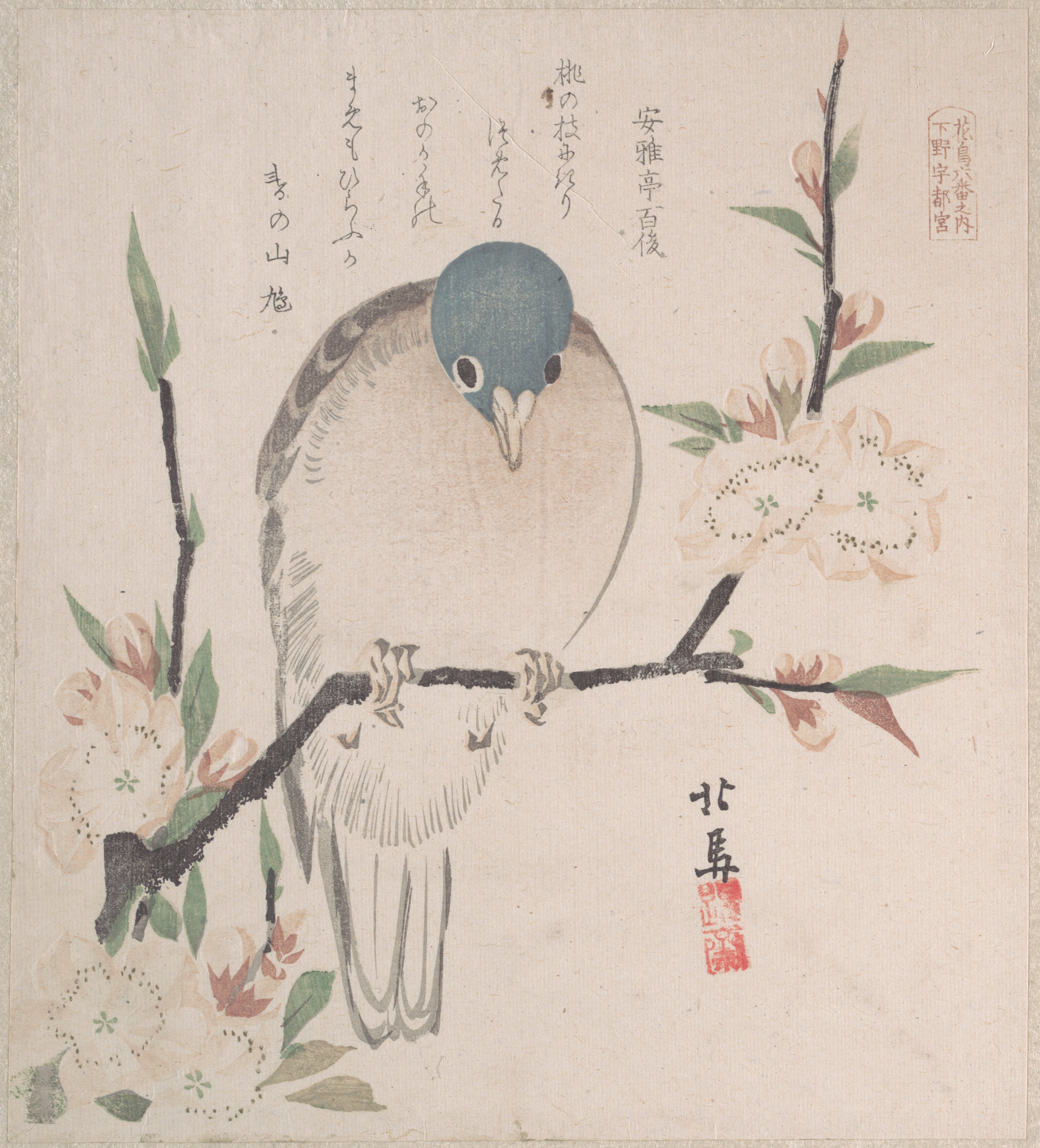
Spring Rain Collection (Harusame shū), vol. 3: Mountain Dove and Peach Flowers
ca. 1820
Privately published woodblock prints (surimono) mounted in an album; ink and color on paper
More Spring Prints

Frequently Asked Questions
Spring Rain Collection (Harusame shū), vol. 3: Swallows and Peonies was created by Teisai Hokuba (蹄斎北馬) in ca. 1820.
Spring Rain Collection (Harusame shū), vol. 3: Swallows and Peonies depicts spring and rain.