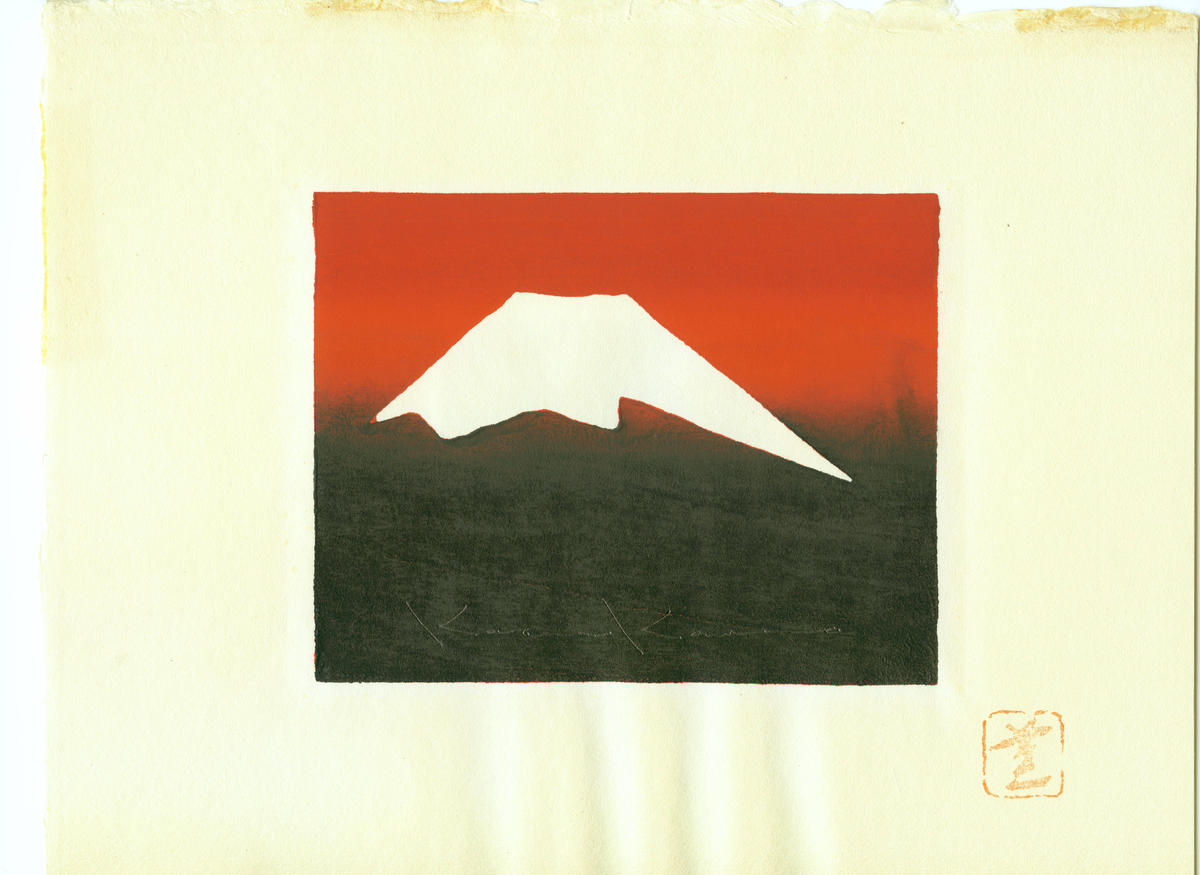
Mt Fuji
by Imoto Tekiho
- Medium:
- Woodblock print
- Source:
- Japanese Art Open Database
Description
Mount Fuji as rendered by Imoto Tekiho joins the vast lineage of Fuji images that stretches from Hokusai and Hiroshige to the present day. Every Japanese artist who depicts Fuji must reckon with this accumulated tradition, finding a personal perspective on a subject that has been painted, printed, and photographed from every conceivable angle. Tekiho's woodblock rendering likely reflects the sumi-e influenced approach that characterizes much of the artist's work, potentially presenting the mountain in a more atmospheric, ink-wash style than the crisp, colorful treatments associated with shin-hanga Fuji prints. The mountain's simple conical form suits the reductive aesthetic of sumi-e, where a few well-placed strokes can suggest a 3,776-meter peak with more power than detailed rendering would achieve.
More Prints by Imoto Tekiho

More Landscapes Prints

Lake Kugushi in Wakasa Province (Wakasa Kugushiko), from the series Souvenirs of Travel I (Tabi miyage dai isshu)"
Wakasa Kugushiko
1920
Color woodblock print; oban
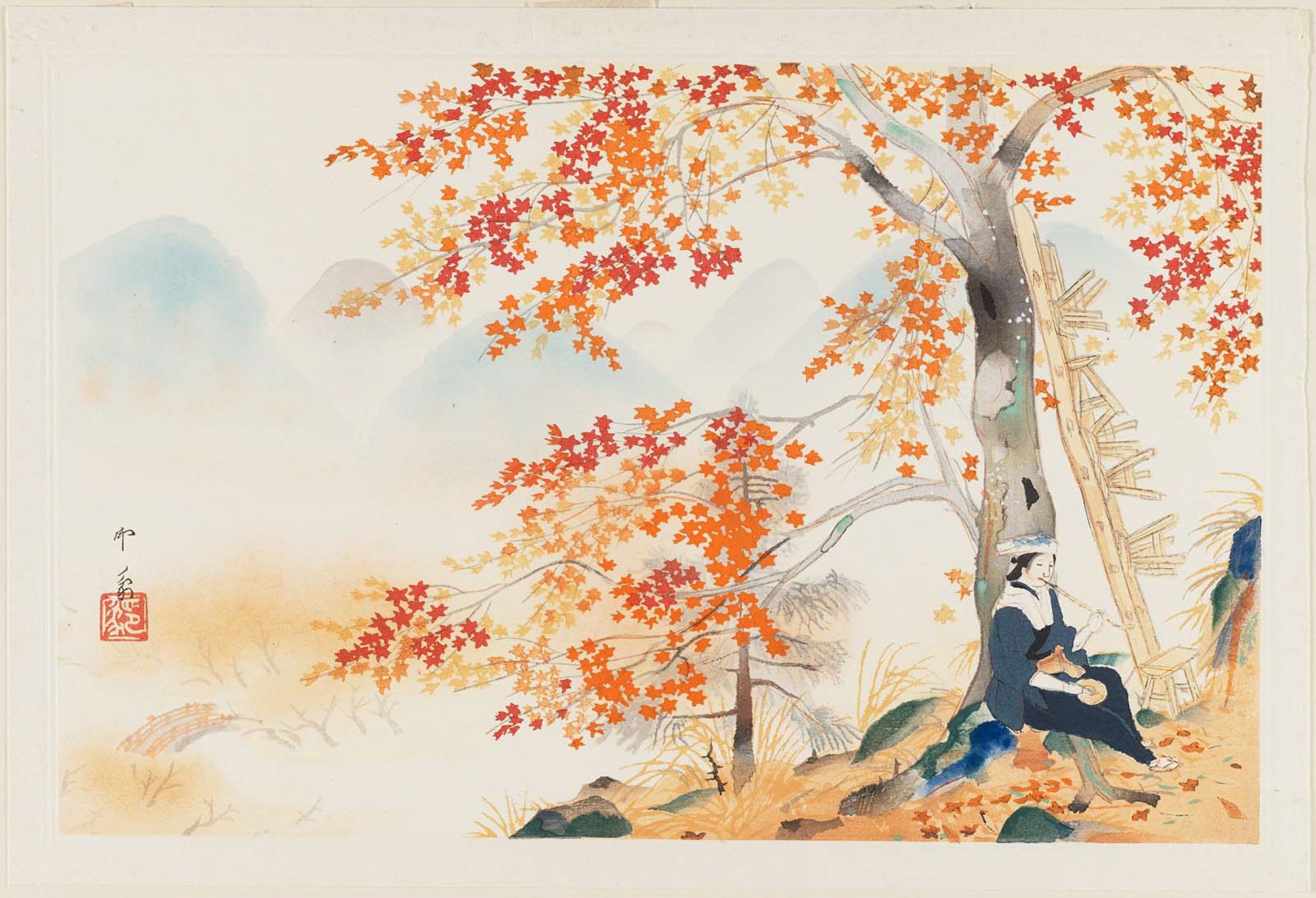
Autumn Maple Leaves at Takao, from the album Eight Views of Kyoto (Kyôto hakkei)
Woodblock print

The Beach at Kaiganji in Sanuki Province (Sanuki Kaiganji no hama), from the series "Collection of Views of Japan II, Kansai Edition (Nihon fukei shu II Kansai hen)"
1934
Color woodblock print; oban

Tea Kettle, section of a sheet from the series "Mirror of Stone Rubbings of Views of the Provinces" (Kohon meihitsu ishizuri kagami)
n.d.
Woodblock print; ishizuri-e, section of harimaze sheet
Featured in Collections
Curated cross-cuts that include this print.
Frequently Asked Questions
Mt Fuji was created by Imoto Tekiho (井元荻浦).
Mt Fuji depicts landscapes and mount fuji, set at Mount Fuji.