
Winter evening
- Medium:
- Mokuhanga (Japanese woodblock)
- Image courtesy of
- Saru Gallery
Description
A nocturnal winter composition combining two of the more difficult conditions for woodblock printing — low light and snow — into a single tonal problem. The print likely uses a deep blue or near-black field across most of its surface, with snow registered as the unprinted white of the washi itself, allowed to read through gaps in the block. Bokashi gradations may suggest the deepening of the sky toward the upper edge or the warm spill of an interior lamp. Inagaki's winter subjects connect his work to the long Japanese tradition of seasonal prints, but his treatment is sosaku-hanga in temperament: structure rather than incident, surface rather than narrative. A single figure, animal, or architectural fragment may anchor the lower portion of the composition, giving scale to the otherwise unbroken color field. The print demonstrates the movement's ambition to extend mokuhanga into expressive territory associated with European modernist printmaking, while continuing to rely on the technical infrastructure of carved block, hand-rubbed baren, and absorbent washi.
More Prints by Tomoo Inagaki


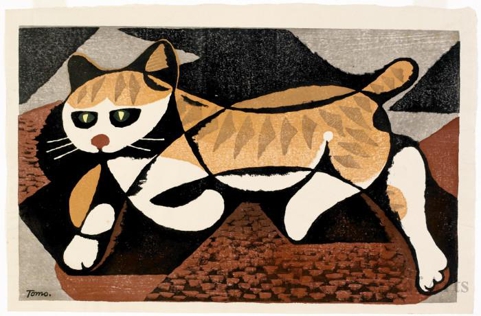
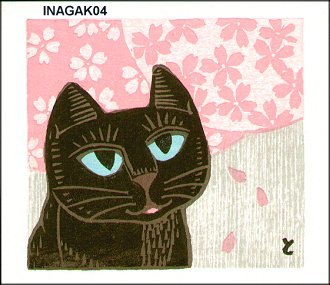
More Night Scenes Prints
Evening in East Africa
Woodblock print

Evening Shower at Teradomari (Teradomari no yau), from the series "Souvenirs of Travel, Second Series (Tabi miyage dai nishu)"
Teradomari no yau
1921
Color woodblock print; oban
![Mount Fuji on a Moonlit Night, Kawai Bridge (Tsukiyo no Fuji [Kawaibashi]), from the series "Selection of Views of the Tokaido (Tokaido fukei senshu)" by Kawase Hasui](https://www.artic.edu/iiif/2/d0960668-1e73-339a-b182-fb995a54bff0/full/843,/0/default.jpg)
Mount Fuji on a Moonlit Night, Kawai Bridge (Tsukiyo no Fuji [Kawaibashi]), from the series "Selection of Views of the Tokaido (Tokaido fukei senshu)"
1947
Color woodblock print; oban

Evening Moon at Nakanoshima, Sapporo (Sapporo Nakanoshima no yuzuki), from the series "Collection of Views of Japan, Eastern Japan Edition (Nihon fukei shu higashi Nihon hen)"
March 1933
Color woodblock print; oban
Featured in Collections
Curated cross-cuts that include this print.
Frequently Asked Questions
Winter evening was created by Tomoo Inagaki (稲垣知雄).
Winter evening depicts night scenes and winter.