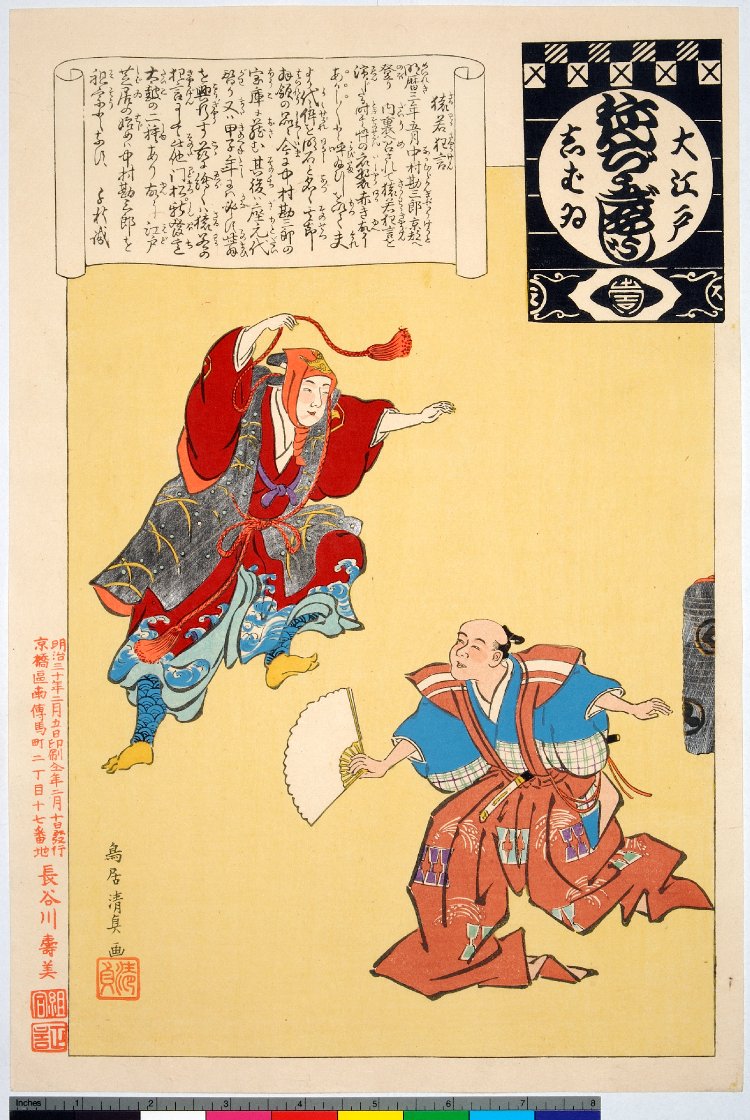
Saruwaka Kyōgen, from the series Annual Events of the Theater in Edo (Ōedo shibai nenjū-gyōji)
大江戸しばゐねんぢうぎやうじ 猿若狂言
- Date:
- 1897
- Medium:
- Woodblock print (nishiki-e); ink and color on paper
- Source:
- British Museum
Description
The Saruwaka kyōgen, the ritual opening dance that traditionally preceded each year's theatrical season at the Nakamura-za, is shown here in Torii Kiyosada's documentary record of the ceremonial customs of pre-Meiji Edo kabuki. The Saruwaka kyōgen took its name from Saruwaka Kanzaburō, the early seventeenth-century founder of the Nakamura-za (originally called the Saruwaka-za) and one of the foundational figures of Edo kabuki, whose memory the ritual dance preserved across more than two centuries of theatrical practice. The dance, performed at the kao-mise (face-showing) ceremony that marked the formal opening of each annual theatrical season in the eleventh month, was one of a set of ritual observances that gave the Edo kabuki year a structured ceremonial frame. By the late nineteenth century, with the Edo theatrical regime largely dismantled under Meiji modernisation and the kao-mise convention itself in retreat, the ritual was passing out of practice; Kiyosada's 1897 print, part of his series Annual Events of the Theater in Edo (Ōedo shibai nenjū-gyōji), functions as a deliberate documentary record of the older customs at the moment of their disappearance. The Torii school's traditional position as designer of all Edo theatrical publicity placed Kiyosada uniquely well to compose such a memorial record of the city's pre-Meiji ritual calendar. The print is held by the British Museum.
More Prints by Torii Kiyosada
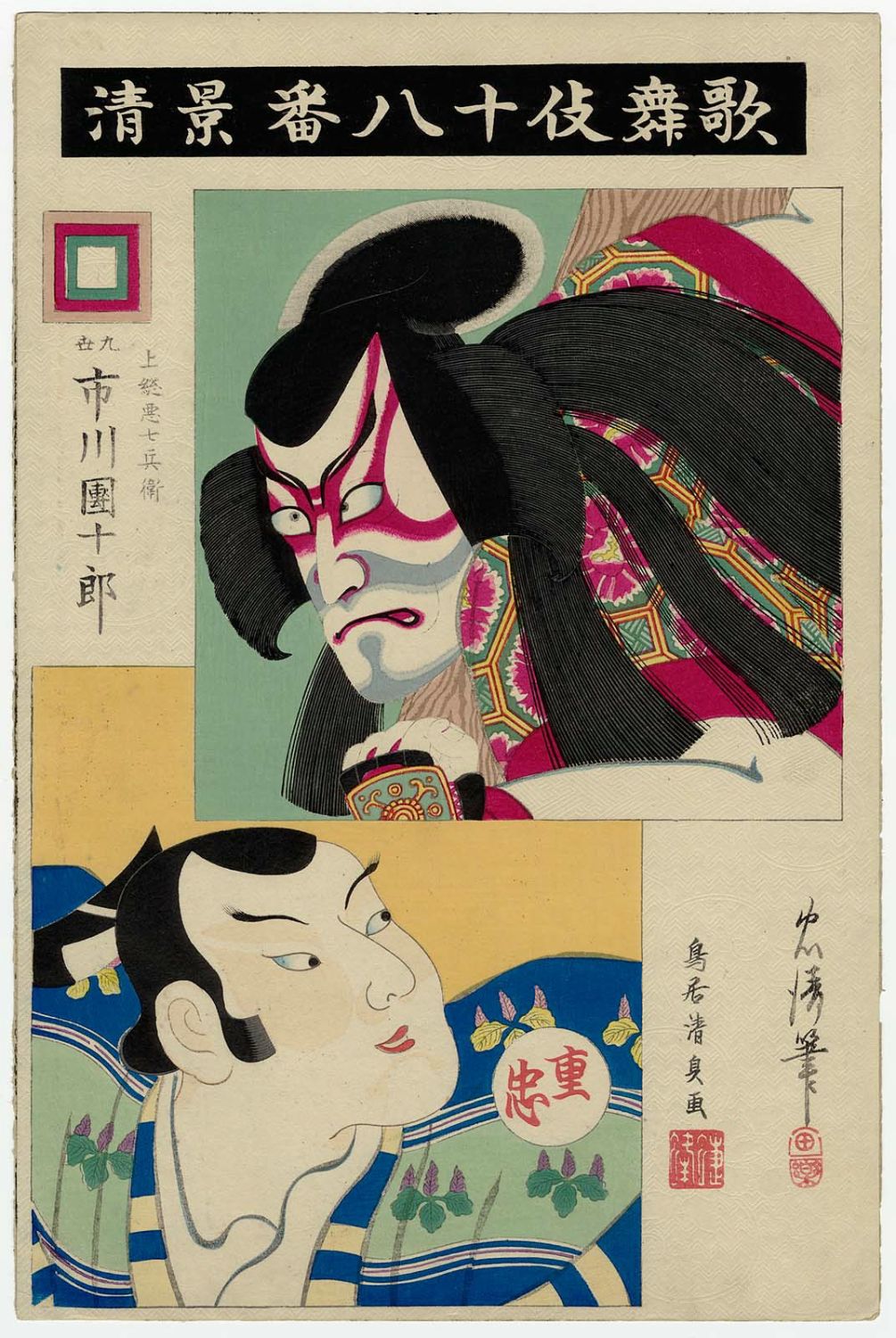
Actor Ichikawa Danjūrō IX as Kazusa Akushichibyōe in Kagekiyo, from the series The Eighteen Great Kabuki Plays (Kabuki Jūhachi-ban)
歌舞伎十八番 景清
1895
Woodblock print (nishiki-e); ink and color on paper
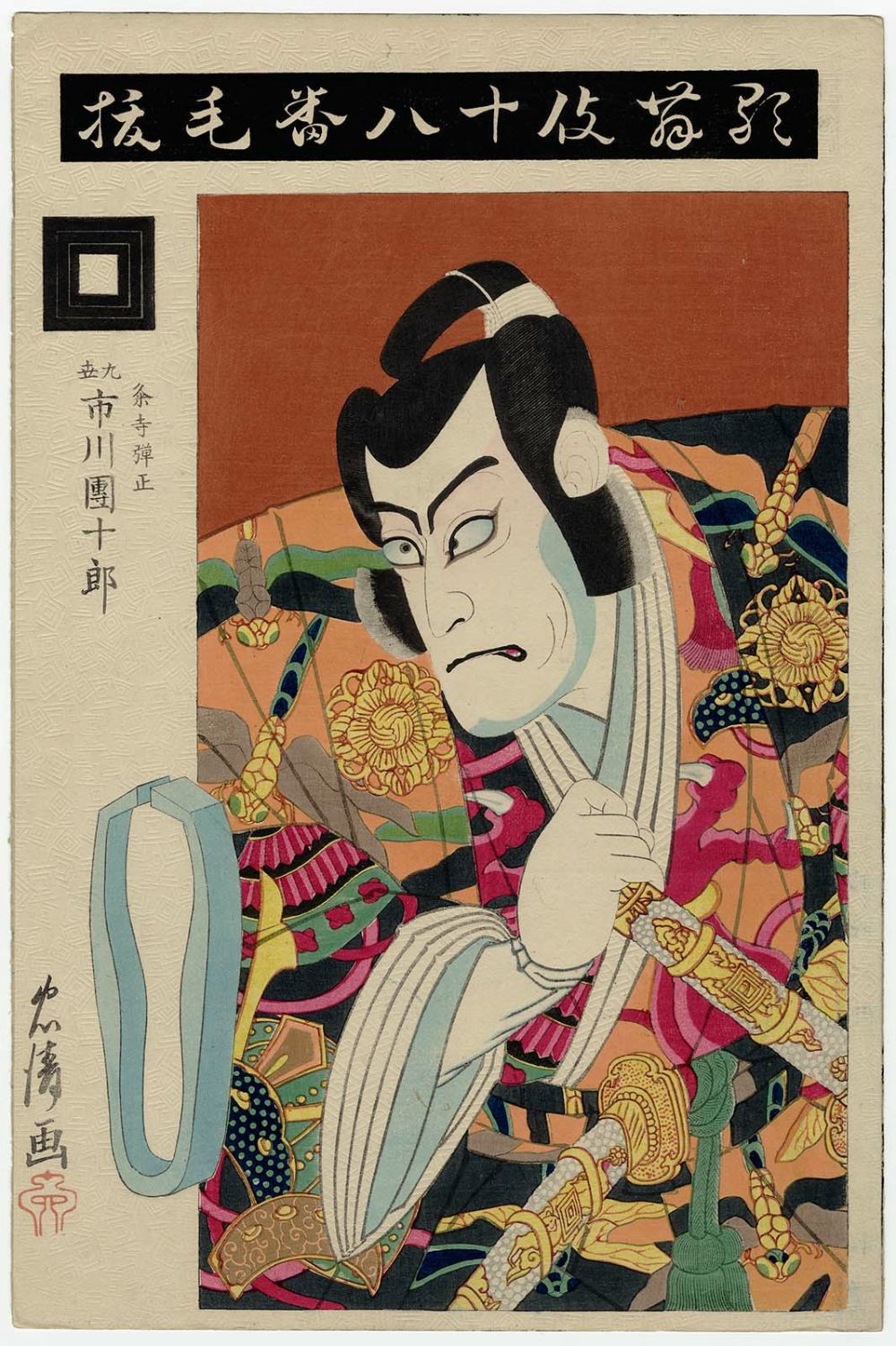
Actor Ichikawa Danjūrō IX as Kumedera Danjō in Kenuki, from the series The Eighteen Great Kabuki Plays (Kabuki Jūhachi-ban)
歌舞伎十八番 毛抜
1895
Woodblock print (nishiki-e); ink and color on paper
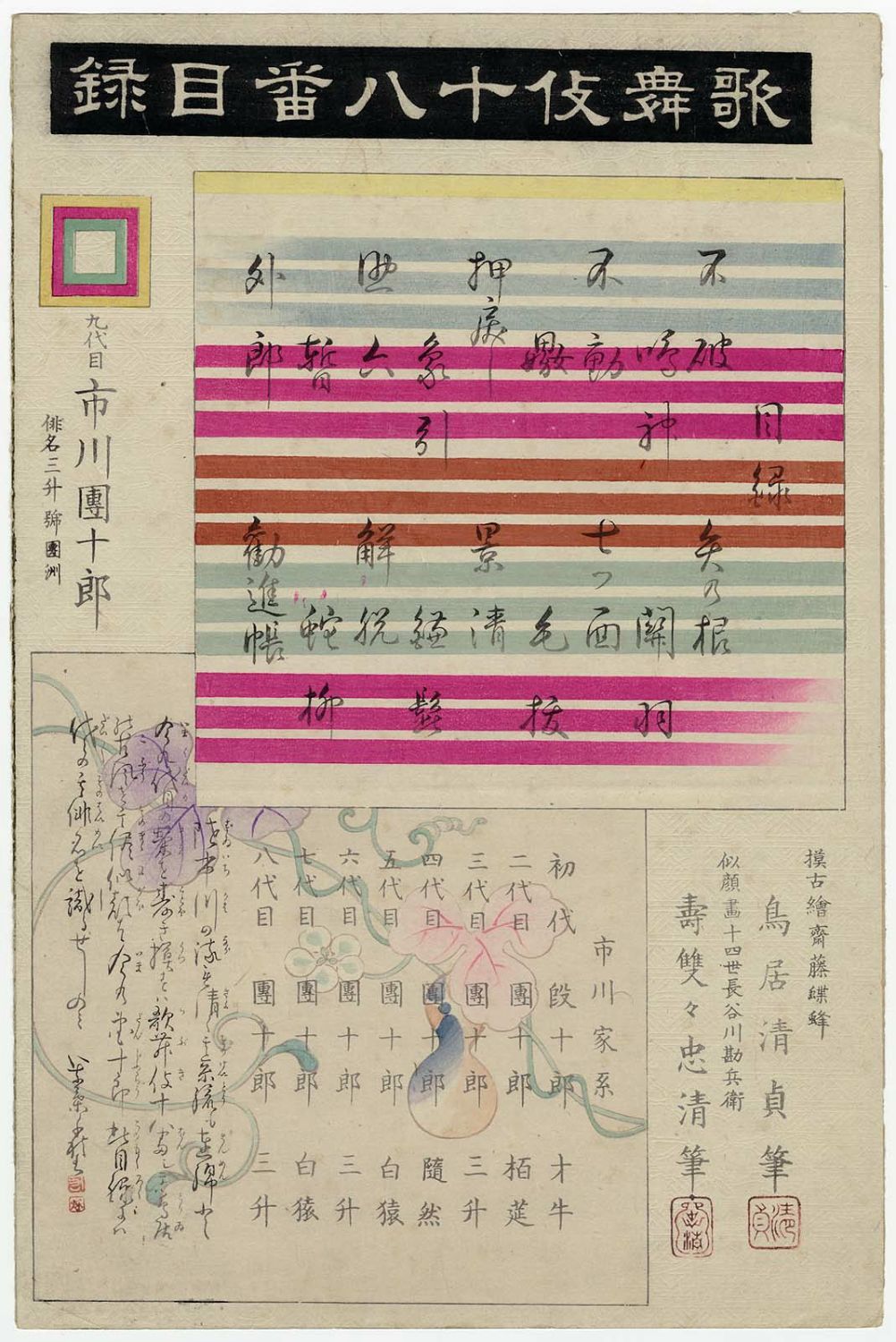
Title page (Mokuroku) for the series The Eighteen Great Kabuki Plays (Kabuki Jūhachi-ban)
歌舞伎十八番 目録
1895
Woodblock print (nishiki-e); ink and color on paper
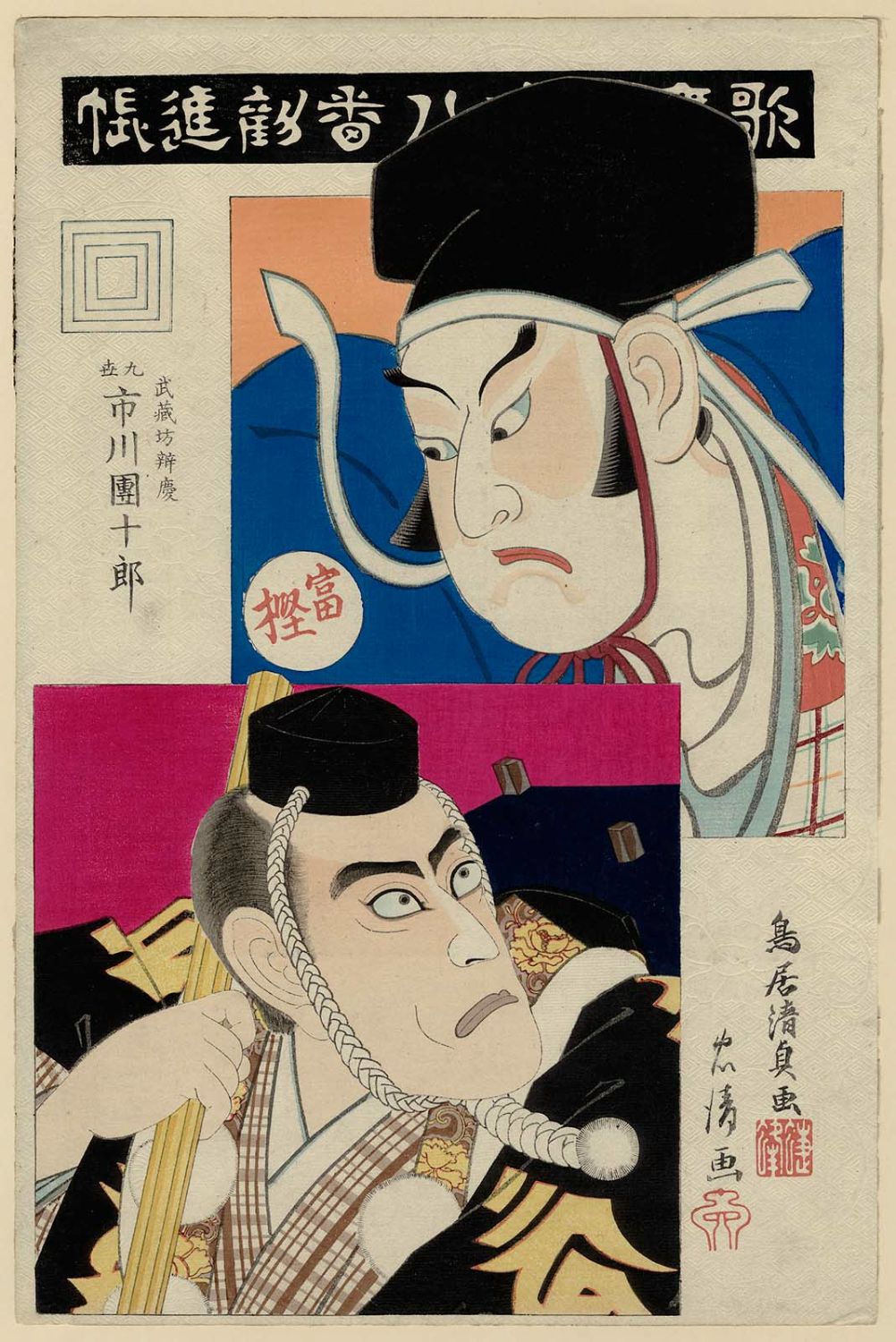
Actor Ichikawa Danjūrō IX as Musashibō Benkei in Kanjinchō, from the series The Eighteen Great Kabuki Plays (Kabuki Jūhachi-ban)
歌舞伎十八番 勧進帳
1896
Woodblock print (nishiki-e); ink and color on paper
Frequently Asked Questions
Saruwaka Kyōgen, from the series Annual Events of the Theater in Edo (Ōedo shibai nenjū-gyōji) (大江戸しばゐねんぢうぎやうじ 猿若狂言) was created by Torii Kiyosada (鳥居清貞) in 1897.