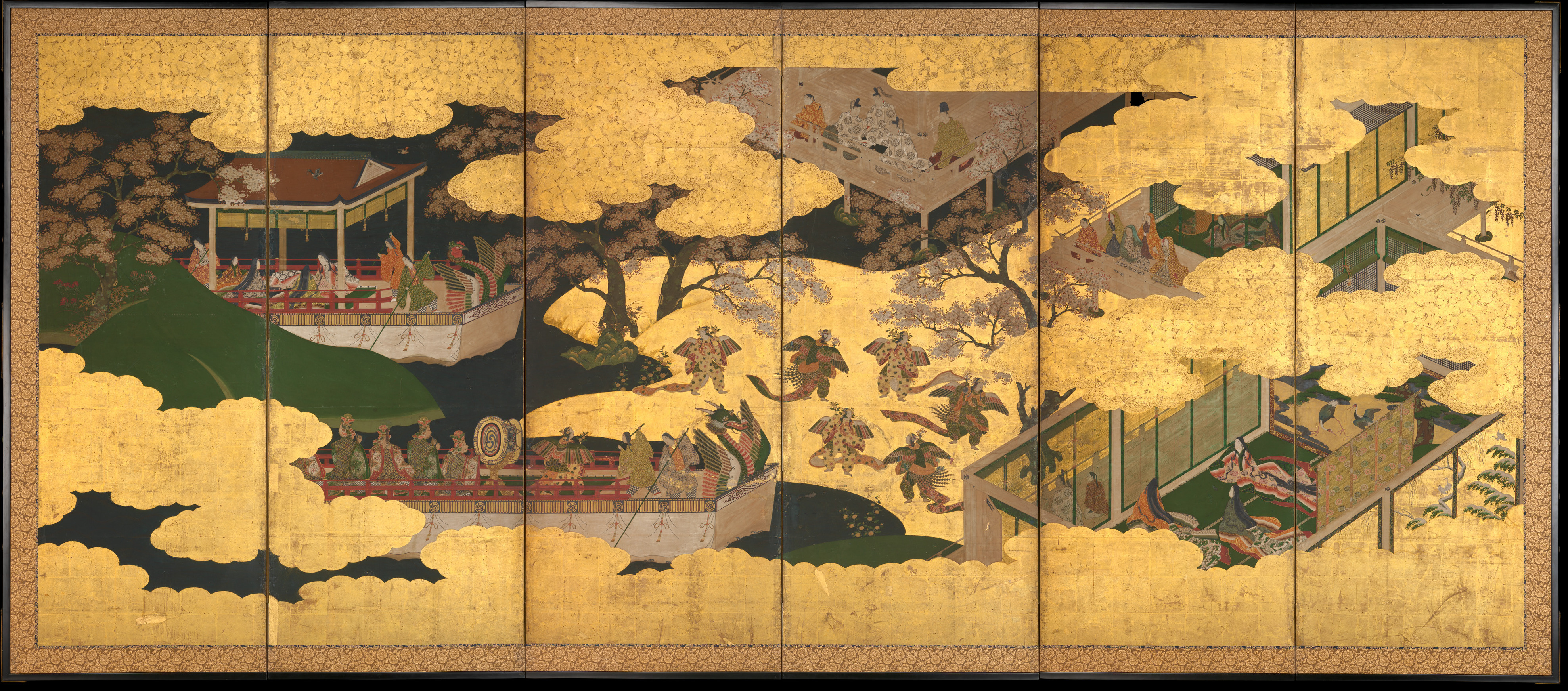
Butterflies
- Date:
- second half of 17th century
- Medium:
- Pair of six-panel folding screens; ink, color, and gold on silk
- Source:
- Metropolitan Museum of Art
Description
A pair of six-panel folding screens by Tosa Mitsuoki, depicting butterflies in flight against a ground of seasonal flowers and grasses, in ink, colour, and gold on silk. Butterflies (cho) were a recurring yamato-e subject, drawing on classical Chinese precedent (where the butterfly carried Daoist associations with the soul and with metamorphosis) but absorbed into the Japanese tradition as a decorative motif tied to the spring and summer seasons. The Tosa school's treatment of insect-and-flower subjects, in the manner of the Chinese kacho-ga (bird-and-flower) tradition naturalised within yamato-e, deployed the same vocabulary of gold-ground decoration and mineral colour that the school used for its more famous figural and narrative compositions. The Metropolitan Museum of Art preserves these screens (accession 1975.268.62) as a notable example of mature Tosa-school decorative painting from Mitsuoki's period of court leadership. The pair of six-panel format - a standard configuration for high-quality seventeenth-century Japanese screen painting, intended to be displayed facing one another to define a chamber interior - allowed Mitsuoki to develop the butterfly motif across twelve combined panels with the sustained decorative rhythm that the format encouraged. The work belongs to the late seventeenth century, the period of Mitsuoki's most accomplished mature production after his 1654 appointment as edokoro azukari.
More Prints by Tosa Mitsuoki

Quail and Autumn Flowers
second half of 17th century
Hanging scroll; ink and color on silk

Portrait-Icon of Murasaki Shikibu
17th century
Hanging scroll; ink, color, and gold on silk

Heron
second half of 17th century
Hanging scroll; ink and color on silk

Flowering Cherry and Autumn Maples with Poem Slips
1654/81
Pair of six-panel screens; ink, color, gold and silver on silk
Frequently Asked Questions
Butterflies was created by Tosa Mitsuoki (土佐光起) in second half of 17th century.