
Heron
- Date:
- second half of 17th century
- Medium:
- Hanging scroll; ink and color on silk
- Source:
- Metropolitan Museum of Art
Description
A hanging-scroll painting by Tosa Mitsuoki depicting a single heron, in ink and colour on silk. The Metropolitan Museum of Art preserves this work (accession 2019.420.19) as part of its holdings of seventeenth-century Tosa-school painting. The heron (sagi) was a recurring subject of Japanese kacho-ga, drawing on the Chinese painting tradition of waterbird subjects and on the bird's associations within Japanese poetic imagery, where the white plumage carried connotations of purity and the waterbird's solitary stillness suggested the kind of contemplative quietude prized in courtly aesthetic discourse. Mitsuoki's treatment of the subject in the hanging-scroll format, with the bird depicted as a single isolated figure against a minimally rendered ground, places the work in the more restrained register of his production, contrasting with the densely worked gold-ground court screens for which he was simultaneously celebrated. The hanging-scroll format suited a less monumental viewing context: the work would have been hung in a tokonoma alcove or in a more intimate chamber interior, rotated through the year in the Japanese seasonal display system that paired specific paintings with specific months. Such bird-and-flower scrolls supplied the visual environment of the seventeenth-century court and aristocratic household, working alongside the larger decorative screens that Mitsuoki produced for more formal spaces.
More Prints by Tosa Mitsuoki

Quail and Autumn Flowers
second half of 17th century
Hanging scroll; ink and color on silk

Portrait-Icon of Murasaki Shikibu
17th century
Hanging scroll; ink, color, and gold on silk
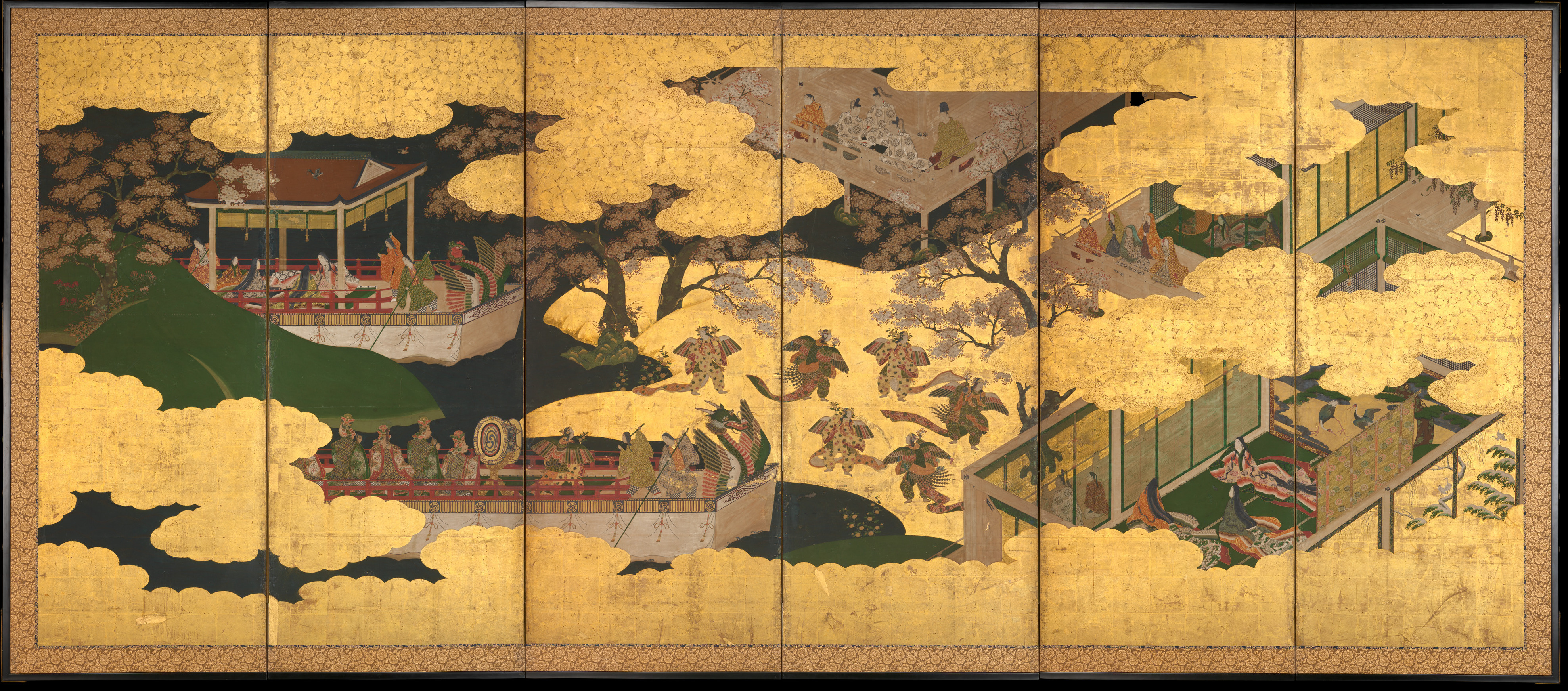
Butterflies
second half of 17th century
Pair of six-panel folding screens; ink, color, and gold on silk

Flowering Cherry and Autumn Maples with Poem Slips
1654/81
Pair of six-panel screens; ink, color, gold and silver on silk
More Birds & Flowers Prints
Frequently Asked Questions
Heron was created by Tosa Mitsuoki (土佐光起) in second half of 17th century.
Heron depicts birds & flowers.