
Ama no Uzume, No. 3 (Sono san) from the series "The Boulder Door of Spring (Haru no iwato)"
- Date:
- 1820s
- Medium:
- Color woodblock print; shikishiban, surimono
- Source:
- Art Institute of Chicago
Description
The third sheet in Totoya Hokkei's surimono series The Boulder Door of Spring (Haru no iwato), dated 1820 by the Art Institute of Chicago, depicts Ama no Uzume, the goddess whose ecstatic dance lured Amaterasu from the cave in which she had hidden. As Sono san, or No. 3, the print follows the drummer and Sarutahiko within the cycle, completing a Shinto tableau that Edo kyoka-e patrons would have read as both mythological and seasonal. Hokkei, a senior pupil of the Hokusai school, was among the most prolific surimono designers of his generation, and his treatment of Uzume reflects the Hokusai workshop's appetite for narrative subjects refined to the demands of the small shikishiban sheet. The Boulder Door myth, central to early Japanese cosmology, was a natural choice for a New Year-related kyoka club commission, since the goddess's return from the cave evoked the sun's return at the new season. Verses by club members would have shared the surface with the image, and the deluxe printing characteristic of surimono — mica, gold and silver pigments, embossing — would have lent the goddess's costume and dance posture a richly tactile presence. The sheet stands as a representative example of how Totoya Hokkei and the Hokusai school adapted classical Japanese myth to the literary and material refinements of the surimono medium.
More Prints by Totoya Hokkei

Potted Plant (Ueki), from the series "Eighteen Illustrations of the Ladder of Ancient Words (Kogentei juhachiban tsuzuki)"
1831
Color woodblock print; shikishiban, surimono
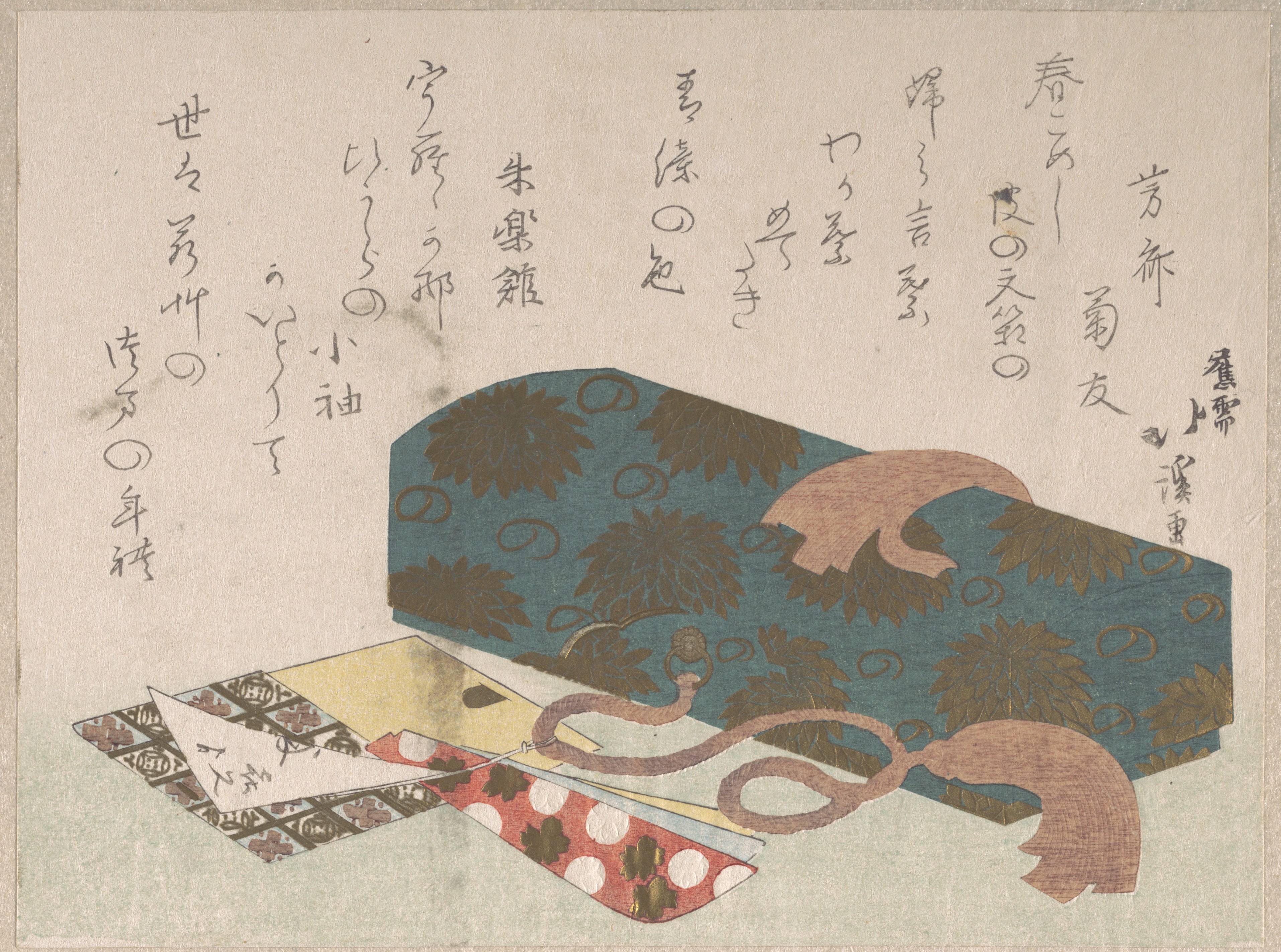
Letter-box and Toothpick Holders
19th century
Part of an album of woodblock prints (surimono); ink and color on paper

Illustration of a Chinese poem, from the series "Picture Book of Chinese Poems (Toshi gafu no uchi)"
c. 1830/44
Color woodblock print; chuban

Kyōka Verse Anthology of Elegant Friends (Kyōka gayū shū) 狂歌雅友集
1826 (Bunsei 9)
Woodblock printed book; ink and color on paper
More Spring Prints

Frequently Asked Questions
Ama no Uzume, No. 3 (Sono san) from the series "The Boulder Door of Spring (Haru no iwato)" was created by Totoya Hokkei (魚屋北渓) in 1820s.
Ama no Uzume, No. 3 (Sono san) from the series "The Boulder Door of Spring (Haru no iwato)" depicts spring.