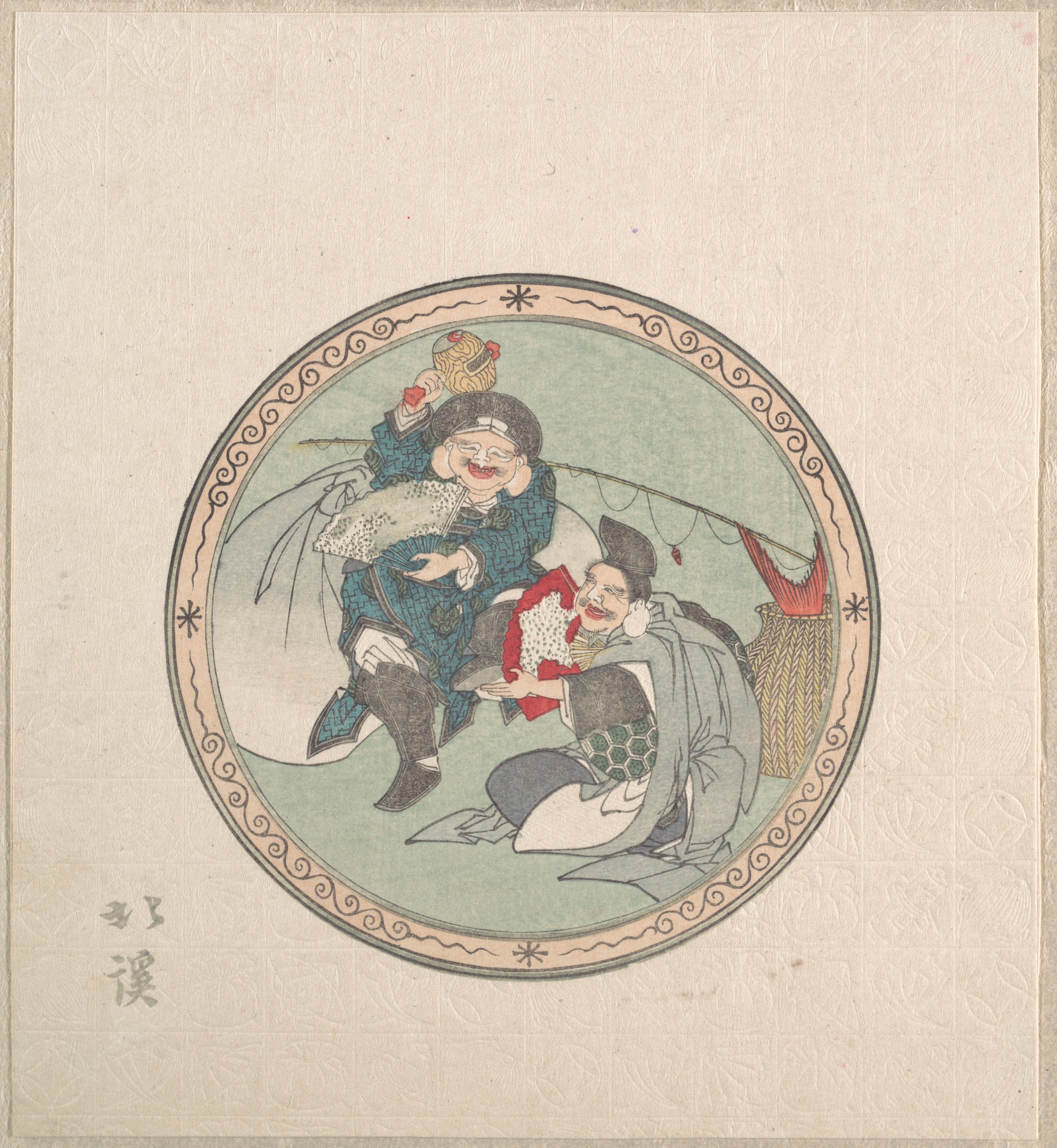
Ebisu and Daikoku; Two of the Seven Gods of Good Fortune
- Date:
- 19th century
- Medium:
- Part of an album of woodblock prints (surimono); ink and color on paper
- Source:
- Metropolitan Museum of Art
Description
Totoya Hokkei's Ebisu and Daikoku; Two of the Seven Gods of Good Fortune is a New Year-themed surimono that captures two of the most beloved deities in Edo popular religion. Ebisu, patron of fishermen and merchants, is traditionally portrayed holding a sea bream and a fishing rod, while Daikoku, the god of wealth and the kitchen, carries his magic mallet and rice bales. Their pairing made them the most frequently invoked of the Seven Gods of Good Fortune (Shichifukujin) in domestic ritual, and they appeared widely on prints commissioned to mark the New Year. As one of Katsushika Hokusai's senior pupils, Hokkei worked within the Hokusai school's tradition of imagining mythological figures with both reverence and gentle humor, presenting the gods as approachable, almost neighborly presences rather than distant sacred beings. Hokkei's composition typically gives the two figures clear, characterful silhouettes against an open ground, allowing their attributes to read at a glance and leaving space for kyoka verses by the poetry club members who commissioned the print. As a surimono, the print would have been distributed within a kyoka circle as a New Year greeting, the accompanying verses playing upon wordplay around fortune, prosperity, and the year ahead. Luxury printing techniques such as gauffrage embossing, gradient bokashi shading, and metallic or mica pigments enhanced the festive atmosphere in original impressions. Held by the Metropolitan Museum of Art, Ebisu and Daikoku exemplifies the way Totoya Hokkei bound popular religious imagery to the social rituals of kyoka exchange. The print captures the intersection of folk belief, literary culture, and domestic celebration that gave surimono its unique flavor within the Hokusai school's broader output.
More Prints by Totoya Hokkei

Potted Plant (Ueki), from the series "Eighteen Illustrations of the Ladder of Ancient Words (Kogentei juhachiban tsuzuki)"
1831
Color woodblock print; shikishiban, surimono
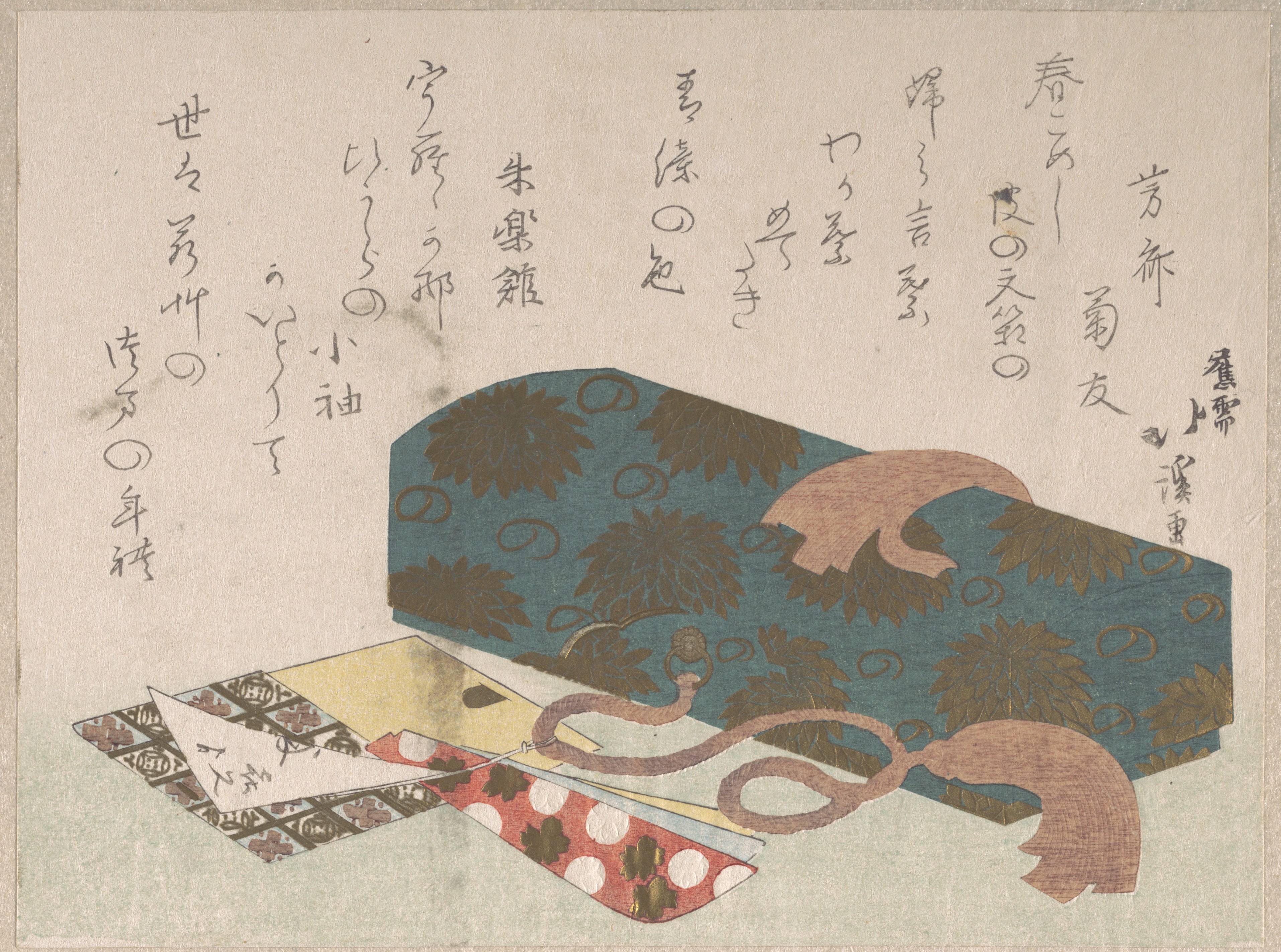
Letter-box and Toothpick Holders
19th century
Part of an album of woodblock prints (surimono); ink and color on paper

Illustration of a Chinese poem, from the series "Picture Book of Chinese Poems (Toshi gafu no uchi)"
c. 1830/44
Color woodblock print; chuban

Kyōka Verse Anthology of Elegant Friends (Kyōka gayū shū) 狂歌雅友集
1826 (Bunsei 9)
Woodblock printed book; ink and color on paper
Frequently Asked Questions
Ebisu and Daikoku; Two of the Seven Gods of Good Fortune was created by Totoya Hokkei (魚屋北渓) in 19th century.