
Spring Mountains, no. 2
- Date:
- ca. 1830
- Medium:
- Source:
- Victoria and Albert Museum
Description
Spring Mountains, no. 2, designed by Totoya Hokkei around 1830, is a surimono whose landscape subject aligns with the broader interest in seasonal mountain views that pervaded late Edo print culture. The image, presumably part of a small set devoted to spring mountains, would have offered a setting at once seasonal and contemplative for the kyoka verses inscribed by the commissioning poets. The combination of spring and mountains in a Japanese poetic context evokes a wide range of associations, from the burgeoning vegetation of low foothills to the lingering snows on higher peaks, all of which provided fertile ground for poetic improvisation. Hokkei renders the subject within the controlled landscape vocabulary of the Hokusai school, drawing on principles he had learned under Katsushika Hokusai for organizing space and modulating tonality. The deluxe surimono format permitted the use of metallic pigments and refined color gradations that would have suited the soft atmospheres of a spring mountain view. Totoya Hokkei specialized in surimono more thoroughly than most other pupils of Hokusai, and his landscape designs from the late 1820s and 1830s reflect a sustained engagement with the genre at a time when Hokusai himself and Ando Hiroshige were transforming public expectations of woodblock landscape. The Victoria and Albert Museum preserves this impression under collection record O129382, where it provides a useful international point of comparison with Hokkei's better-known travel and zodiac surimono of the same period, and where it demonstrates the breadth of his contribution to Hokusai school landscape practice.
More Prints by Totoya Hokkei

Potted Plant (Ueki), from the series "Eighteen Illustrations of the Ladder of Ancient Words (Kogentei juhachiban tsuzuki)"
1831
Color woodblock print; shikishiban, surimono
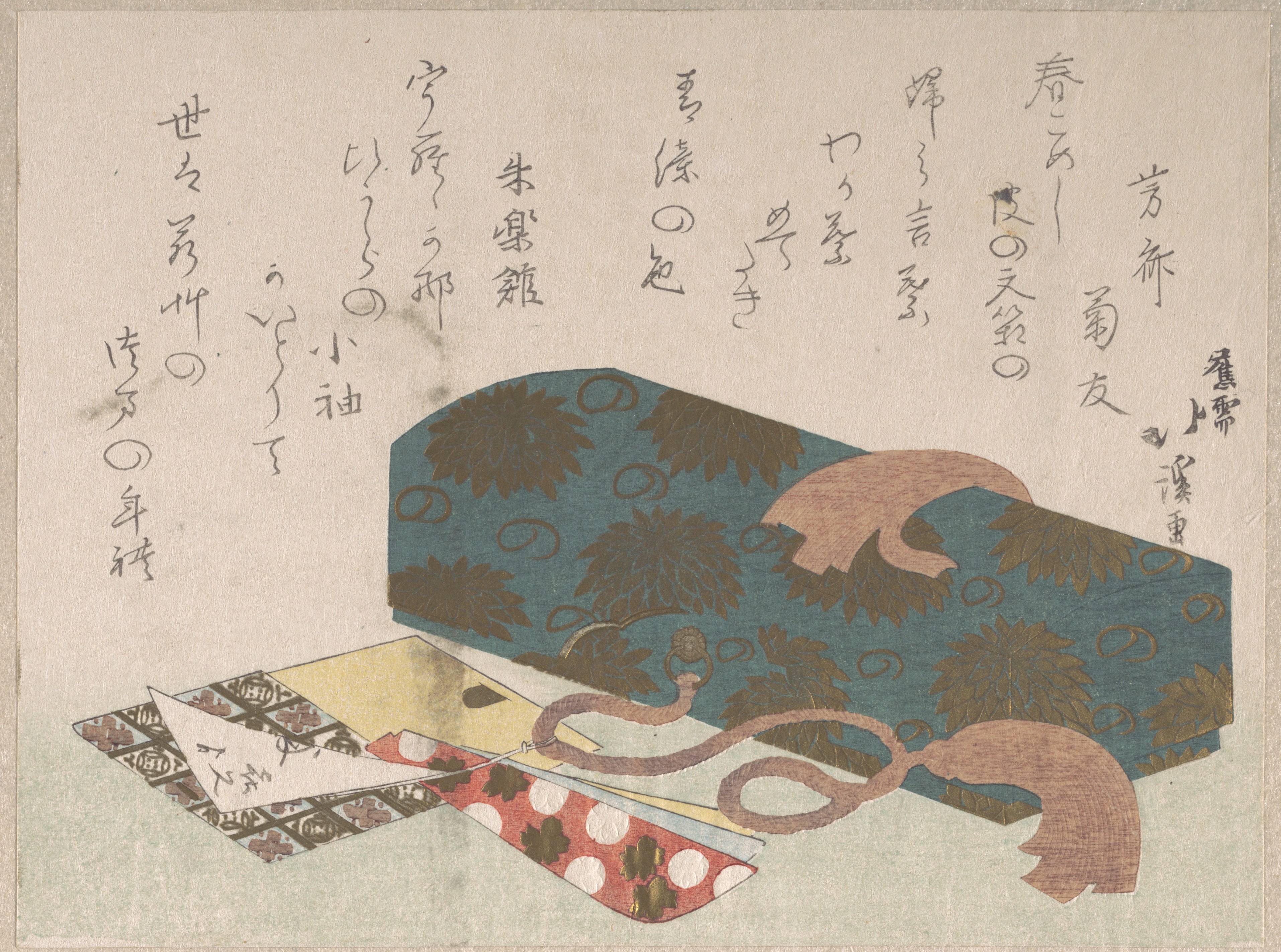
Letter-box and Toothpick Holders
19th century
Part of an album of woodblock prints (surimono); ink and color on paper

Illustration of a Chinese poem, from the series "Picture Book of Chinese Poems (Toshi gafu no uchi)"
c. 1830/44
Color woodblock print; chuban

Kyōka Verse Anthology of Elegant Friends (Kyōka gayū shū) 狂歌雅友集
1826 (Bunsei 9)
Woodblock printed book; ink and color on paper
More Spring Prints

Frequently Asked Questions
Spring Mountains, no. 2 was created by Totoya Hokkei (魚屋北渓) in ca. 1830.
Spring Mountains, no. 2 depicts spring.