
The drummer, No. 1 (Sono ichi) from the series "The Boulder Door of Spring (Haru no iwato)"
- Date:
- 1820s
- Medium:
- Color woodblock print; shikishiban, surimono
- Source:
- Art Institute of Chicago
Description
This print from Totoya Hokkei's surimono series The Boulder Door of Spring (Haru no iwato), recorded in the Art Institute of Chicago with a date of 1820, illustrates the drummer who features in the mythological cycle surrounding the sun goddess Amaterasu. The series title alludes to the well-known myth in which Amaterasu hides in a cave, plunging the world into darkness until raucous music and dancing draw her out. As Sono ichi, or No. 1, the drummer opens the sequence, providing the rhythm that propels the divine performance to follow. Hokkei was a leading designer of Edo kyoka-e surimono and one of the most accomplished pupils of the Hokusai school, and Haru no iwato is a characteristic example of how kyoka clubs liked to organize their commissions into thematic series. Each sheet would have carried kyoka verses by club members, with the mythological subject providing both auspicious New Year associations and a learned point of literary reference. Surimono printing in this period employed deluxe techniques unavailable in the commercial market, including karazuri blind embossing, mica and metallic inks, ideally suited to the costumes, instruments and gilded details of a Shinto theatrical scene. As part of Hokkei's body of surimono work, the sheet illustrates the Hokusai school's mastery of small-format narrative design at the height of Edo's private-print culture.
More Prints by Totoya Hokkei

Potted Plant (Ueki), from the series "Eighteen Illustrations of the Ladder of Ancient Words (Kogentei juhachiban tsuzuki)"
1831
Color woodblock print; shikishiban, surimono
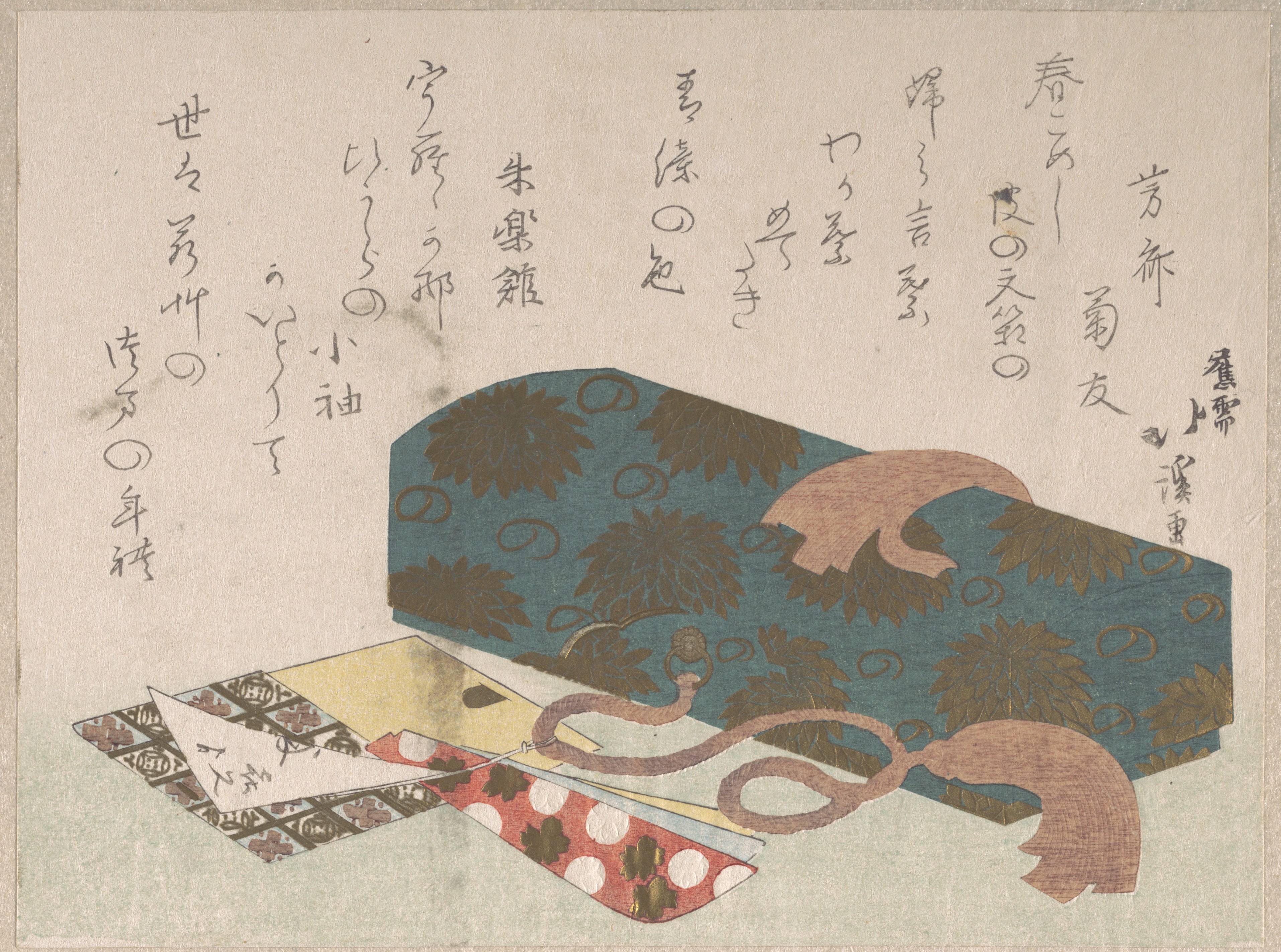
Letter-box and Toothpick Holders
19th century
Part of an album of woodblock prints (surimono); ink and color on paper

Illustration of a Chinese poem, from the series "Picture Book of Chinese Poems (Toshi gafu no uchi)"
c. 1830/44
Color woodblock print; chuban

Kyōka Verse Anthology of Elegant Friends (Kyōka gayū shū) 狂歌雅友集
1826 (Bunsei 9)
Woodblock printed book; ink and color on paper
More Spring Prints

Frequently Asked Questions
The drummer, No. 1 (Sono ichi) from the series "The Boulder Door of Spring (Haru no iwato)" was created by Totoya Hokkei (魚屋北渓) in 1820s.
The drummer, No. 1 (Sono ichi) from the series "The Boulder Door of Spring (Haru no iwato)" depicts spring.