
Yamauba in the Ashigawa Mountains Accompanied by Flying Nightingale (Uguisu) Men, the second piece from the diptych of "Spring Mountains (Haru no yama-mata)"
- Date:
- about 1830
- Medium:
- Color woodblock print; left piece of the diptych
- Source:
- Art Institute of Chicago
Description
This surimono by Totoya Hokkei, produced around 1825, depicts Yamauba, the mountain hag of Japanese folklore, set in the Ashigawa Mountains and accompanied by flying nightingale men. It is the second print in a diptych titled "Spring Mountains (Haru no yama-mata)." Yamauba was a popular figure in kabuki and nineteenth-century print culture, especially in her association with the warrior-child Kintaro, but here Hokkei treats her in a more lyrical mode, surrounded by uguisu (bush warblers) transformed into anthropomorphic flying figures. The imagery draws on the rich tradition of spring associations in Japanese poetry, where mountains, plum blossoms, and the song of the uguisu announce the new season. Hokkei composes the scene with the inventive imagination that characterized the late Hokusai school, balancing folkloric subject matter against decorative refinement. As a leading pupil of Katsushika Hokusai, Totoya Hokkei specialized in surimono throughout his career. These privately commissioned deluxe prints combined striking imagery with kyoka comic poems on heavy paper enriched with metallic pigments and embossing, and they were used by poetry clubs to mark seasonal celebrations. The diptych format allowed for an extended pictorial narrative across two sheets, a sophisticated arrangement that flattered the connoisseurship of recipients. The Art Institute of Chicago, which preserves this impression, holds substantial collections of nineteenth-century Japanese prints. The technical refinements visible here, the careful figure drawing of Yamauba, the inventive depiction of the bird-men, the embossed details on robes, and metallic pigments that catch the light, all reflect the luxurious production standards that distinguished surimono from ordinary commercial nishiki-e.
More Prints by Totoya Hokkei

Potted Plant (Ueki), from the series "Eighteen Illustrations of the Ladder of Ancient Words (Kogentei juhachiban tsuzuki)"
1831
Color woodblock print; shikishiban, surimono
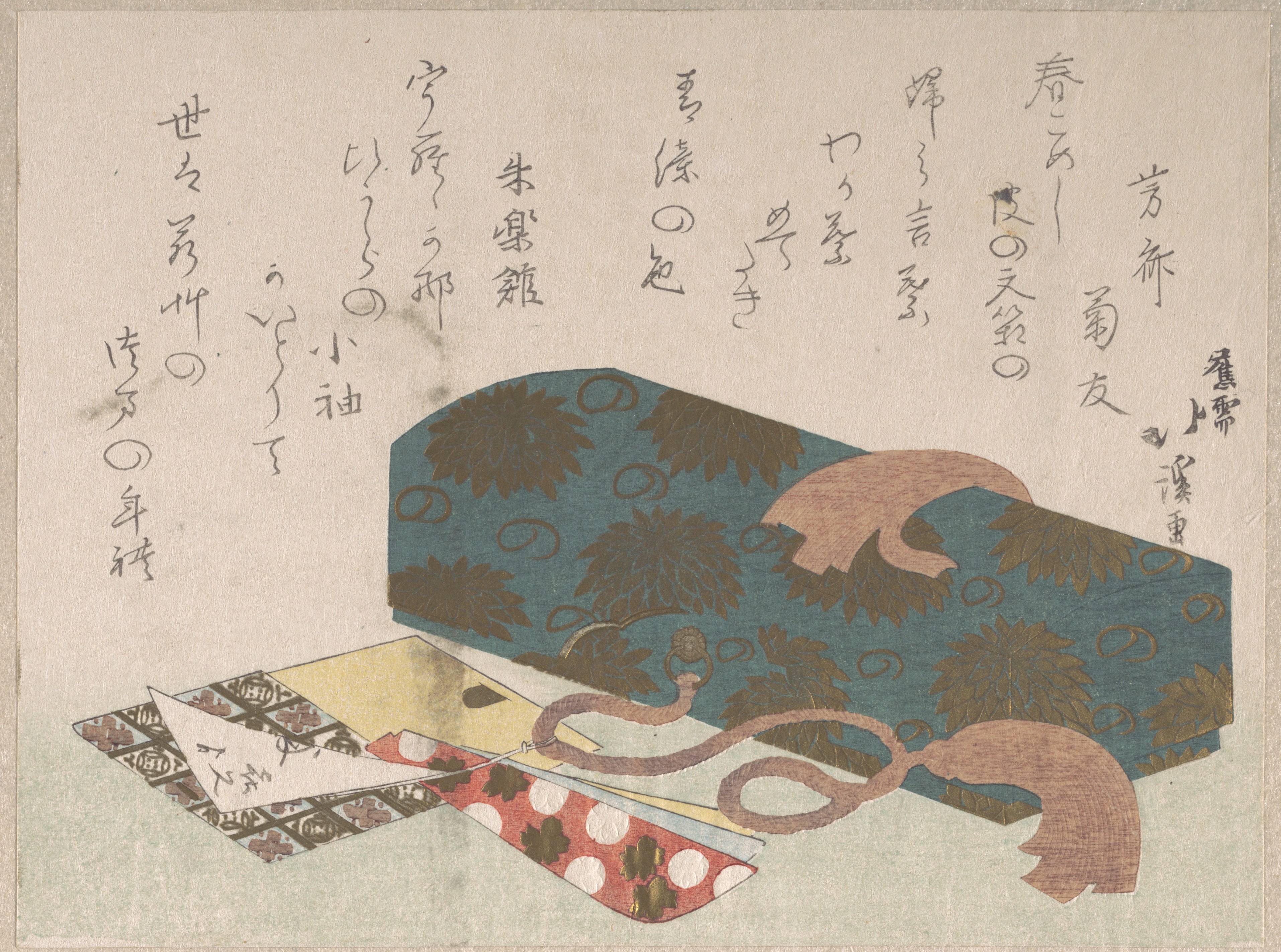
Letter-box and Toothpick Holders
19th century
Part of an album of woodblock prints (surimono); ink and color on paper

Illustration of a Chinese poem, from the series "Picture Book of Chinese Poems (Toshi gafu no uchi)"
c. 1830/44
Color woodblock print; chuban

Kyōka Verse Anthology of Elegant Friends (Kyōka gayū shū) 狂歌雅友集
1826 (Bunsei 9)
Woodblock printed book; ink and color on paper
More Spring Prints

Frequently Asked Questions
Yamauba in the Ashigawa Mountains Accompanied by Flying Nightingale (Uguisu) Men, the second piece from the diptych of "Spring Mountains (Haru no yama-mata)" was created by Totoya Hokkei (魚屋北渓) in about 1830.
Yamauba in the Ashigawa Mountains Accompanied by Flying Nightingale (Uguisu) Men, the second piece from the diptych of "Spring Mountains (Haru no yama-mata)" depicts spring.