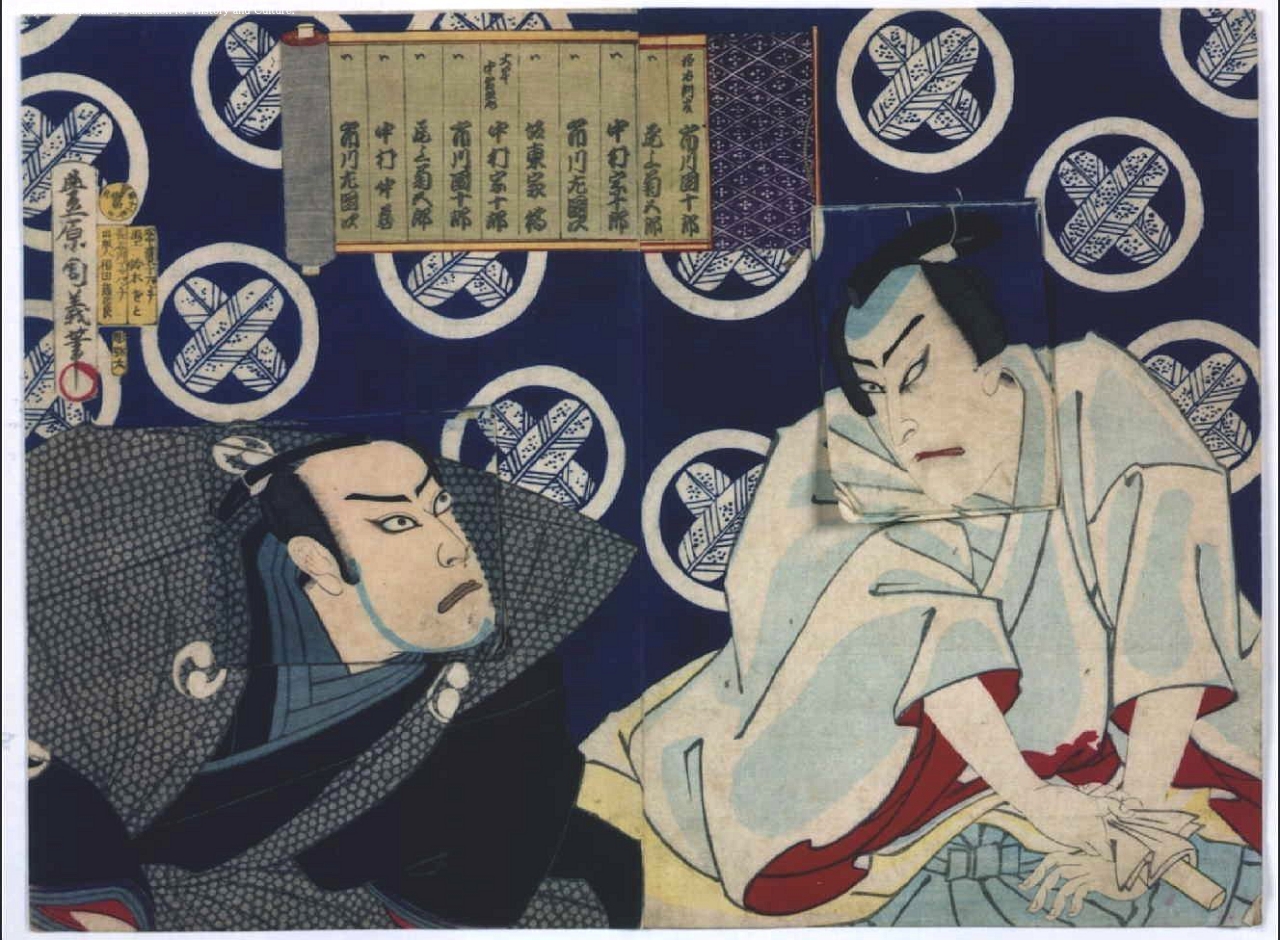
Chushingura
忠臣蔵
- Date:
- 1880s
- Medium:
- Color woodblock print; oban triptych
- Source:
- Edo-Tokyo Museum
Description
Chūshingura is a Toyohara Chikayoshi print, preserved at the Edo-Tokyo Museum, depicting a scene from the famed forty-seven rōnin story that constituted the most enduring narrative subject of nineteenth-century Japanese popular culture. The story of the Akō samurai who avenged their lord's enforced suicide in 1701-1703 had been the basis of countless kabuki plays, novels, and prints since the original Kanadehon Chūshingura was staged in 1748, and by Chikayoshi's day it remained the most reliably profitable theatrical subject for any Tokyo publisher to commission a designer to handle. Chikayoshi's treatment, signed under her own name rather than as a student of Kunichika, follows the late Utagawa kabuki-print conventions for the subject: a composition built around named actors costumed as specific rōnin characters, identified by their mon (family crests) and by their characteristic poses from the long stage tradition. The print employs the saturated reds, purples, and aniline pigments characteristic of 1880s actor prints, with the figures rendered at large scale against a simplified background that signals the stage rather than a topographical location. As one of the few Chikayoshi designs preserved in a major Japanese museum collection, the print is an important document both of her engagement with the central kabuki subject of her era and of the place a female designer could occupy within the actor-print market that her teacher Kunichika had dominated since the 1860s.
More Prints by Toyohara Chikayoshi
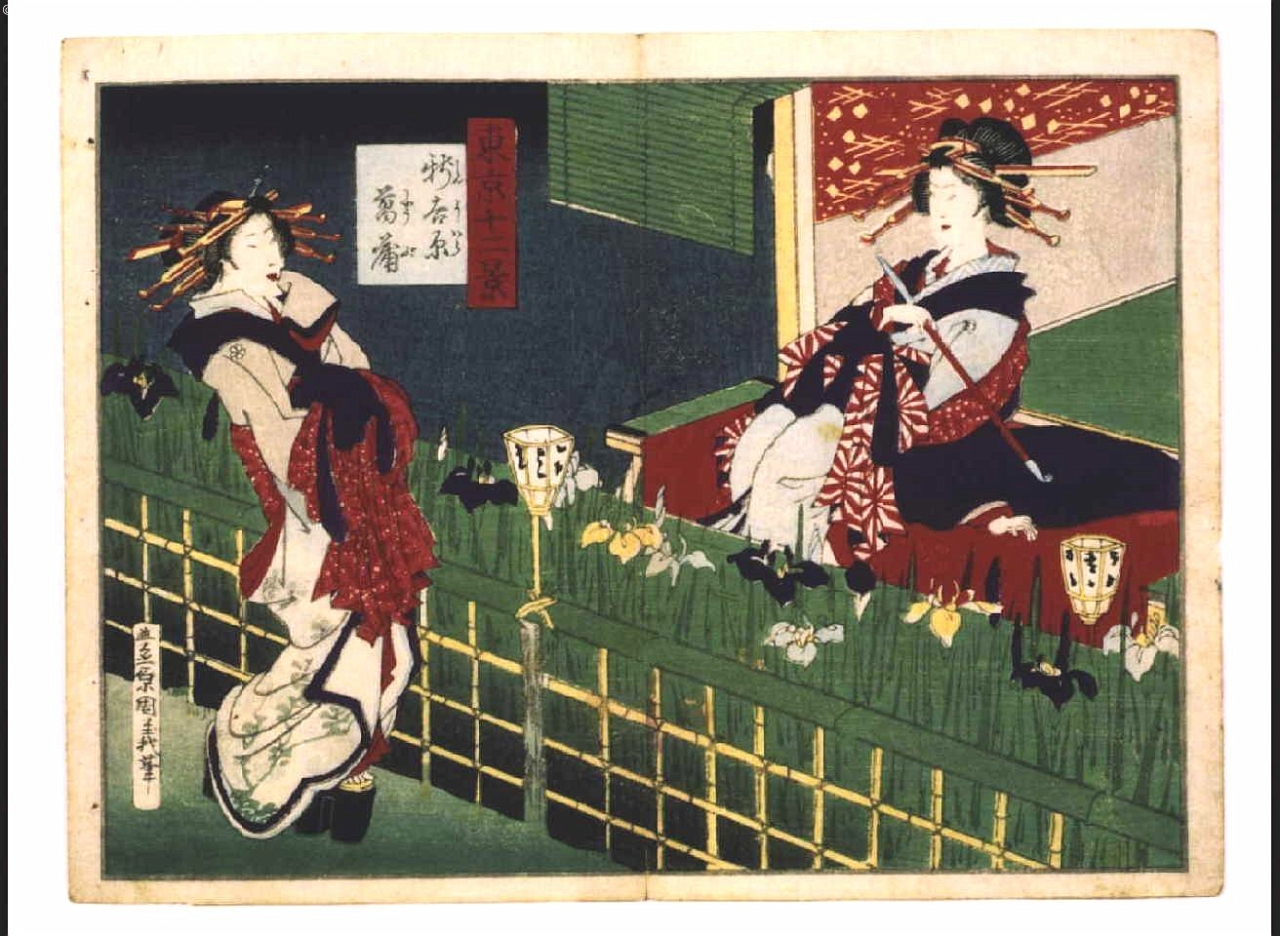
Twelve Views of Tokyo: Iris Field, Shin-Yoshiwara Licensed Quarter
東京十二景 新吉原遊郭 菖蒲園
early 1880s
Color woodblock print; oban triptych
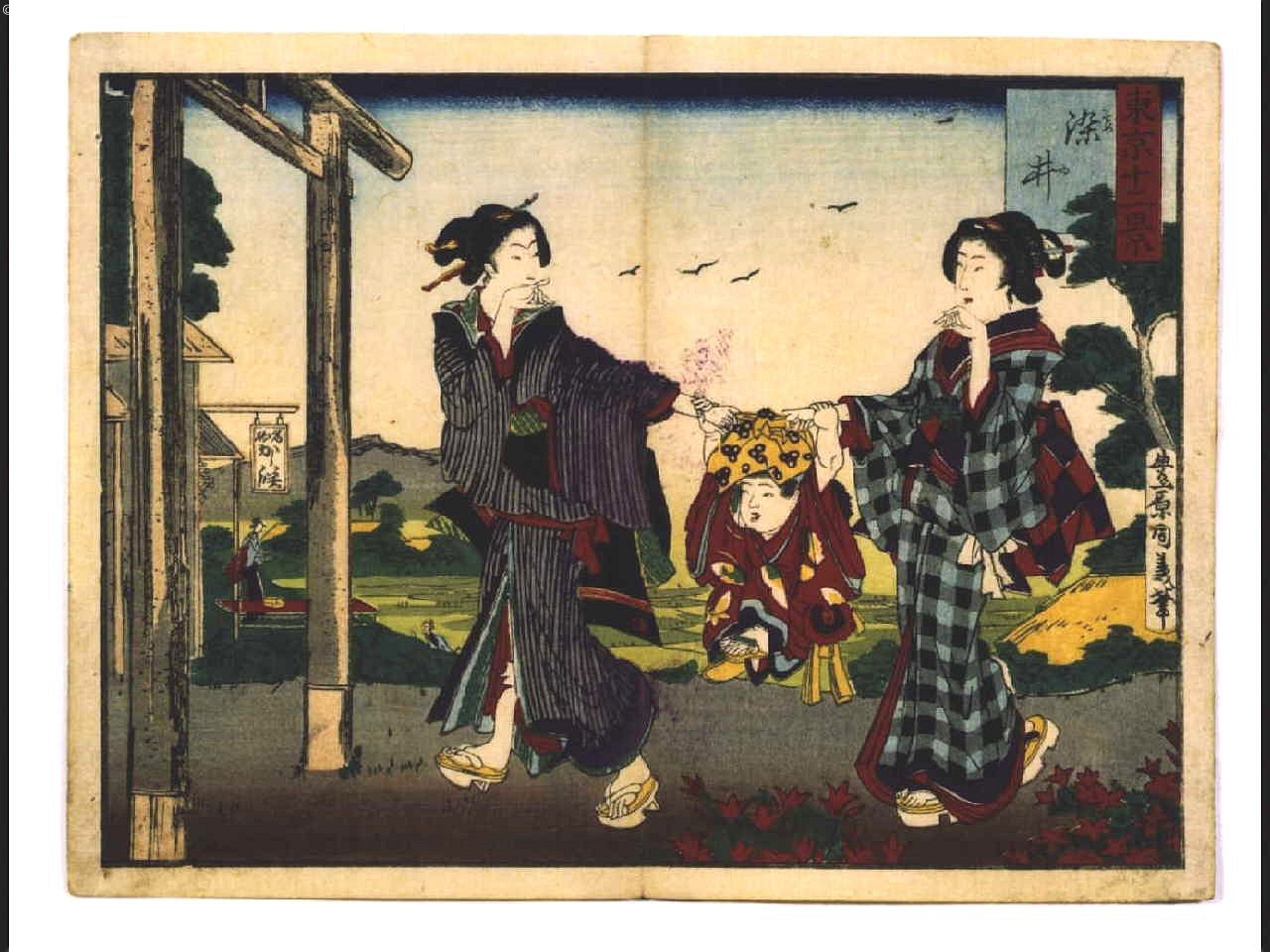
Twelve Views of Tokyo: Somei
東京十二景 染井
early 1880s
Color woodblock print; oban triptych
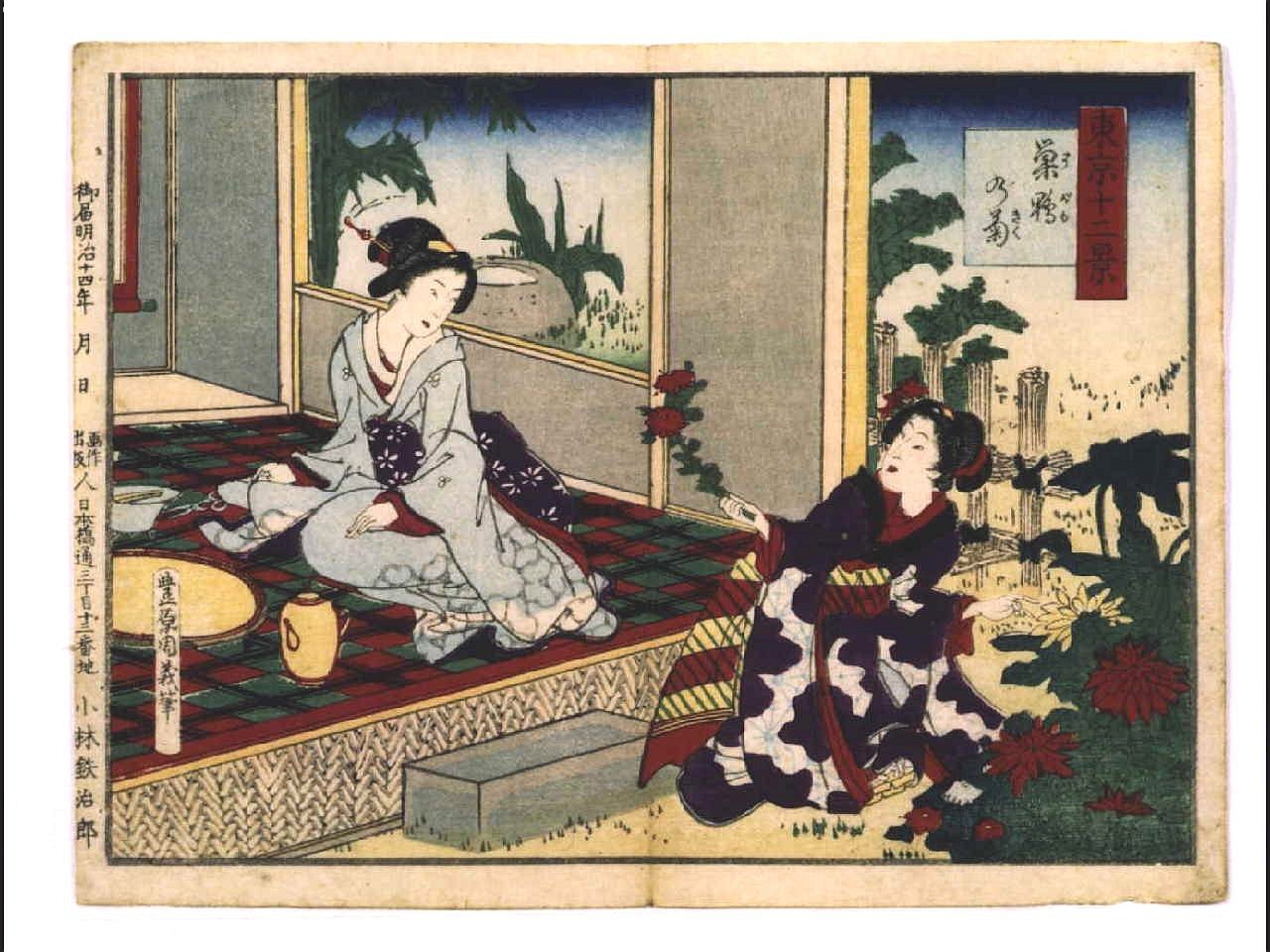
Twelve Views of Tokyo: Chrysanthemums at Sugamo
東京十二景 巣鴨の菊
early 1880s
Color woodblock print; oban triptych
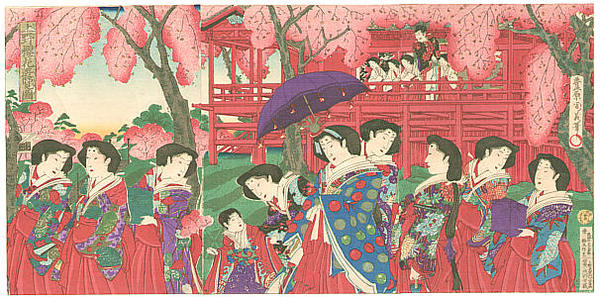
Viewing Cherry Blossoms in Ueno Park
上野桜遊覧之図
early 1880s
Color woodblock print; oban triptych; published by Asano Eizo
Frequently Asked Questions
Chushingura (忠臣蔵) was created by Toyohara Chikayoshi (豊原周美) in 1880s.