YOJIRO THE MONKEY TRAINER
- Medium:
- Woodblock print
- Format:
- Oban
- Publisher:
- Doi Sadaichi
- Edition:
- Published by Watanabe Shozaburo
- Source:
- Harvard Art Museums
Description
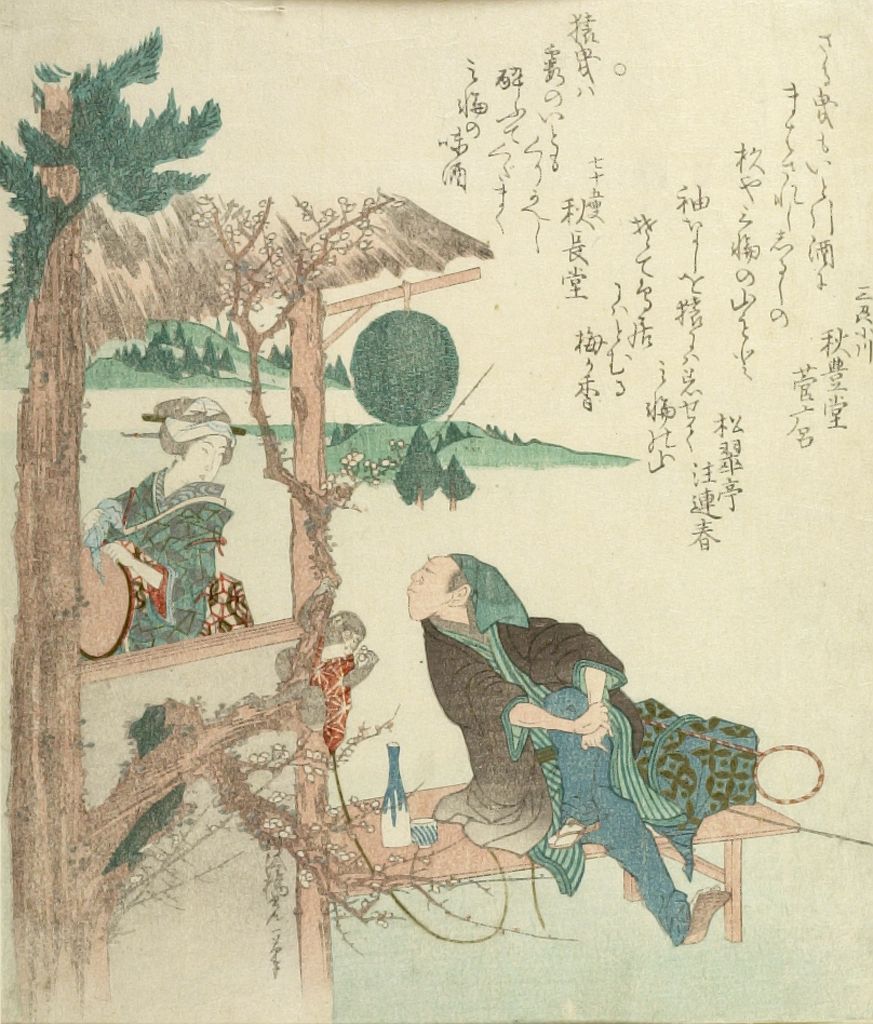
This oban woodblock print by Tsuchiya Koitsu depicts Yojiro, a monkey trainer, with his performing animal. Street entertainment featuring trained monkeys, known as sarumawashi, has roots stretching back to the Heian period and remained a familiar sight in Japan well into the modern era. Koitsu captures the relationship between handler and animal with a warmth that suggests genuine affection rather than mere spectacle. The bokashi gradation technique creates atmospheric depth around the figures, softening the background while keeping the central interaction sharply defined. Yojiro's costume and posture convey the itinerant performer's life, while the monkey's alert pose suggests the intelligence and training that made these acts popular at festivals and on street corners. The print preserves a vanishing form of traditional entertainment with documentary sensitivity.
More Prints by Tsuchiya Koitsu


More Animals Prints

Snake Charmers (Hebizukai)
Hebizukai
1932
Color woodblock print; oban

Hoshifuri Pine at Zen'yoji Temple in Edogawa (Edogawa-ku Zen'yoji Hoshifuri matsu), from the series "One Hundred Views of Great Tokyo in the Showa Era (Showa dai Tokyo fukei hyaku zue hanga)"
1935
Color woodblock print; oban

Drawing for Rabbit and Boy
1964
Acrylic paint and oil pastel with oiled charcoal and ink over an ink and graphite underdrawing on paper

Rabbit and Boy
1964
Color lithograph with relief block and hand coloring; edition 35/36
Featured in Collections
Curated cross-cuts that include this print.
Frequently Asked Questions
YOJIRO THE MONKEY TRAINER was created by Tsuchiya Koitsu (土屋光逸).
YOJIRO THE MONKEY TRAINER uses Bokashi, on woodblock print.
YOJIRO THE MONKEY TRAINER was published by Doi Sadaichi.
YOJIRO THE MONKEY TRAINER depicts animals.