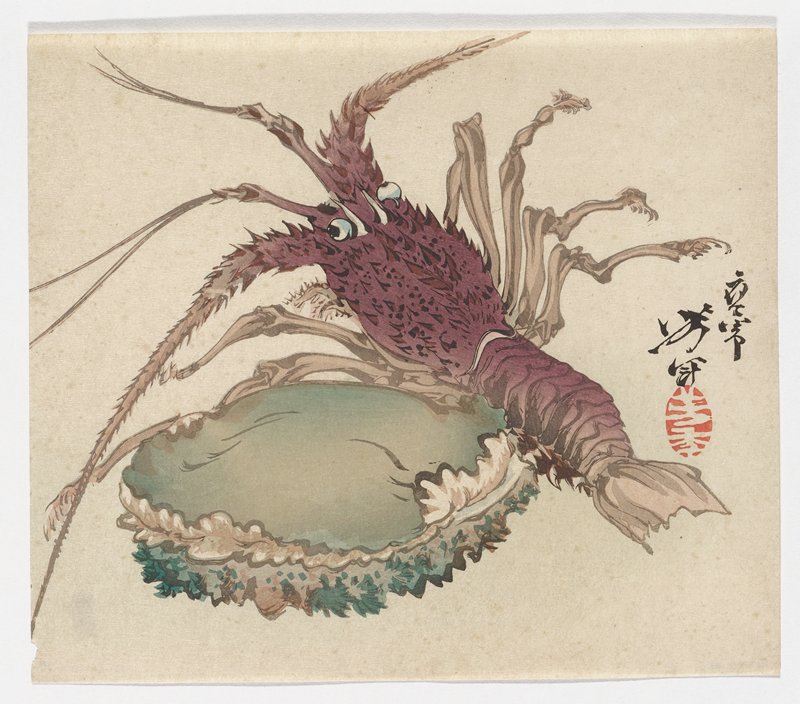
Lobster and Abalone
- Date:
- late 1880s
- Medium:
- Woodblock print (nishiki-e), ink and color on paper
- Format:
- Oban
- Dimensions:
- 22.1 × 25.4 cm
- Source:
- Minneapolis Institute of Art
Description
"Lobster and Abalone" from the late 1880s is an unusual departure from Yoshitoshi's characteristic narrative subject matter, presenting the two seafood items as pure natural study subjects in the tradition of kachō-ga (bird-and-flower painting). The lobster and abalone were associated in Japanese culture with celebratory feasting and longevity—the lobster's bent posture suggesting the back of an elderly person, hence a symbol of long life. Yoshitoshi renders the crustacean and mollusk with close observational precision, demonstrating his versatility beyond narrative and figural composition.
More Prints by Tsukioka Yoshitoshi
More Fish Prints


Frequently Asked Questions
Lobster and Abalone was created by Tsukioka Yoshitoshi (月岡芳年) in late 1880s.
Lobster and Abalone depicts fish and animals.
Lobster and Abalone measures 22.1 × 25.4 cm (Oban format).