
BIJIN-E (beauty print)
by Uemura Shoen
- Source:
- ukiyo-e.org
Description
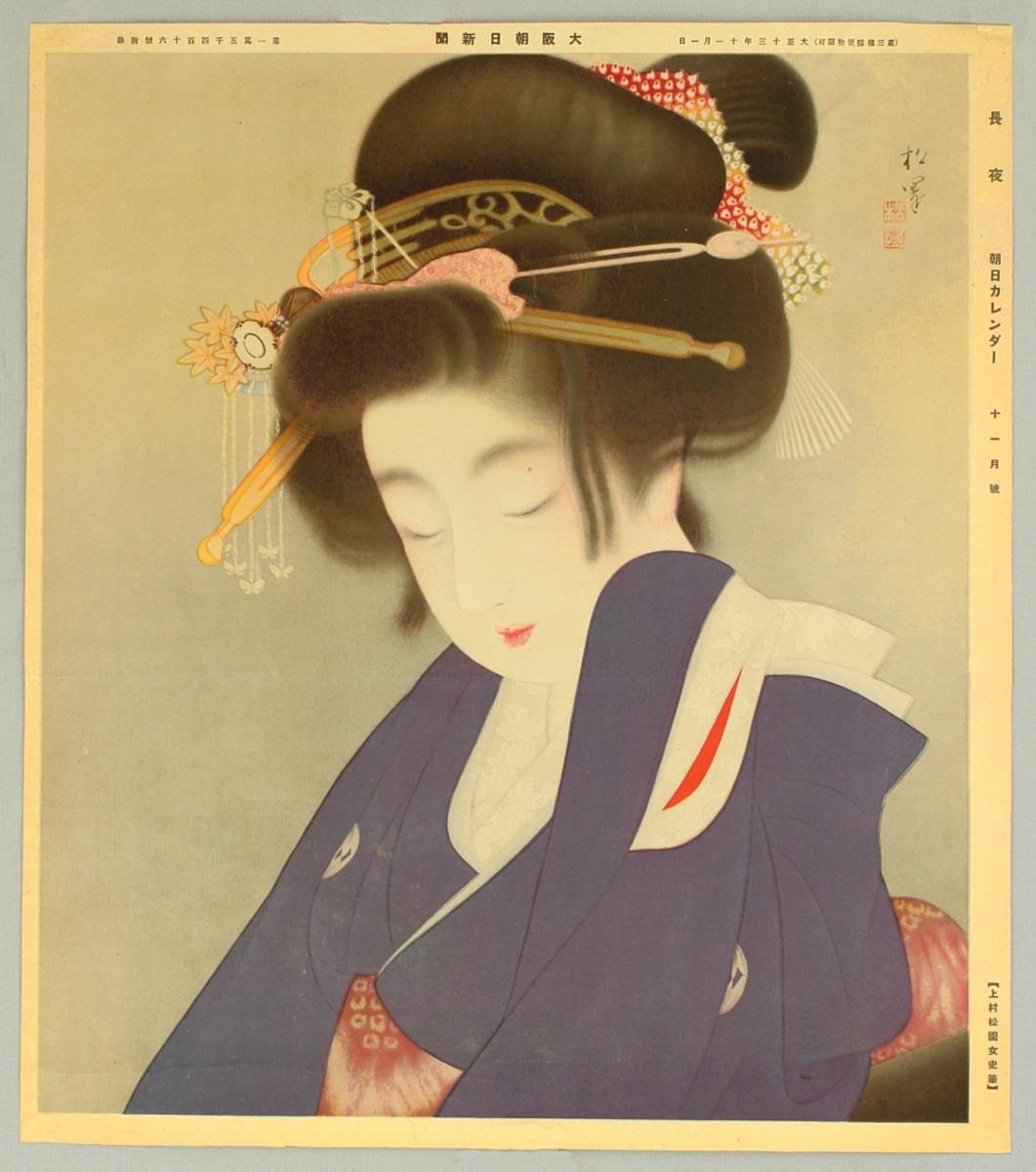
BIJIN-E (beauty print) is catalogued on ukiyo-e.org and represents Uemura Shoen's lifelong engagement with the bijin-ga, or beauty picture, tradition as reinterpreted through Kyoto nihonga. The generic title indicates that this image entered circulation as a representative beauty design rather than as part of a named series, a common situation for later reproductions and commemorative prints made after a painter's original silk or paper composition. Uemura Shoen (1875-1949) is the central figure in any account of Taisho-Showa bijin-ga, because she demonstrated that the genre, sometimes dismissed in the late Meiji period as a worn-out subject of Edo woodblock prints, could be renewed within the modern nihonga movement. Her training in the Shijo lineage at the Kyoto Prefectural Painting School gave her a vocabulary of fine ink line, controlled mineral pigment, and naturalistic figure construction, while her exhibition career at Bunten and Teiten gave bijin-ga a serious institutional standing. In her hands the beauty picture became a study of inner life: a woman threading a needle, listening to insects, arranging incense, or simply standing still before an unseen mirror. She insisted in her essays that she painted women not as decoration but as carriers of moral and aesthetic seriousness, a stance that earned her appointment to the Imperial Art Academy and, in 1948, the Order of Culture, the first awarded to a woman. As a representative Kyoto nihonga beauty image, BIJIN-E offers a compact illustration of those values, even where the specific title and edition are not preserved. Source: ukiyo-e.org listing; for confirmed Shoen paintings of similar type, see the Adachi Museum of Art and Yamatane Museum collections.
More Prints by Uemura Shoen
Frequently Asked Questions
BIJIN-E (beauty print) was created by Uemura Shoen (上村松園).