
No. 28, View of Gomizaka in Tsumagoi (Tsumagoi Gomizaka no kei), from the series Comical Views of Famous Places in Edo
江戸名所道化尽 二十八 妻恋ごみ坂之景
- Date:
- 1859
- Medium:
- Color woodblock print (nishiki-e)
Description
View of Gomizaka in Tsumagoi (Tsumagoi Gomizaka no kei), number 28 in Utagawa Hirokage's Edo meisho dōke zukushi ('Comical Views of Famous Places in Edo'), is a vertical ōban color woodblock print published in 1859 by Tsujiokaya Bunsuke. Tsumagoi was a small district near Yushima in the northern reach of Edo, and Gomizaka (literally 'Refuse Hill,' also written Tatezume-zaka) was a sloping street within it. The print stages a public toilet (kawaya) at the top of the slope as a stage for slapstick: a samurai is shown perched on a stool inside the open-fronted facility, with the surrounding street treated as both audience and accomplice. The subject is a representative example of the dōke zukushi's program — taking minor Edo locations whose name and topography were well known to townsmen, and finding the comic disruption that the place could host. The Museum of Fine Arts, Boston holds an impression of this sheet (object 537070, William Sturgis Bigelow Collection), one of several Tsumagoi-area sheets in the series and a useful example of how Hirokage's comic register extends to forms of urban embarrassment that Hiroshige's meisho-e would never have admitted.
More Prints by Utagawa Hirokage

No. 39, Mannen Bridge at Fukagawa (Fukagawa Mannen-bashi), from the series Comical Views of Famous Places in Edo
江戸名所道化尽 三十九 深川万年橋
1860
Color woodblock print (nishiki-e)

No. 2, Shower at Ryōgoku Bridge (Ryōgoku no yūdachi), from the series Comical Views of Famous Places in Edo
江戸名所道化尽 二 両国の夕立
1859
Color woodblock print (nishiki-e)
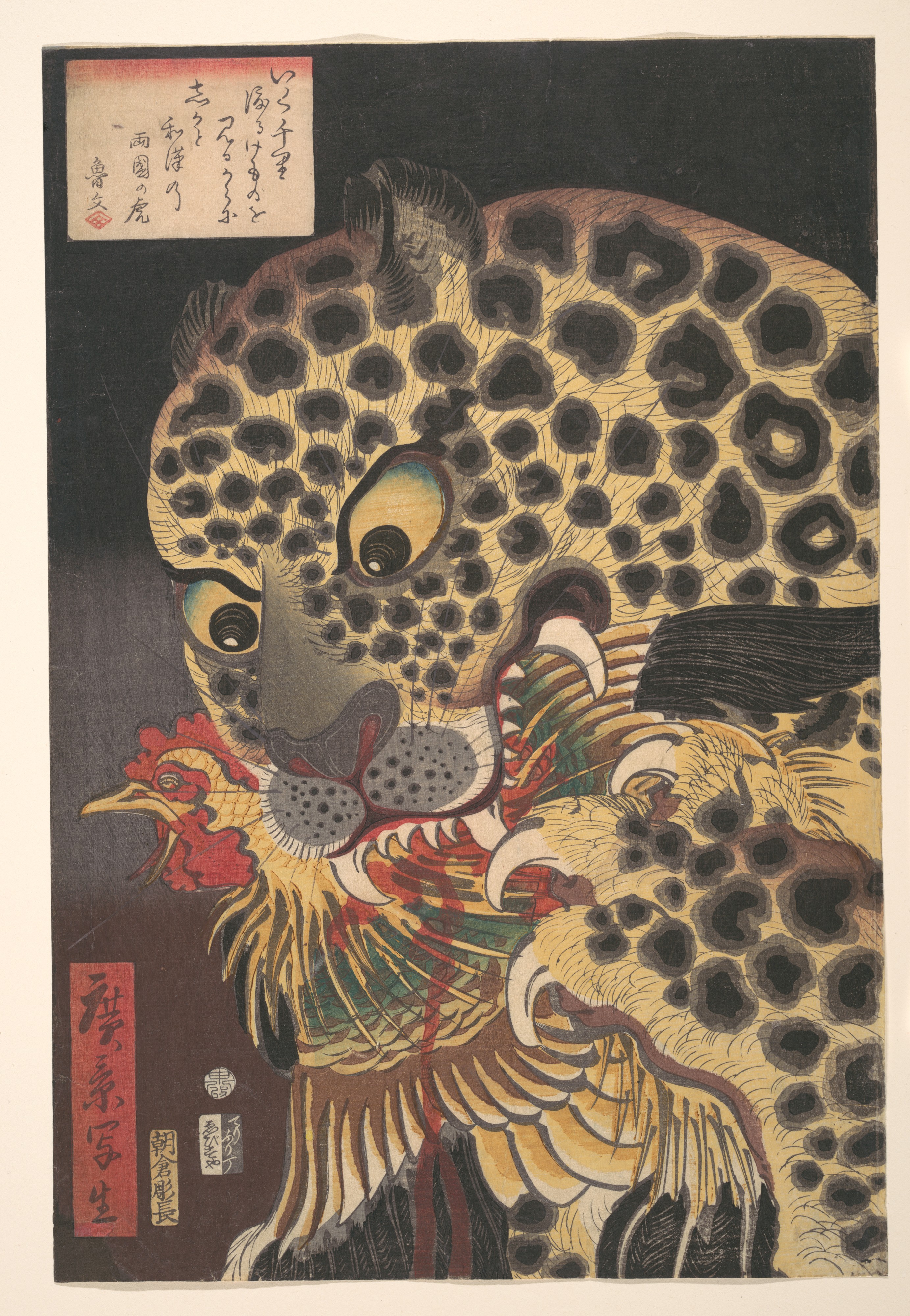
The Tiger of Ryōgoku, from the series True Scenes by Hirokage
両国の虎 — 廣景眞景之内
8th month, 1860
Color woodblock print (nishiki-e)

Shinobazu Pond (Shinobazu no ike), from the series Edo meisho dōke zukushi (Comical Views of Famous Places in Edo)
不忍の池 — 江戸名所道化尽
1859
Color woodblock print (nishiki-e)
Frequently Asked Questions
No. 28, View of Gomizaka in Tsumagoi (Tsumagoi Gomizaka no kei), from the series Comical Views of Famous Places in Edo (江戸名所道化尽 二十八 妻恋ごみ坂之景) was created by Utagawa Hirokage (歌川広景) in 1859.