
No. 2, Shower at Ryōgoku Bridge (Ryōgoku no yūdachi), from the series Comical Views of Famous Places in Edo
江戸名所道化尽 二 両国の夕立
- Date:
- 1859
- Medium:
- Color woodblock print (nishiki-e)
Description
Shower at Ryōgoku Bridge (Ryōgoku no yūdachi), number 2 in Utagawa Hirokage's Edo meisho dōke zukushi ('Comical Views of Famous Places in Edo'), is a vertical ōban color woodblock print published in 1859 by Tsujiokaya Bunsuke. The Ryōgoku Bridge was one of the most celebrated meisho-e sites in Edo — the great wooden span over the Sumida River where the city's summer fireworks displays were held and where pedestrians and pleasure-boats crossed in dense traffic on warm evenings — and Hirokage builds his comic premise on the kind of sudden afternoon thunderstorm (yūdachi) for which the season was famous. The composition reimagines the standard meisho-e of the bridge as a slapstick fable: a kappa (a river imp from Japanese folklore) attacks a thunder deity who has tumbled into the river, trying to seize the deity's magical ball, while the deity counterattacks with a directed gust of intestinal wind. The combination of canonical Edo site, classical thunderstorm subject, and Rabelaisian comic premise is characteristic of the series and aligns Hirokage's work with the late-Edo tradition of gigaga (戯画, 'play pictures') practiced most famously by Utagawa Kuniyoshi. The Ōta Memorial Museum of Art in Tokyo holds an impression of this sheet, which featured in the museum's 2024 Hirokage retrospective.
More Prints by Utagawa Hirokage

No. 39, Mannen Bridge at Fukagawa (Fukagawa Mannen-bashi), from the series Comical Views of Famous Places in Edo
江戸名所道化尽 三十九 深川万年橋
1860
Color woodblock print (nishiki-e)
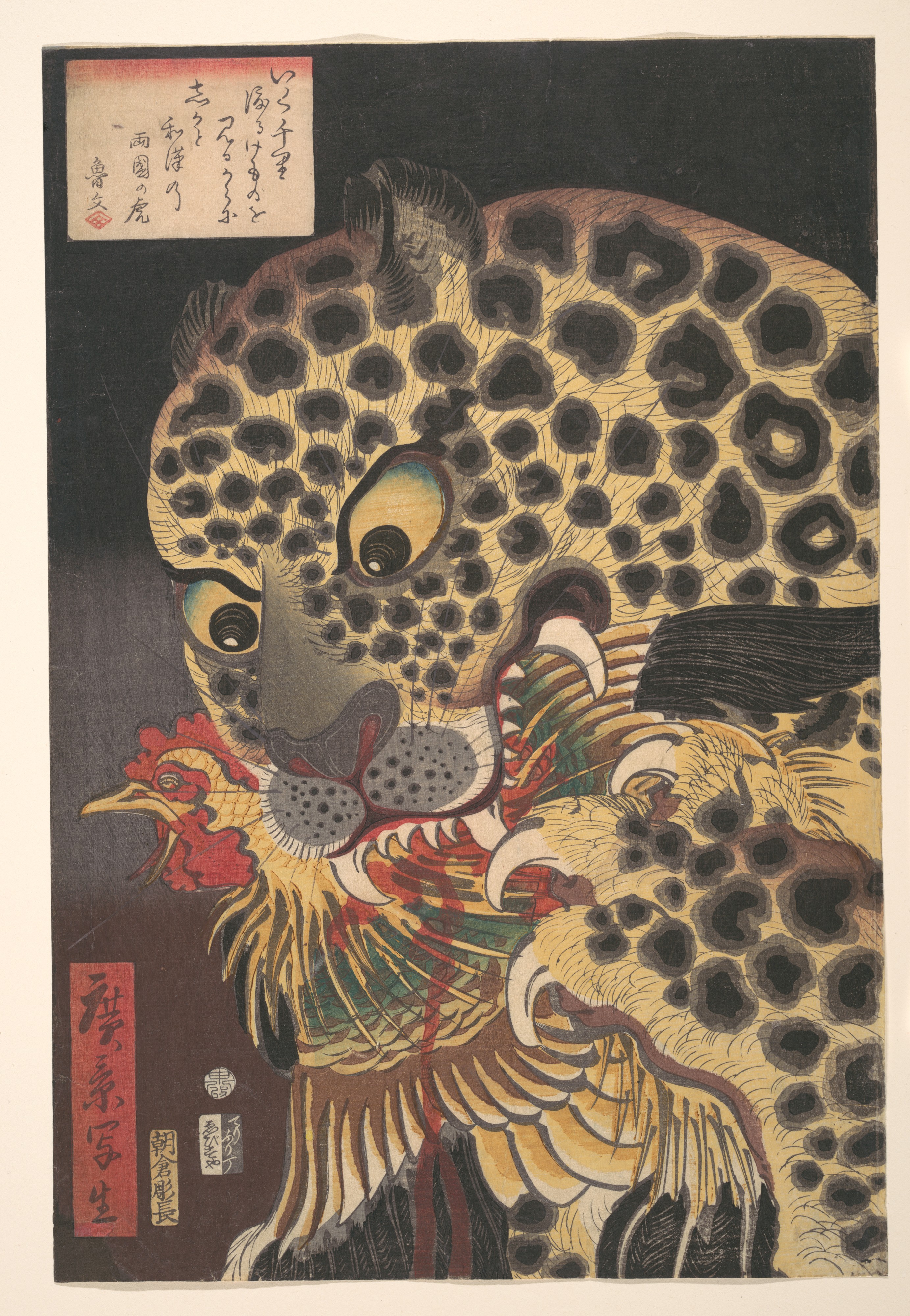
The Tiger of Ryōgoku, from the series True Scenes by Hirokage
両国の虎 — 廣景眞景之内
8th month, 1860
Color woodblock print (nishiki-e)

Shinobazu Pond (Shinobazu no ike), from the series Edo meisho dōke zukushi (Comical Views of Famous Places in Edo)
不忍の池 — 江戸名所道化尽
1859
Color woodblock print (nishiki-e)
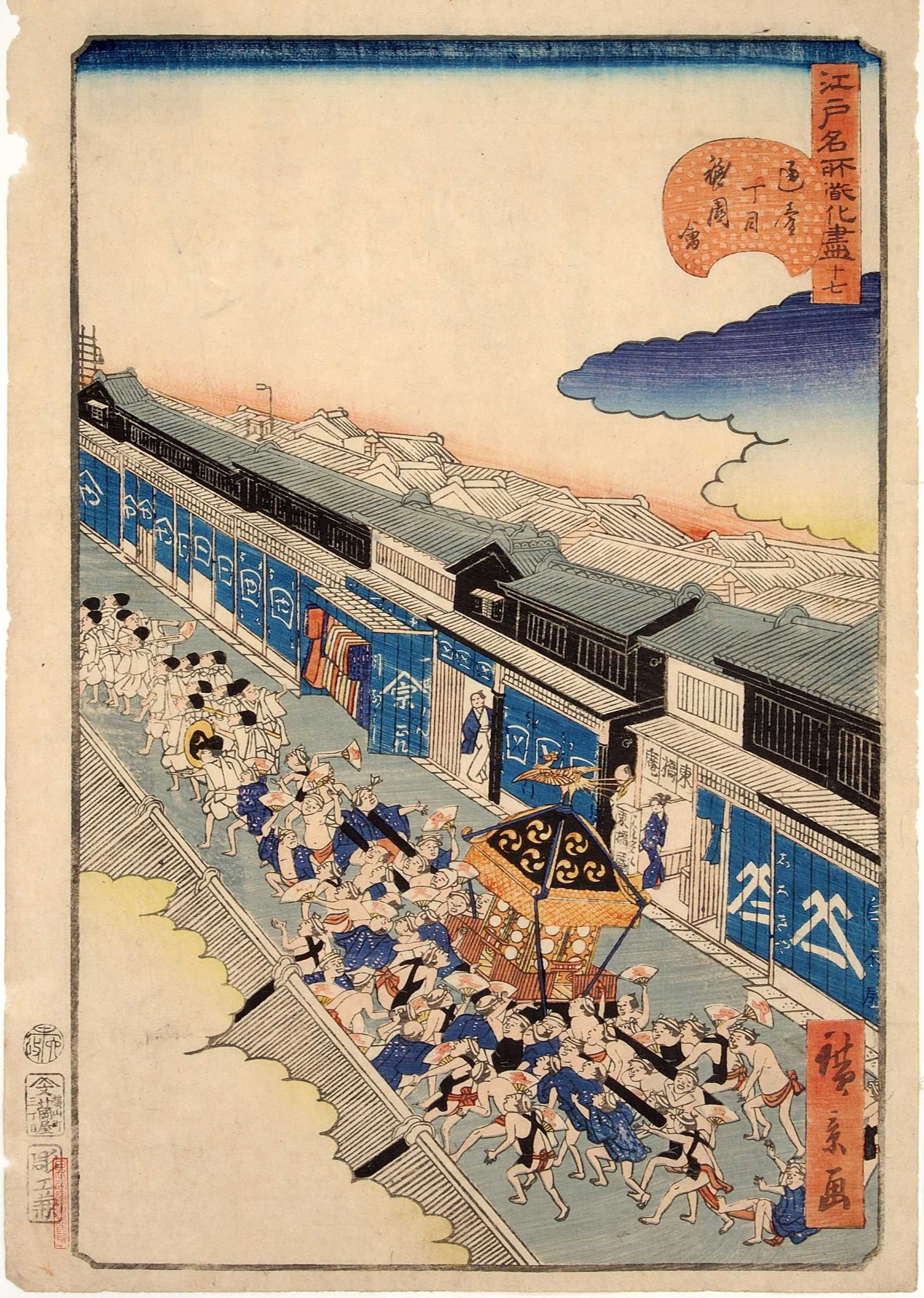
No. 17, Gion Festival at Tōri-itchōme (Tōri-itchōme Gion-e), from the series Comical Views of Famous Places in Edo
江戸名所道化尽 十七 通一丁目祇園会
1859
Color woodblock print (nishiki-e)
More Bridges Prints
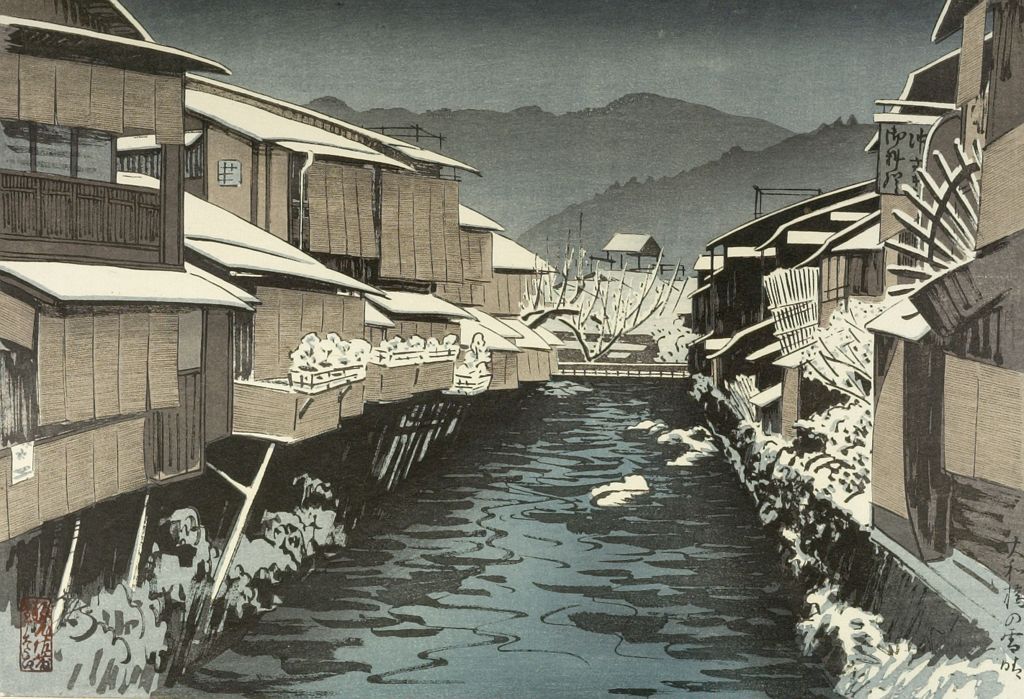
Fair Weather After Snow at Yamato Bridge, Kyoto (Yamato bashi no yukibare), Taishô period, dated 1924
Woodblock print
![Mount Fuji on a Moonlit Night, Kawai Bridge (Tsukiyo no Fuji [Kawaibashi]), from the series "Selection of Views of the Tokaido (Tokaido fukei senshu)" by Kawase Hasui](https://www.artic.edu/iiif/2/d0960668-1e73-339a-b182-fb995a54bff0/full/843,/0/default.jpg)
Mount Fuji on a Moonlit Night, Kawai Bridge (Tsukiyo no Fuji [Kawaibashi]), from the series "Selection of Views of the Tokaido (Tokaido fukei senshu)"
1947
Color woodblock print; oban

Shin Ohashi Bridge (Shin Ohashi), from the series "Twenty View of Tokyo (Tokyu nijukkei)"
1926
Color woodblock print; oban

Sacred Bridge in Nikko (Nikko Shinkyo)
1930
Color woodblock print; oban
Frequently Asked Questions
No. 2, Shower at Ryōgoku Bridge (Ryōgoku no yūdachi), from the series Comical Views of Famous Places in Edo (江戸名所道化尽 二 両国の夕立) was created by Utagawa Hirokage (歌川広景) in 1859.
No. 2, Shower at Ryōgoku Bridge (Ryōgoku no yūdachi), from the series Comical Views of Famous Places in Edo depicts bridges.