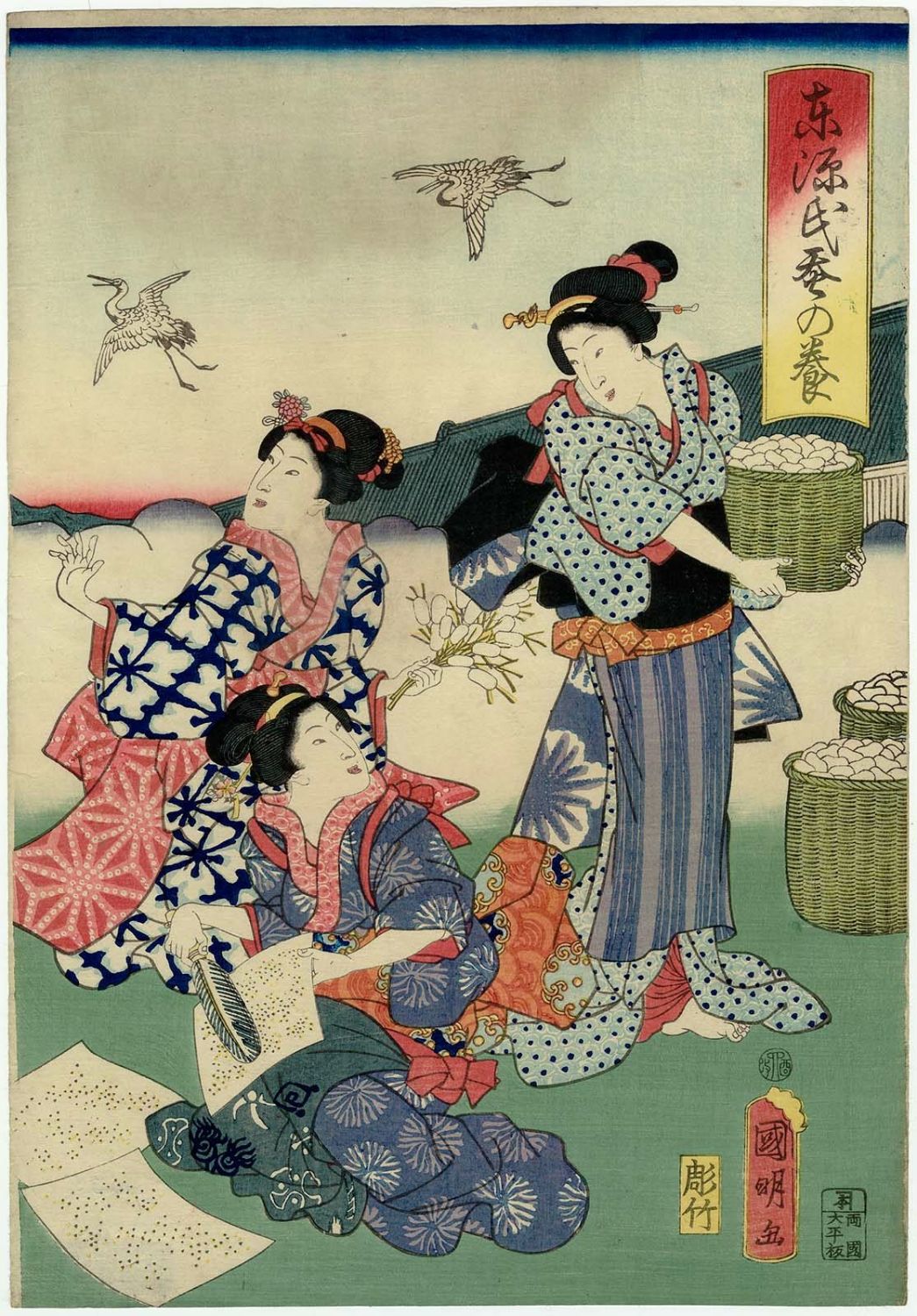
Eastern Genji's Silkworm Cultivation (Azuma Genji kaiko no yashinai)
- Date:
- 1861
- Medium:
- Color woodblock print; ōban
- Source:
- Museum of Fine Arts, Boston
Description
A color ōban woodblock print of 1861 in the Museum of Fine Arts, Boston, this Eastern Genji's Silkworm Cultivation (Azuma Genji kaiko no yashinai) belongs to the genre of Genji-mono parodies that absorbed the eleventh-century Tale of Genji into late-Edo popular subjects. The Azuma Genji — "Eastern Genji" — variant of the genre relocates the original courtly narrative to contemporary Edo, recasting the protagonist as an idealized Edo dandy and replacing the Heian palace milieu with the licensed quarter, the bathhouse, the theater, and the merchant ward. Ryūtei Tanehiko's 1829–1842 illustrated novel Nise Murasaki inaka Genji ("A Country Genji by a Fake Murasaki") established the formula, and Kunisada's series of illustrations for the novel became one of the foundational bodies of late-Edo bijin-ga. Kuniaki II's 1861 sheet applies the formula to sericulture — the silkworm-cultivation industry that supported the kimono trade — replacing the courtly subjects of the original Genji with a contemporary scene of women tending silkworm trays in a domestic interior. The print belongs to the visual culture of late-Bakumatsu Edo in which classical literary references were freely adapted to everyday occupational and seasonal subjects.
More Prints by Utagawa Kuniaki II
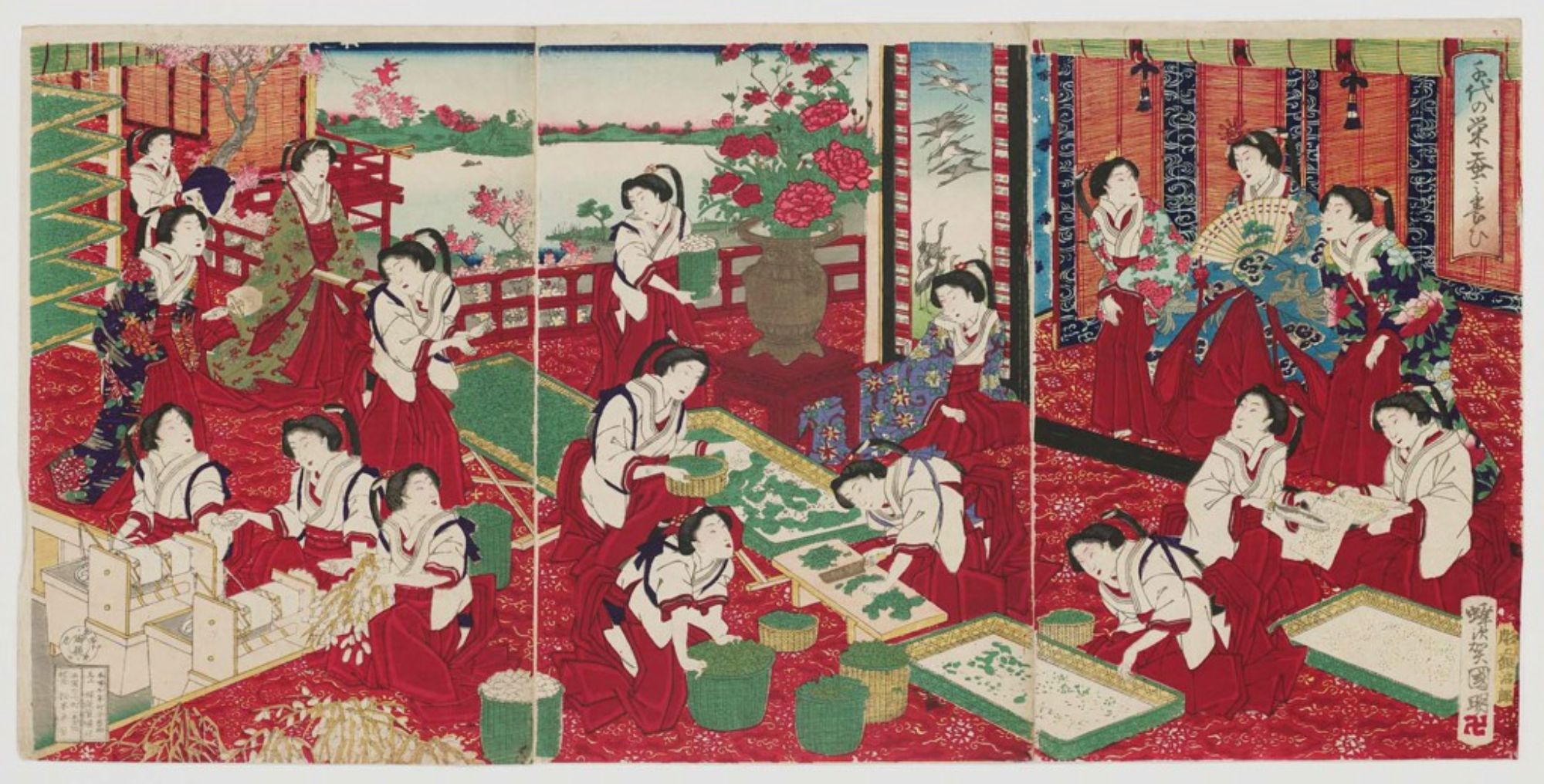
Raising Silk Worms for a Thousand Ages of Prosperity (Chiyo no sakae kaiko no yashinai)
1877
Color woodblock print; ōban triptych
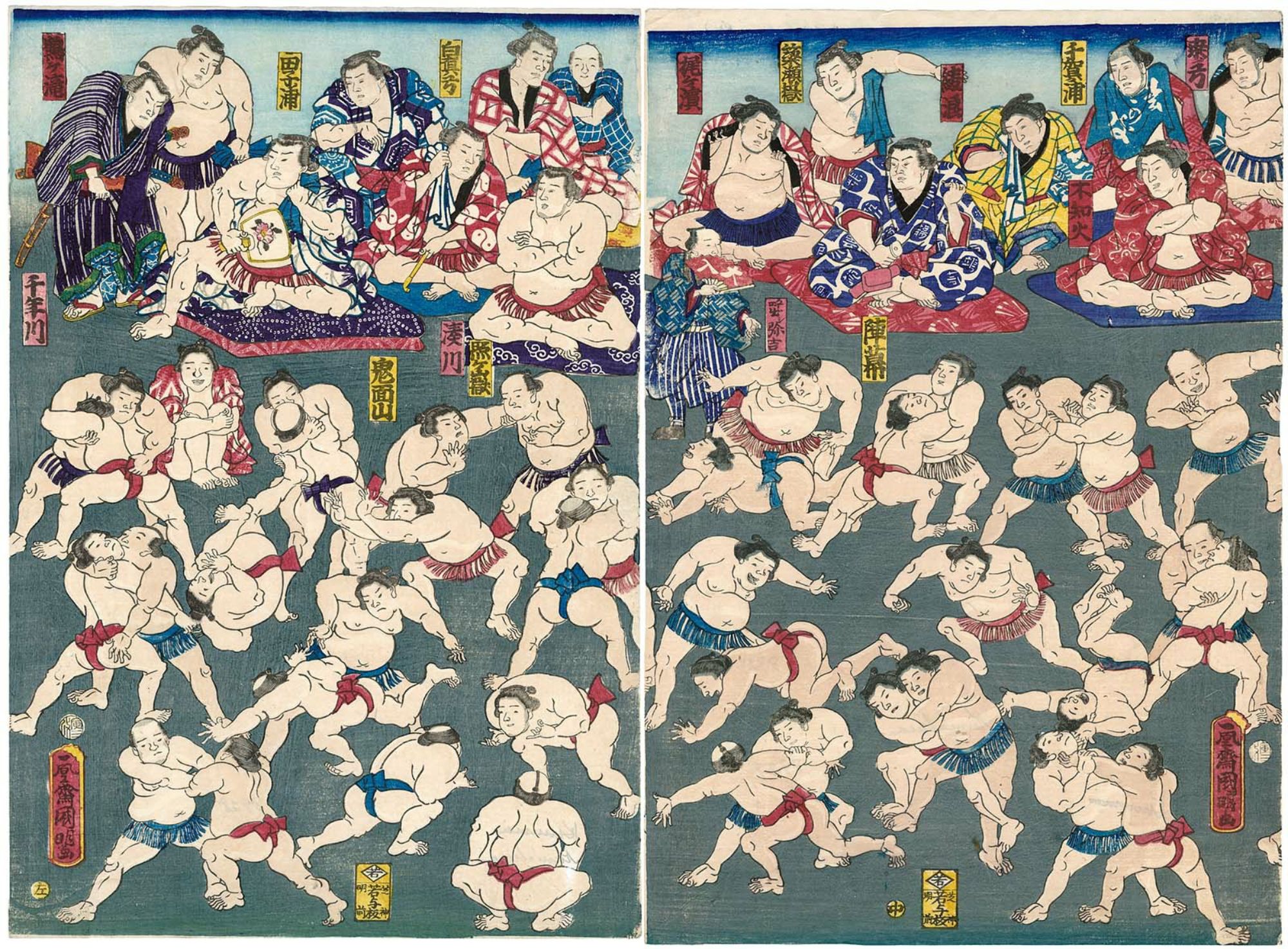
Sumō Wrestlers Practicing
1866
Color woodblock print; ōban
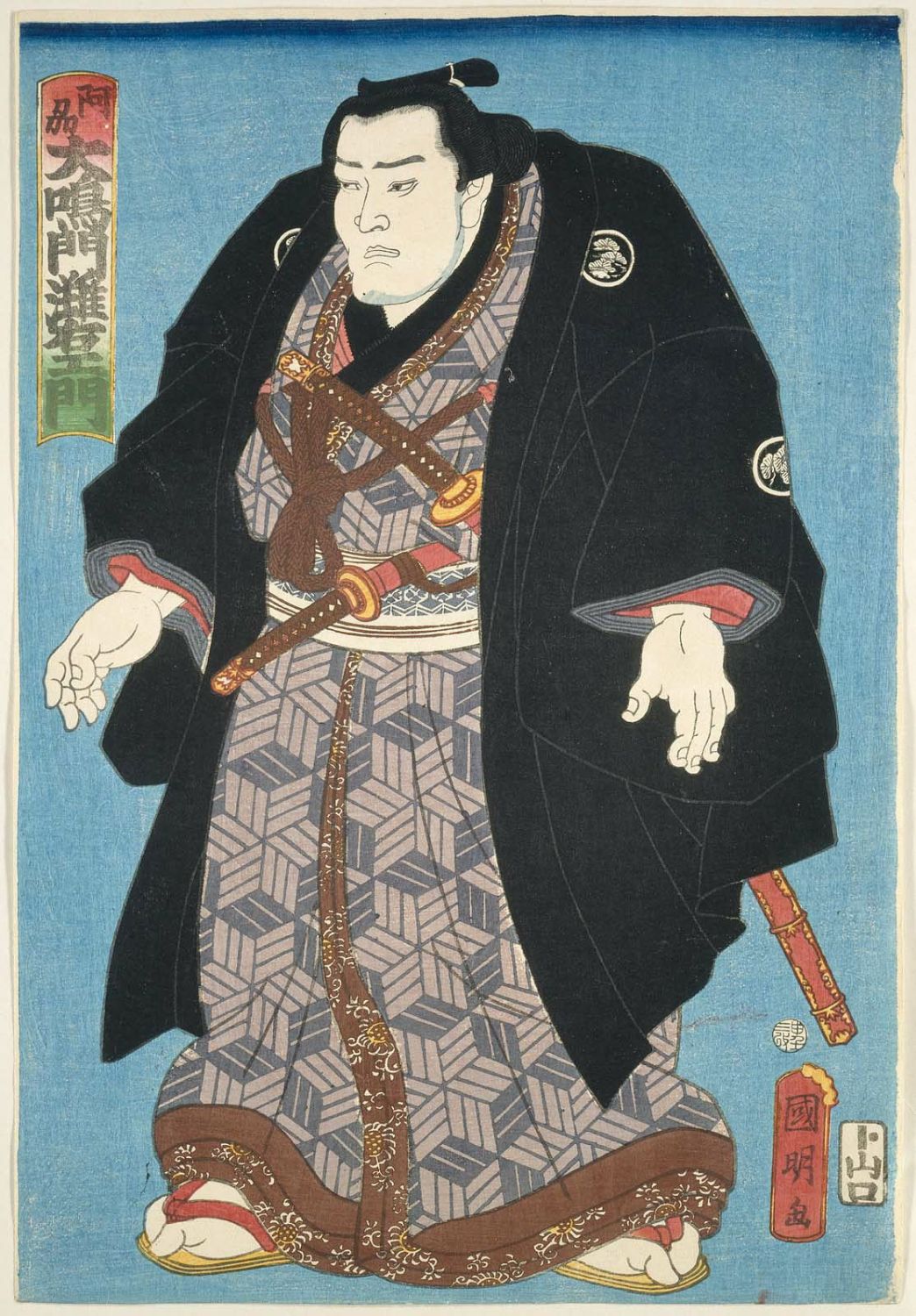
Sumō Wrestler Ōnaruto Nadaemon of Awa Province (Ashū Ōnaruto Nadaemon)
1860
Color woodblock print; ōban
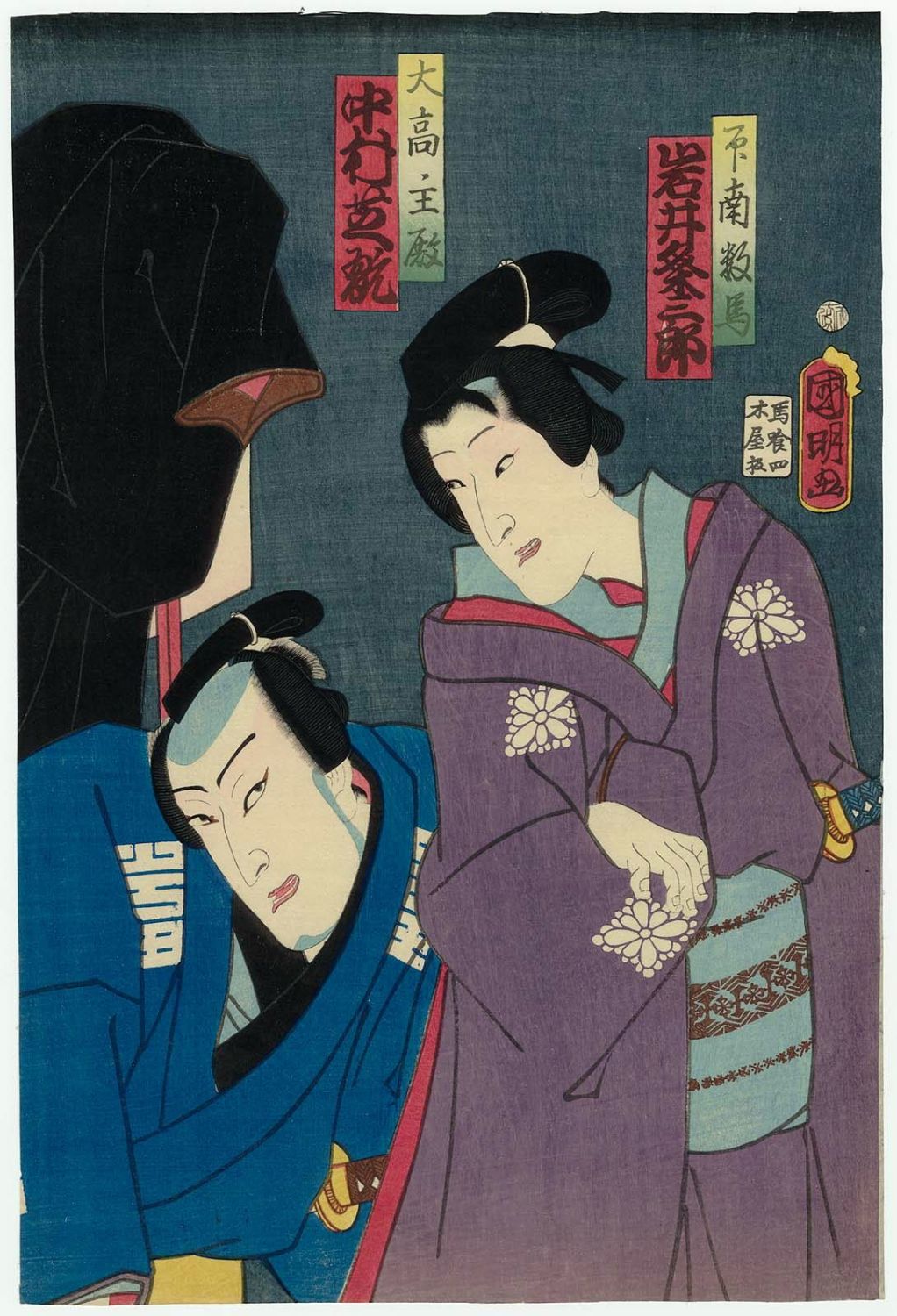
Actors Iwai Kumesaburō and Nakamura Shikan
1862
Color woodblock print; ōban
Frequently Asked Questions
Eastern Genji's Silkworm Cultivation (Azuma Genji kaiko no yashinai) was created by Utagawa Kuniaki II (二代歌川国明) in 1861.