Biography
Utagawa Kuniaki II (二代歌川国明, 1835–1888) was a late-Edo and early-Meiji designer in the Utagawa school, active in Tokyo across the political and visual transformations of the 1860s, 1870s, and 1880s. He trained under Utagawa Kunisada I (1786–1865), one of the most prolific and commercially dominant designers of the nineteenth-century woodblock industry, and emerged in the early 1860s as a producer of yakusha-e (actor prints), sumō-e, and bijin-ga in the late-Edo Utagawa idiom. After the Meiji Restoration of 1868 he adapted his output to the new market for kaika-e (“enlightenment pictures”) and imperial subjects, becoming one of the school’s reliable second-rank chroniclers of Meiji modernization. His prints are held today at the Museum of Fine Arts, Boston, which preserves one of the largest single concentrations of his work, as well as the Honolulu Museum of Art, the Harvard Art Museums, and the Edo-Tokyo Museum.
He is distinct from the earlier Utagawa Kuniaki (歌川国明), an obscure Bakumatsu-era designer whose dates remain unestablished; the suffix “II” (二代, ni-dai, “second generation”) records the formal succession to the Kuniaki name within the Utagawa lineage. He was born into the Hirasawa (平沢) family and later adopted into the Hachisuka (蜂須賀) family, and beyond the Kuniaki signature sources record the personal name Onojirō (斧二郎) and the gō Hōsai (鳳斎), Ippōsai (一鳳斎), and Ichiosai (一凰齋). The Utagawa school’s habit of recycling names through generations of pupils generates the recurring ambiguity that surrounds his attribution; the “II” designation and the body of signed work dated from the early 1860s through the late 1880s together fix his identity as separate from his namesake.
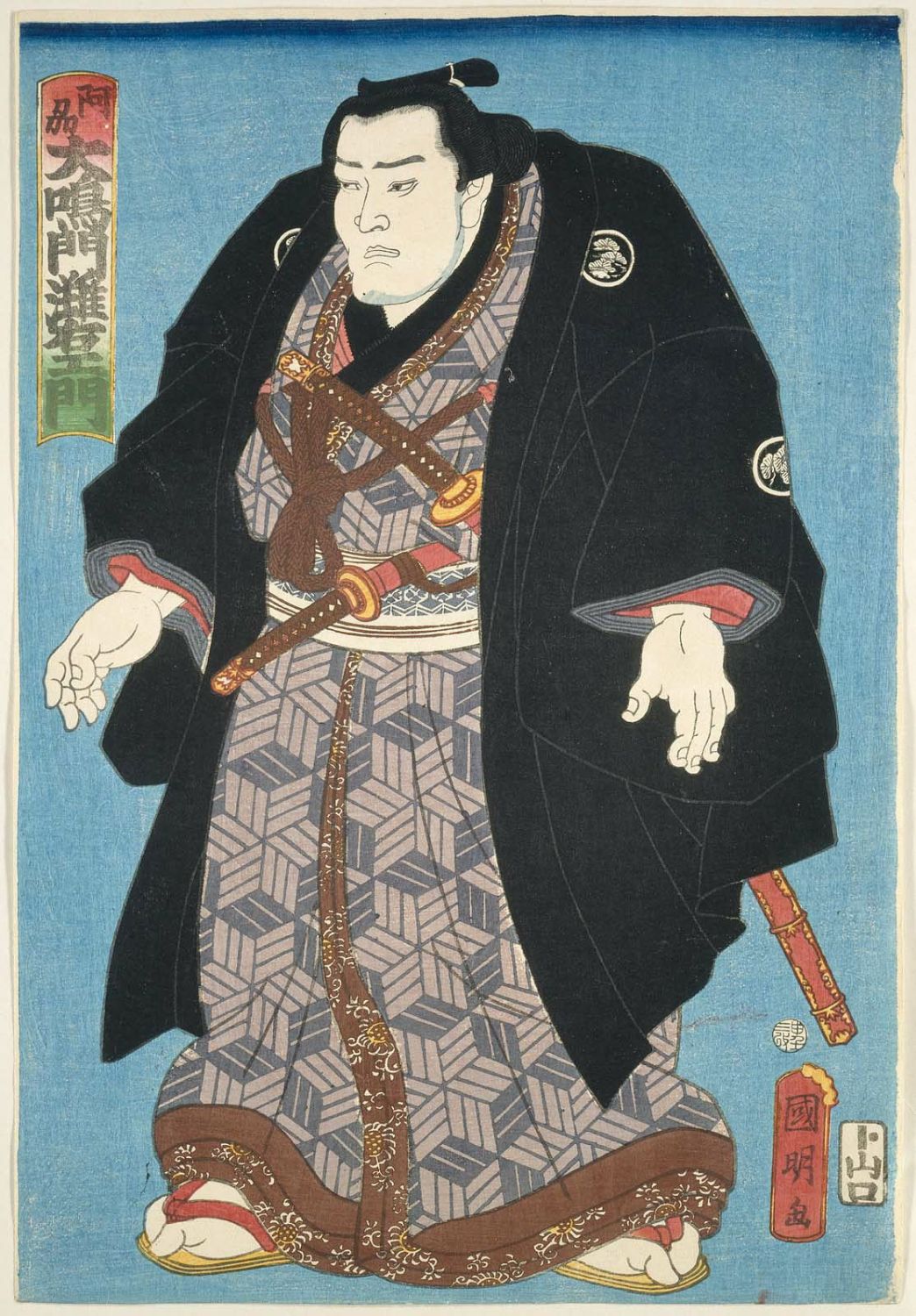
His earliest dated prints establish his position in the late-Bakumatsu market for portraits of sumō champions, courtesans of the Yoshiwara licensed quarter, and parodic Genji-mono designs. The best-documented is his 1860 portrait of the sumō wrestler Ōnaruto Nadaemon of Awa Province, held at the Museum of Fine Arts, Boston, which stands alongside early-1860s bijin-ga, Genji-themed, and actor designs that demonstrate his command of the late-Edo Utagawa idiom at the threshold of the Meiji transition.
Among his most ambitious surviving projects of these years is a series on the Storehouse of Loyal Retainers (Kanadehon chūshingura). Following the model of Kunisada’s earlier multi-sheet Chūshingura sets, it pairs portraits of leading Edo-stage kabuki actors with scenes from the acts of the classic vendetta drama, from the opening palace episodes through the climactic raid on Lord Kira’s mansion, and preserves documentary value for late-Bakumatsu kabuki performance history.
The Meiji Restoration of 1868 reoriented his output. The popular print market shifted from the Edo theater districts and the Yoshiwara quarter to the new subjects of the modernizing nation: imperial ceremonies, Western-style buildings, industrial machinery, foreign visitors, and the choreographed public appearances of the Meiji emperor. He produced kaika-e (“enlightenment pictures”) for this market throughout the 1870s and 1880s. His 1877 Illustration of the Silk Reeling Machine at the Japanese National Industrial Exposition, in the Museum of Fine Arts, Boston, pictures machinery on display at the first Naikoku Kangyō Hakurankai (National Industrial Exposition) of 1877, the inaugural Japanese state-sponsored exposition modeled on European world’s fairs. He treated the sericulture industry that became a foundation of Meiji-era export earnings in companion prints such as Raising Silk Worms for a Thousand Ages of Prosperity, demonstrating the speed with which he absorbed Meiji industrial subjects into the Utagawa pictorial vocabulary.
The imperial subjects of his late career constitute a parallel body of Meiji documentation. An Imperial Excursion to Maruyama in Shiba Park, a triptych held at the Museum of Fine Arts, Boston and the Honolulu Museum of Art, pictures the Meiji emperor’s visit to the Shiba Park grounds, a public park established in 1873 on land formerly attached to the Tokugawa-related Zōjō-ji temple. The print Sumō Match Held in the Presence of the Emperor and Empress at Yayoi Shrine, also at the Honolulu Museum of Art, depicts one of the imperial sumō matches of the period; sumō had struggled in the early years of the new government as a relic of feudal Japan, and patronage by the imperial household in the 1880s helped revive its national standing. His sumō-e of the 1870s and 1880s, including the Great Sumo Wrestlers series at the Edo-Tokyo Museum, document leading wrestlers of the period such as Ōnaruto Nadaemon and Odate Uzaemon alongside the imperial ceremonies that legitimized them.
He also produced a body of yokohama-e (“Yokohama pictures”) depicting the foreign communities established at the treaty port of Yokohama after its opening in 1859. The Harvard Art Museums hold his print Americans (Amerikajin), from the series Bankoku jimbutsu (“Peoples of All Nations”), part of the genre that emerged in the early 1860s to satisfy public curiosity about the appearance, dress, and customs of the foreigners newly resident in Japan. The yokohama-e genre, which arose around 1860–1861 with designers including Utagawa Sadahide and Yoshitora, drew on imported lithographs, photographs, and direct observation to produce an iconography of Western dress, naval uniforms, and national types; his contributions belong to the later designers who continued the genre into the Meiji decades.
The Famous Views of Modern Tokyo series, on which he collaborated with Utagawa Hiroshige III (1842–1894), represents the late phase of his career. The Edo-Tokyo Museum preserves the print In the Hana Yashiki Entertainment Garden in Asakusa from this collaboration. Hana Yashiki, founded in 1853, became one of Tokyo’s earliest amusement parks; the collaboration pictures its gardens, pavilions, and Meiji visitors as part of a broader documentation of the modernizing capital. The series situates his late work within the Meiji-print tradition of urban-view publication that ran from Hiroshige III through Inoue Yasuji and Kobayashi Kiyochika into the 1890s.
He died in 1888 at the age of fifty-three, after a working life that bridged the late-Edo actor-print market in which he had trained and the Meiji modernization that consumed most of his mature production. His position in the historiography of the Utagawa school is that of a competent second-rank designer working alongside contemporaries such as Hiroshige III, Yoshikazu, Yoshitora, and Kunichika; he was never the most innovative or most celebrated of his generation, but his surviving prints across the Museum of Fine Arts, Boston, the Honolulu Museum of Art, the Harvard Art Museums, and the Edo-Tokyo Museum constitute a coherent visual record of the Meiji-era subjects — industrial expositions, imperial ceremonies, sumō tournaments, the Yokohama foreign community, and the gardens and parks of the modernizing capital — to which the late Utagawa school turned in the decades when the woodblock industry contracted toward its long twilight.
Key Facts
- Active Period
- 1835–1888
- Nationality
- 🇯🇵Japan
- Movement
- Meiji/Taishō Prints
- Works Indexed
- 15
Frequently Asked Questions
Utagawa Kuniaki II (二代歌川国明, 1835–1888) was a late-Edo and early-Meiji designer in the Utagawa school, active in Tokyo across the political and visual transformations of the 1860s, 1870s, and 1880s. He trained under Utagawa Kunisada I (1786–1865), one of the most prolific and commercially dominant designers of the nineteenth-century woodblock industry, and emerged in the early 1860s as a producer of yakusha-e (actor prints), sumō-e, and bijin-ga in the late-Edo Utagawa idiom. After the Meiji Restoration of 1868 he adapted his output to the new market for kaika-e (“enlightenment pictures”) and imperial subjects, becoming one of the school’s reliable second-rank chroniclers of Meiji modernization. His prints are held today at the Museum of Fine Arts, Boston, which preserves one of the largest single concentrations of his work, as well as the Honolulu Museum of Art, the Harvard Art Museums, and the Edo-Tokyo Museum.
Utagawa Kuniaki II was active from 1835 to 1888. They were associated with the Meiji/Taishō Prints movement.
Utagawa Kuniaki II's work was shaped by the Meiji/Taishō Prints tradition in Japanese woodblock printmaking. Meiji/Taishō Prints: Meiji and Taishō era prints (1868–1926) bridge the transition from traditional ukiyo-e to the modern shin-hanga and sosaku-hanga movements.
Utagawa Kuniaki II's prints frequently feature sumo, spring.
Original prints by Utagawa Kuniaki II can be found in collections including Museum of Fine Arts, Boston.
Woodblock Prints by Utagawa Kuniaki II (15)
Sumō Wrestler Ōnaruto Nadaemon of Awa Province (Ashū Ōnaruto Nadaemon)
1860
Color woodblock print; ōban
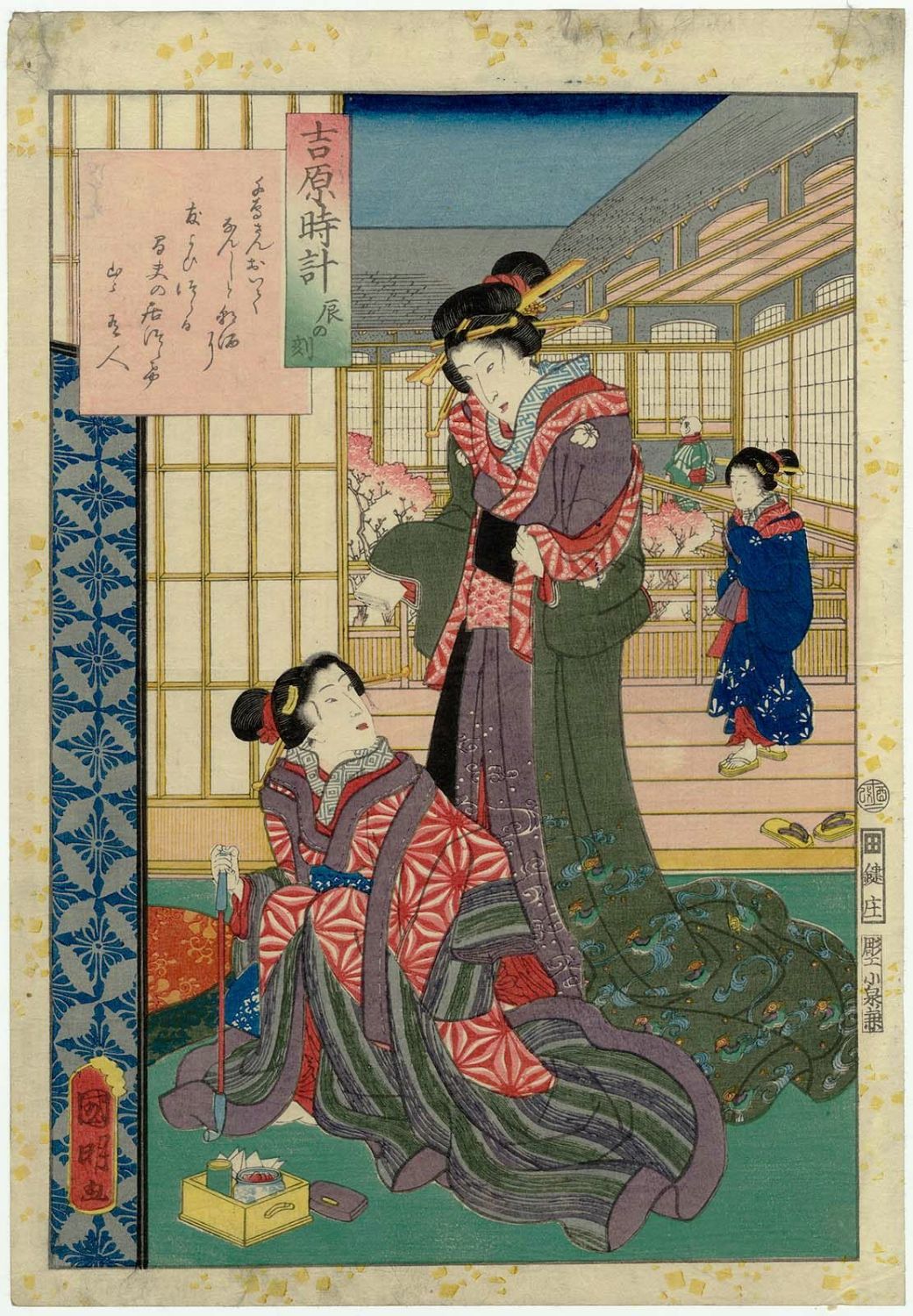
The Hour of the Dragon (Tatsu no koku), from the series A Yoshiwara Clock (Yoshiwara tokei)
1861
Color woodblock print; ōban
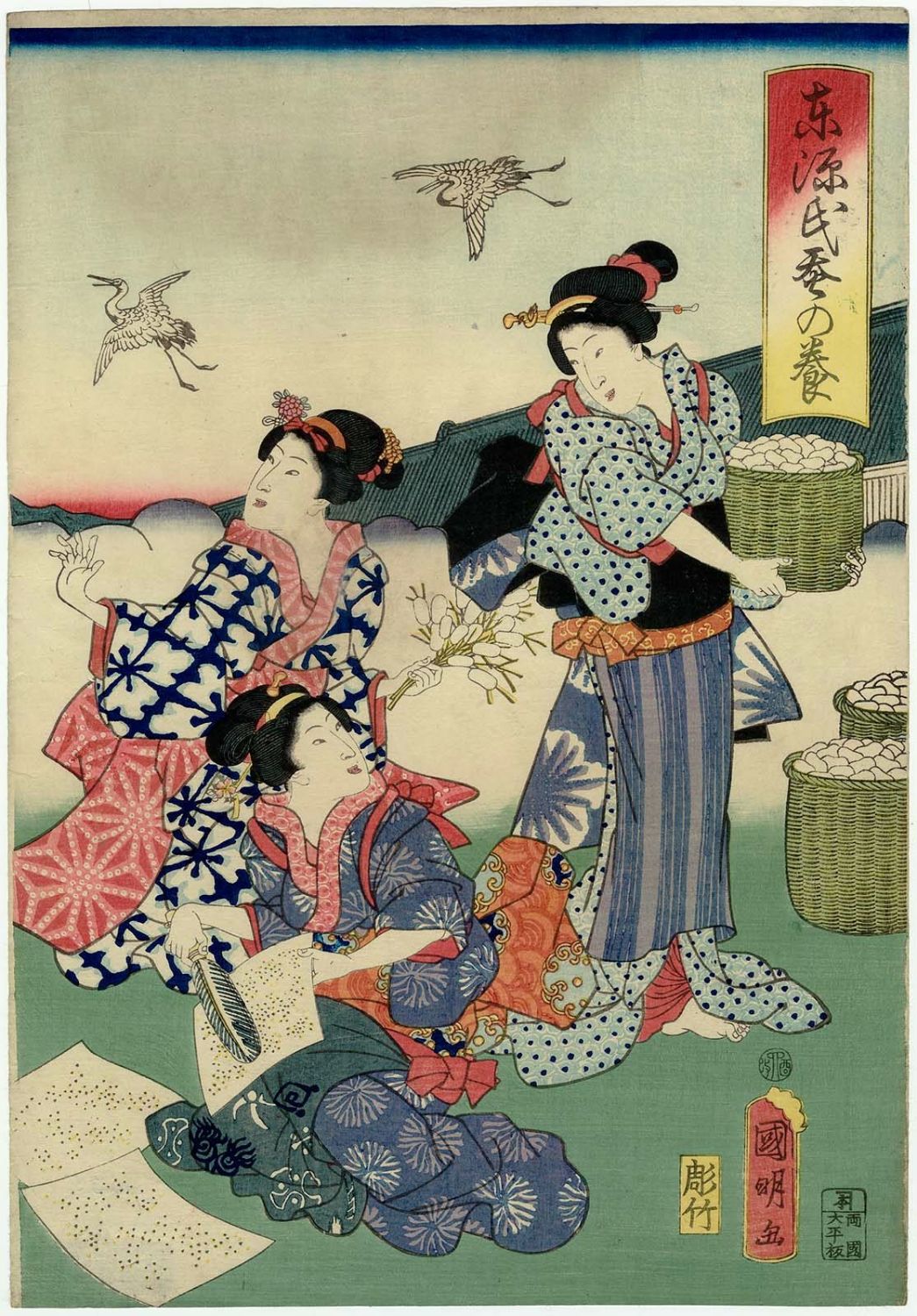
Eastern Genji's Silkworm Cultivation (Azuma Genji kaiko no yashinai)
1861
Color woodblock print; ōban
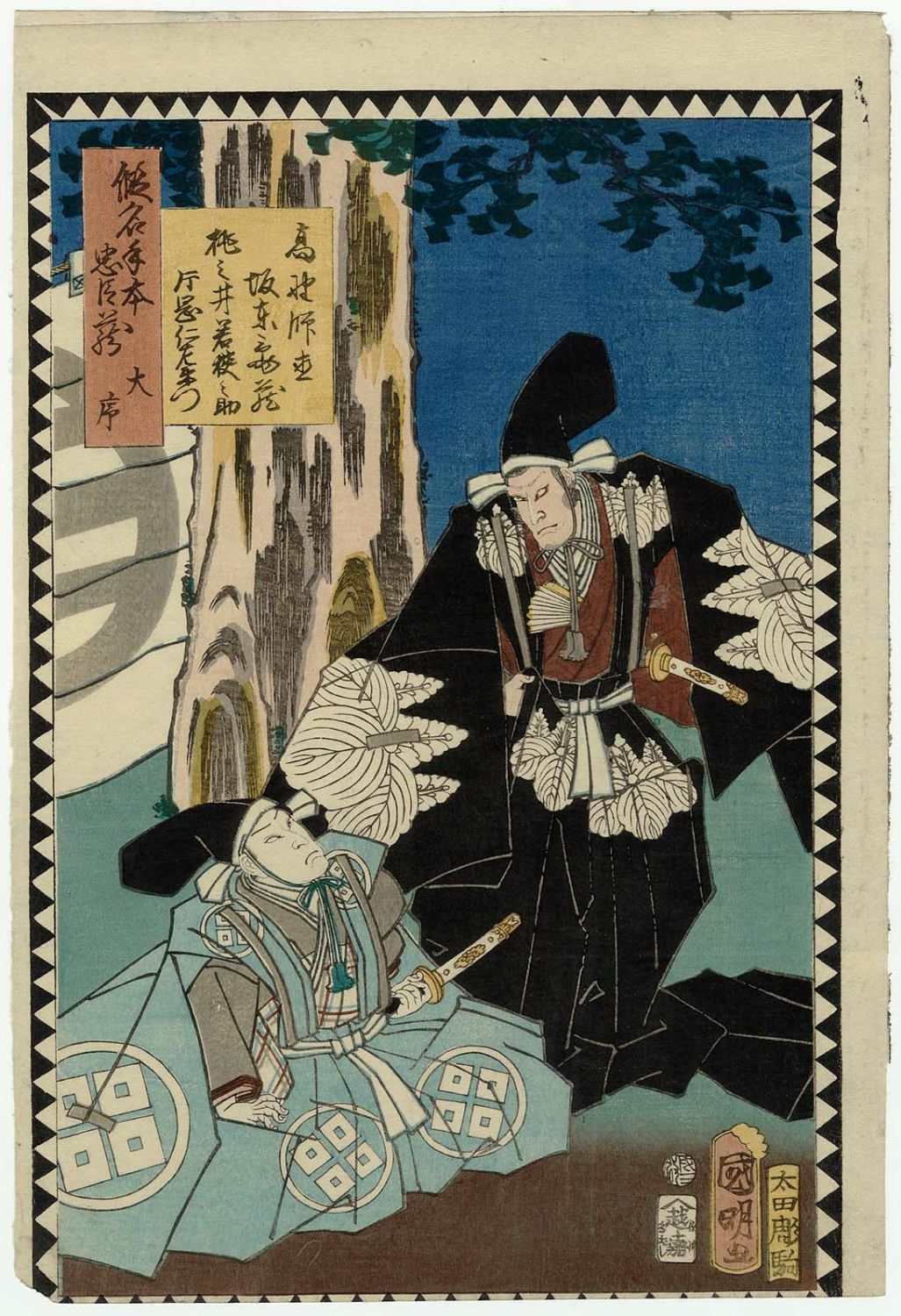
Act I (Daijo): Actors Bandō Kamezō as Kō no Moronao and Kataoka Nizaemon as Momonoi Wakasanosuke, from the series The Storehouse of Loyal Retainers, a Primer (Kanadehon chūshingura)
1862
Color woodblock print; ōban
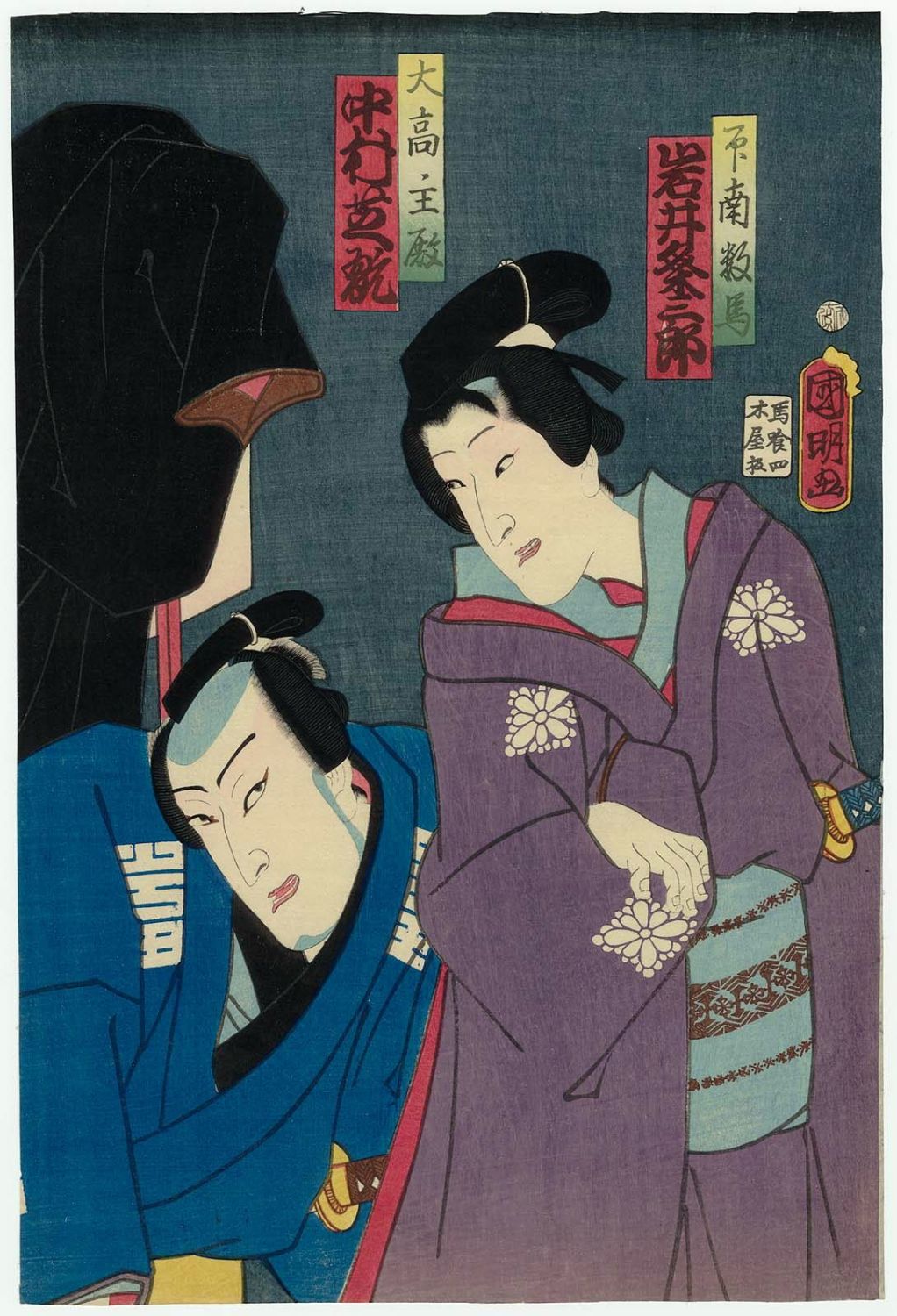
Actors Iwai Kumesaburō and Nakamura Shikan
1862
Color woodblock print; ōban
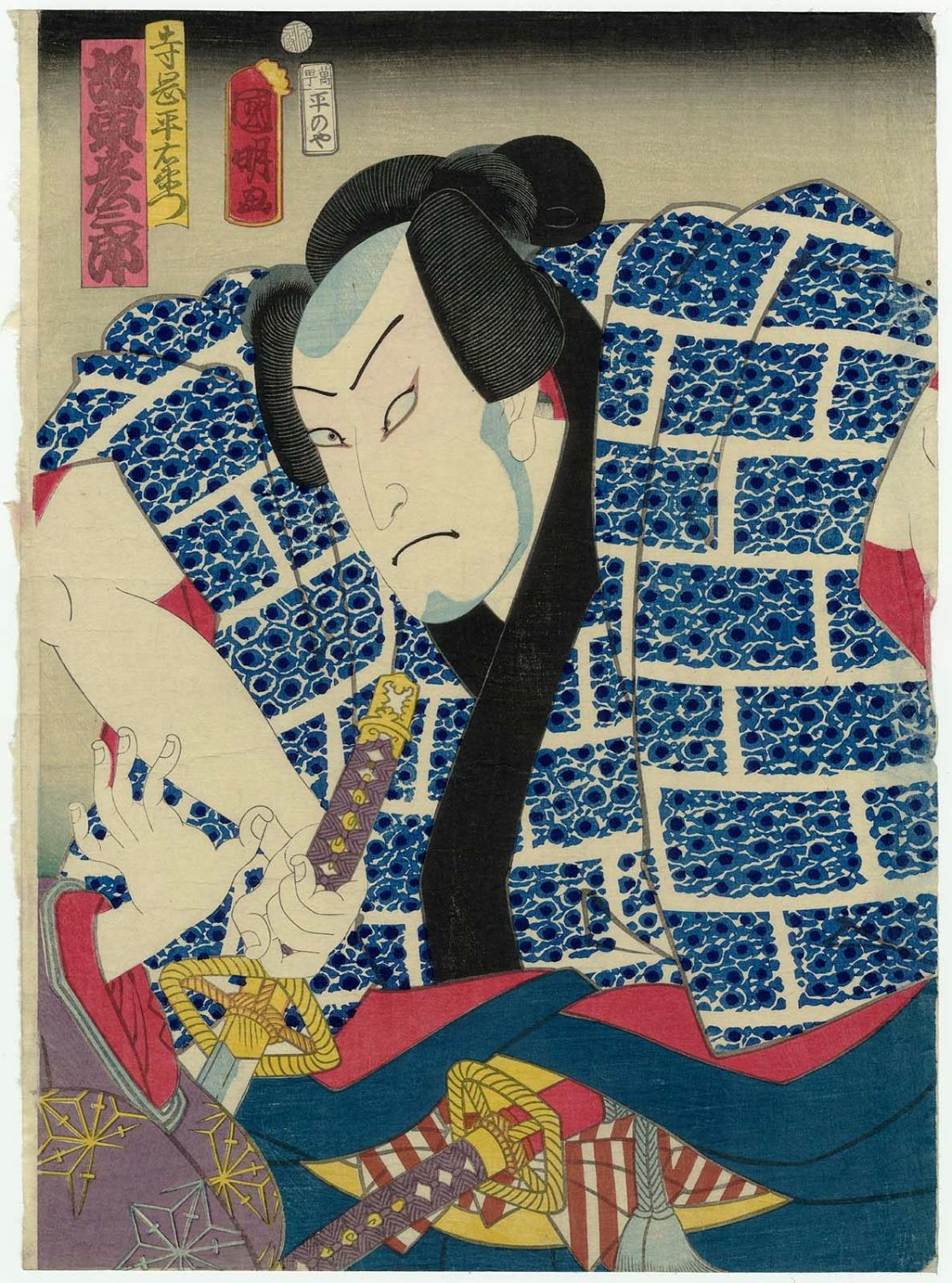
Actor Bandō Hikosaburō V as Teraoka Heiemon
1862
Color woodblock print; ōban

Actor Umeya Kakitsu
1862
Color woodblock print; ōban

Act VI (Dai rokudanme): Actors Bandō Hikosaburō as Hayano Kanpei and Sawamura Tanosuke as His Wife Okaru, from the series The Storehouse of Loyal Retainers, a Primer (Kanadehon chūshingura)
1862
Color woodblock print; ōban
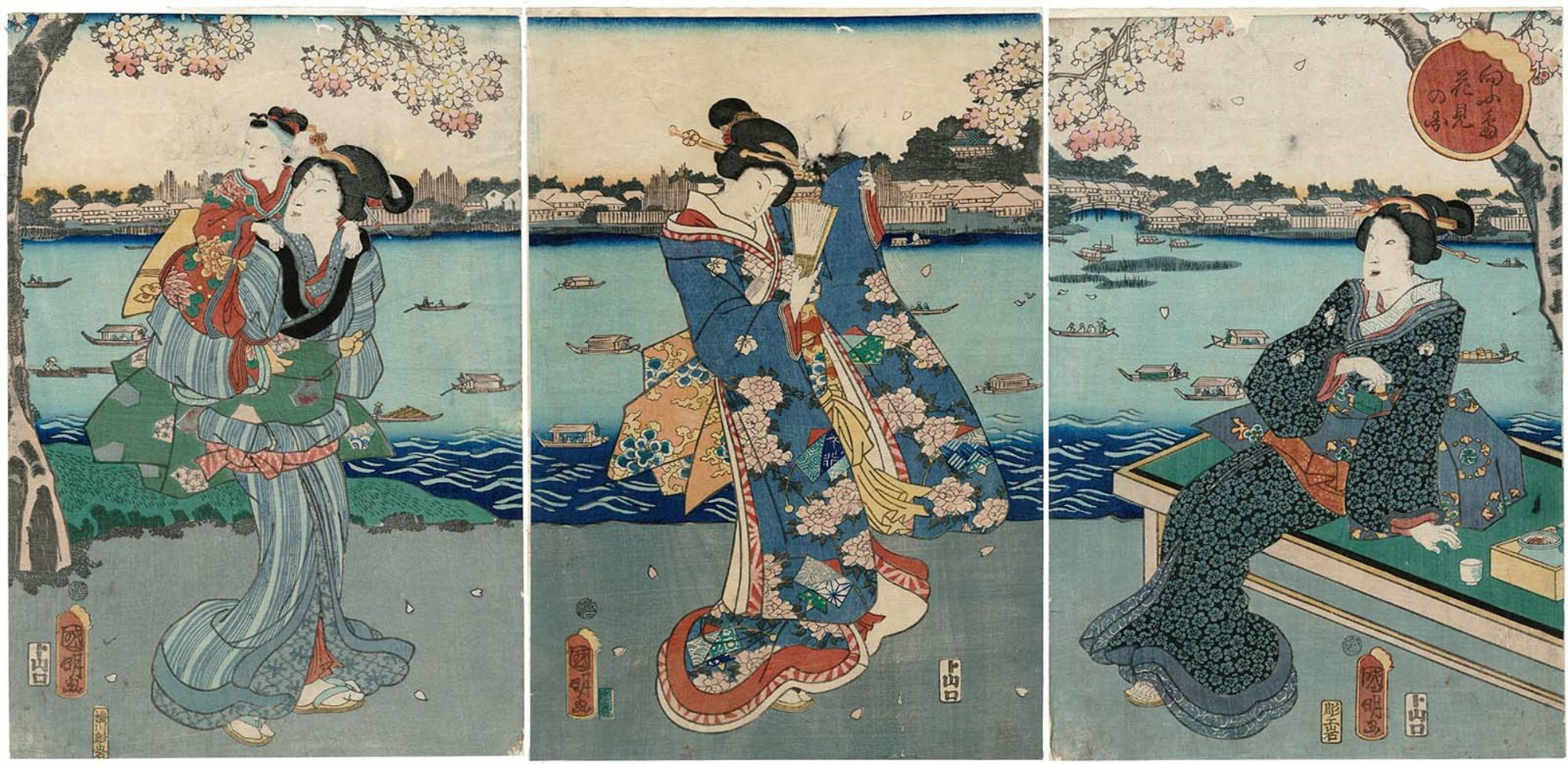
Viewing Cherry Blossoms at Mukōjima (Mukōjima hanami no zu)
1862
Color woodblock print; ōban triptych
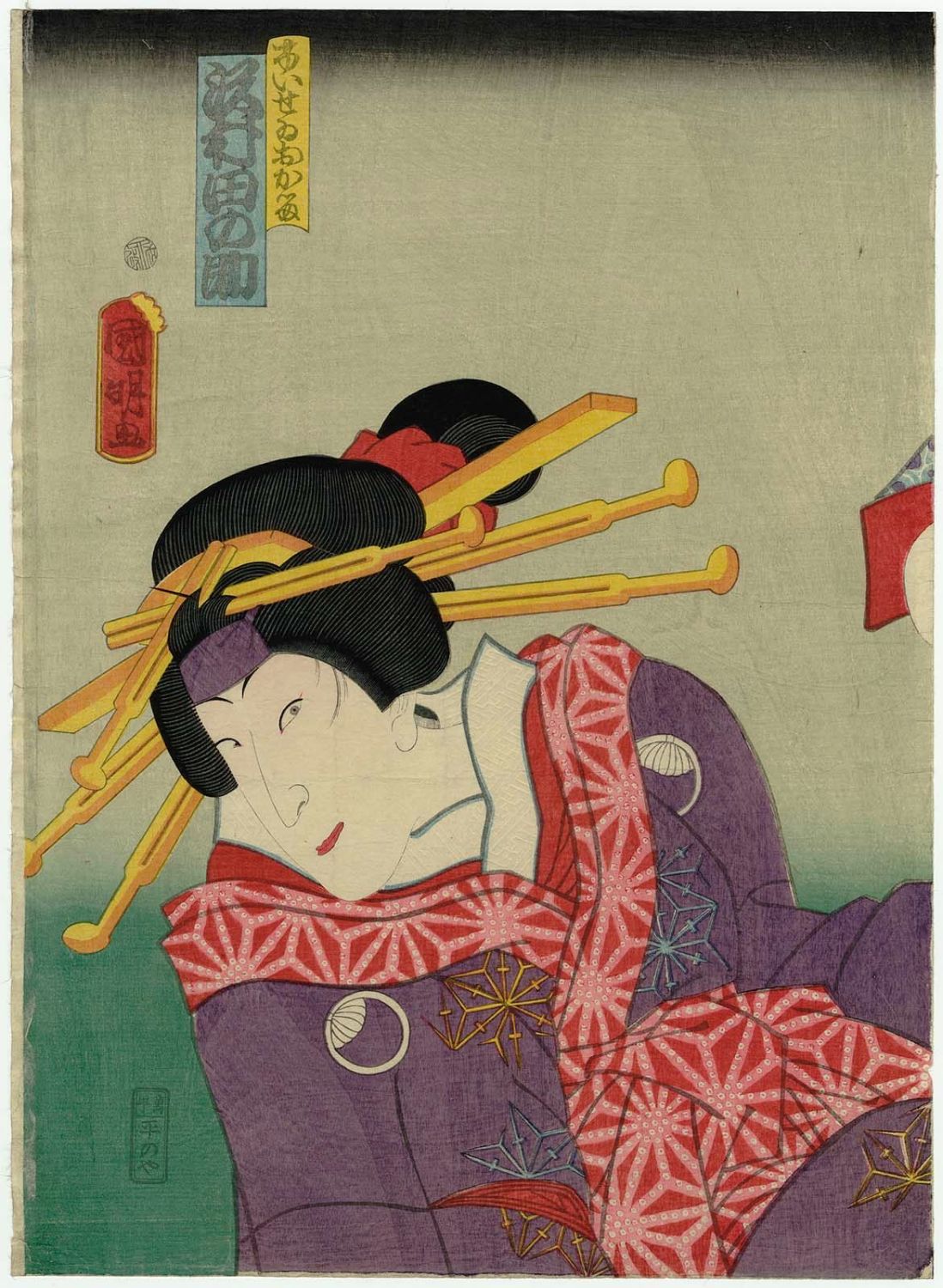
Actor Sawamura Tanosuke
1862
Color woodblock print; ōban
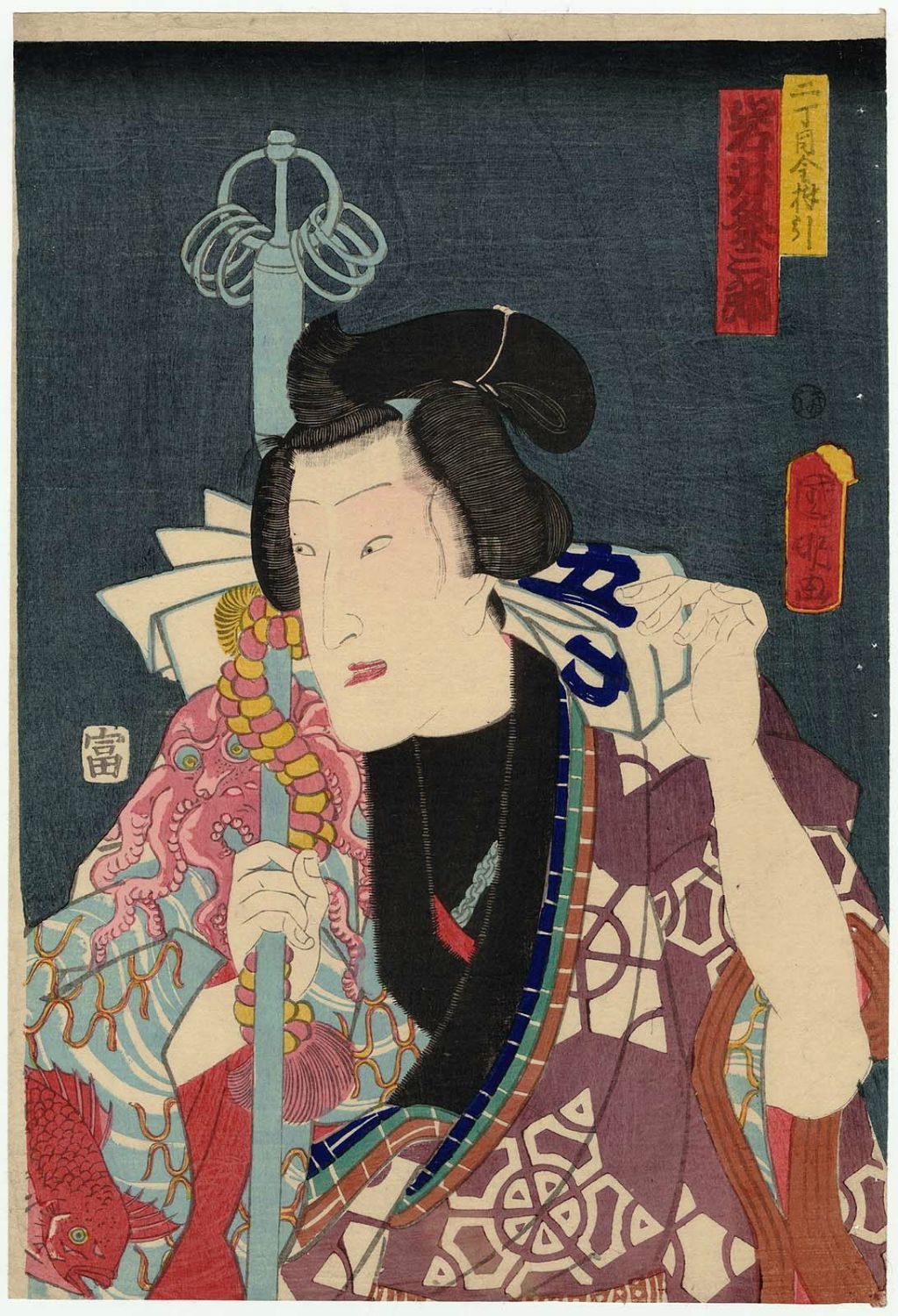
Actor Iwai Kumesaburō
1864
Color woodblock print; ōban
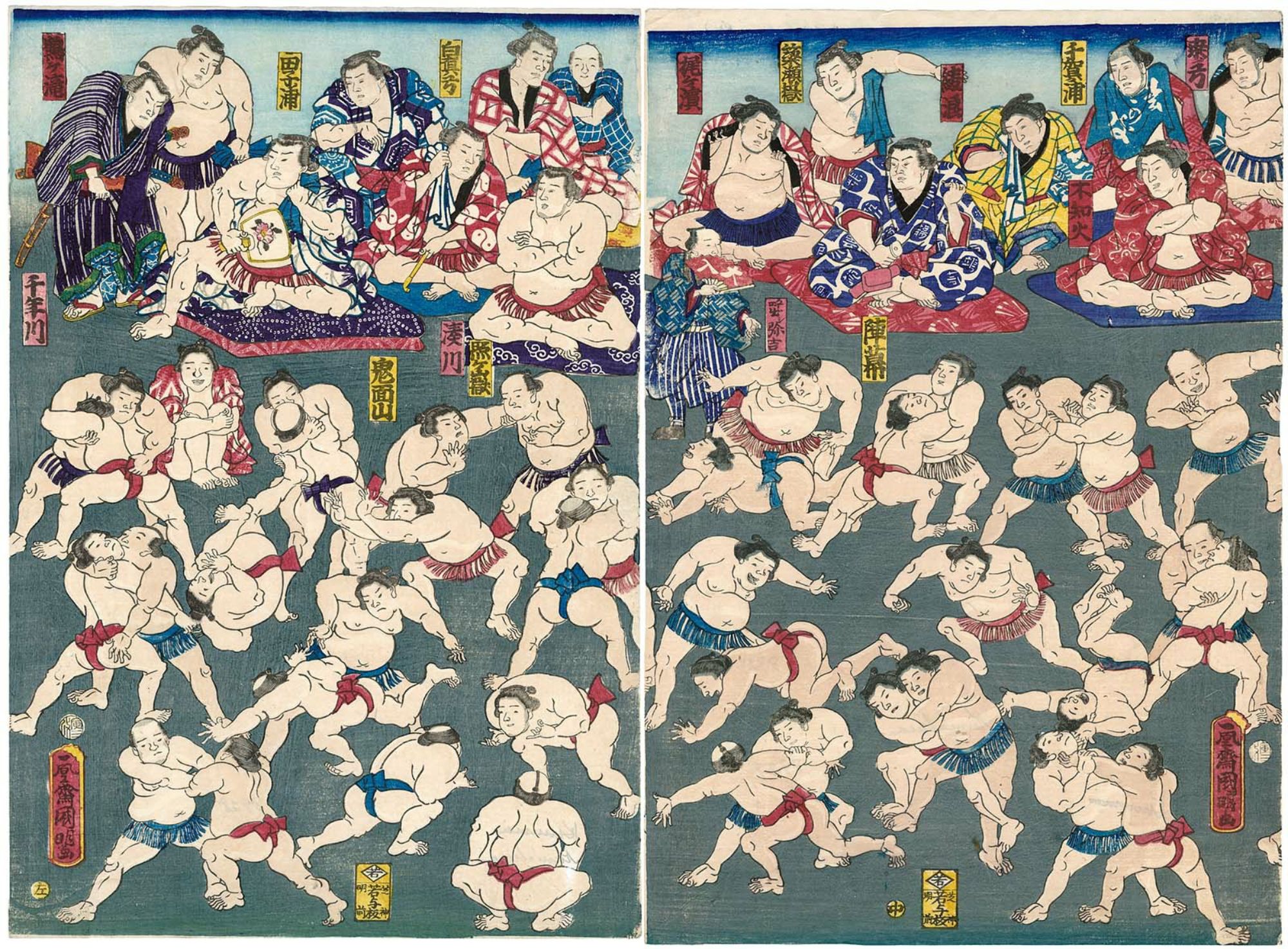
Sumō Wrestlers Practicing
1866
Color woodblock print; ōban
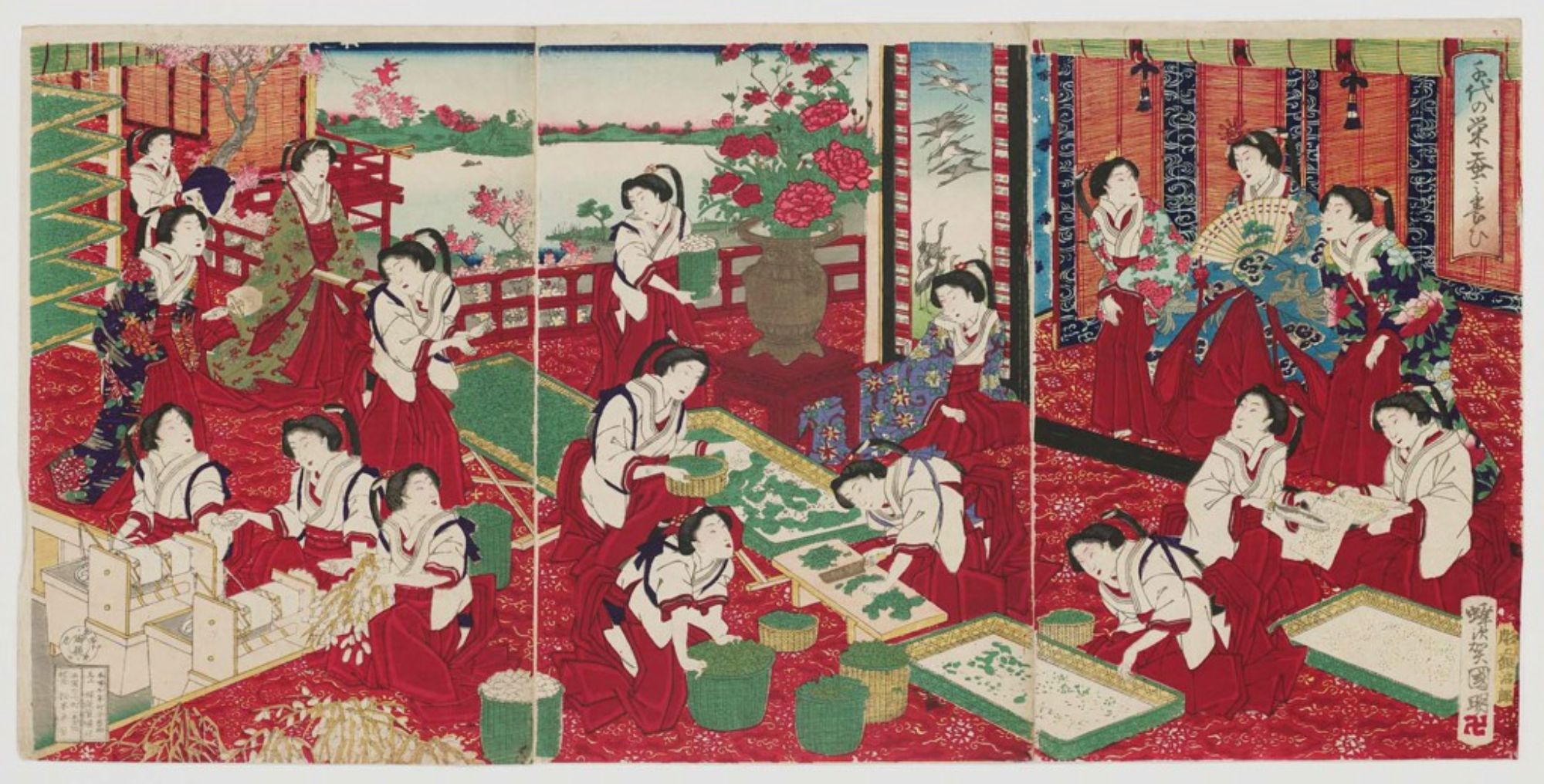
Raising Silk Worms for a Thousand Ages of Prosperity (Chiyo no sakae kaiko no yashinai)
1877
Color woodblock print; ōban triptych
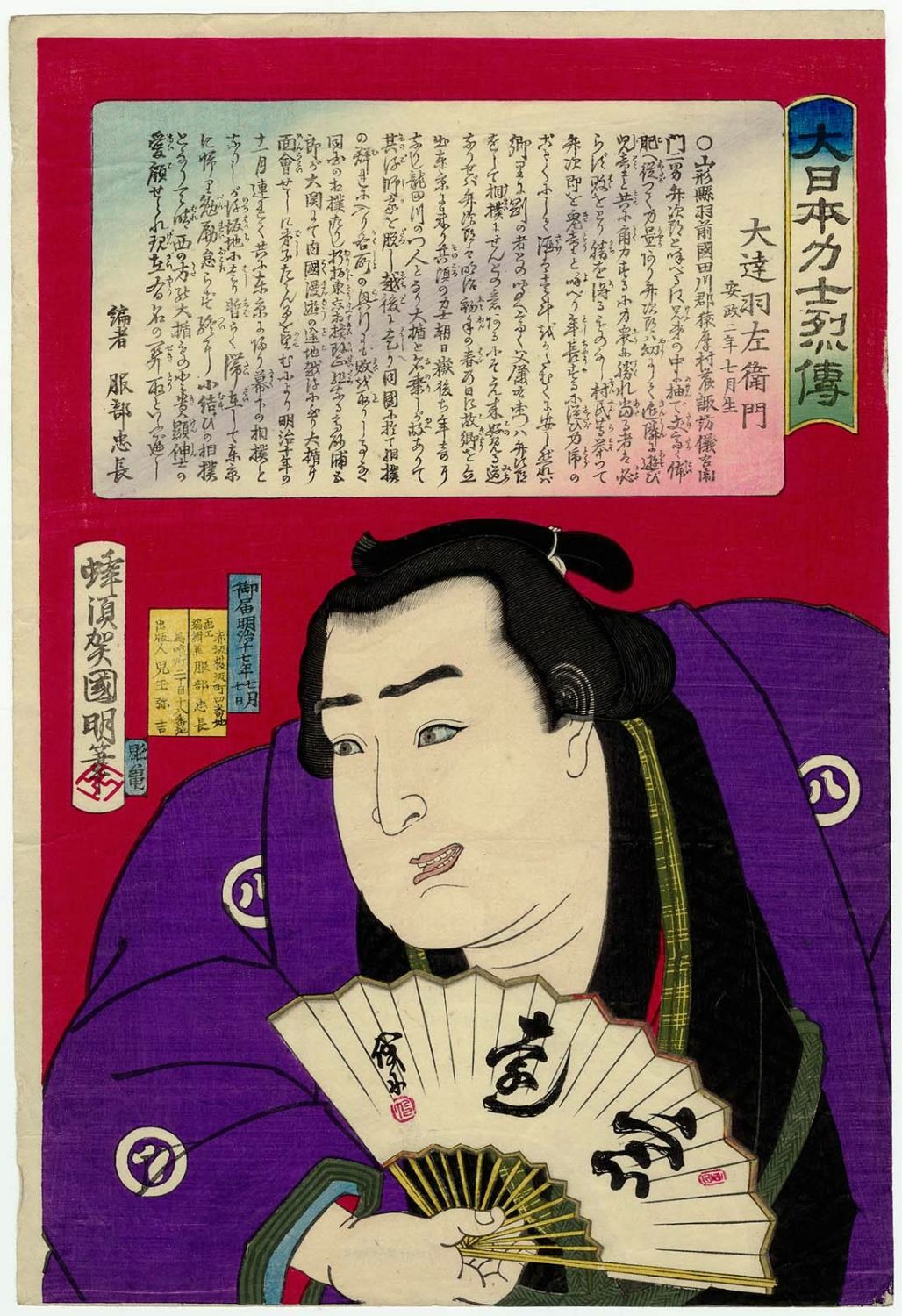
Lives of Sumō Wrestlers of Great Japan (Dai Nihon rikishi retsuden)
1884
Color woodblock print; ōban

Spring Colors: Lion Dance at a Mansion (Shunshoku yakata no shishi-mai)
c. 1860s
Color woodblock print; ōban triptych