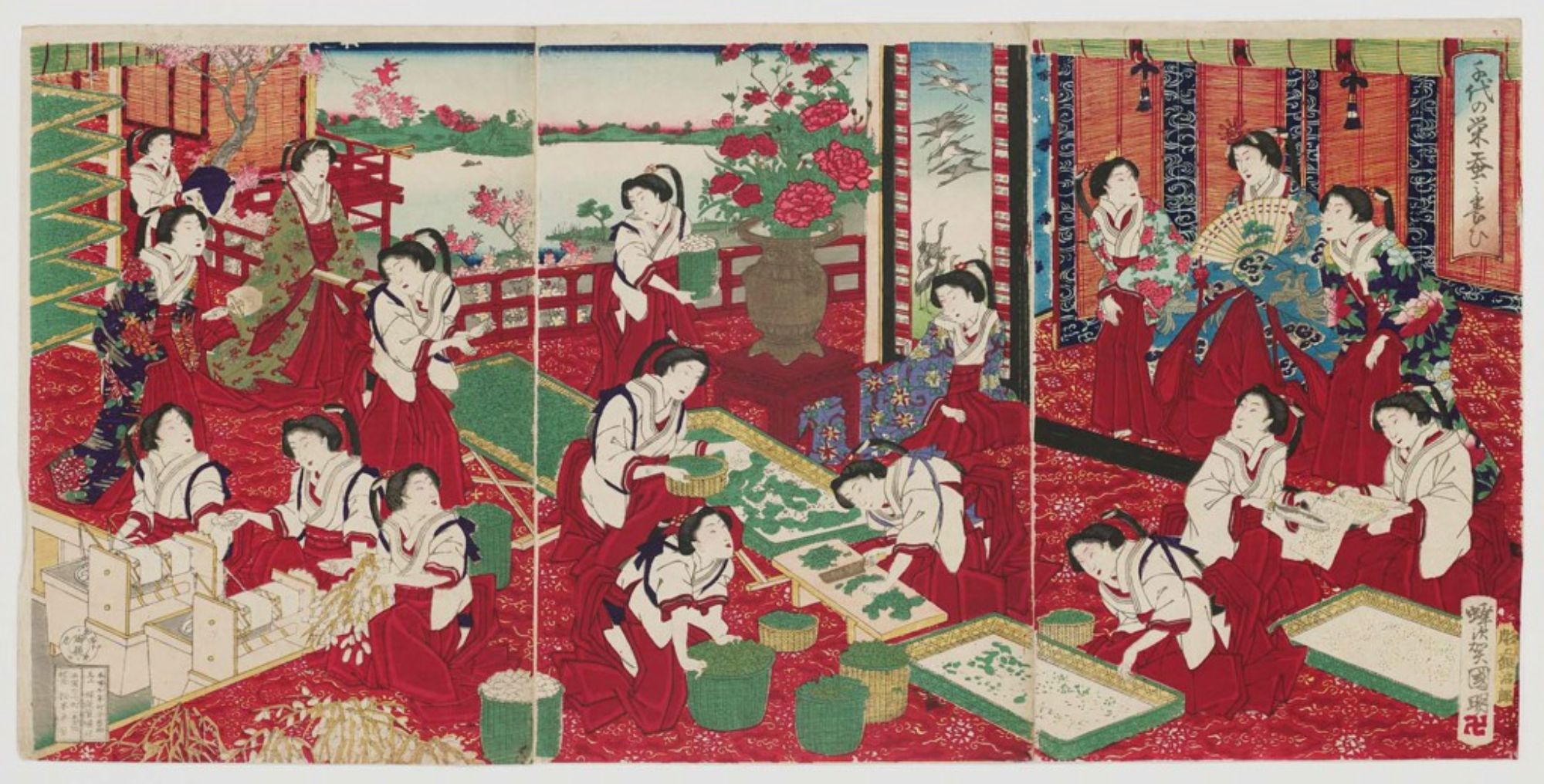
Raising Silk Worms for a Thousand Ages of Prosperity (Chiyo no sakae kaiko no yashinai)
- Date:
- 1877
- Medium:
- Color woodblock print; ōban triptych
- Source:
- Museum of Fine Arts, Boston
Description
A color ōban woodblock triptych of 1877 in the Museum of Fine Arts, Boston, this Raising Silk Worms for a Thousand Ages of Prosperity (Chiyo no sakae kaiko no yashinai) belongs to Kuniaki II's body of Meiji-era sericulture prints — a small genre celebrating the industrial silk production that became one of the foundations of Meiji-era export earnings. The title phrase chiyo no sakae ("a thousand ages of prosperity") invokes the auspicious congratulatory vocabulary of the imperial Meiji state, casting the silkworm cultivation depicted in the composition as a national contribution to the prosperity of the new regime. The triptych likely pictures women workers tending silkworm trays during the spring rearing season, an activity that combined household-scale traditional practice with the rapidly industrializing factory production that absorbed much of rural Japan's female workforce during the 1870s and 1880s. The 1877 dating places the print in the same productive year as Kuniaki II's silk-reeling-machine triptych for the National Industrial Exposition, and the two prints together constitute a small portfolio of sericulture documentation aimed at the Meiji popular market.
More Prints by Utagawa Kuniaki II
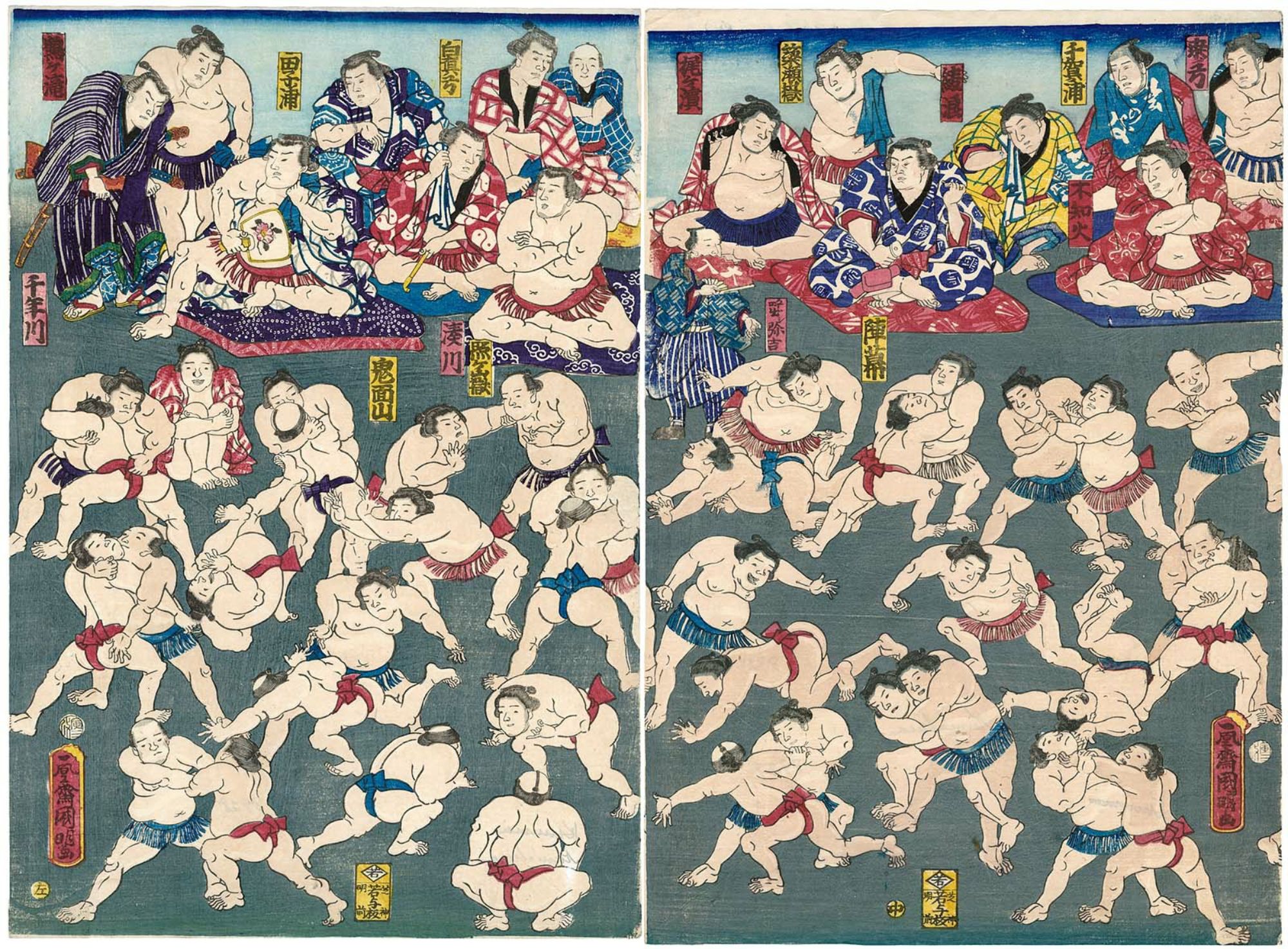
Sumō Wrestlers Practicing
1866
Color woodblock print; ōban
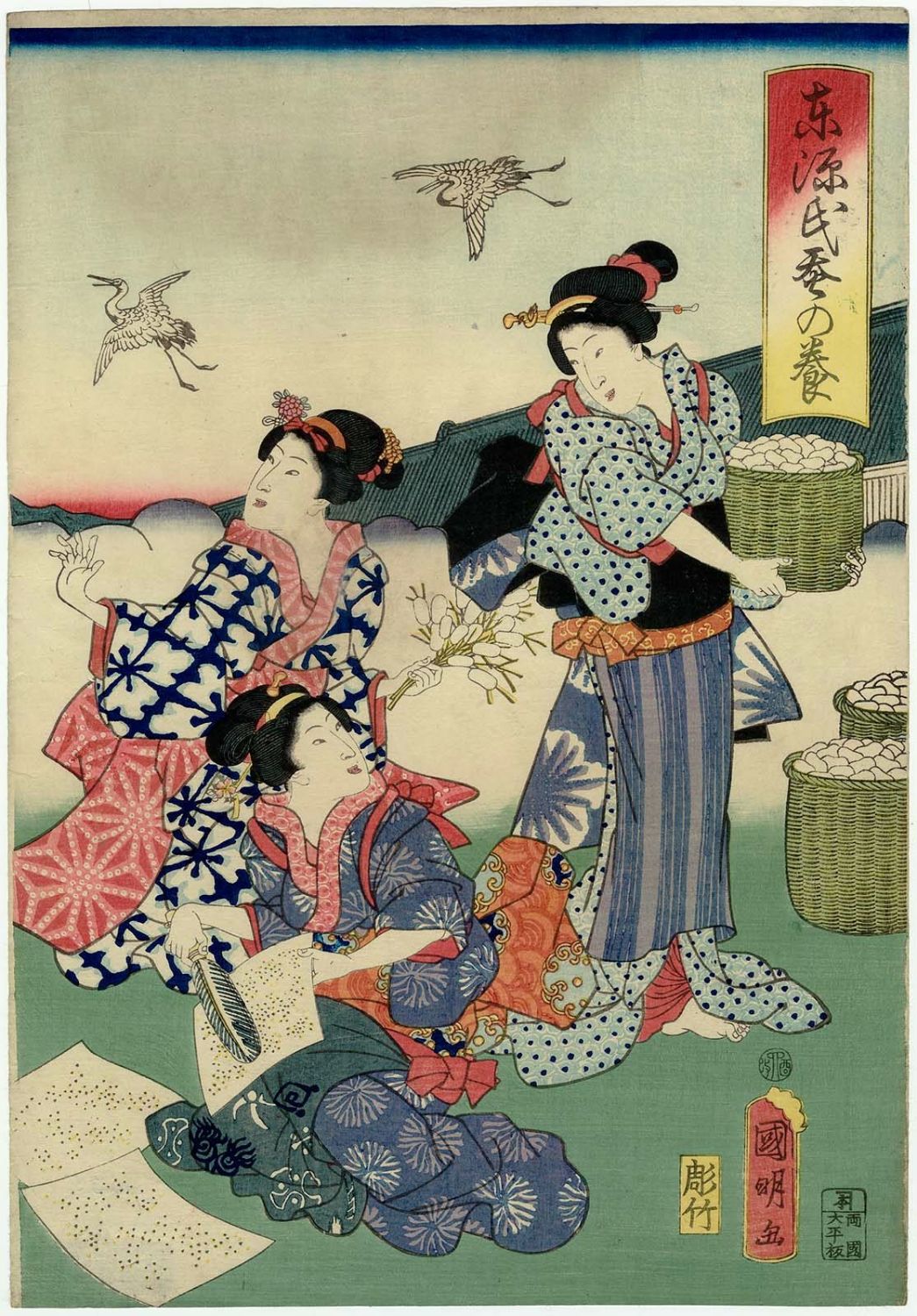
Eastern Genji's Silkworm Cultivation (Azuma Genji kaiko no yashinai)
1861
Color woodblock print; ōban
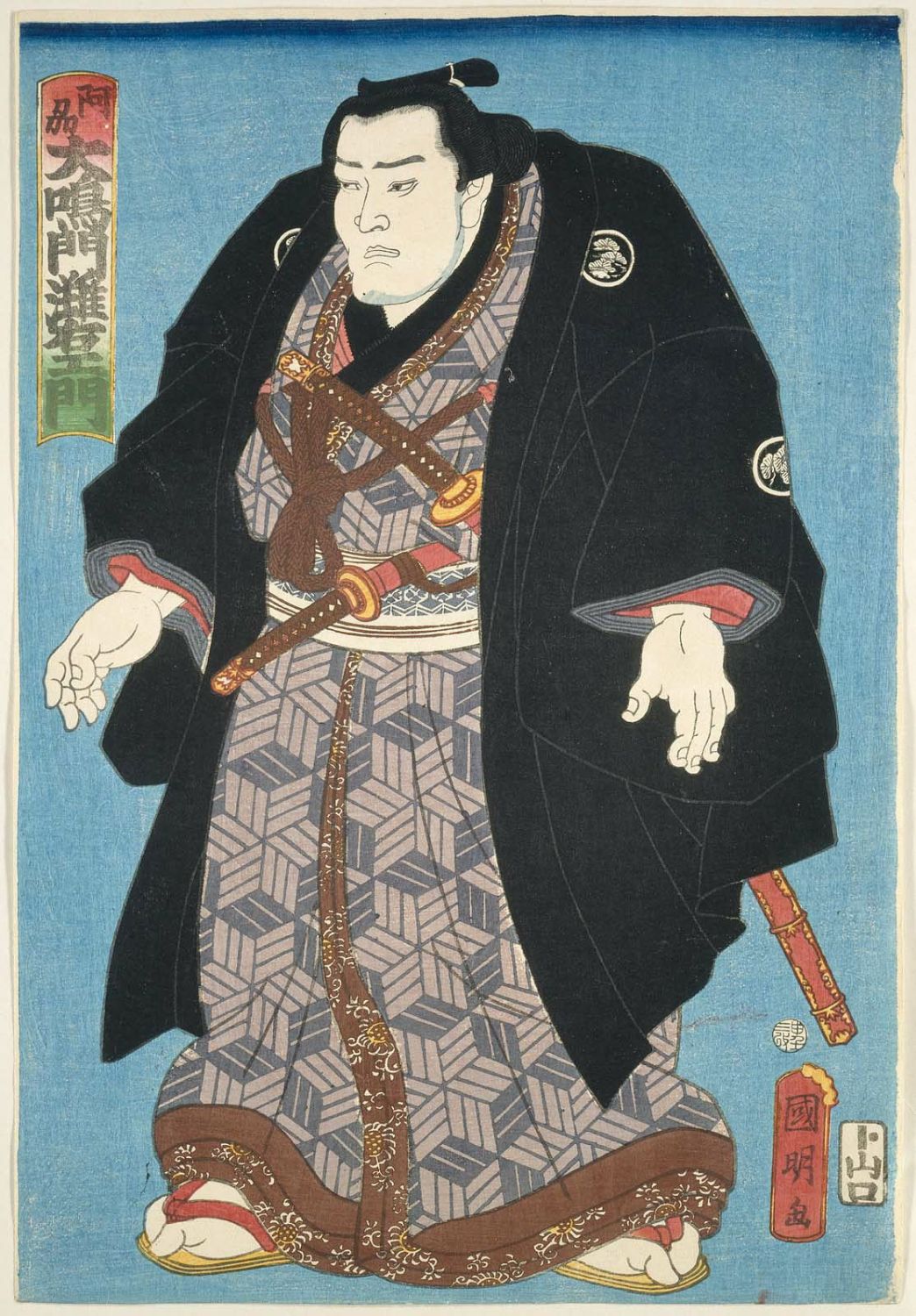
Sumō Wrestler Ōnaruto Nadaemon of Awa Province (Ashū Ōnaruto Nadaemon)
1860
Color woodblock print; ōban
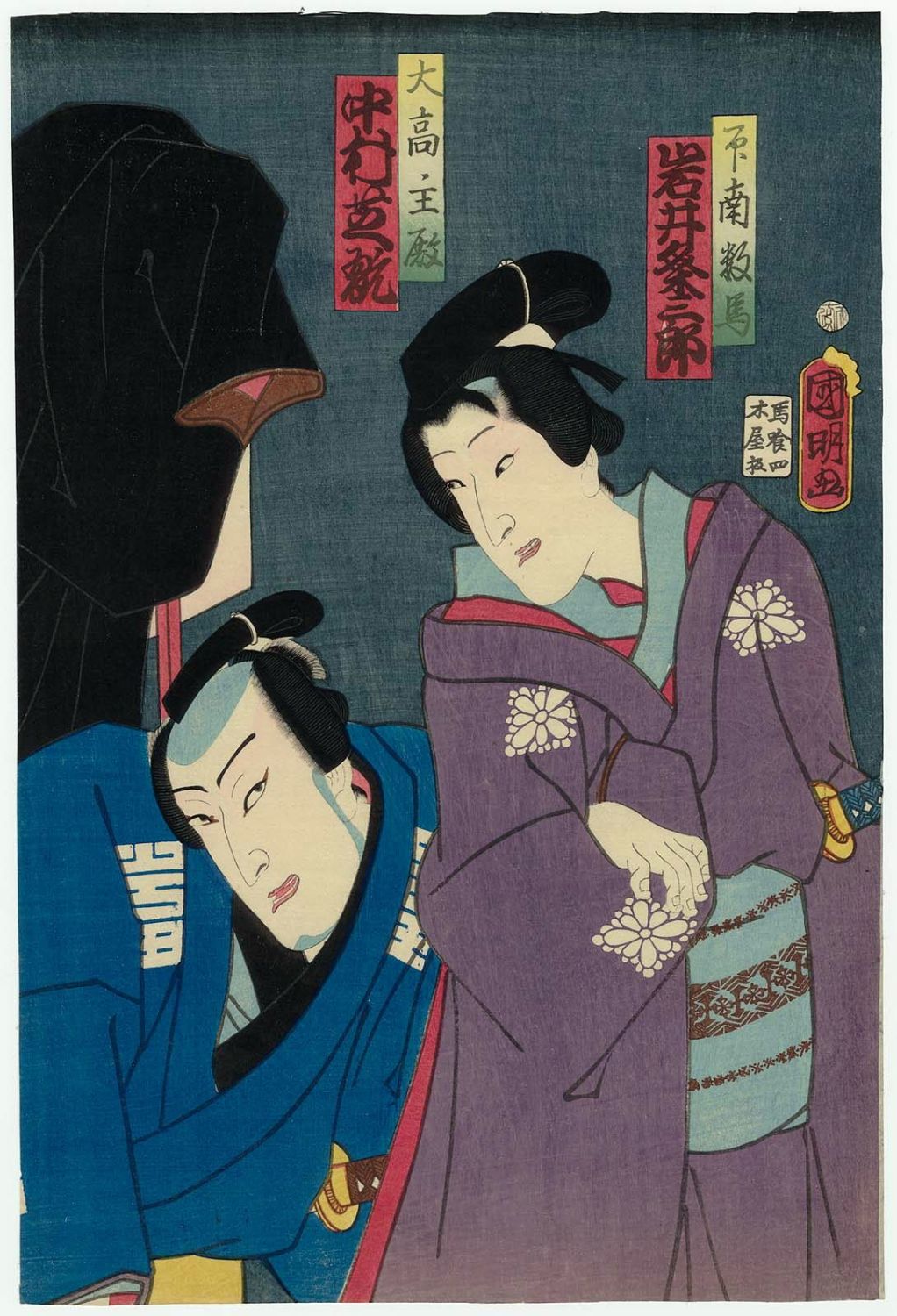
Actors Iwai Kumesaburō and Nakamura Shikan
1862
Color woodblock print; ōban
Frequently Asked Questions
Raising Silk Worms for a Thousand Ages of Prosperity (Chiyo no sakae kaiko no yashinai) was created by Utagawa Kuniaki II (二代歌川国明) in 1877.