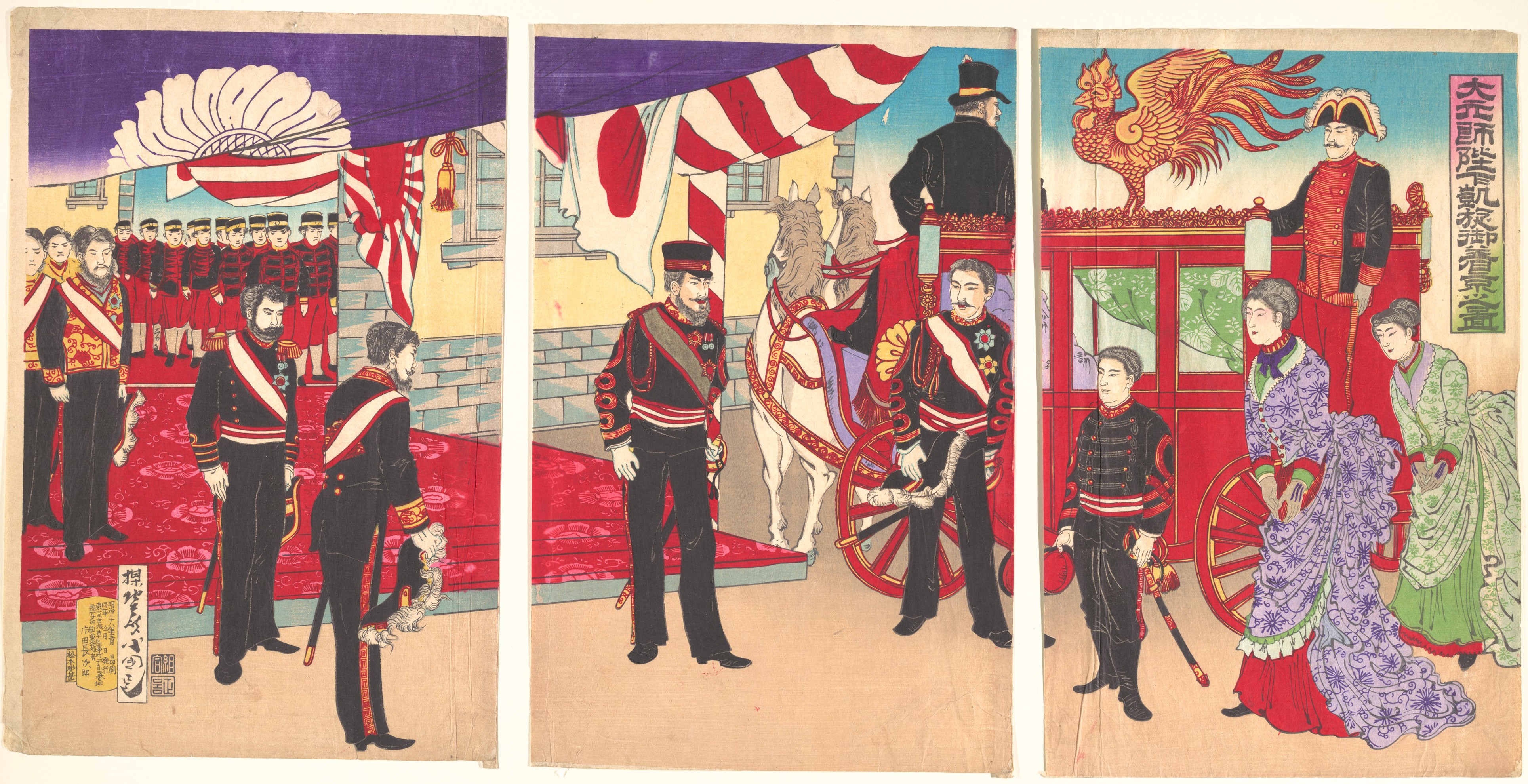
Arrival of the Emperor at Tokyo after the Victory
- Date:
- May 1895
- Medium:
- Woodblock print; ink and color on paper
- Source:
- Metropolitan Museum of Art
Description
A May 1895 woodblock triptych in the Metropolitan Museum of Art (accession JP3257), this print by Kunisada III pictures Emperor Meiji's triumphal arrival at Tokyo following the Japanese victory in the Sino-Japanese War of 1894–95. (The Met's title field reads 'Russo-Japanese War' but the May 1895 date places the subject squarely at the end of the Sino-Japanese conflict, which formally concluded with the Treaty of Shimonoseki in April 1895; the Russo-Japanese War would not begin until 1904.) The composition belongs to the sensō-e (war print) genre that flooded the Japanese popular print market during the war, when triptychs depicting troop movements, naval engagements, imperial ceremonies, and reported acts of individual heroism met an enormous public demand for visual news. The full triptych measures 37.6 by 72.1 cm and pictures the emperor and his entourage entering the modernized capital, the composition combining the imperial-procession conventions of earlier Edo daimyō-gyōretsu prints with the architectural and costume vocabulary of late Meiji Tokyo: gas lamps, brick buildings, Western military uniforms, and the rickshaws and horse-drawn carriages of the new city. The Met's impression preserves the print's late-Meiji aniline color scheme.
More Prints by Utagawa Kunisada III

Frequently Asked Questions
Arrival of the Emperor at Tokyo after the Victory was created by Utagawa Kunisada III (三代目歌川国貞) in May 1895.