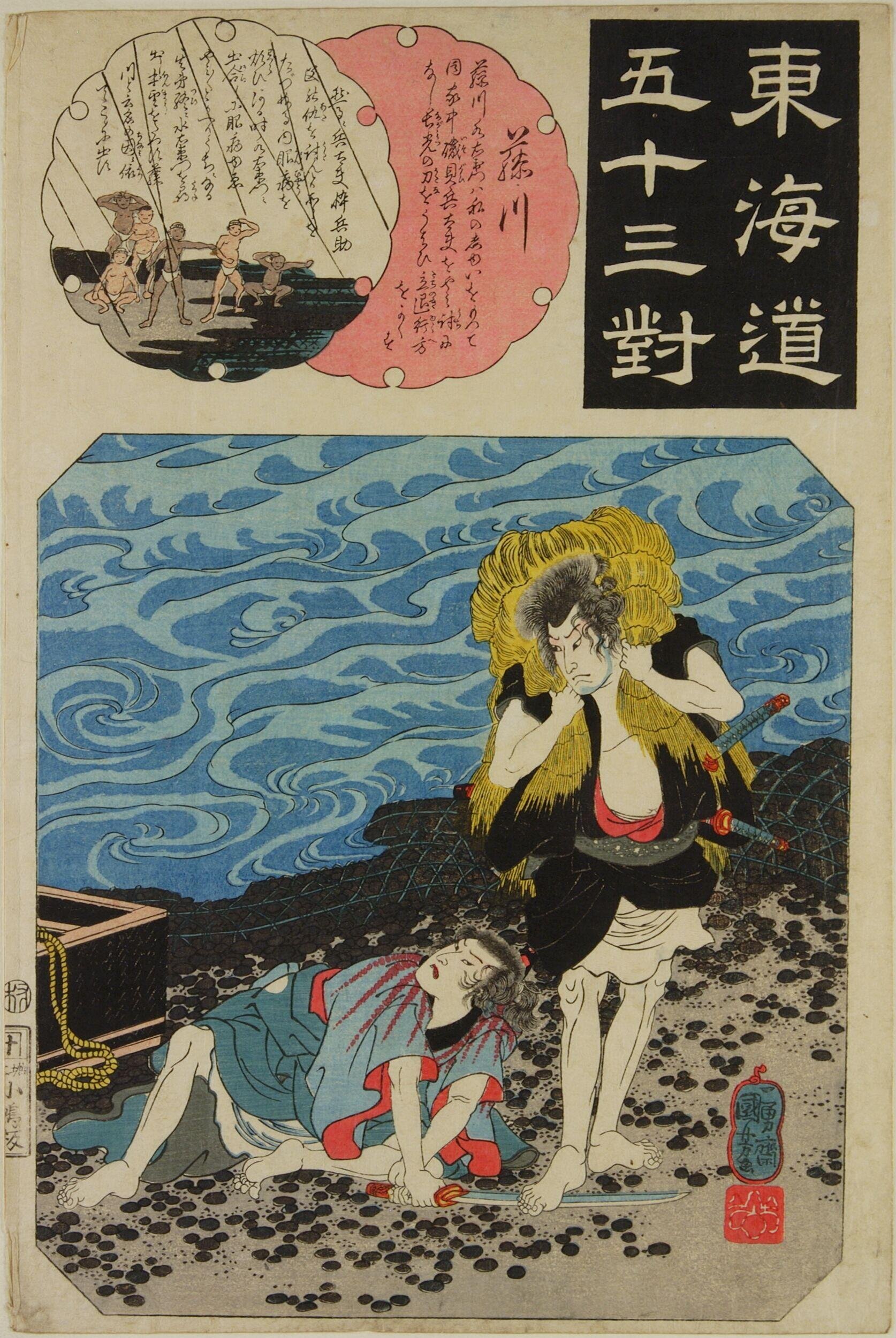
Fujikawa (Fujikawa)
- Medium:
- Source:
- Victoria and Albert Museum
Description
Fujikawa, an undated woodblock print by Utagawa Kuniyoshi held by the Victoria and Albert Museum, belongs to one of his Tōkaidō-themed series in which each station along the famous post road is paired with a historical or legendary figure. While Hiroshige's landscape Tōkaidō prints are better known internationally, Kuniyoshi's contributions to the genre demonstrate how Edo ukiyo-e designers could reinterpret the road's stations through the lens of warrior prints, kabuki characters, and chapters drawn from popular fiction. Fujikawa, a small station in Mikawa province, becomes the setting for a figural scene whose dramatic tension derives less from topography than from character. Kuniyoshi's command of muscular anatomy, costume detail, and theatrical pose shaped many of these station prints, turning each sheet into a small narrative tableau rather than a pure travel record. The composition's strong outline carving and limited but well-balanced colour palette point to the high standards of Edo woodblock workshops, where designer, carver, and printer collaborated to translate Kuniyoshi's brush drawings into reproducible sheets. The Victoria and Albert Museum's collection of Kuniyoshi's Tōkaidō-related designs reflects nineteenth-century British and European enthusiasm for Japanese prints and offers a useful corpus for studying how popular pilgrimage routes were re-imagined as stages for famous warriors, courtesans, and ghosts. As a representative sheet of this approach, Fujikawa illustrates Kuniyoshi's gift for embedding character-driven narrative within the broader Edo culture of named places and station prints.
More Prints by Utagawa Kuniyoshi
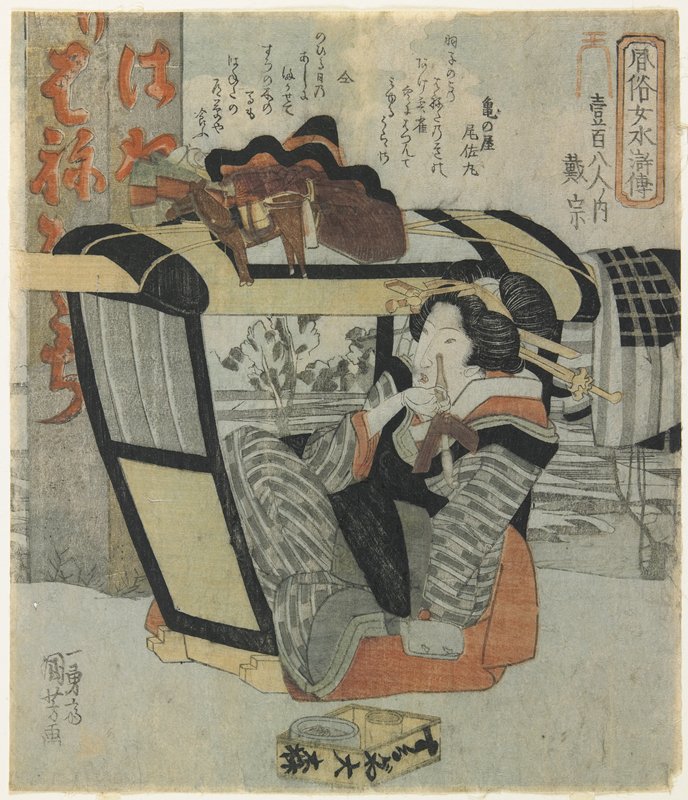
Woman as the Hero Taisō in Palanquin Holding a Pipe
c. 1830
Woodblock print (surimono), ink and color on paper

Yan Qing (Roshi Ensei), from the series "One Hundred and Eight Heroes of the Popular Water Margin (Tsuzoku Suikoden goketsu hyakuhachinin no hitori)"

Poem by Abe no Nakamaro, from an untitled series of One Hundred Poems by One Hundred Poets

Hu Sanniang (Ko Sanjo Ichijosei), from the series "One Hundred and Eight Heroes of the Popular Water Margin (Tsuzoku Suikoden goketsu hyakuhachinin no hitori)"
More Mount Fuji Prints
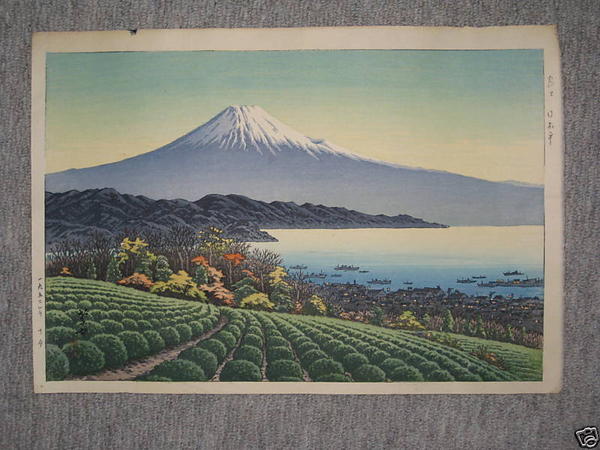
Fuji from tea farm
Woodblock print

Akasaka, Fujikawa, Okazaki, Chiryu, and Narumi, from the series "Famous Places on the Fifty-three Stations of the Tokaido, Five Stations (Tokaido gojusan eki goshuku meisho)"
c. 1830/35
Color woodblock print; oban
![Mount Fuji on a Moonlit Night, Kawai Bridge (Tsukiyo no Fuji [Kawaibashi]), from the series "Selection of Views of the Tokaido (Tokaido fukei senshu)" by Kawase Hasui](https://www.artic.edu/iiif/2/d0960668-1e73-339a-b182-fb995a54bff0/full/843,/0/default.jpg)
Mount Fuji on a Moonlit Night, Kawai Bridge (Tsukiyo no Fuji [Kawaibashi]), from the series "Selection of Views of the Tokaido (Tokaido fukei senshu)"
1947
Color woodblock print; oban

Mt. Fuji in Rain (Ame no Fuji)
n.d.
Color woodblock print
Featured in Collections
Curated cross-cuts that include this print.
Frequently Asked Questions
Fujikawa (Fujikawa) was created by Utagawa Kuniyoshi (歌川国芳).
Fujikawa (Fujikawa) depicts mount fuji.