
A Parody of Hachi no ki
- Date:
- n.d.
- Medium:
- Color woodblock prints; oban triptych
- Source:
- Art Institute of Chicago
Description
This Utagawa Toyokuni print, catalogued in the Art Institute of Chicago, presents a parody of the Noh play Hachi no Ki, a story in which an impoverished samurai sacrifices his prized potted trees to provide warmth for a traveling stranger who later turns out to be a powerful regent. The original tale was a canonical example of loyalty rewarded, and Edo ukiyo-e designers regularly reworked it through the lens of contemporary parody, or mitate, recasting its players as fashionable men and women of the floating world. Toyokuni was an active participant in this strand of ukiyo-e production. Here he reimagines the Hachi no Ki narrative within an idiom recognizable to his urban audience, allowing modern dress, kabuki-inflected pose, and present-day setting to overlay the medieval source. The result respects the underlying story while inviting viewers to relish the distance between the original and its updated version. The print's composition balances narrative cues with the decorative emphasis that defined Toyokuni's commercial sheets, ensuring that the parodic conceit comes across at a glance. Its survival in a major museum collection underscores both the popularity of mitate as a sub-genre and the range of Toyokuni's engagement with classical Japanese literature. For viewers today, the work is a useful reminder that Edo ukiyo-e was never solely a record of contemporary life but also a continual reworking of older cultural memory.
More Prints by Utagawa Toyokuni I

Segawa Kikunojō III as the Shop Boy Chōkichi
1796
Woodblock print (nishiki-e), ink and color on paper
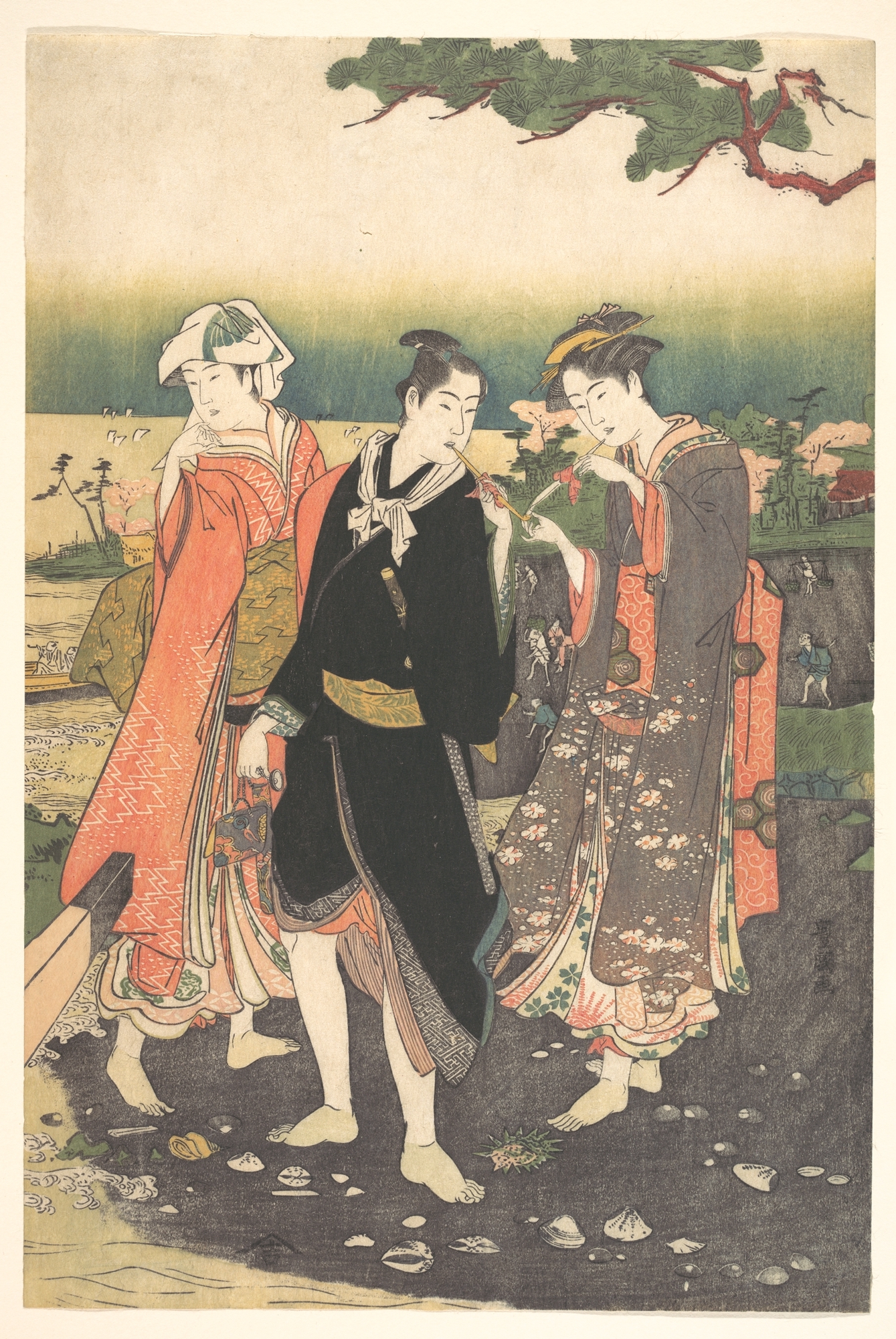
On Shinagawa Beach at Ebb-Tide
1769–1825
Woodblock print; ink and color on paper
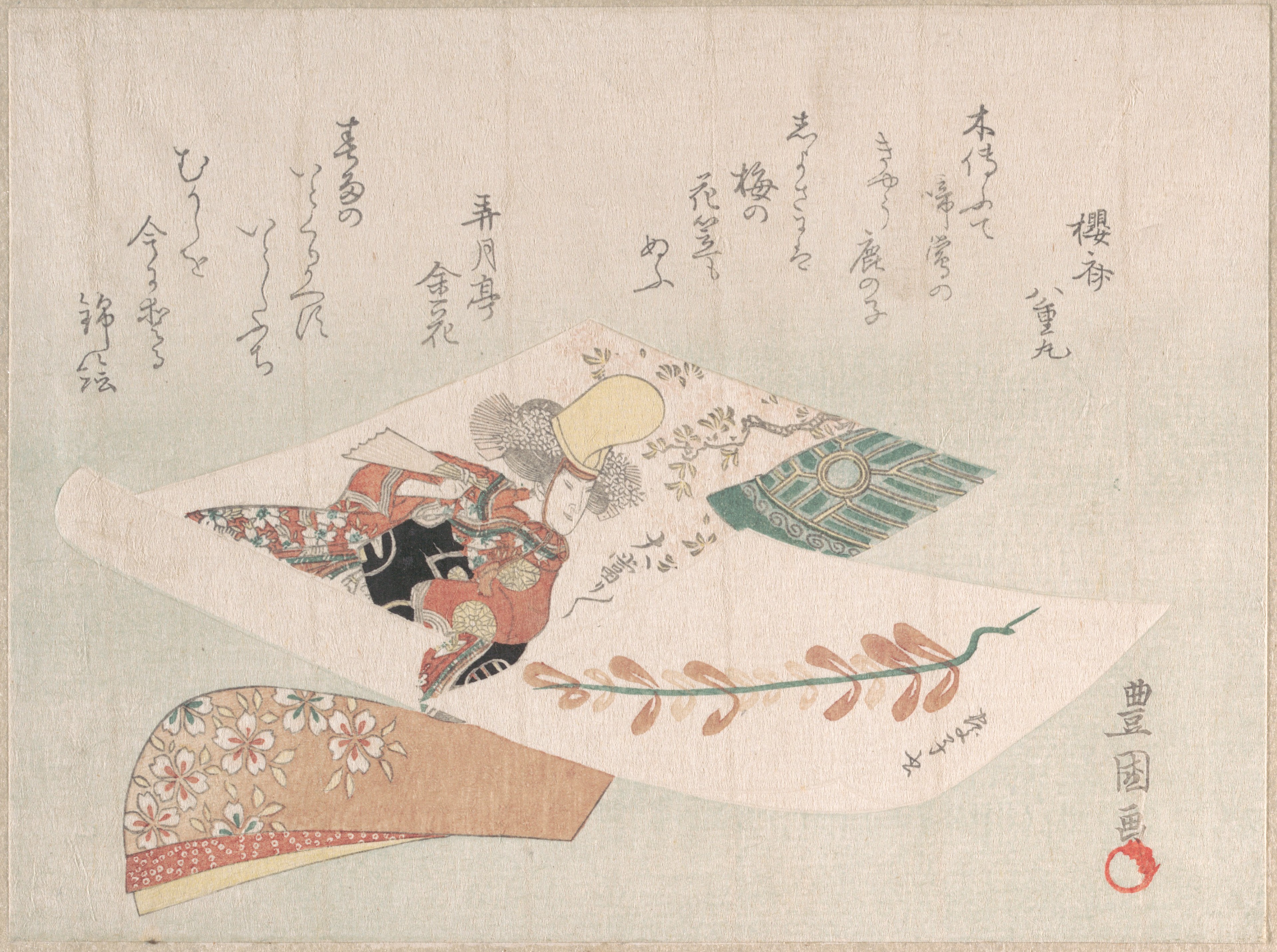
Representation of the Dance-Play "Dōjōji"
Woodblock print (surimono); ink and color on paper

The actors Sawamura Sojuro II as Satsuma Gengobei and Arashi Ryuzo II as Mawashi-otoko Yasuke in the play "Edo Sunago Kichirei Soga," performed at the Miyako Theater on the first month, 1795
c. 1795
Color woodblock print; oban
Frequently Asked Questions
A Parody of Hachi no ki was created by Utagawa Toyokuni I (歌川豊国) in n.d..