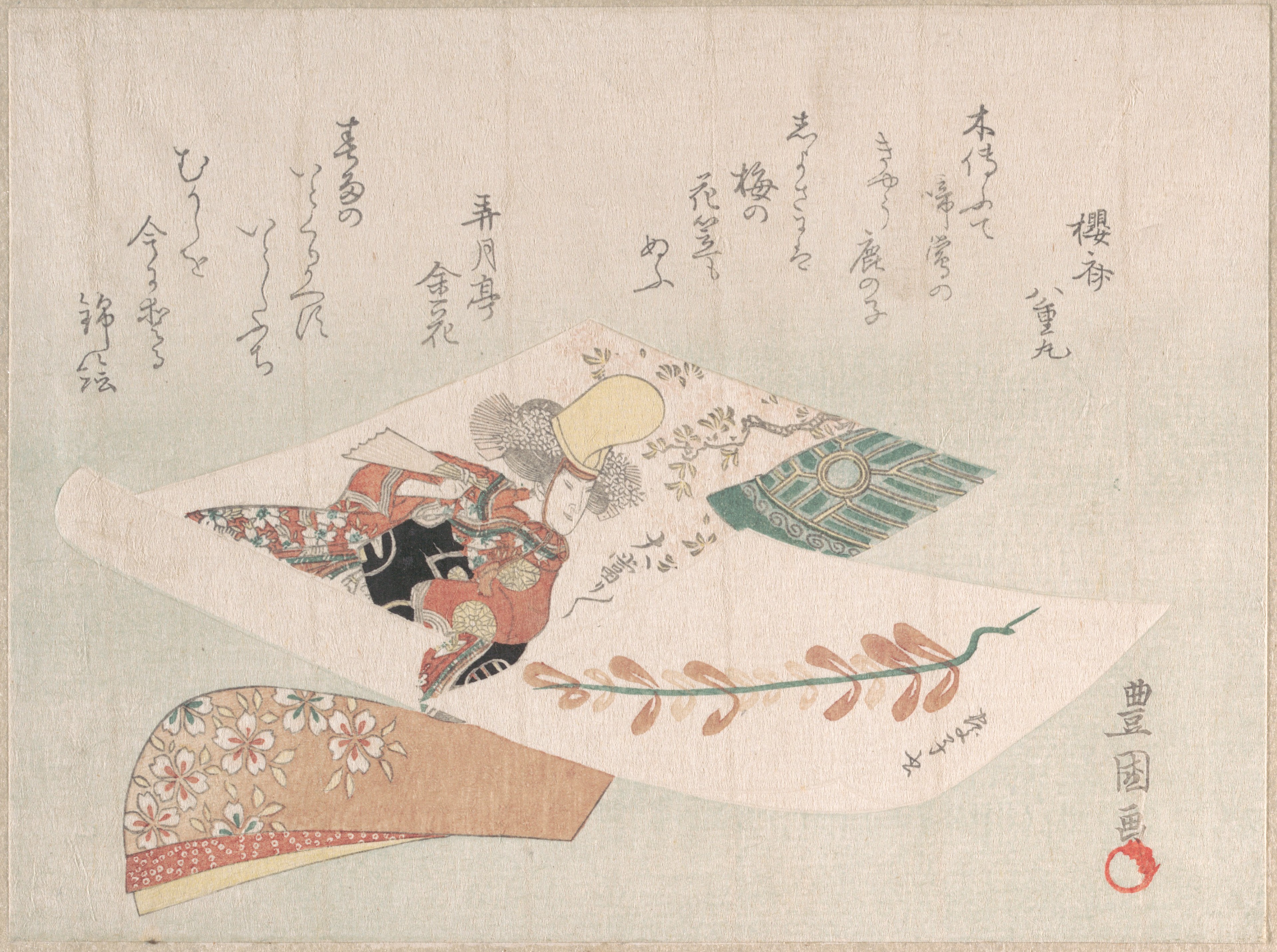
Representation of the Dance-Play "Dōjōji"
- Medium:
- Woodblock print (surimono); ink and color on paper
- Source:
- Metropolitan Museum of Art
Description
Utagawa Toyokuni I's "Representation of the Dance-Play Dōjōji" treats one of kabuki's most celebrated set pieces, the shosagoto dance in which a young woman approaches the bell of Dōjōji temple only to reveal herself as the vengeful serpent-spirit of the legend. The Metropolitan Museum of Art preserves the print as part of its substantial Edo ukiyo-e collection, where Toyokuni's compositions sit alongside those of his contemporaries and rivals. Although the print's documented date of 1769 predates Utagawa Toyokuni's birth in 1769 only nominally, the impression is part of a long Edo tradition of returning to Dōjōji as both dance and pictorial subject, and Toyokuni's image participates in the kabuki actor prints lineage that the Utagawa school would dominate for generations. The dance hinges on rapid quick-changes of costume — the hayagawari — that allow a single performer to embody multiple aspects of the same character, and yakusha-e of Dōjōji frequently capture one such moment of transformation. Toyokuni's interest in stage performance never resolved into mere illustration; his figures carry weight and rhythm, the cloth of their robes drawn with the calligraphic confidence that defined Edo ukiyo-e at its best. For collectors and students, the print offers an entry point into the iconography of kabuki actor prints and into Toyokuni's role at the head of the Utagawa school. The Metropolitan's example, accessible online and in its print study room, remains a useful reference for anyone tracing Toyokuni's treatment of theatrical dance.
More Prints by Utagawa Toyokuni I

Segawa Kikunojō III as the Shop Boy Chōkichi
1796
Woodblock print (nishiki-e), ink and color on paper
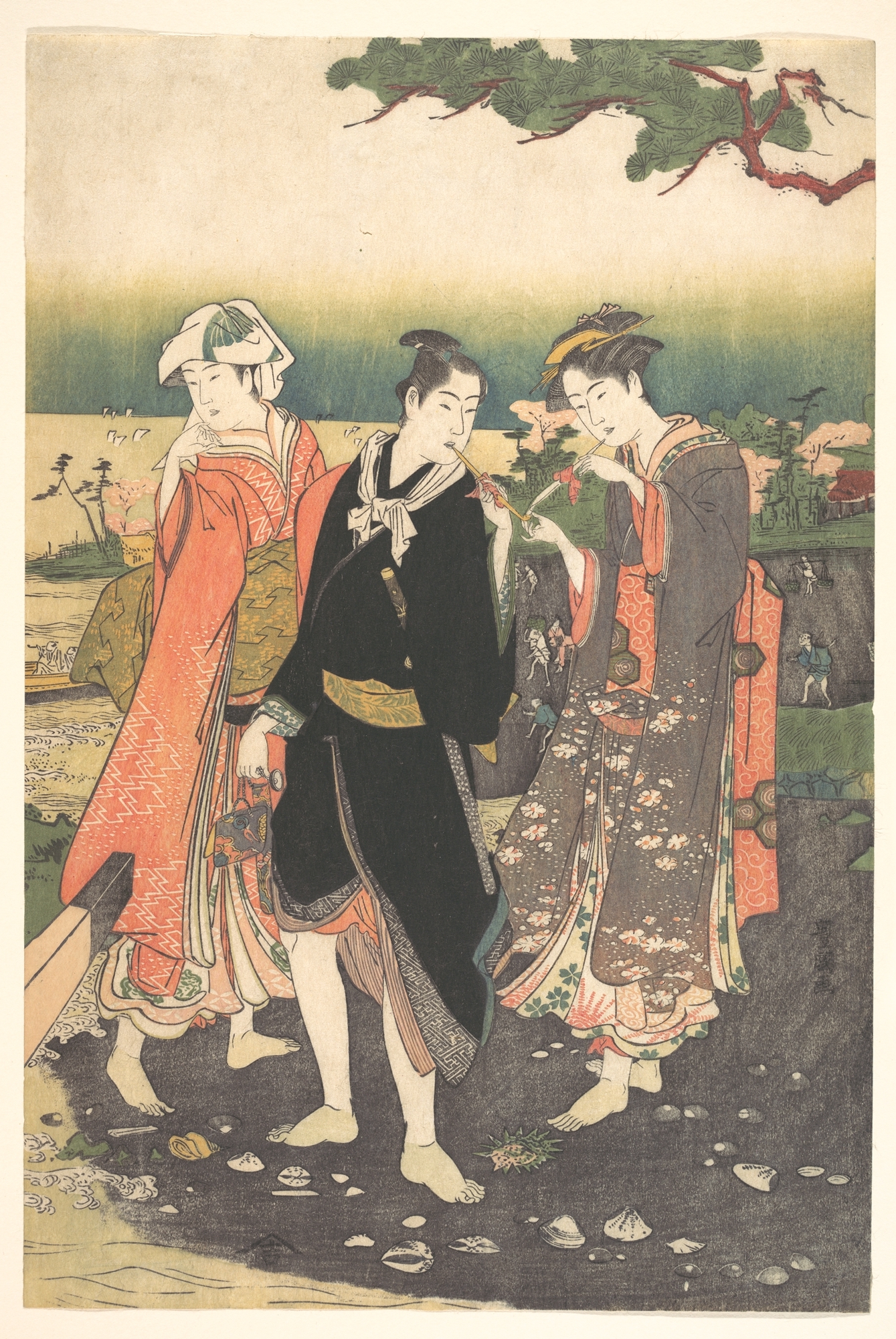
On Shinagawa Beach at Ebb-Tide
1769–1825
Woodblock print; ink and color on paper

The actors Sawamura Sojuro II as Satsuma Gengobei and Arashi Ryuzo II as Mawashi-otoko Yasuke in the play "Edo Sunago Kichirei Soga," performed at the Miyako Theater on the first month, 1795
c. 1795
Color woodblock print; oban

Hamamuraya: Segawa Kikunojo III as Shirabyoshi Hisakata, from the series "Portraits of Actors on Stage (Yakusha butai no sugata-e)"
1794
Color woodblock print; oban
Frequently Asked Questions
Representation of the Dance-Play "Dōjōji" was created by Utagawa Toyokuni I (歌川豊国).