
A procession of women holding shimadai decorations
- Date:
- c. 1789/1801
- Medium:
- Color woodblock print; oban triptych
- Source:
- Art Institute of Chicago
Description
A procession of women holding shimadai decorations, recorded by the Art Institute of Chicago with a date of 1784, depicts a ceremonial parade in which women carry the elaborate shimadai, an island-shaped auspicious arrangement used in weddings and other formal celebrations. Utagawa Toyokuni stages the composition as a horizontal procession, where the figures move from one edge of the sheet to the other, their robes and the decorations forming an extended decorative band. Shimadai traditionally feature pines, cranes, tortoises, and other longevity symbols built up into miniature landscapes, and Toyokuni renders these objects with enough care that the auspicious meaning is preserved while the larger pattern remains visually balanced. As Edo ukiyo-e, the work participates in a long tradition of recording ceremonial culture and the visual codes that surrounded it. The shimadai itself anchors the design semantically, while the costumes of the women indicate the gravity and elegance of the occasion. Although Utagawa Toyokuni is best known for yakusha-e, this print shows the depth of his attention to ritual scenes and to the social rhythms that shaped the lives of women in the capital. The Art Institute of Chicago preserves the sheet as part of its Toyokuni holdings, where it complements his actor and bijin work by demonstrating his commitment to the broader spectrum of subjects that defined the late eighteenth-century print market in Edo.
More Prints by Utagawa Toyokuni I

Kabuki Actor Iwai Kumesaburo with abacus

Segawa Kikunojō III as the Shop Boy Chōkichi
1796
Woodblock print (nishiki-e), ink and color on paper
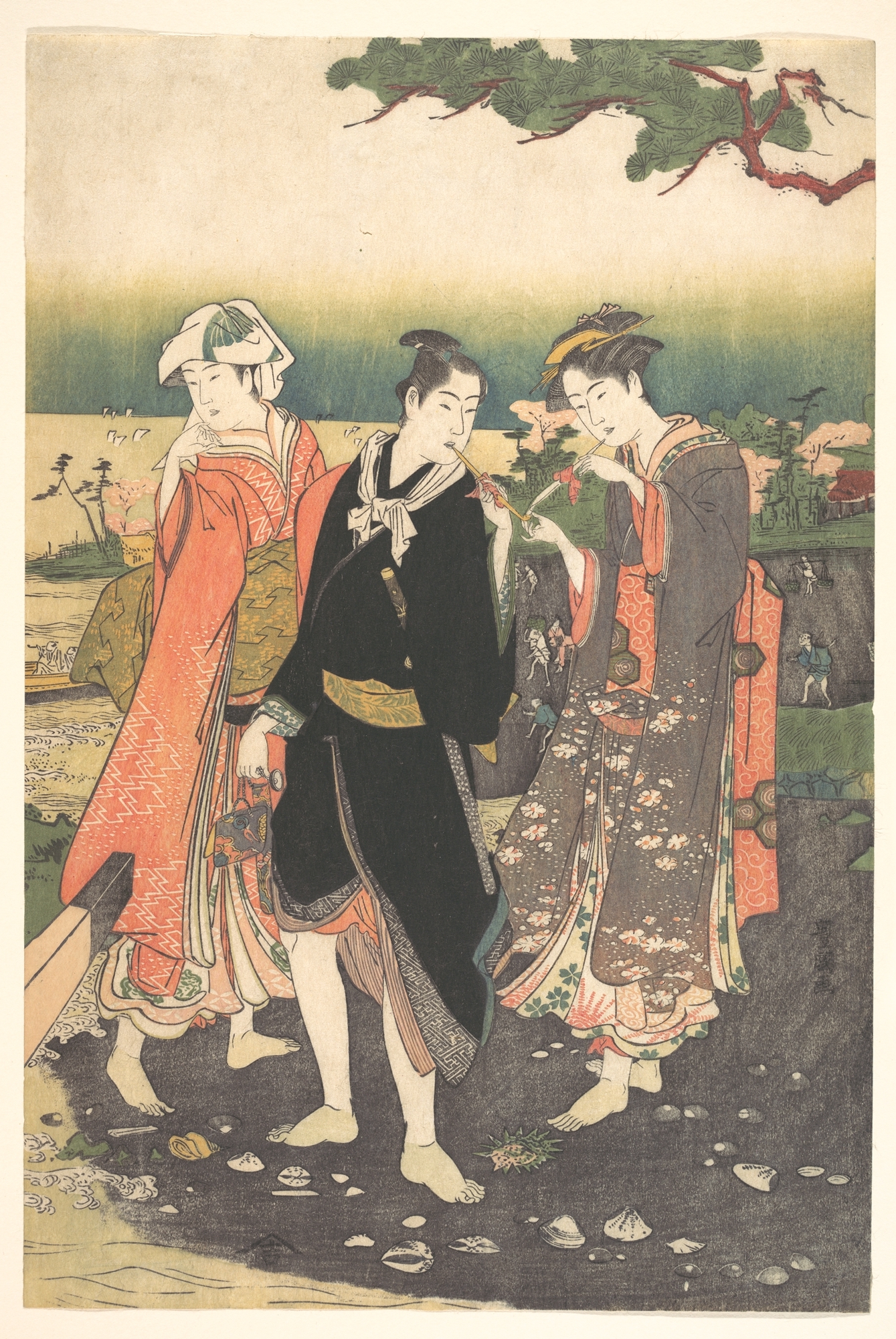
On Shinagawa Beach at Ebb-Tide
1769–1825
Woodblock print; ink and color on paper
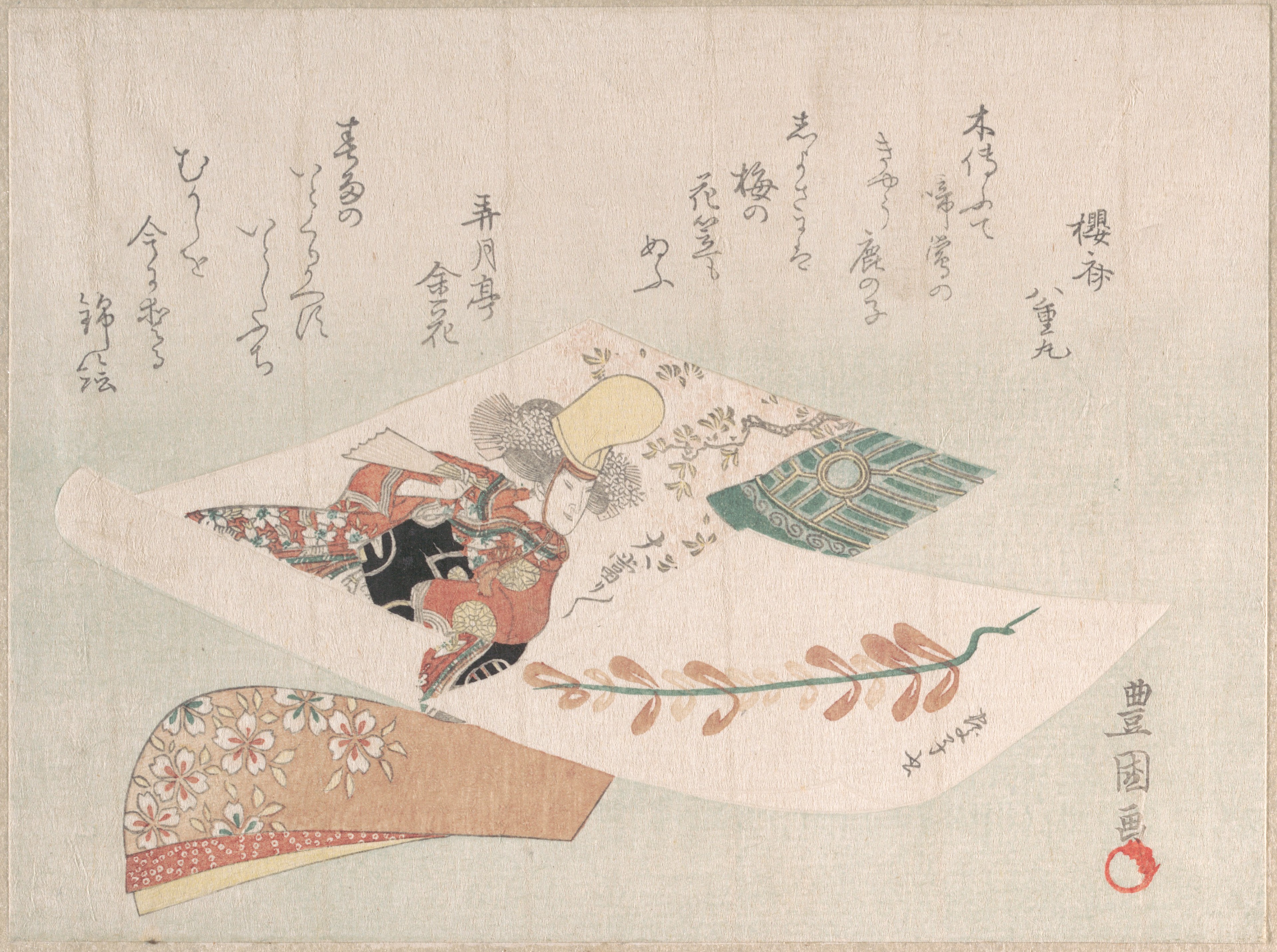
Representation of the Dance-Play "Dōjōji"
Woodblock print (surimono); ink and color on paper
Frequently Asked Questions
A procession of women holding shimadai decorations was created by Utagawa Toyokuni I (歌川豊国) in c. 1789/1801.