
A Public Bath House
- Date:
- c. 1790s
- Medium:
- Color woodblock print; left sheet of oban triptych
- Source:
- Art Institute of Chicago
Description
Utagawa Toyokuni I's "A Public Bath House" steps into one of the most familiar institutions of Edo daily life — the sentō, where neighborhood residents bathed, gossiped, and conducted much of the social business that defined urban living. The Art Institute of Chicago holds the print as part of its Toyokuni collection. Toyokuni's bathhouse design participates in a long line of ukiyo-e bathhouse and onsen scenes, and although Utagawa Toyokuni's reputation rested on kabuki actor prints — the yakusha-e on which the Utagawa school built its dominance in Edo ukiyo-e — his bijin and genre scenes show how completely he understood the city he depicted. Bathhouse prints presented artists with a particular challenge: how to render bodies and water in the same restrained vocabulary as patterned kimono and stage costume. Toyokuni's solution is characteristic; he relies on contour, on the carefully positioned head, and on the architectural framing of the bathhouse's interior to organize the composition rather than on elaborate detail. The result is a sentō scene that is at once descriptive and decorous, reflecting the conventions by which the genre operated. The Art Institute of Chicago's catalogue documents the print without speculation. For collectors and students of Edo ukiyo-e, the work is a useful counterweight to Toyokuni's better-known kabuki actor prints, demonstrating the same discipline of line applied to a fundamentally different scene of urban life.
More Prints by Utagawa Toyokuni I

Kabuki Actor Iwai Kumesaburo with abacus

Segawa Kikunojō III as the Shop Boy Chōkichi
1796
Woodblock print (nishiki-e), ink and color on paper
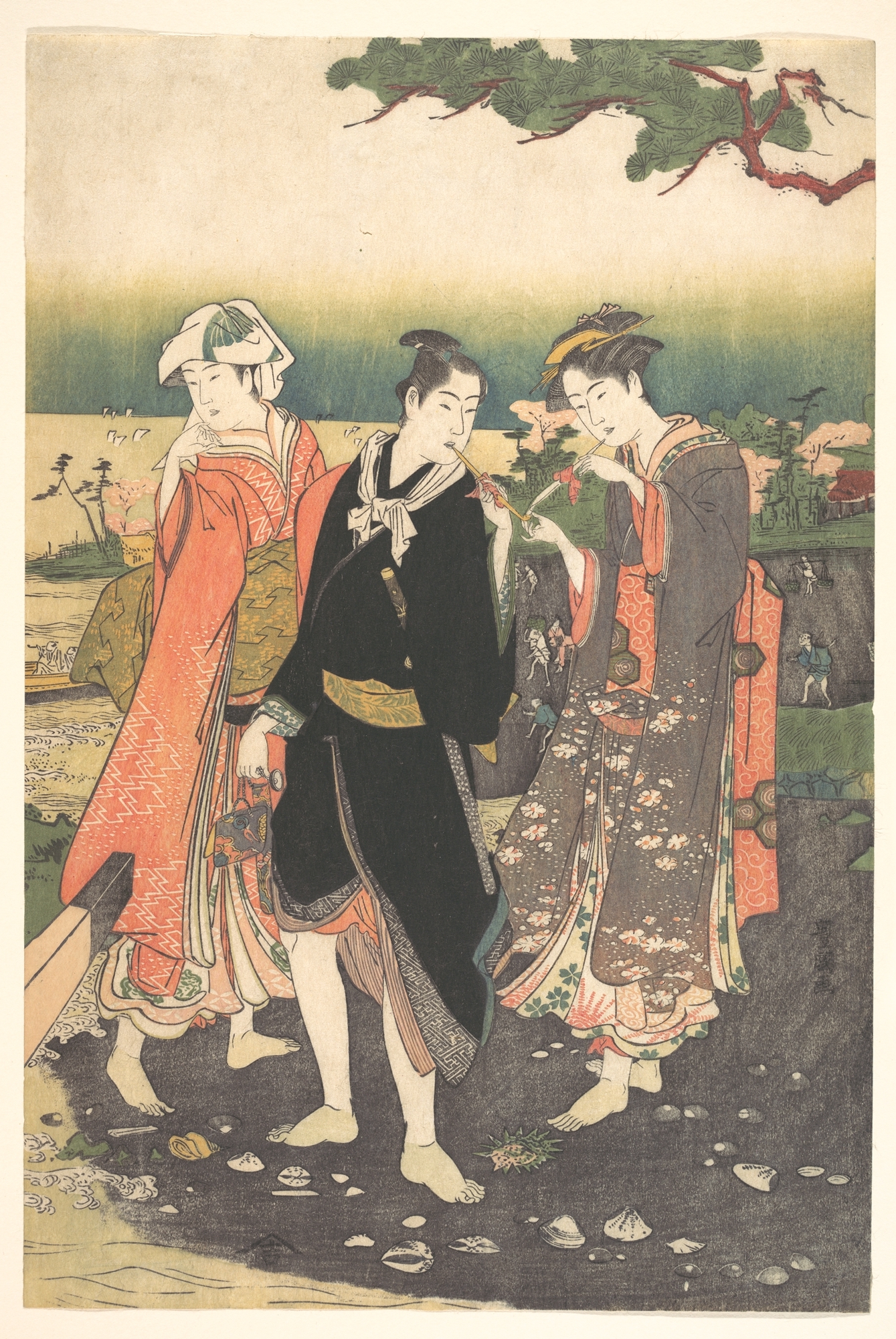
On Shinagawa Beach at Ebb-Tide
1769–1825
Woodblock print; ink and color on paper
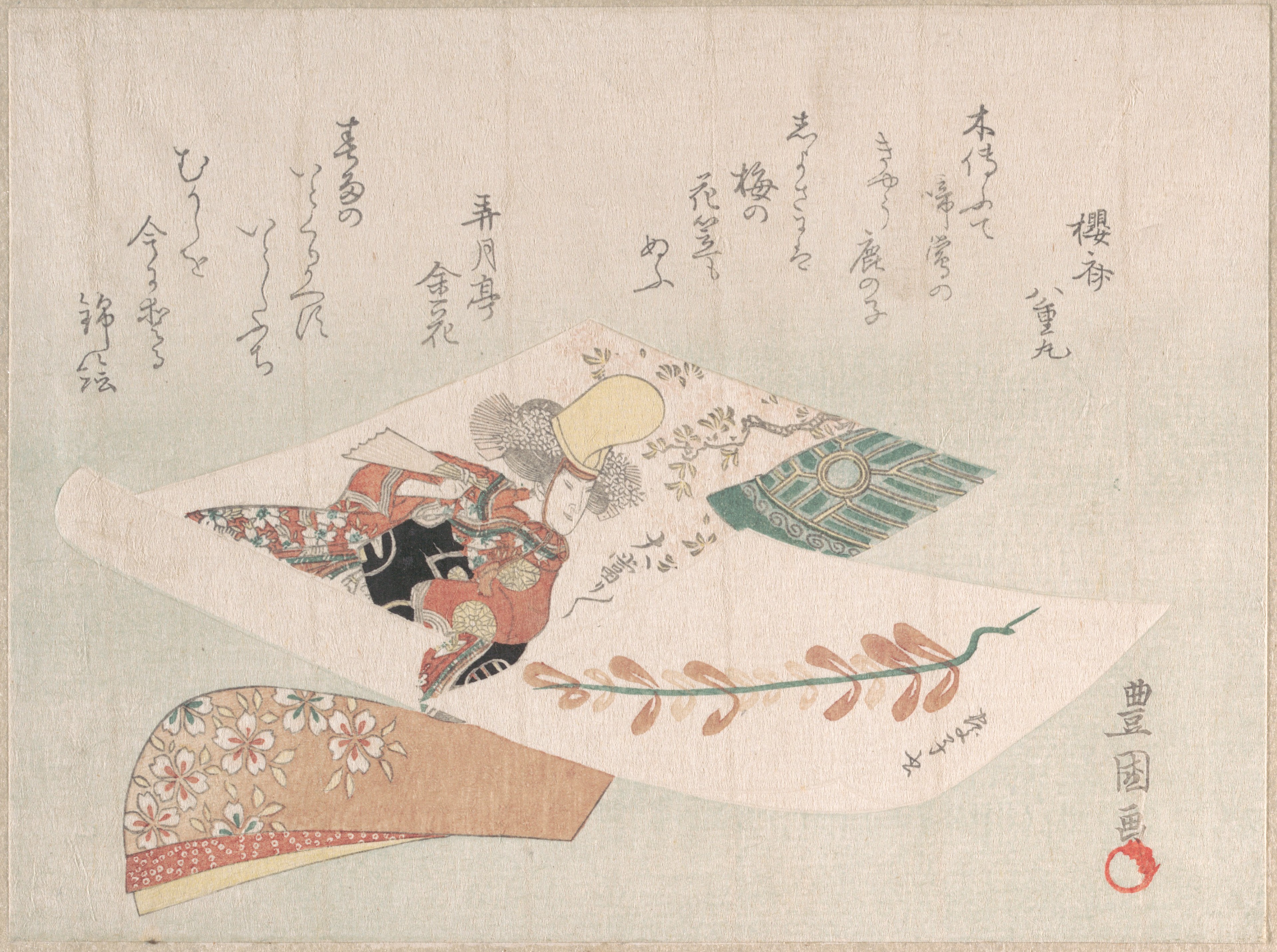
Representation of the Dance-Play "Dōjōji"
Woodblock print (surimono); ink and color on paper
Frequently Asked Questions
A Public Bath House was created by Utagawa Toyokuni I (歌川豊国) in c. 1790s.