
A Windy Day under the Cherry Trees
- Date:
- c. 1797
- Medium:
- Color woodblock prints; oban triptych
- Source:
- Art Institute of Chicago
Description
Utagawa Toyokuni I's "A Windy Day under the Cherry Trees" takes the most quintessential of Edo ukiyo-e settings — the cherry-blossom outing — and animates it with the small turbulence of weather. The Art Institute of Chicago holds the print, in which fashionable women, caught by a sudden gust beneath the blossoms, hold down their sleeves and steady their headcloths as petals scatter around them. The conceit is classic: a moment of beauty (the bloom) destabilized by a moment of vulnerability (the wind), giving the figures a pretext for gestures that reveal both the lining of the kimono and the temperament of the wearer. Although Utagawa Toyokuni is best known for kabuki actor prints — the yakusha-e that made the Utagawa school's name in Edo ukiyo-e — his bijinga of seasonal outings carry the same discipline of line and confident grouping. The wind compresses the figures' poses into a narrow range of urgent gesture, and Toyokuni handles each variation distinctly. The print would have circulated as a spring image keyed to the cherry-blossom season, a portable token of an activity that Edo residents and visitors alike pursued each year. The Art Institute of Chicago's catalogue documents the print without invention. For collectors of Edo ukiyo-e, the design is a particularly graceful example of Utagawa Toyokuni's bijinga, and of how Edo ukiyo-e drew its energy as much from the calendar of weather as from the calendar of kabuki.
More Prints by Utagawa Toyokuni I

Kabuki Actor Iwai Kumesaburo with abacus

Segawa Kikunojō III as the Shop Boy Chōkichi
1796
Woodblock print (nishiki-e), ink and color on paper
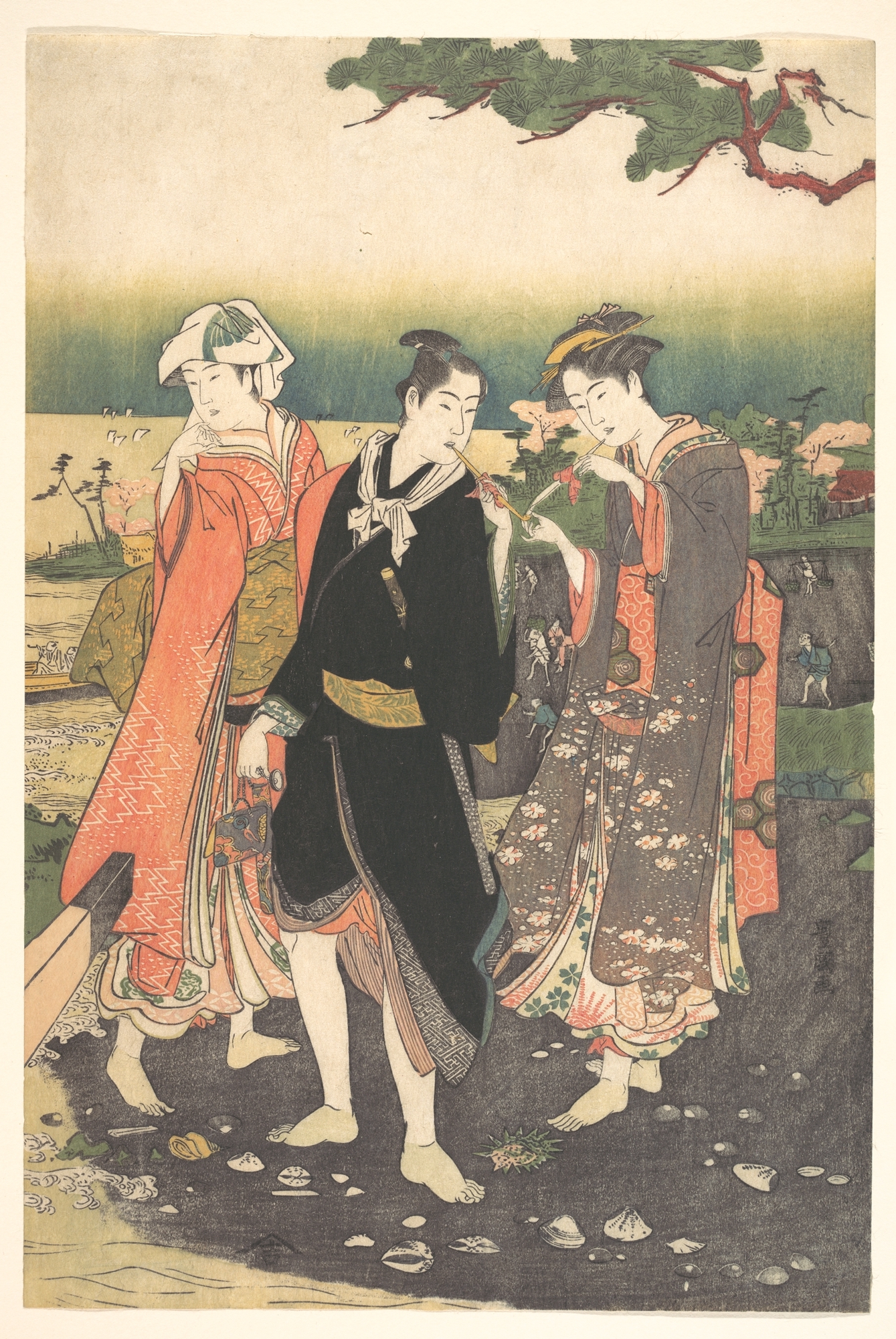
On Shinagawa Beach at Ebb-Tide
1769–1825
Woodblock print; ink and color on paper
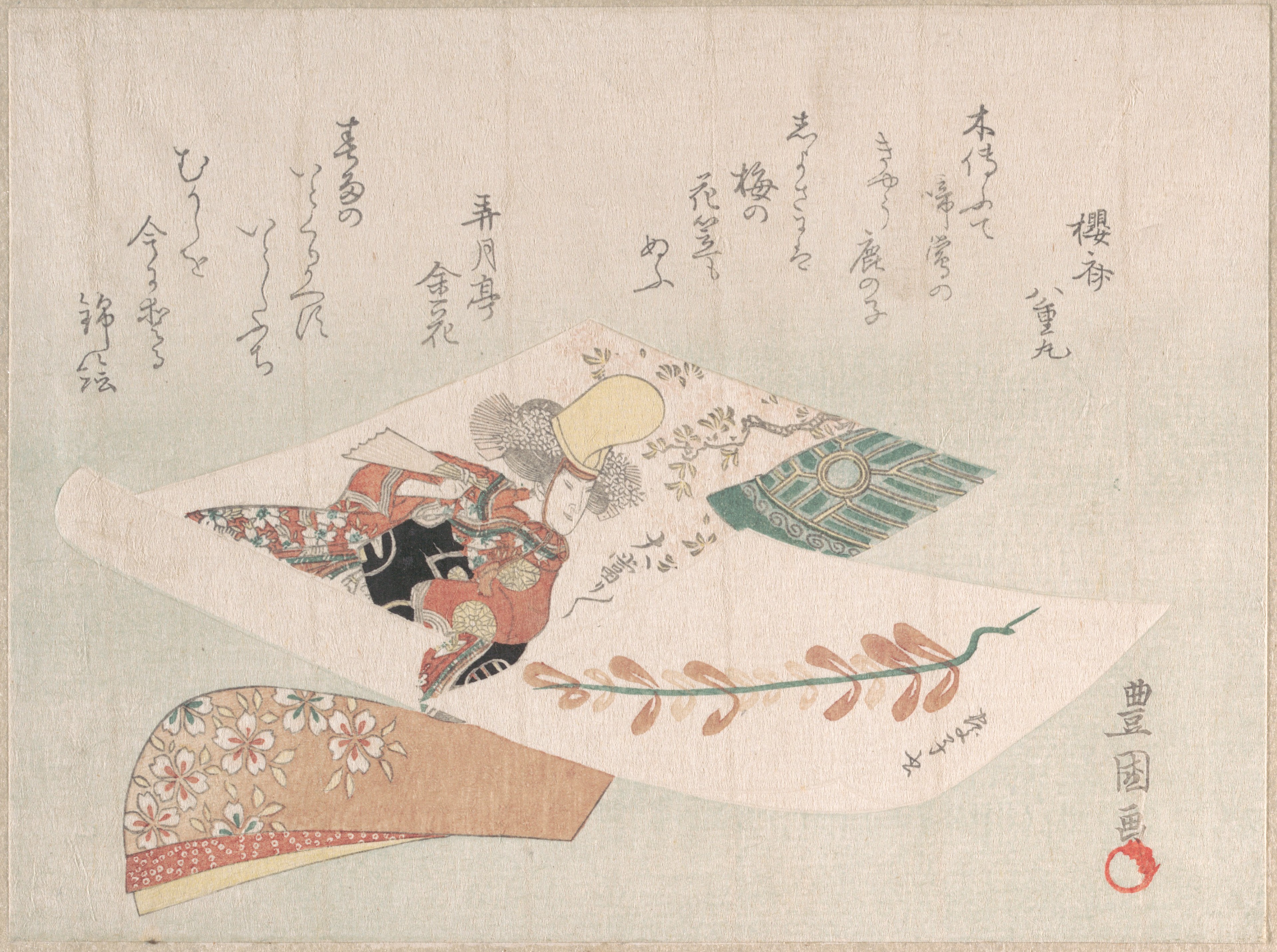
Representation of the Dance-Play "Dōjōji"
Woodblock print (surimono); ink and color on paper
Frequently Asked Questions
A Windy Day under the Cherry Trees was created by Utagawa Toyokuni I (歌川豊国) in c. 1797.