
Acrobats on a Ladder
- Date:
- 18th-19th century
- Medium:
- Color woodblock print; hosoban
- Source:
- Art Institute of Chicago
Description
Acrobats on a Ladder, catalogued by the Art Institute of Chicago with a date of 1769, captures one of the more dramatic forms of street and festival entertainment popular in the Edo capital: troupes of acrobats stacking themselves on and around a tall ladder. Utagawa Toyokuni organizes the design around the strong vertical of the ladder itself, with figures balanced at different heights, their bodies forming angular patterns against the wood. The diagonals of arms and legs play off the strict horizontals of the rungs, while the crowd around the base of the ladder anchors the composition. Acrobatic acts of this kind, hashigo-nori, were closely associated with the firefighters of Edo, who turned displays of agility into civic spectacles, and ukiyo-e designs took up the subject as a way of celebrating the courage and showmanship of these performers. The print embodies a key strength of Edo ukiyo-e: the ability to turn fleeting public events into widely circulated images that fixed the moment in collective memory. Although Toyokuni's reputation rests largely on yakusha-e, designs such as this one demonstrate his early willingness to take on subjects beyond the kabuki theatre, drawing on the broader urban entertainment culture of the city. The Art Institute of Chicago houses the sheet as part of its Toyokuni I holdings, where it sits alongside his actor and bijin works as evidence of the formal and thematic range that his career encompassed.
More Prints by Utagawa Toyokuni I

Segawa Kikunojō III as the Shop Boy Chōkichi
1796
Woodblock print (nishiki-e), ink and color on paper
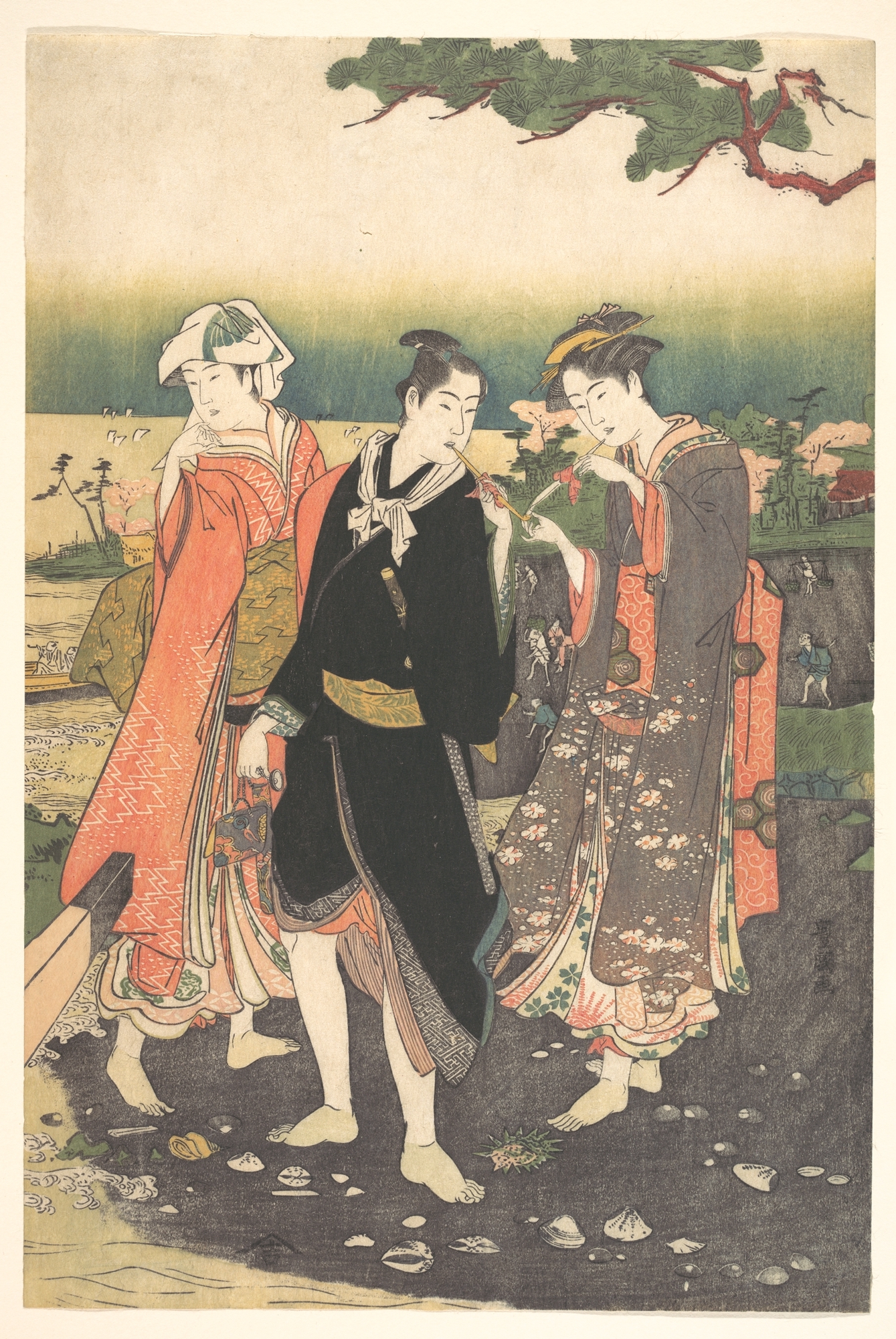
On Shinagawa Beach at Ebb-Tide
1769–1825
Woodblock print; ink and color on paper
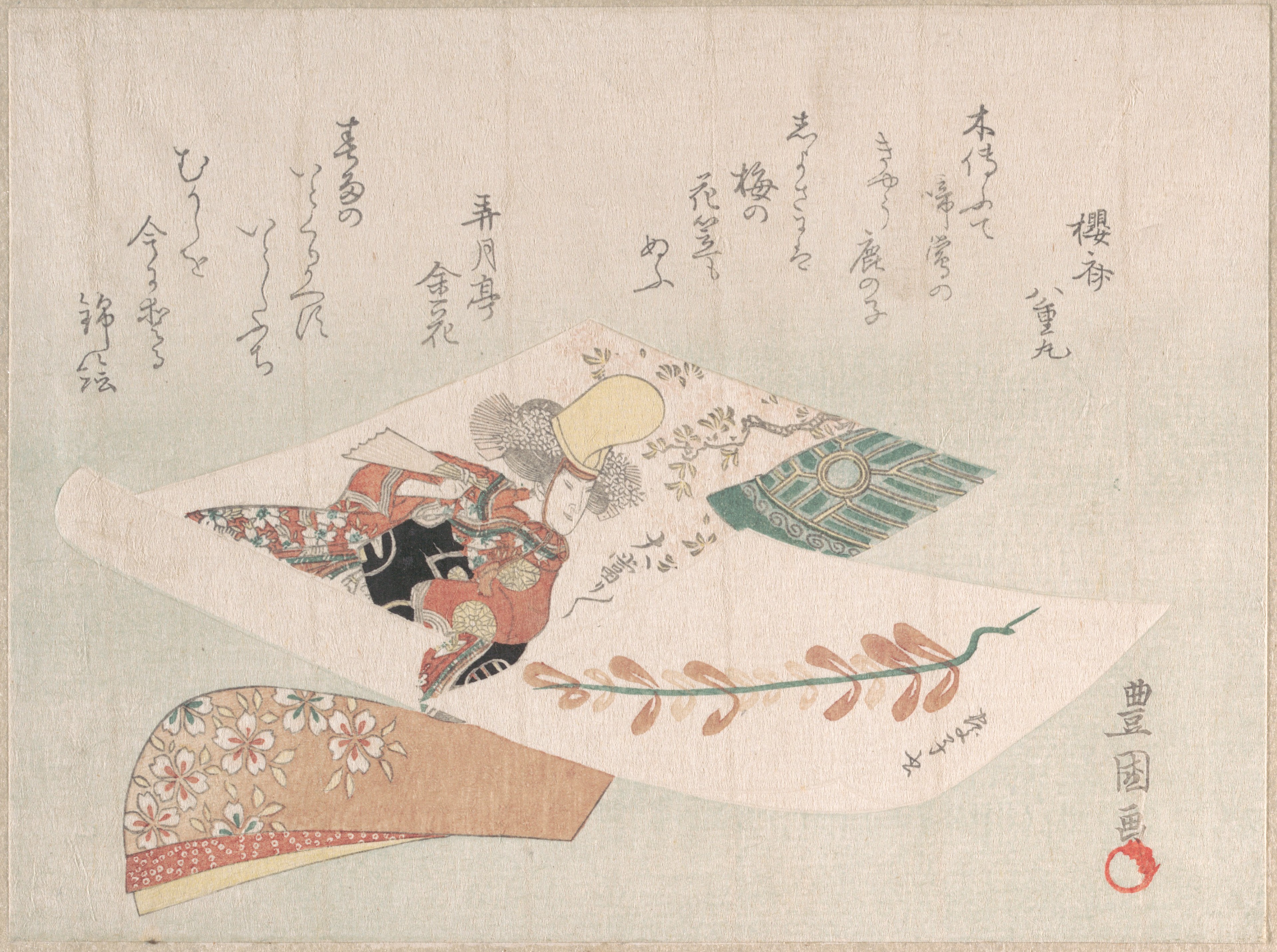
Representation of the Dance-Play "Dōjōji"
Woodblock print (surimono); ink and color on paper

The actors Sawamura Sojuro II as Satsuma Gengobei and Arashi Ryuzo II as Mawashi-otoko Yasuke in the play "Edo Sunago Kichirei Soga," performed at the Miyako Theater on the first month, 1795
c. 1795
Color woodblock print; oban
Frequently Asked Questions
Acrobats on a Ladder was created by Utagawa Toyokuni I (歌川豊国) in 18th-19th century.