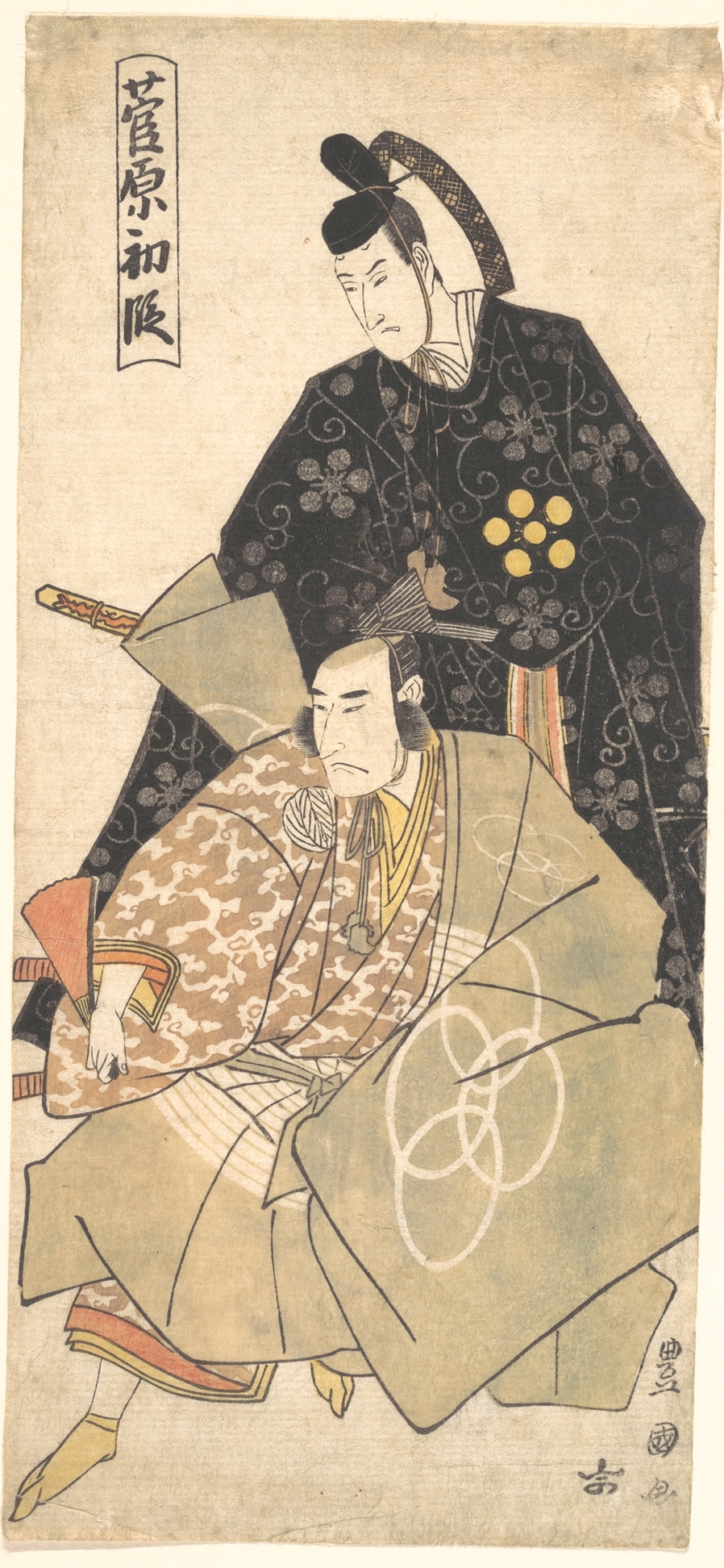
Act I of the Drama "Sugawara"
- Date:
- 1769–1825
- Medium:
- Woodblock print; ink and color on paper
- Source:
- Metropolitan Museum of Art
Description
Act I of the Drama "Sugawara" is an Edo ukiyo-e woodblock print attributed to the Utagawa Toyokuni line and held by the Metropolitan Museum of Art, where the record carries a 1769 date. The image belongs to the yakusha-e tradition that the Utagawa school later defined, illustrating the opening act of the long kabuki cycle Sugawara denju tenarai kagami - the dramatization of the historical exile of the Heian-era scholar-statesman Sugawara no Michizane and the fates of his three loyal retainers Umeomaru, Matsuomaru, and Sakuramaru. Edo audiences knew the play's structure intimately, and a sheet such as this would have functioned as both souvenir and program note, fixing the costumes, postures, and role assignments of a particular performance. The composition is built around the strong silhouettes that Edo block-cutters could render efficiently in line and the broad, evenly inked color fields that early polychrome printing handled best. Contours describe the actors' faces and the heavy outer robes; finer cutting carries crests, sleeve patterns, and headgear. The Met's catalog entry is the primary verifiable source for the dating and attribution; it identifies the print by its drama and act without assigning a publisher or series specifically in the public record consulted here, and no further narrative claims are advanced beyond those. As a Sugawara design, the sheet sits at the intersection of Edo civic memory and ukiyo-e marketing, and it illustrates the kind of theatrical subject that the Utagawa Toyokuni workshop would continue to issue, in updated forms, well into the nineteenth century.
More Prints by Utagawa Toyokuni I

Segawa Kikunojō III as the Shop Boy Chōkichi
1796
Woodblock print (nishiki-e), ink and color on paper
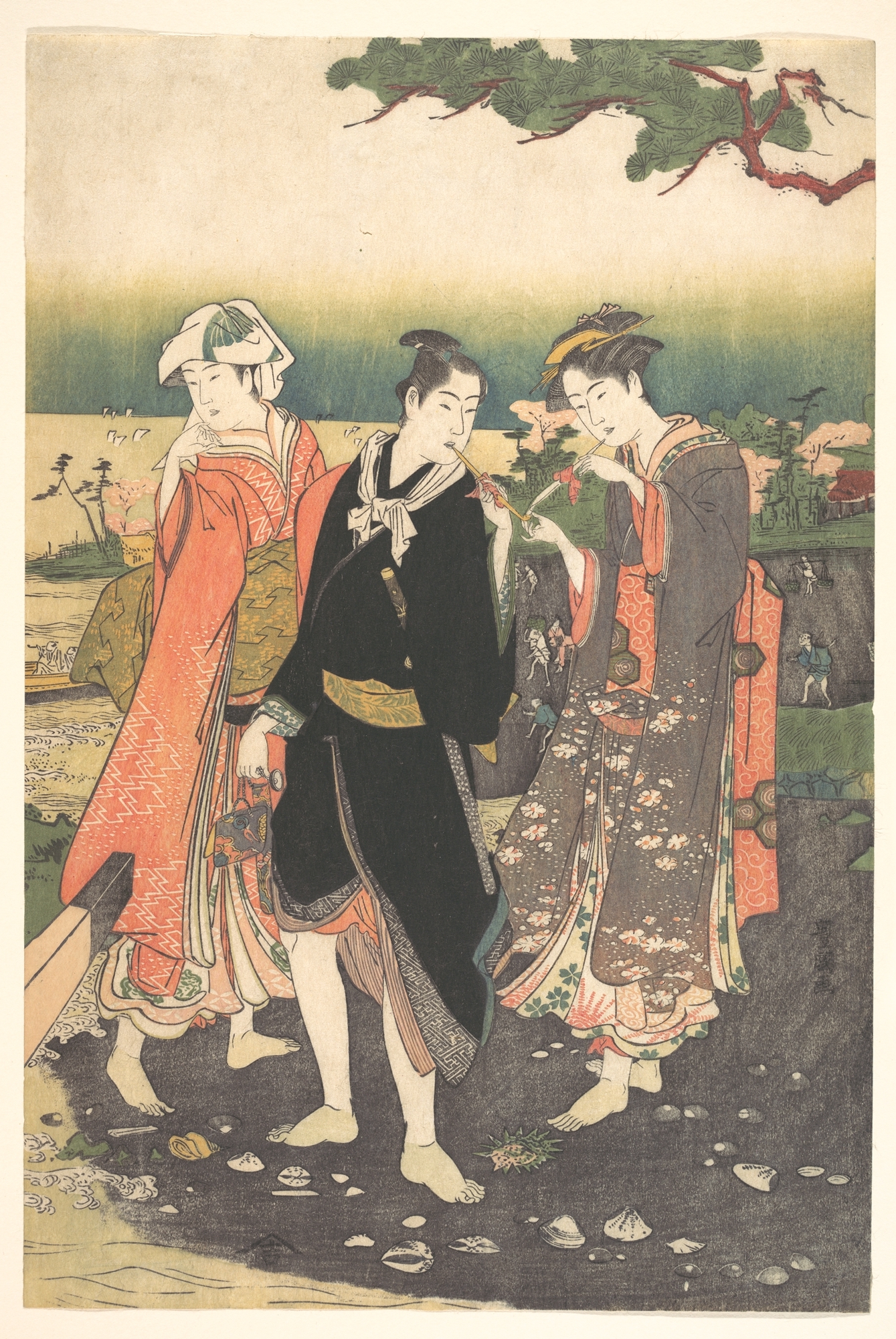
On Shinagawa Beach at Ebb-Tide
1769–1825
Woodblock print; ink and color on paper
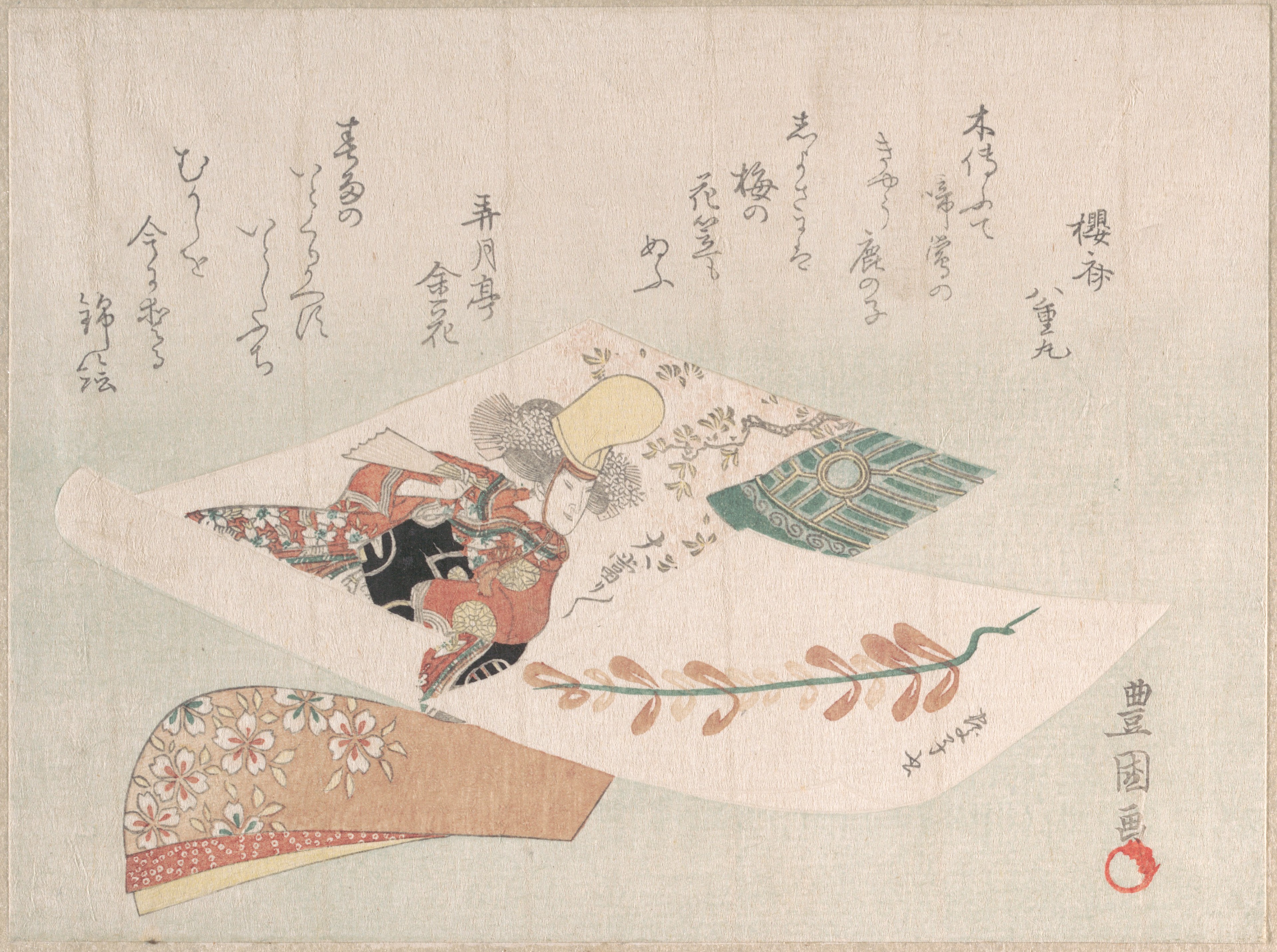
Representation of the Dance-Play "Dōjōji"
Woodblock print (surimono); ink and color on paper

The actors Sawamura Sojuro II as Satsuma Gengobei and Arashi Ryuzo II as Mawashi-otoko Yasuke in the play "Edo Sunago Kichirei Soga," performed at the Miyako Theater on the first month, 1795
c. 1795
Color woodblock print; oban
Frequently Asked Questions
Act I of the Drama "Sugawara" was created by Utagawa Toyokuni I (歌川豊国) in 1769–1825.