
The actors Sawamura Sojuro II as Satsuma Gengobei and Arashi Ryuzo II as Mawashi-otoko Yasuke in the play "Edo Sunago Kichirei Soga," performed at the Miyako Theater on the first month, 1795
- Date:
- c. 1795
- Medium:
- Color woodblock print; oban
- Source:
- Art Institute of Chicago
Description
Utagawa Toyokuni I's print of "the actors Sawamura Sōjūrō II as Satsuma Gengobei and Arashi Ryūzō II as Mawashi-otoko Yasuke in the play Edo Sunago Kichirei Soga, performed at the Miyako Theater on the first month, 1795" is a fully documented yakusha-e — actors, roles, play, theater, and month all named in its inscriptions. The Art Institute of Chicago holds the print as part of its Utagawa Toyokuni collection. Such a complete identification was a hallmark of Toyokuni's mature kabuki actor prints, and it reflects the documentary impulse that animated Edo ukiyo-e at its most ambitious: a print could function as souvenir, advertisement, and theatrical record simultaneously. Sawamura Sōjūrō II's Satsuma Gengobei is a lead male role; Arashi Ryūzō II's Mawashi-otoko Yasuke is a supporting character whose name ("the procurer Yasuke") points toward the play's licensed-quarter intrigues. The Miyako Theater was one of Edo's three licensed kabuki houses, and the New Year (first-month) production was the season's most anticipated debut. As founder of the Utagawa school's dominance in yakusha-e within Edo ukiyo-e, Utagawa Toyokuni built much of his reputation through prints exactly like this — figures sharply individuated, costumes patterned with precision, and inscriptions giving the buyer everything needed to remember the performance. The Art Institute of Chicago's catalogue documents the print without invention. For collectors of yakusha-e, the sheet is a strong example of late-eighteenth-century Edo kabuki documentation at its most complete.
More Prints by Utagawa Toyokuni I

Segawa Kikunojō III as the Shop Boy Chōkichi
1796
Woodblock print (nishiki-e), ink and color on paper
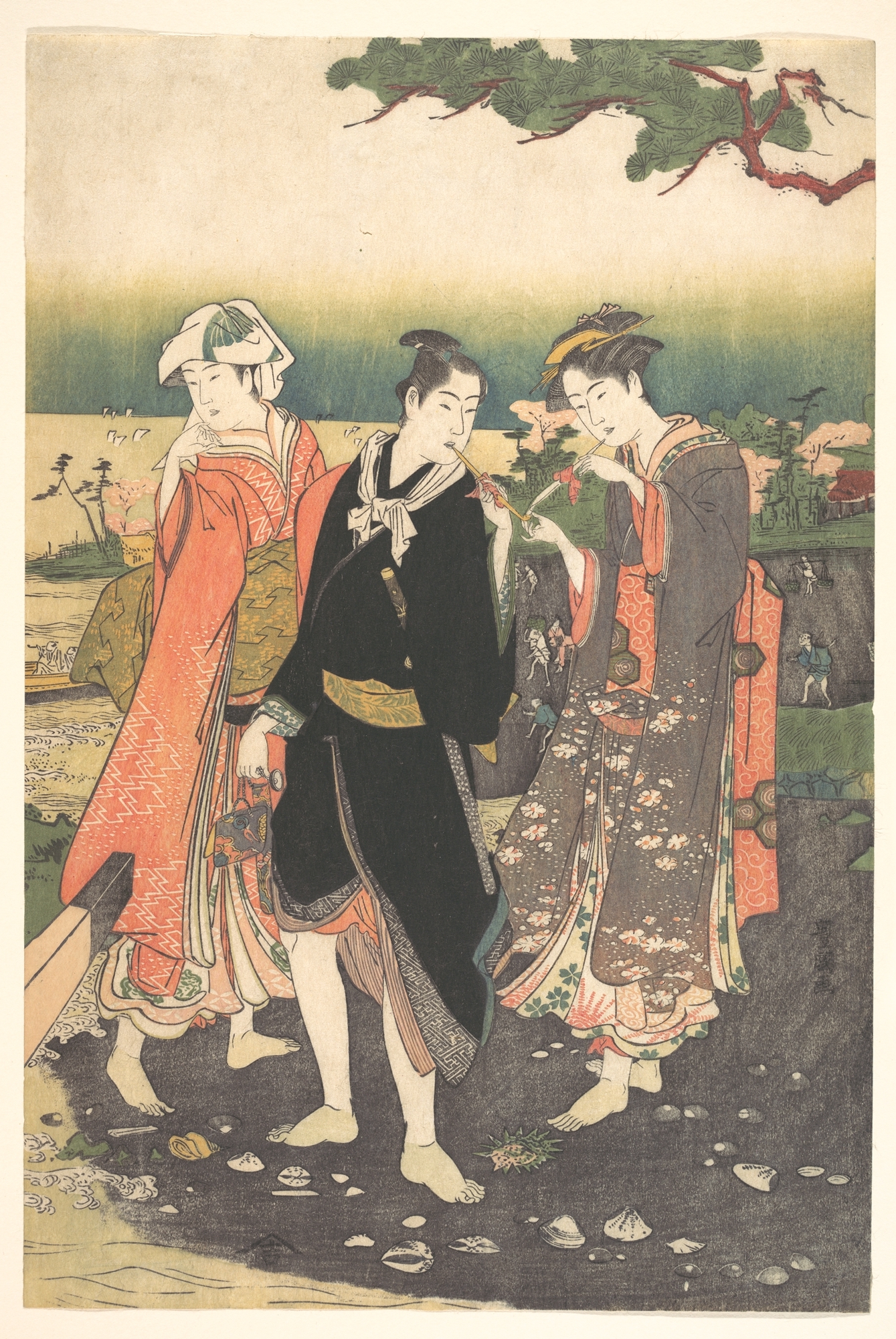
On Shinagawa Beach at Ebb-Tide
1769–1825
Woodblock print; ink and color on paper
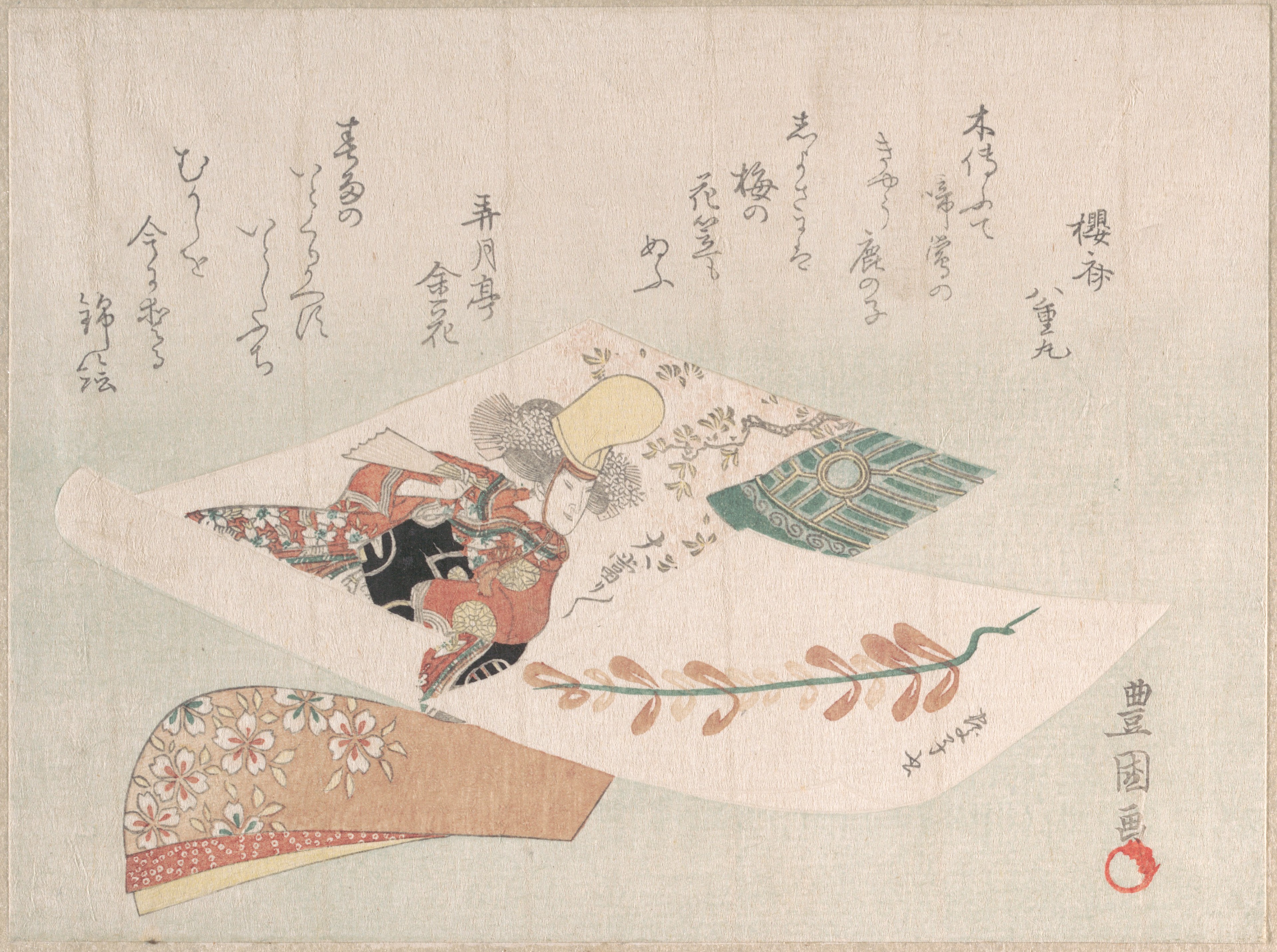
Representation of the Dance-Play "Dōjōji"
Woodblock print (surimono); ink and color on paper

Hamamuraya: Segawa Kikunojo III as Shirabyoshi Hisakata, from the series "Portraits of Actors on Stage (Yakusha butai no sugata-e)"
1794
Color woodblock print; oban
Frequently Asked Questions
The actors Sawamura Sojuro II as Satsuma Gengobei and Arashi Ryuzo II as Mawashi-otoko Yasuke in the play "Edo Sunago Kichirei Soga," performed at the Miyako Theater on the first month, 1795 was created by Utagawa Toyokuni I (歌川豊国) in c. 1795.