
Actor in a scene from a drama
- Date:
- Late 18th century and early 19th century
- Medium:
- Color woodblock print
- Source:
- Art Institute of Chicago
Description
This Utagawa Toyokuni print, recorded by the Art Institute of Chicago and showing an actor in a scene from a drama, is a characteristic example of the artist's central output within Edo ukiyo-e yakusha-e. As the head of the Utagawa school and the dominant designer of kabuki imagery in his generation, Toyokuni produced hundreds of theatrical portraits across his career, each one calibrated to communicate both the specific role and the unmistakable likeness of the performer. The composition isolates the figure against a relatively spare ground, allowing the costume, sword, and facial expression to function as the primary carriers of information. Toyokuni's nigao-e draftsmanship gives the actor's features the recognizability his audiences expected, while the patterning of the robe and the configuration of the pose anchor the figure firmly in a specific moment of stage action. Although the museum's identification does not specify the production, prints of this kind would have circulated quickly after the performance they depict, functioning as souvenirs, advertisements, and collectible portraits. For modern viewers, the sheet illustrates the everyday operation of the Edo theatrical print economy and the consistency of Toyokuni's stylistic vocabulary in producing it. Such single-figure yakusha-e form the bedrock of his reputation and the broader Utagawa school's hold on nineteenth-century Edo print culture.
More Prints by Utagawa Toyokuni I

Segawa Kikunojō III as the Shop Boy Chōkichi
1796
Woodblock print (nishiki-e), ink and color on paper
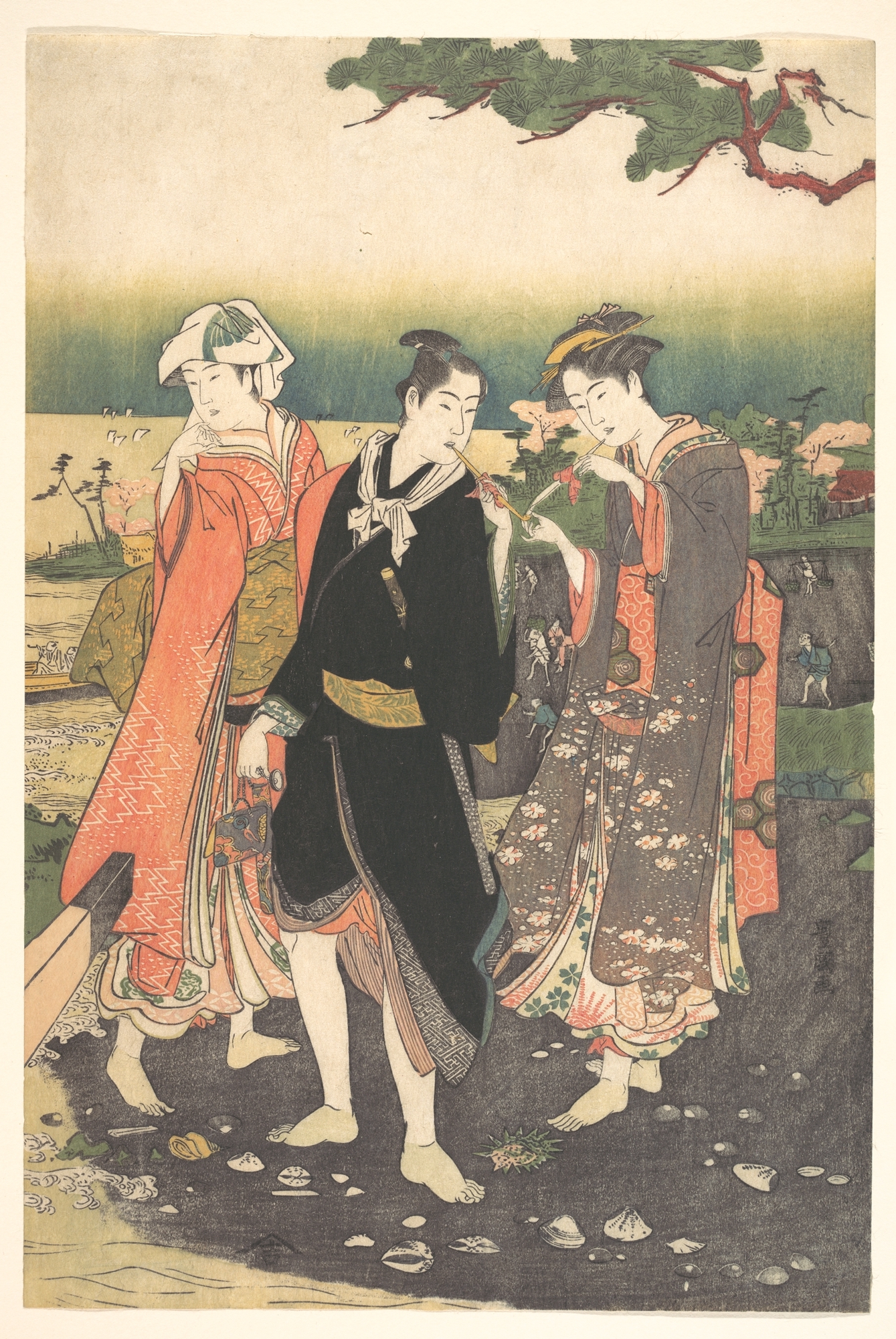
On Shinagawa Beach at Ebb-Tide
1769–1825
Woodblock print; ink and color on paper
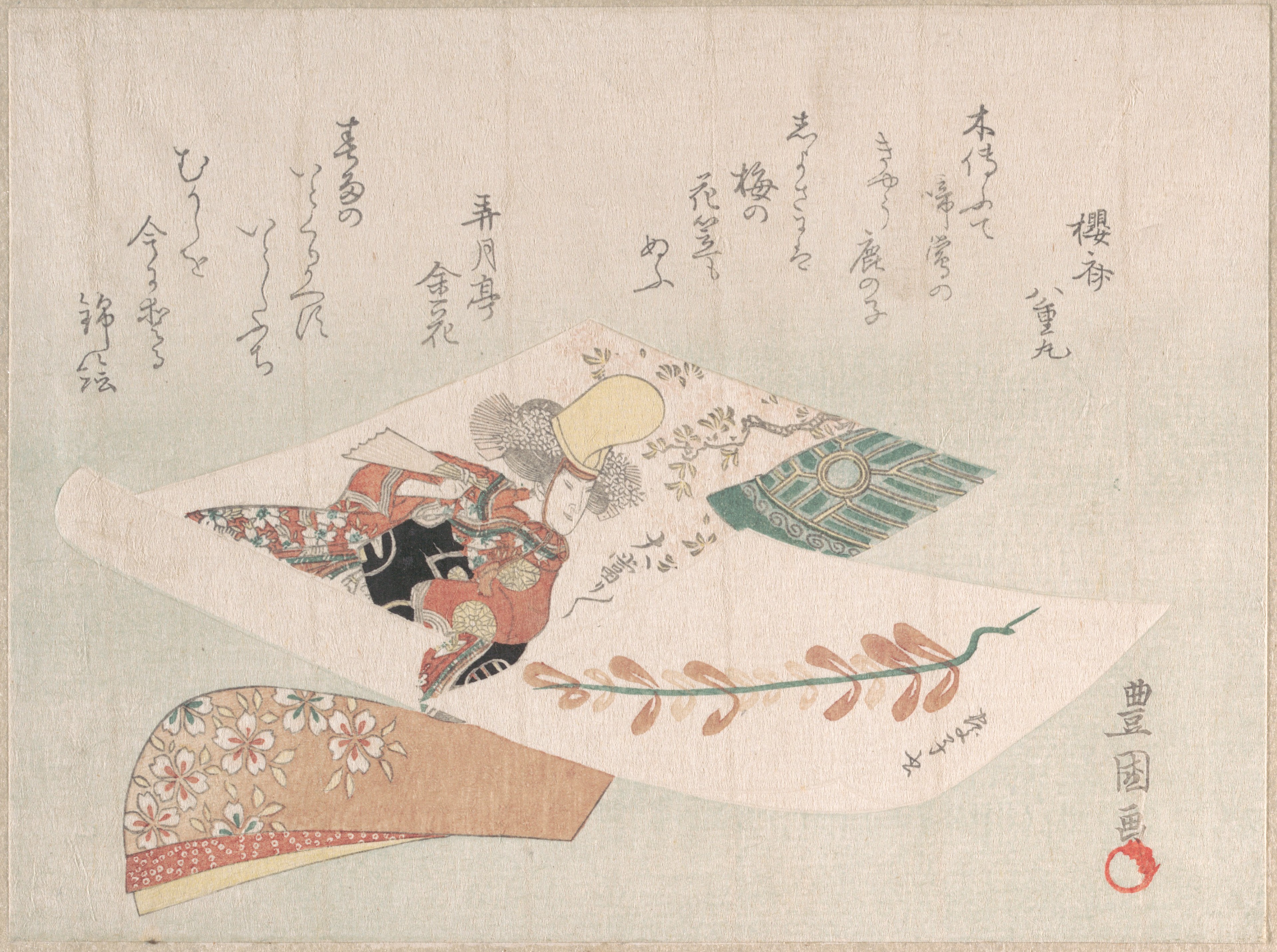
Representation of the Dance-Play "Dōjōji"
Woodblock print (surimono); ink and color on paper

The actors Sawamura Sojuro II as Satsuma Gengobei and Arashi Ryuzo II as Mawashi-otoko Yasuke in the play "Edo Sunago Kichirei Soga," performed at the Miyako Theater on the first month, 1795
c. 1795
Color woodblock print; oban
Frequently Asked Questions
Actor in a scene from a drama was created by Utagawa Toyokuni I (歌川豊国) in Late 18th century and early 19th century.