
Actor Nakamura Utaemon IV as the Boatman Matsuemon, actually Higuchi Jiro Kanemitsu (Sendo Matsuemon, jissha Higuchi Jiro Kanemitsu)
- Date:
- 1849
- Medium:
- Color woodblock print; oban
- Source:
- Art Institute of Chicago
Description
This 1849 print by Utagawa Toyokuni in the Art Institute of Chicago depicts the celebrated kabuki actor Nakamura Utaemon IV in one of his signature double-identity roles: the apparent boatman Matsuemon who is in fact the warrior Higuchi Jiro Kanemitsu in disguise. The composition belongs to the yakusha-e tradition that anchored Edo ukiyo-e production, and it shows the Utagawa school's distinctive way of compressing dramatic narrative into a single still image. Nakamura Utaemon IV was one of the era's great character actors, and roles built around the kabuki convention of secret identity (jissha) gave him exceptional scope for the layered emotional registers that contemporary audiences prized. Toyokuni captures the moment of theatrical doubleness by combining the boatman's working-class garb with the underlying warrior gravitas in his pose and expression. Costume patterning rewards close inspection: each motif on the textile served as a visual cue that experienced theatergoers could decode, often identifying the hidden character before the play's reveal scene. As a dated sheet from 1849, the print falls in the productive middle of the late Utagawa school period, when Toyokuni's studio output was at a high level of technical refinement. The print's preservation by the Art Institute of Chicago supports ongoing research into Utagawa Toyokuni and the visual conventions by which kabuki disguise plots were translated into print. The sheet is a strong example of how Edo ukiyo-e treated narrative simultaneity through pictorial means.
More Prints by Utagawa Toyokuni I

Segawa Kikunojō III as the Shop Boy Chōkichi
1796
Woodblock print (nishiki-e), ink and color on paper
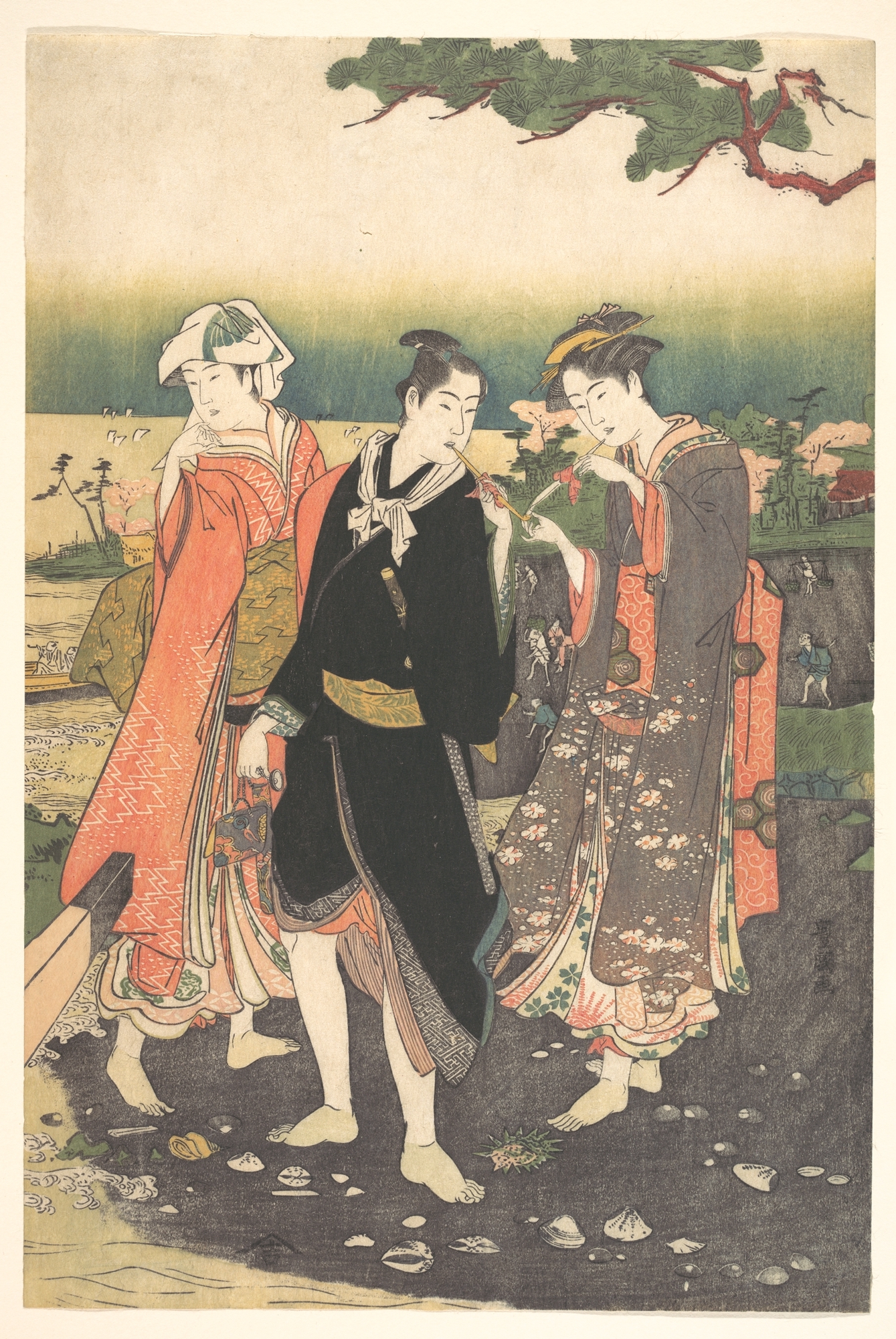
On Shinagawa Beach at Ebb-Tide
1769–1825
Woodblock print; ink and color on paper
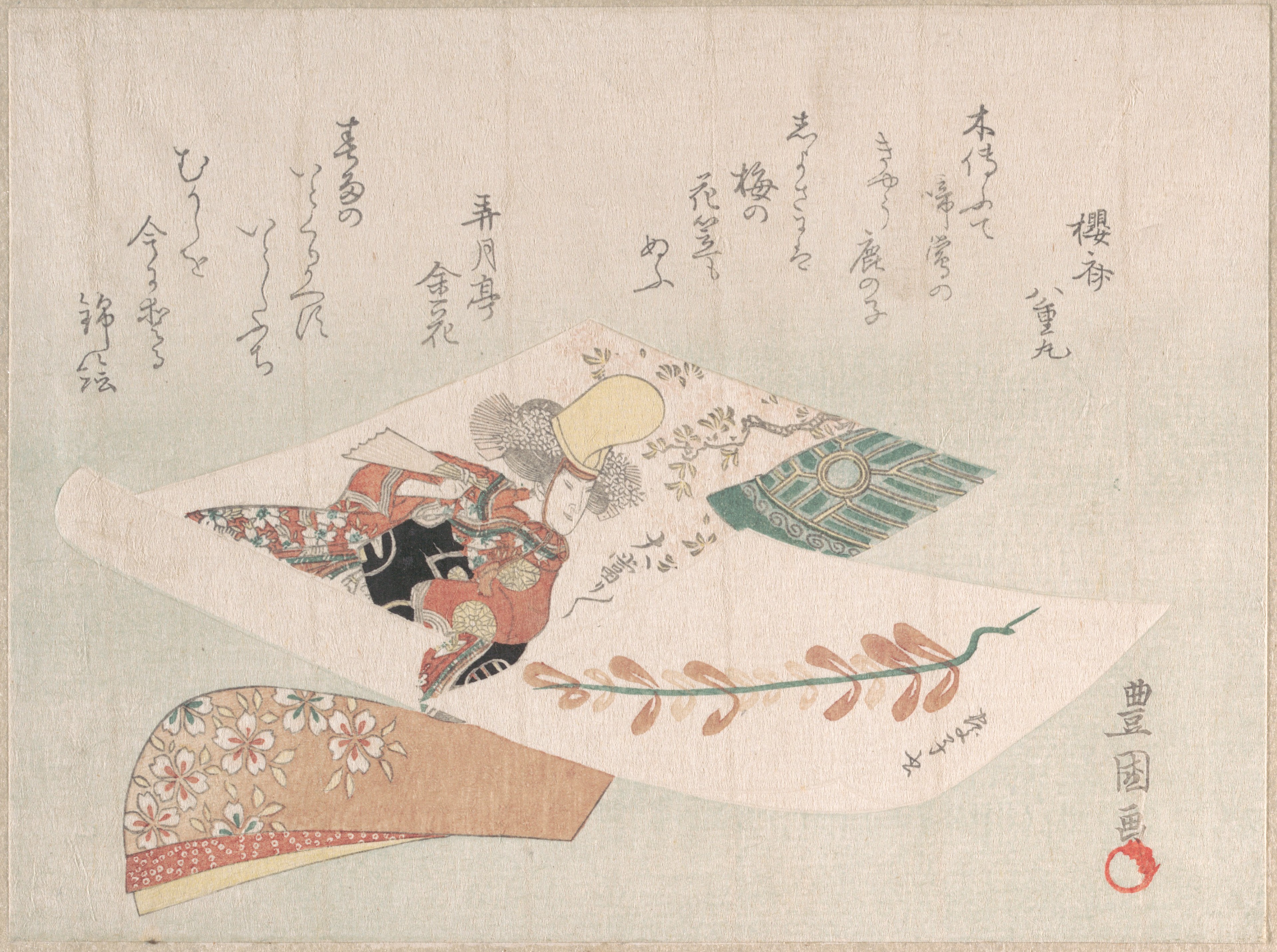
Representation of the Dance-Play "Dōjōji"
Woodblock print (surimono); ink and color on paper

The actors Sawamura Sojuro II as Satsuma Gengobei and Arashi Ryuzo II as Mawashi-otoko Yasuke in the play "Edo Sunago Kichirei Soga," performed at the Miyako Theater on the first month, 1795
c. 1795
Color woodblock print; oban
Frequently Asked Questions
Actor Nakamura Utaemon IV as the Boatman Matsuemon, actually Higuchi Jiro Kanemitsu (Sendo Matsuemon, jissha Higuchi Jiro Kanemitsu) was created by Utagawa Toyokuni I (歌川豊国) in 1849.